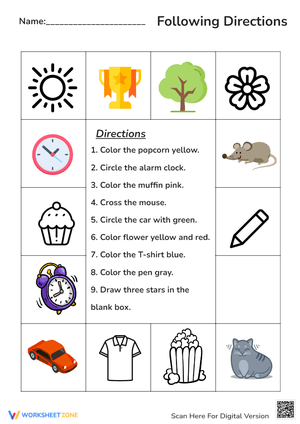
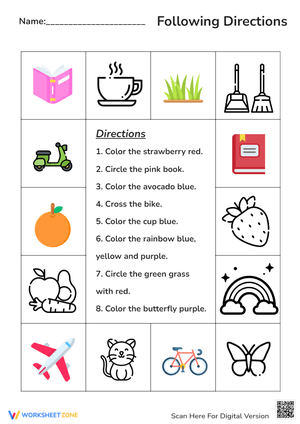
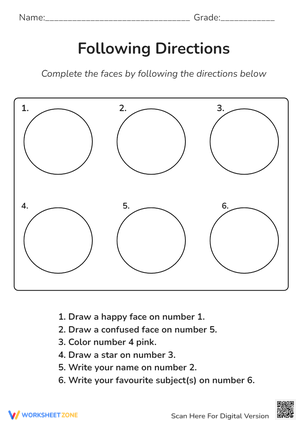
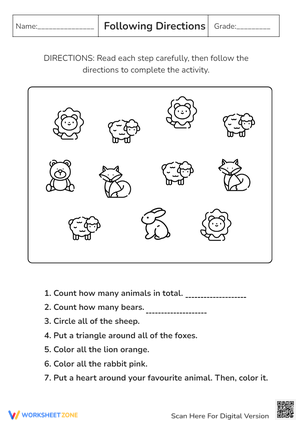
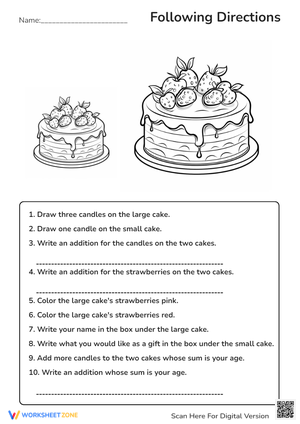
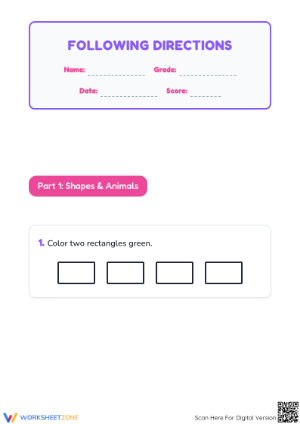
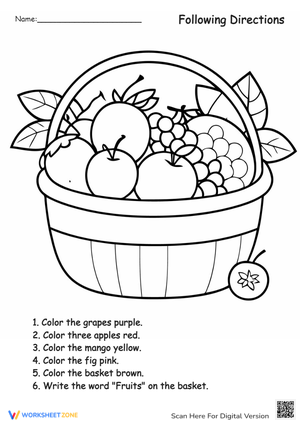
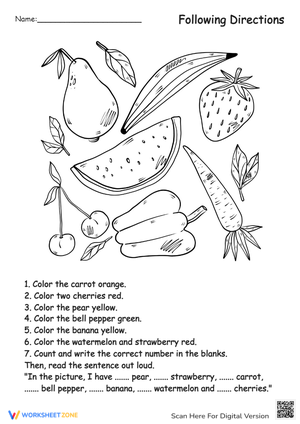
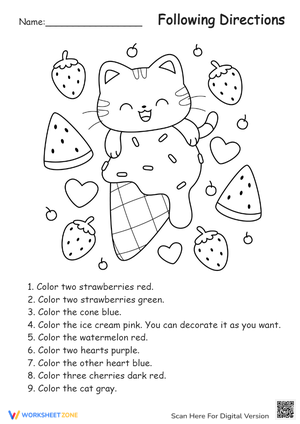
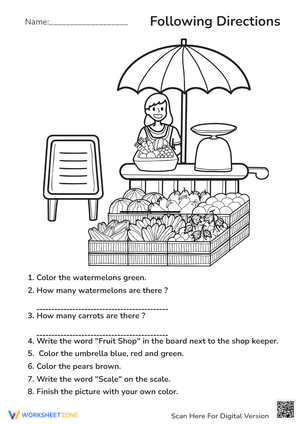
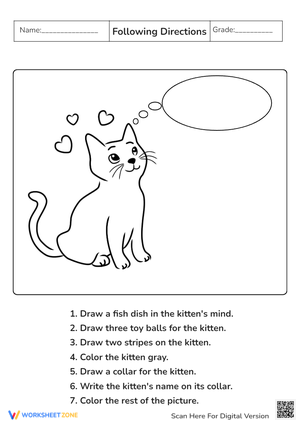
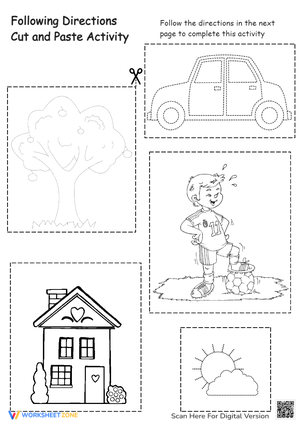
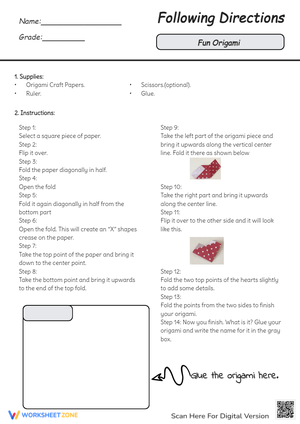
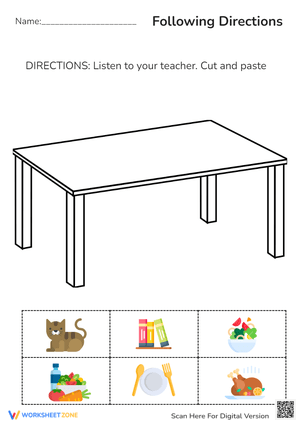
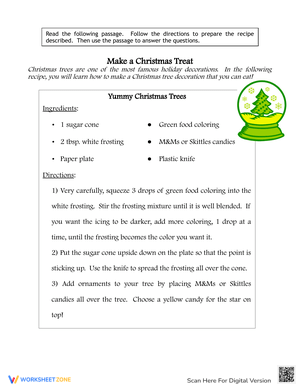
These 2nd grade following directions worksheets give teachers a set of targeted activities built around the specific cognitive demands that seven- and eight-year-olds face when asked to manage a multi-step task on their own. The set spans five distinct formats — directional drawing, sequential grid logic, if-then conditional tasks, temporal sequence tasks, and map-based direction chains — each one stressing a different aspect of the skill rather than repeating the same demand in a new costume.
What Each Worksheet Targets
Each worksheet isolates a specific layer of direction-following rather than stacking every demand type into a single task. That isolation matters because students fail for different reasons: some lose track of sequence, some skip conditional steps, some start executing before they have finished reading. Knowing which failure pattern a student hits tells you which format to assign next.
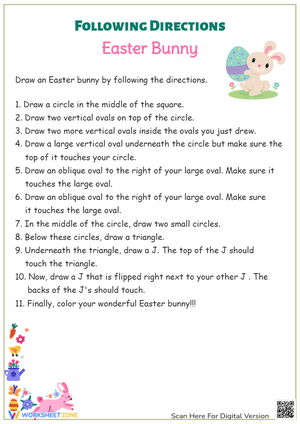
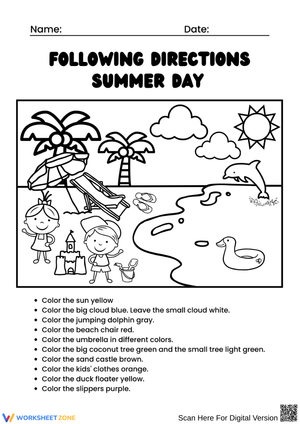
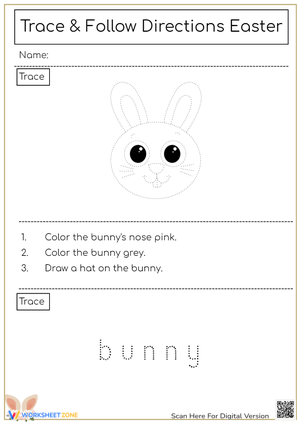
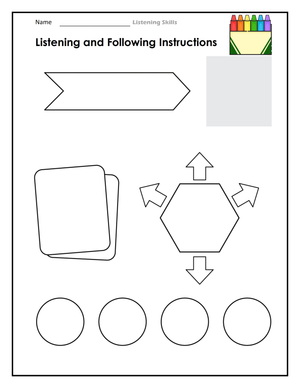
- Directional drawing tasks: Students receive a blank picture frame and a three- or four-step instruction set — Draw a red hat on the figure. Place a yellow star below the window. Add a cloud above the house. These reward the habit of reading to the end before picking up a pencil.
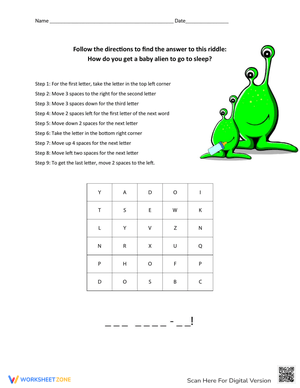
- Sequential grid tasks: Students follow positional language — above, below, beside, between — to locate or mark cells in a grid. Spatial vocabulary and reading order both get practiced here.
- If-then conditional tasks: Students apply a decision rule before acting: If the word begins with a vowel, circle it; if it begins with a consonant, underline it. These build the habit of pausing to check a condition rather than immediately copying what the first student does.
- Temporal sequence tasks: Instructions use markers like before, after, and then. Students must reorder their actions based on those markers — not simply execute steps in the order they appear.
- Map-based tasks: A character moves across a simple grid; students follow a direction chain to trace the route or record the final position. Spatial reasoning and sequential processing work together.
Frequent Student Errors Worth Watching For and Correcting
The most consistent error in temporal sequence tasks is what teachers sometimes call the recency problem: students execute the last instruction they read, first. A direction like After you circle the noun, underline the verb sends many second graders straight to underlining because that was the final image held in working memory when they looked up from the page. They are not careless — the brain at this age tends to prioritize its most recent input, and that is developmentally expected. The temporal sequence worksheets surface this pattern quickly, often by the second item, which means you can address it before it settles into a fixed classroom habit.
In conditional tasks, a different error appears. Students apply the if branch without checking whether the condition is actually true — they see a word, skip the vowel-or-consonant check, and circle everything in sight. When you look at the work, every item is circled regardless of its starting letter. The answer key for these worksheets marks each item individually rather than providing only a total, so returning the work with specific items flagged gives students concrete feedback on exactly which step they bypassed.
A third pattern shows up consistently across classrooms: students who do not read all steps before starting. The directional drawing tasks catch this. Step three sometimes modifies or contradicts step one, so a student who completes step one immediately and then encounters a conflicting instruction in step three will have to erase and restart. That friction is deliberate — not punitive, but diagnostic. It tells you at a glance who is reading ahead and who is not.
How to Build These Worksheets Into Your Lesson-Planning Week
The most productive placement is as a brief daily routine rather than an isolated unit. Eight minutes at the start of independent work time — right after morning meeting ends — gives students a focused, low-stakes warm-up that also trains sustained attention before the heavier literacy or math block begins. The work is quiet enough to run while attendance is called or while a small group gathers at the back table.
For a more targeted approach, the 2nd grade following directions worksheets fit cleanly into literacy center rotations. Independent center use works, but only after you have explicitly modeled the habit of reading every step before picking up a pencil — plan to narrate that habit aloud several times across the first week before it holds. The if-then conditional format is demanding enough that it runs better as a separate center tier, assigned intentionally rather than landing on students by rotation chance.
The map-based format works well in the Friday review slot. The spatial component resets attention late in the week, and the sequential chain of moves gives students something concrete to trace and then self-check. Build in that self-checking step explicitly: ask students to point back to each instruction after each move rather than completing all moves and checking once at the end. That habit of pausing to verify transfers into other subject areas faster than most teachers expect.
Differentiating These Worksheets Across Your Class
Students who still struggle with two-step directions start best with directional drawing tasks that use only positional language — no conditionals, no temporal markers, just place and sequence. Adding a small printed checklist on the margin of the worksheet — a numbered 1, 2, 3 with a checkbox beside each step — lets those students physically track progress without having to hold the full instruction set in working memory at once. That simple addition removes the retrieval burden so the student can focus on reading and executing.
Students who move through the standard formats quickly are ready for if-then tasks with two simultaneous conditions, or map tasks stretched to five or six moves instead of three. The added difficulty is not harder vocabulary — it is a longer instruction chain taxing the same working memory at higher capacity. Asking these students to restate each instruction in their own words before acting on it adds a comprehension layer that slows them down productively and reveals whether they are truly processing the condition or pattern-matching from prior items.
For students receiving pull-out support, the directional drawing worksheets work well in a small-group setting where an adult can prompt verbal rehearsal — What does step two say? Say it out loud before you draw it — without disrupting the rest of the class. That auditory repetition builds sequential memory in a way that transfers back to independent classroom work faster than most other approaches for this age group.
Standard Alignment
These worksheets connect most directly to CCSS.ELA-Literacy.RI.2.1, which asks second graders to ask and answer questions demonstrating understanding of key details in a text. Following a written multi-step instruction is one of the clearest practical tests of that standard — the task card functions as the text, and accurate execution functions as the comprehension check. The conditional and temporal sequence formats also address CCSS.ELA-Literacy.RI.2.3, which covers describing the connections between a series of steps in a procedural text. Both standards sit in the Reading Informational Text strand, which means teachers who run these worksheets during literacy center time reinforce reading standards without carving out separate instructional minutes.
Frequently Asked Questions
How many steps can a typical 2nd grader reliably follow?
Most students at this level manage two-step directions consistently, and many are building toward reliable three-step sequences by mid-year. Quantity alone is not the strongest predictor of difficulty, though. A two-step direction that includes a temporal marker like after is cognitively harder than a plain three-step sequential list. The 2nd grade following directions worksheets account for this by ordering formats from lower to higher cognitive load — positional and sequential tasks first, conditional and temporal tasks later — so the challenge increases in meaningful ways rather than simply adding more steps.
Do these worksheets work for students who struggle with attention?
The shorter-format tasks do. Each worksheet contains enough items to build a genuine practice habit without pushing past the attention window of a student who has trouble sustaining focus. The physical element — drawing, circling, underlining, tracing — keeps hands engaged in a way that pure listening tasks cannot. That said, students who freeze when confronted with more than two written instructions at once may need an adult to read each step aloud one at a time during early sessions, working toward full independent reading as stamina builds over several weeks.
Can families use these at home effectively?
Yes, with one adjustment. A parent should read each instruction aloud alongside the student for the first few items rather than letting the child read silently and guess. Home practice works best when it mirrors the step-by-step processing built at school: read one step, complete it, check it off, then move to the next. The sequential and directional drawing formats travel home well; the if-then conditional format makes more sense once students have seen it modeled and discussed in class.
How frequently should students practice with these?
Short and frequent outperforms long and occasional. Ten focused minutes, four days a week, produces more durable improvement than a thirty-minute session once a week. Working memory and sequential processing respond to repeated activation in small doses — the same reason daily fluency practice beats a weekly marathon drill. The 2nd grade following directions worksheets are sized with that frequency in mind: each one takes roughly eight to twelve minutes to complete when students are reading each step carefully rather than rushing through.












 Interactive Worksheet Maker
 Quiz Maker
 Word Search Maker
 Crossword Puzzle Maker
 Word Scramble Generator
 Sentence Scramble Generator
 Handwriting Worksheet Generator
 Name Tracing Generator
 Fill In The Blank Generator