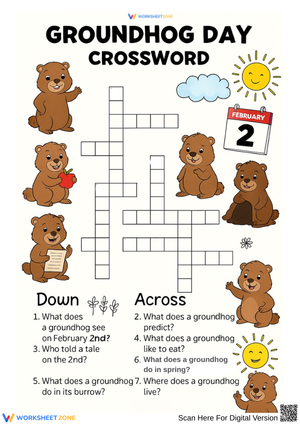
Engaging Groundhog Day Worksheets for 2nd Grade: Comprehensive ELA and Science Activities
These groundhog day worksheets for 2nd grade cover three content strands simultaneously — life science, early literacy, and logical reasoning — which is why they work well as a standalone February unit rather than a one-day activity. Each worksheet targets a specific skill, so teachers can assign them across the week leading up to February 2nd without any single lesson feeling rushed.
Skills These Worksheets Build
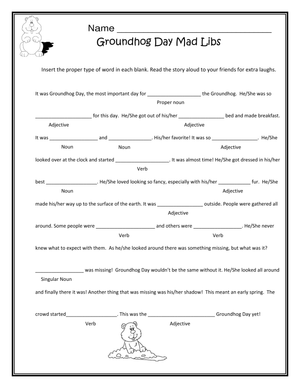
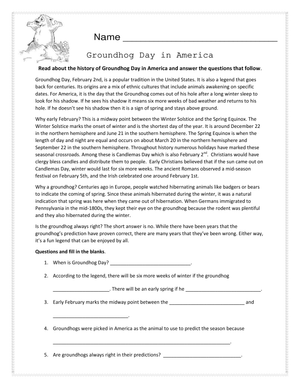
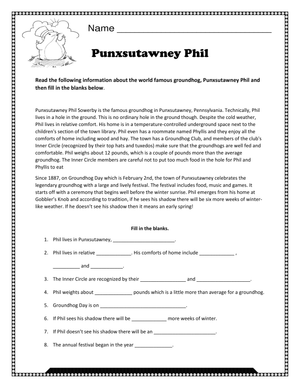
The set spans a wider range of second-grade skills than the holiday might suggest. On the science side, students label a cross-section of a groundhog burrow, sequence the stages of hibernation from late-summer feeding through emergence, and compare groundhog behavior with that of a non-hibernating animal. On the literacy side, worksheets ask students to read short informational passages and identify the main idea alongside two supporting details. Vocabulary work weaves through both strands: words like hibernate, burrow, prediction, and meteorologist appear in context before students sort, match, or use them in original sentences.
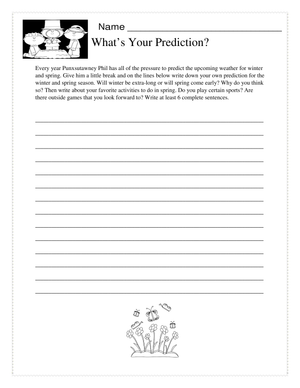
The prediction strand deserves its own mention. Each worksheet in this section asks students to record their forecast for February 2nd, then list at least one piece of supporting evidence — a weather observation, a change in daylight hours, a note about snowpack in the schoolyard. That evidence requirement is what separates these activities from simple opinion prompts and starts students thinking about data-supported claims, which is a genuine science practice at the second-grade level.
How to Build These Worksheets Into Your Lesson Plans
Most teachers slot this set into the five school days before Groundhog Day. The hibernation sequencing worksheet works well as Monday warm-up work after the weekend, when students need a familiar task to re-engage. The vocabulary-in-context worksheet pairs naturally with a read-aloud mid-week. The prediction worksheet — the one that asks for evidence — lands best on February 1st, so students can fill in their results the following morning. That two-day structure gives the prediction activity genuine stakes, which makes the writing feel purposeful rather than performative.
The groundhog day worksheets for 2nd grade also work as independent center rotations. The shadow-and-light worksheet — where students draw the sun's position and trace where a shadow would fall — runs without teacher facilitation once students have seen a quick flashlight-and-object demonstration. That frees the teacher to pull a small group for the informational text worksheet, which requires more direct support on the main-idea skill.
Frequent Student Errors Worth Watching For
The most persistent mistake appears on the prediction worksheet: students write "I think it will still be winter because I think so" and consider that sufficient evidence. They hear the word prediction and interpret it as pure opinion. Redirecting them to the weather-observation chart they've been filling in — even three days of data — usually gets them to connect the idea. The worksheet leaves deliberate space for that evidence, so the blank is harder to skip past.
On the hibernation sequencing activity, students frequently place emergence immediately after the groundhog enters the burrow, skipping the months-long dormancy entirely. They understand that the groundhog goes in and comes out but don't grasp the scale of time involved. A brief class discussion about what month they're in versus what month the groundhog went underground usually fixes this, and the worksheet then becomes a record of corrected thinking rather than an uncaught error.
One more: on vocabulary matching activities, second graders reliably swap hibernate and burrow. They know both words relate to the groundhog but confuse the action with the place. A teacher who spots this pattern in the first center rotation can do a thirty-second clarification before the next group sits down — the worksheet makes that pattern visible fast.
Adjusting the Worksheets for a Range of Learners
For students still building reading fluency, the vocabulary and labeling worksheets carry the science content without requiring extended reading. These students engage with the hibernation diagram and the shadow-drawing activity at full depth while their reading-intensive peers work through the informational passages. Because the science skills and the literacy skills don't always arrive together on the same worksheet, level-based sorting is straightforward — you're not stripping content from one group, just assigning different entry points.
Students reading well above grade level benefit most from the prediction-with-evidence worksheet combined with a simple table tracking local weather across the five days before February 2nd. You can extend the task by asking them to compare their own predictions with published National Weather Service data for early February — a light introduction to the idea that real meteorologists also work with probabilistic forecasts. That extension costs no additional prep; it just adds a second column to the worksheet's evidence section.
The groundhog day worksheets for 2nd grade also happen to work across a grade-level span. First graders handle the labeling and shadow-drawing worksheets with minimal support. Third graders who need review of main-idea-and-details can use the informational passages without the content feeling below their level, because the actual science of hibernation physiology and seasonal cues is genuinely interesting at any elementary grade.
Standard Alignment
The informational reading worksheets align with CCSS.ELA-LITERACY.RI.2.2, which requires students to identify the main topic and key details of a multi-paragraph text. At second grade, this standard is often practiced with decontextualized passages that feel generic; a thematic anchor like Groundhog Day gives the reading a clear purpose students can name. The vocabulary work supports CCSS.ELA-LITERACY.L.2.4, specifically using context clues to determine word meaning — a skill that becomes critical in third grade when informational text density increases sharply.
On the science side, the hibernation and seasonal-change content maps to NGSS 2-LS4-1 and the broader life science thread about how living things respond to their environment. The prediction and evidence activities support the early science practices strand — specifically asking questions and using observational data — which runs through the NGSS framework from kindergarten onward and deepens steadily across elementary grades.
Frequently Asked Questions
Do these worksheets require any classroom setup beyond printing?
The shadow-and-light worksheet works better if students have seen a brief demonstration with a flashlight and a small object before they sit down with it. Everything else in the set is print-and-go. The weather observation activity becomes more meaningful if students have been recording daily temperature for a few days beforehand, but that's optional enrichment, not a prerequisite.
How long does each worksheet typically take?
Most run between eight and fifteen minutes for an on-grade-level second grader working independently. The informational reading worksheet with main idea and supporting details often takes closer to fifteen minutes for students still building fluency. The vocabulary matching and labeling worksheets typically fall under ten minutes, making them well suited for morning warm-up slots or the transitional minutes before a specialist period.
What if February 2nd falls on a weekend?
The groundhog day worksheets for 2nd grade don't depend on the actual calendar date. When the holiday lands on a Saturday or Sunday, most teachers shift the prediction-and-results activity to the Friday before and the Monday after. The sequencing and vocabulary worksheets are entirely date-independent and work in any order during the last week of January or the first few days of February.
Is the science content accurate, or does it lean into the folk legend?
Both strands appear, and they're kept distinct. Each worksheet that references the shadow prediction also includes a note separating the folk tradition from actual animal behavior. The hibernation worksheets are grounded in accurate biology — significant body temperature drop, fat-reserve depletion, emergence triggered by temperature and light cues — rather than the legend. Students finish the set having encountered both the cultural tradition and the real science, which naturally opens a discussion about how folklore often grows out of genuine natural phenomena.
Clear All