


























Views
Downloads

Grade 2 Reading Comprehension — Printable No-Prep Worksheet
Paste this activity's link or code into your existing LMS (Google Classroom, Canvas, Teams, Schoology, Moodle, etc.).
Students can open and work on the activity right away, with no student login required.
You'll still be able to track student progress and results from your teacher account.
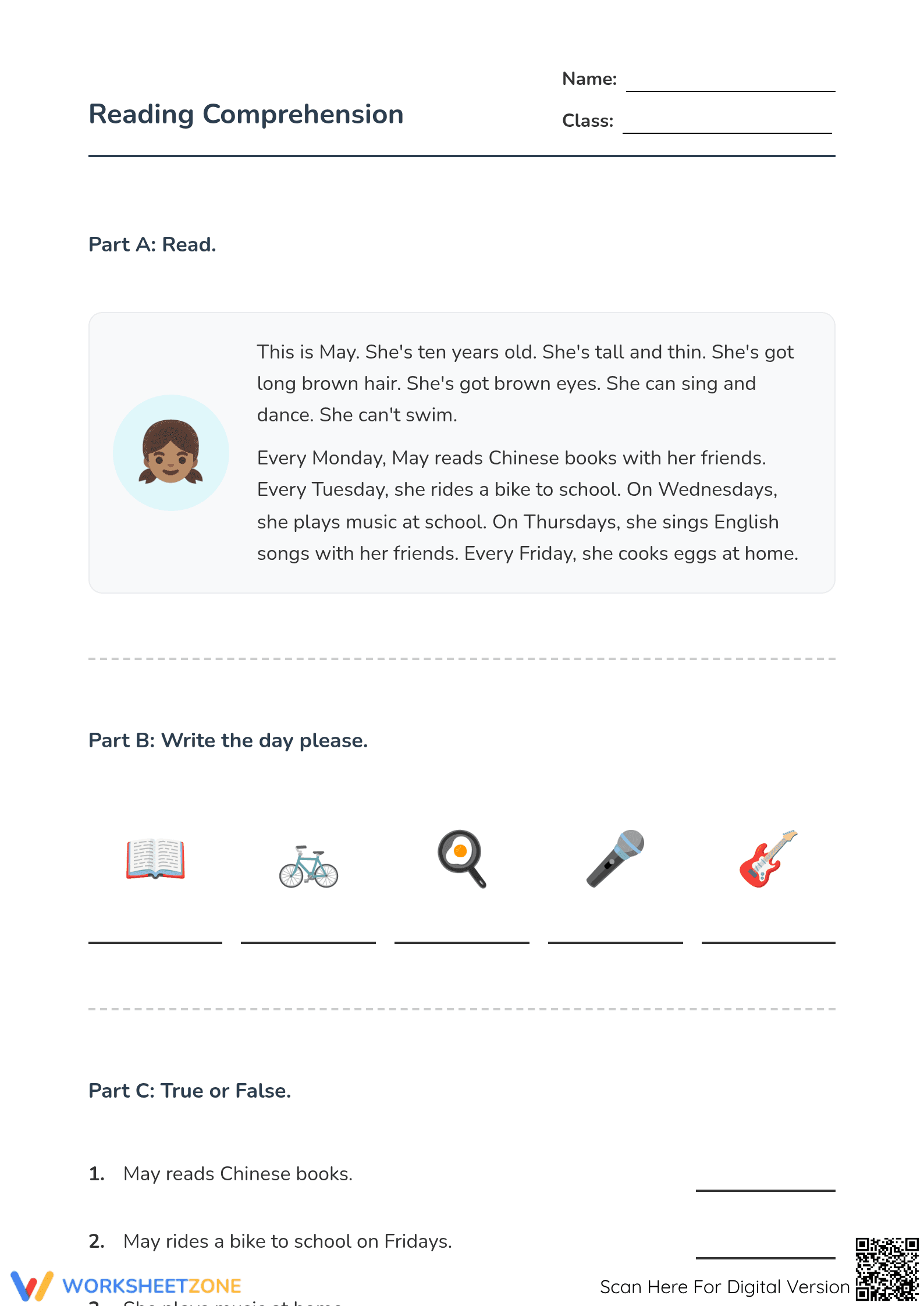
This Grade 2 reading comprehension worksheet helps students practice retrieving key details from a short text. By reading a simple passage about a character's weekly routine and answering targeted questions, young learners build foundational literacy skills and improve their ability to locate specific information independently.
At a Glance
- Grade: 2 · Subject: ELA
- Standard:
CCSS.ELA-LITERACY.RL.2.1— Answer questions to demonstrate understanding of key details.- Skill Focus: Reading comprehension and detail retrieval
- Format: 2 pages · 15 problems · Answer key included · PDF
- Best For: Independent practice and morning work
- Time: 15–20 minutes
What's Inside
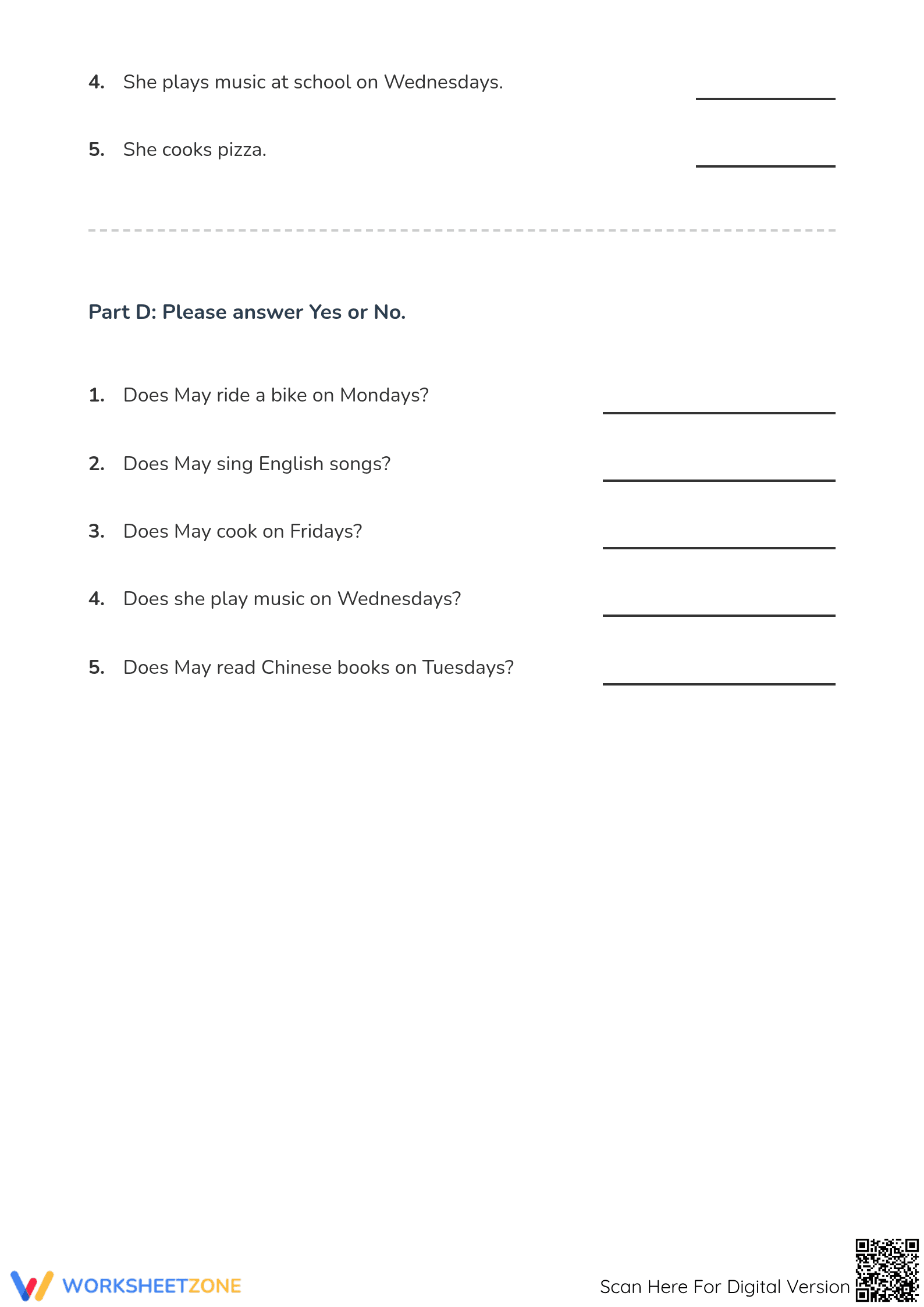
This two-page resource features a short, accessible reading passage about a girl named May and her daily activities. Following the text, students complete 15 comprehension tasks divided into three distinct sections: matching days of the week to activity icons, answering true or false statements, and responding to yes or no questions. A complete answer key is provided to ensure quick and accurate grading.
Zero-Prep Workflow
Enjoy a highly efficient zero-prep workflow.
- Print (1 minute): Simply download the PDF and print the two-page student handout. The layout requires no special formatting.
- Distribute (1 minute): Hand out the worksheets to students. The instructions are self-explanatory, allowing students to begin working immediately.
- Review (3 minutes): Use the included answer key to quickly check student responses or guide a whole-class review session.
Total prep time is under two minutes, making this ideal for sub plans.
Standards Alignment
This worksheet is directly aligned to CCSS.ELA-LITERACY.RL.2.1, requiring students to ask and answer such questions as who, what, where, when, why, and how to demonstrate understanding of key details in a text. By locating specific days and activities within the passage, students practice essential evidence-gathering skills. Both standard codes can be copied directly into lesson plans, IEP goals, or district curriculum mapping tools.
How to Use It
This versatile worksheet can be utilized during independent reading blocks or as a focused morning work assignment. Teachers can assign it after direct instruction on finding text evidence to give students immediate, hands-on practice. As a formative assessment tip, observe whether students are physically looking back at the passage to verify their true/false and yes/no answers, or if they are guessing. Expected completion time is 15 to 20 minutes.
Who It's For
Designed for second-grade students, this serves as excellent review for third graders or intervention for students reading below grade level. The visual cues in the matching section provide helpful scaffolds for English Language Learners and visual learners. It pairs perfectly with a mini-lesson on highlighting text evidence or an anchor chart detailing the days of the week.
Developing strong reading comprehension skills in early elementary grades is critical for long-term academic success. This resource targets CCSS.ELA-LITERACY.RL.2.1, helping students answer questions to demonstrate understanding of key details. According to Fisher & Frey (2014), providing students with structured, text-dependent questions encourages them to return to the text, fostering deeper comprehension and analytical habits. By engaging with this worksheet, students practice locating specific information—such as matching activities to specific days of the week—which builds their capacity to process and retain written information. The clear, predictable format of the true/false and yes/no questions reduces cognitive load, allowing young readers to focus entirely on extracting meaning from the passage. This targeted practice ensures students build the foundational literacy skills necessary for tackling more complex texts in subsequent grade levels.


