


























Views
Downloads
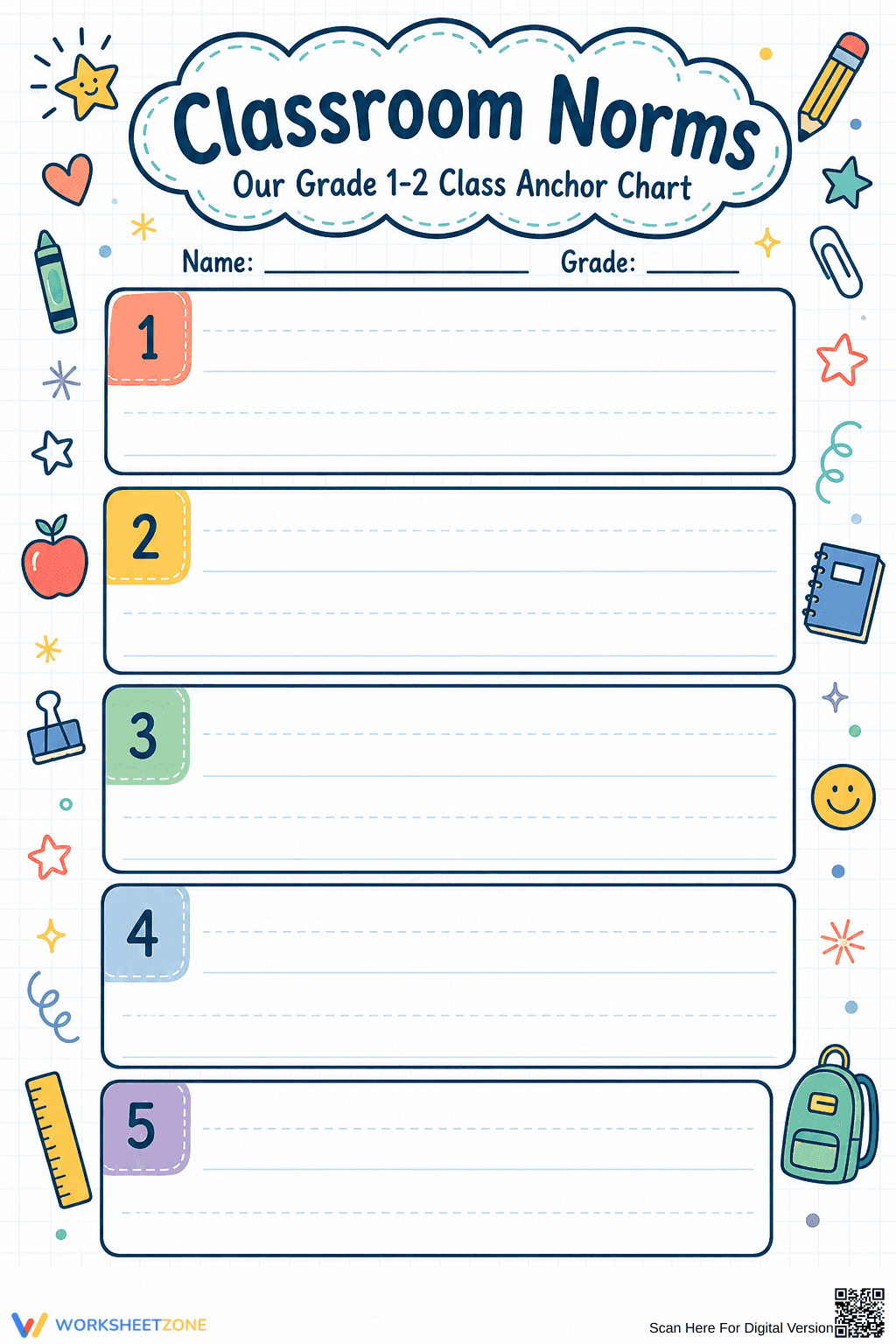

Grade 1-2 Classroom Norms — Printable No-Prep Worksheet
Paste this activity's link or code into your existing LMS (Google Classroom, Canvas, Teams, Schoology, Moodle, etc.).
Students can open and work on the activity right away, with no student login required.
You'll still be able to track student progress and results from your teacher account.
This printable classroom norms anchor chart helps Grade 1 and Grade 2 students collaboratively establish a positive learning environment. By defining clear behavioral expectations, young learners gain a sense of ownership over their social interactions. This visual tool ensures every child understands the boundaries of their specific classroom community.
At a Glance
- Grade: 1-2 · Subject: Social Skills
- Standard:
CCSS.ELA-LITERACY.SL.1.1— Follow agreed-upon rules for discussions- Skill Focus: Behavioral Expectations
- Format: 1 page · 5 problems · No answer key · PDF
- Best For: Back-to-school community building
- Time: 15–20 minutes
This single-page PDF features a vibrant, grid-based design with five distinct, color-coded sections for writing. The layout is intentionally open, providing primary-lined spaces that allow teachers to scribe for younger students or for second graders to practice their handwriting while recording group-decided rules. Playful border doodles create a welcoming aesthetic that fits any primary classroom decor without requiring additional setup.
The zero-prep workflow for this resource is designed for maximum efficiency. First, print the document in color or grayscale, which takes about 30 seconds. Second, distribute the sheet during a morning meeting or circle time to facilitate a group discussion about shared values. Finally, display the completed chart on a bulletin board for daily reference. Total teacher preparation time is under 2 minutes, making it an excellent option for a quick sub plan activity.
This resource aligns with CCSS.ELA-LITERACY.SL.1.1, which requires students to participate in collaborative conversations with diverse partners about grade-level topics and texts with peers and adults in small and larger groups, specifically following agreed-upon rules for discussions. By documenting these rules, students engage in the foundational work of social-emotional literacy. Both standard codes can be copied directly into lesson plans, IEP goals, or district curriculum mapping tools.
Use this worksheet during the first week of school as a primary formative assessment of student social awareness. Observe which students actively contribute ideas and how they negotiate which five norms are most important for the group. It also serves as a living document that can be revisited after winter break to reinforce or adjust classroom expectations based on current needs. Expect the initial brainstorming and writing process to take 15 to 20 minutes.
This template is ideal for general education teachers, school counselors, and special education providers working on social-emotional goals with primary students. The visual structure supports English Language Learners by providing a clear, numbered framework for new vocabulary and behavioral concepts. It pairs naturally with a back-to-school read-aloud or a direct instruction lesson on active listening and sharing.
Research from Fisher & Frey (2014) emphasizes that co-constructing classroom norms is a critical component of the gradual release of responsibility, as it shifts the cognitive and behavioral load from the teacher to the student. This Grade 1-2 anchor chart facilitates that shift by providing a structured space for students to document their commitment to CCSS.ELA-LITERACY.SL.1.1, specifically the ability to follow agreed-upon rules for discussions. By limiting the list to five key items, the resource respects the working memory constraints of primary learners while ensuring high visibility for behavioral cues. Classrooms with clearly defined and collaboratively built expectations show higher levels of student engagement and fewer instructional disruptions. This printable tool serves as a permanent visual scaffold, reinforcing social skills and communication norms throughout the academic year, making it a staple for evidence-based classroom management.


