


























Views
Downloads
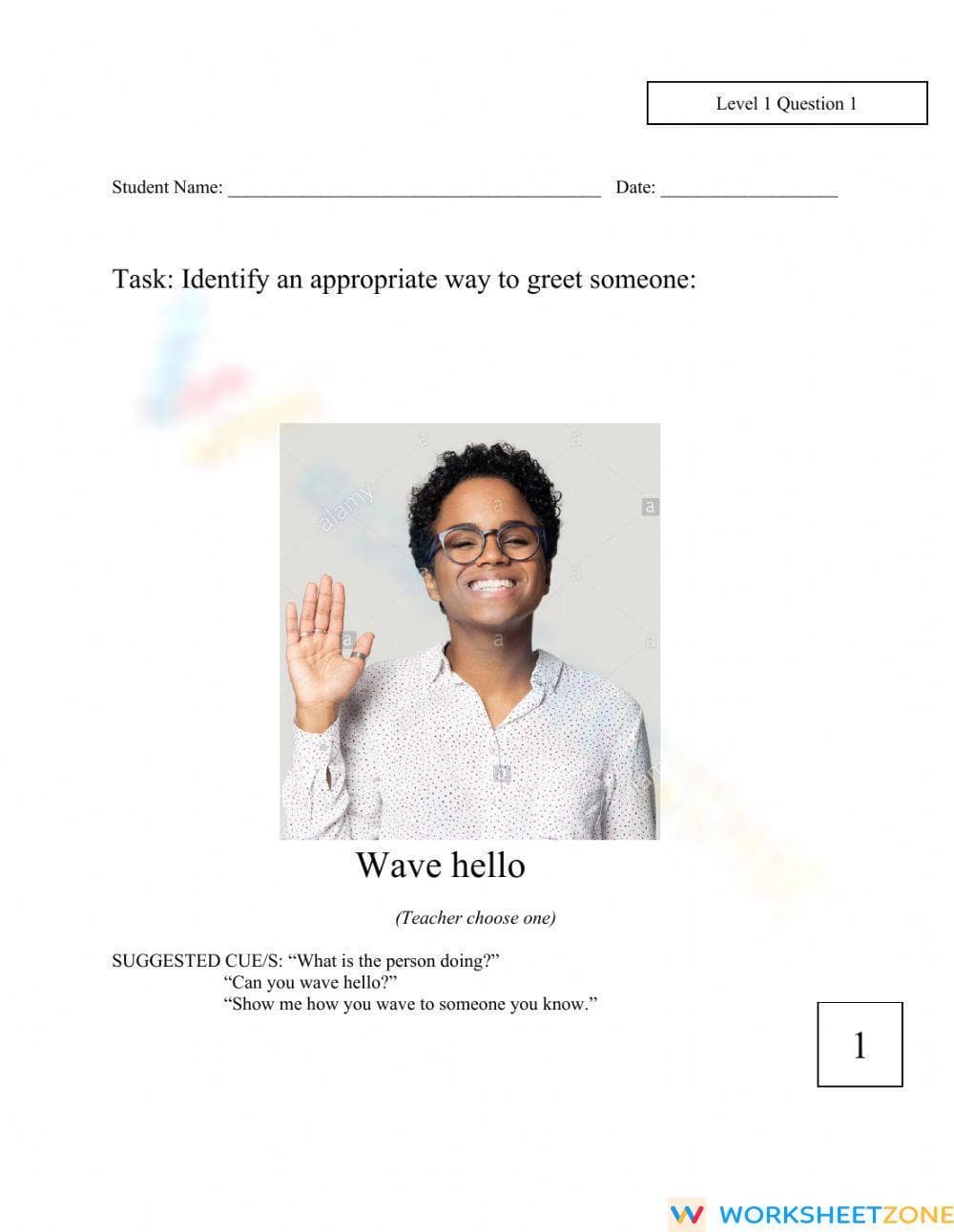
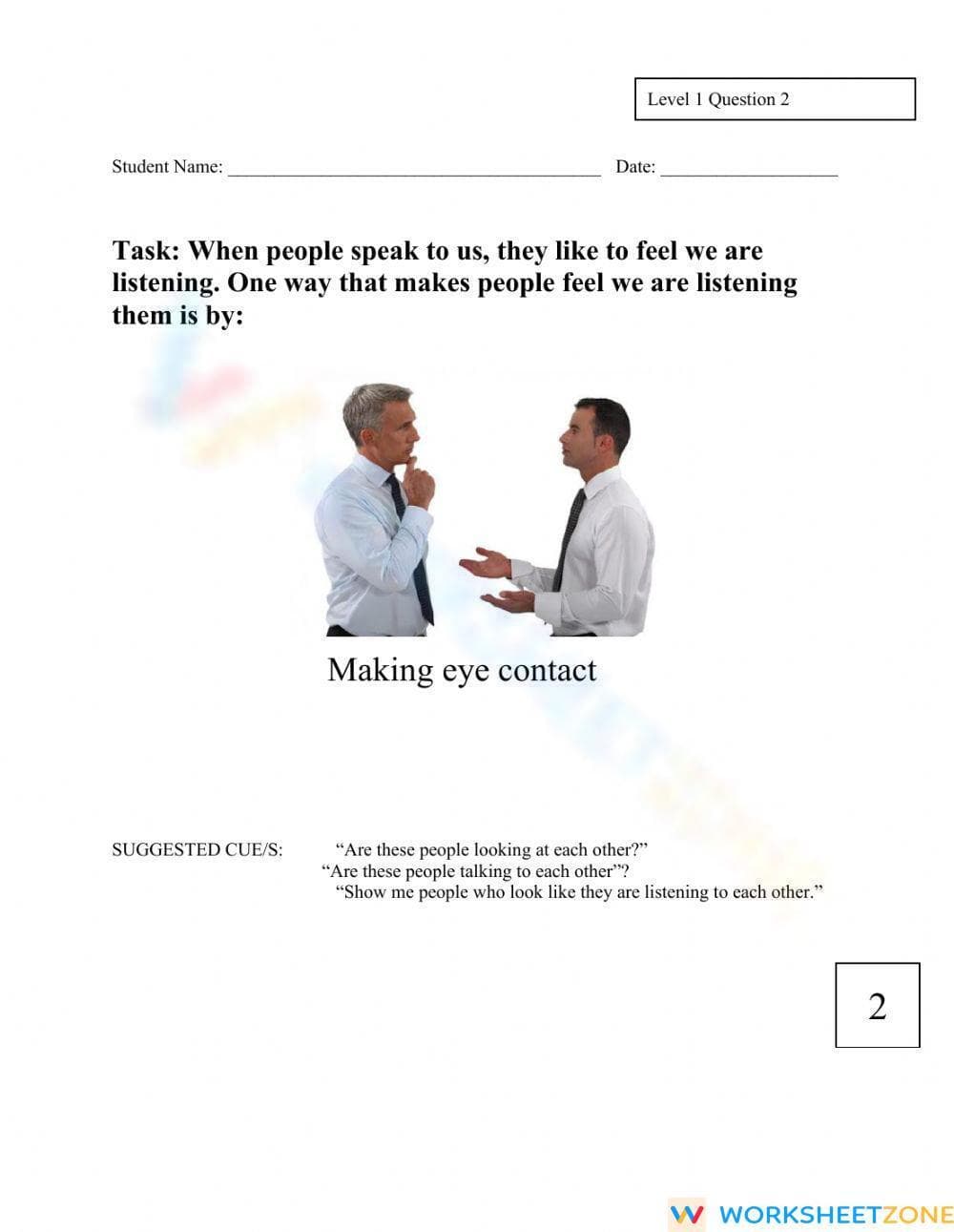
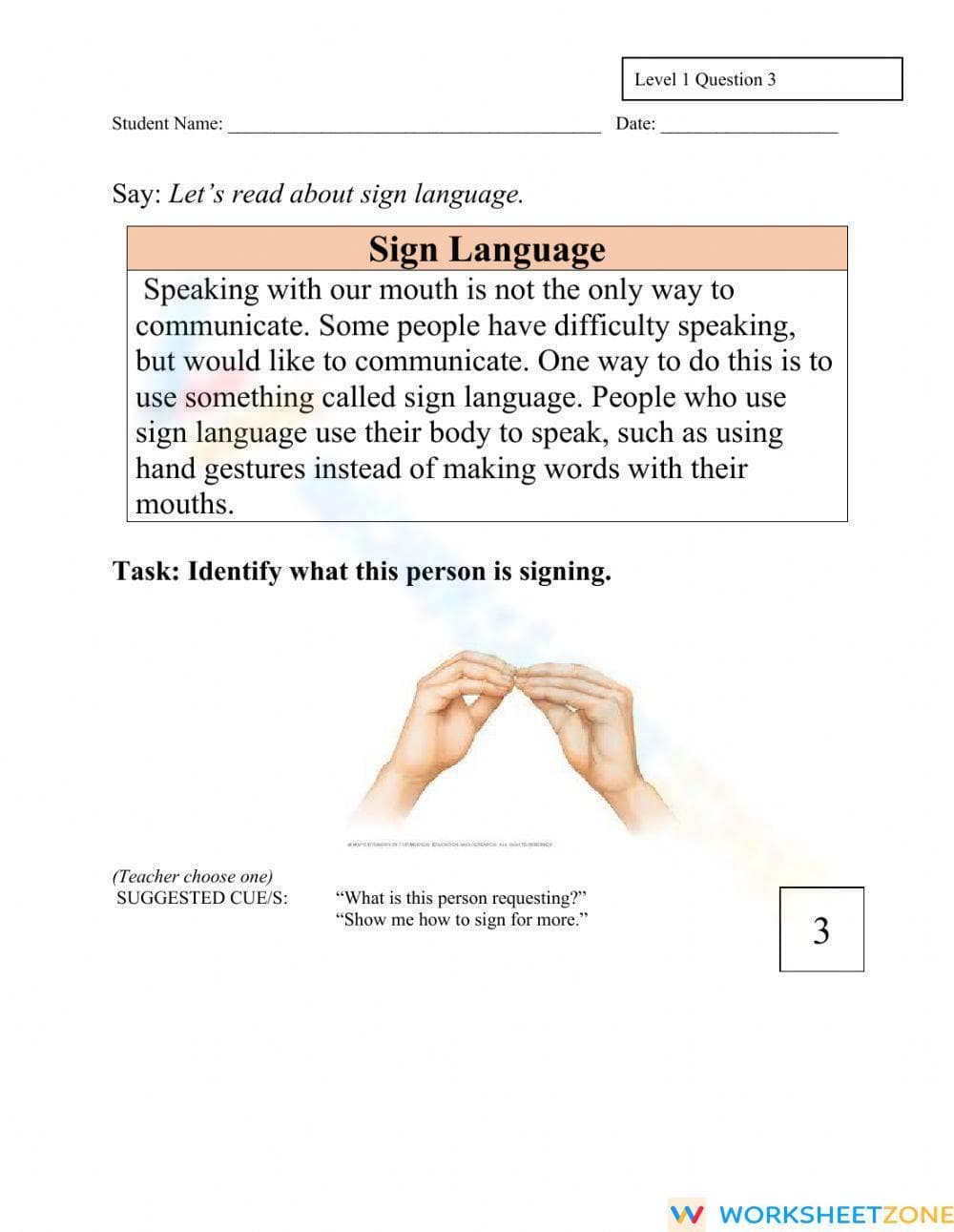
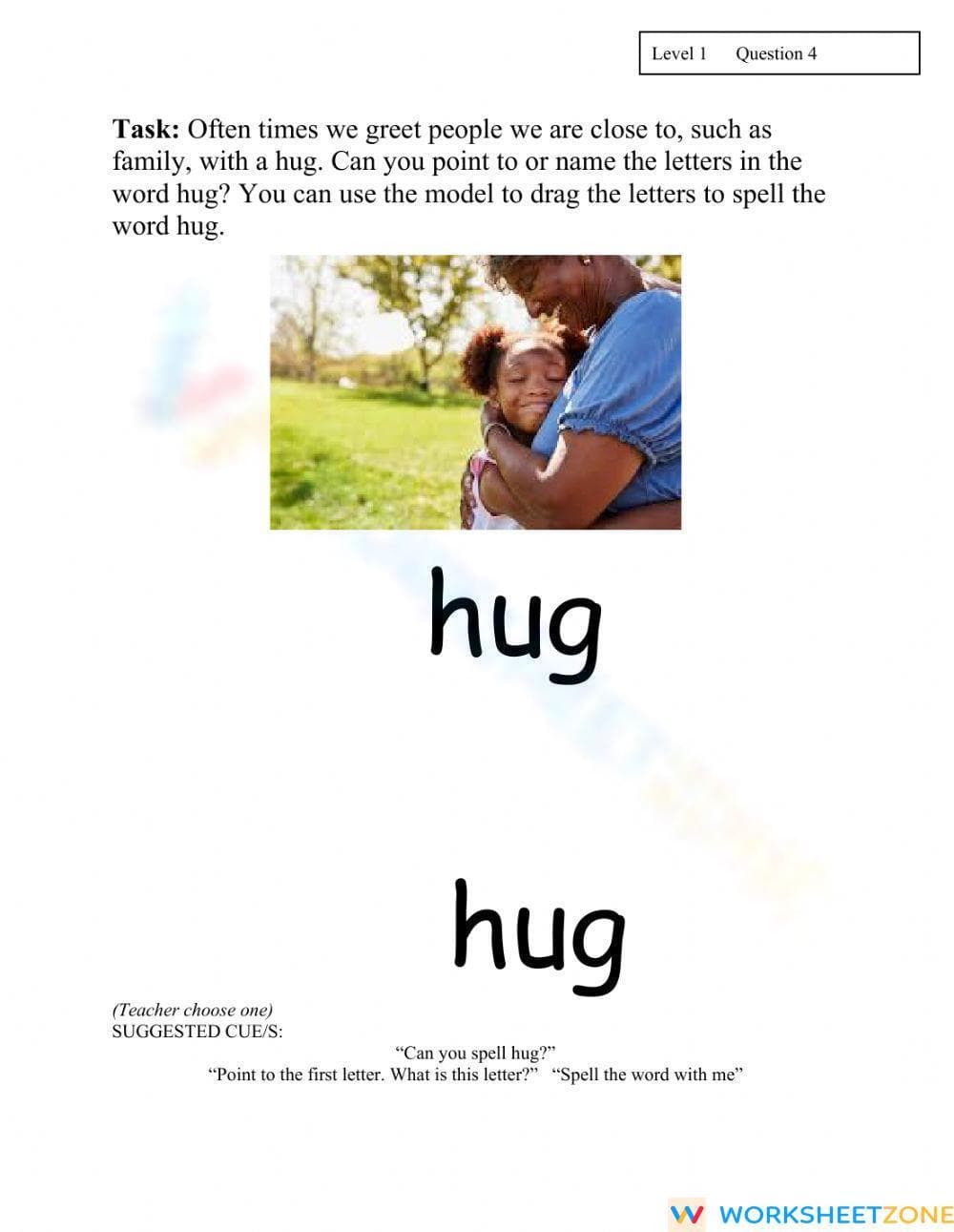

Aligned Grade 1 ELA Assessment: November Skills Level 1
Paste this activity's link or code into your existing LMS (Google Classroom, Canvas, Teams, Schoology, Moodle, etc.).
Students can open and work on the activity right away, with no student login required.
You'll still be able to track student progress and results from your teacher account.
This Grade 1 ELA assessment provides a structured way to evaluate foundational communication and literacy skills. By focusing on social greetings, active listening, and introductory reading, the worksheet helps teachers identify student progress in key developmental areas. Students demonstrate their understanding through visual identification and verbal responses to teacher-led prompts, ensuring a clear snapshot of fall-term mastery.
At a Glance
- Grade: 1 · Subject: ELA
- Standard:
CCSS.ELA-LITERACY.SL.1.1— Follow rules for discussions, including listening to others and responding to greetings- Skill Focus: Social Communication & Listening
- Format: 4 pages · 4 tasks · Teacher cues included · PDF
- Best For: Formative fall assessment and IEP progress tracking
- Time: 10–15 minutes
This assessment features 4 pages, each dedicated to a high-priority communication skill. The layout includes clear visual anchors and "Level 1" indicators. Teachers will find "Suggested Cue/s" at the bottom of each page to standardize the administration. Tasks cover appropriate greetings, eye contact, a sign language passage, and a phonics-based spelling exercise.
The worksheet provides evidence of mastery across sub-skills within the Speaking and Listening strand. Each task maps to an observable behavior, such as identifying a greeting. The "Suggested Cue/s" act as a prompt system, allowing teachers to record whether a student required direct questioning or modeling. Scores can be entered directly into gradebooks or IEP progress notes.
Standards Alignment
The primary alignment is `CCSS.ELA-LITERACY.SL.1.1`, which requires students to participate in collaborative conversations. Specifically, it addresses following rules for discussions, such as listening with care. The sign language passage also supports `CCSS.ELA-LITERACY.RI.1.1`. Both standard codes can be copied directly into lesson plans, IEP goals, or district curriculum mapping tools.
How to Use It
Use this assessment in November as a formative check-in. Administer it 1-on-1 to accurately observe student responses. During the assessment, use the teacher cues to gauge support levels. A useful observation tip is to note whether the student maintains eye contact during the "listening" task. Completion typically takes 10 to 15 minutes.
Who It's For
This resource is designed for Grade 1, but works for Kindergarten extension or Grade 2 review. It is an ideal tool for SLPs and Special Education teachers focusing on social-emotional learning goals. This worksheet pairs naturally with a classroom anchor chart about "Whole Body Listening" or a lesson on non-verbal communication.
According to the RAND AIRS 2024 analysis, targeted assessments in early childhood education are essential for mapping the trajectory of social-emotional and communicative development. This Grade 1 November Assessment focuses on CCSS.ELA-LITERACY.SL.1.1, providing educators with a structured framework to evaluate how students internalize social norms like greetings, active listening, and non-verbal communication. By utilizing suggested teacher cues, the worksheet bridges the gap between receptive understanding and expressive application. Research indicates that formative assessments which incorporate multi-modal elements—such as sign language and visual cues—yield a more accurate representation of a learner's mastery than traditional text-only tests. This resource ensures that foundational literacy and communication benchmarks are met through 4 specific tasks, allowing for data-driven instructional adjustments. Standardized alignment with CCSS frameworks permits this tool to be integrated directly into district-wide curriculum mapping and IEP progress monitoring systems for diverse learners.


