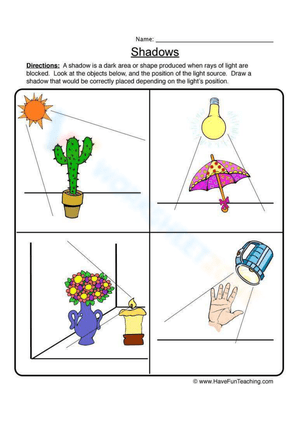
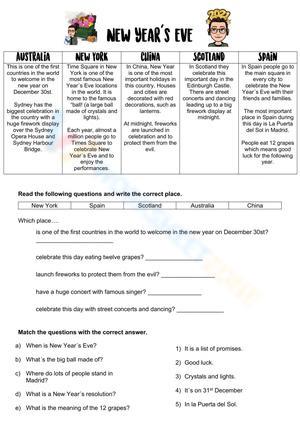
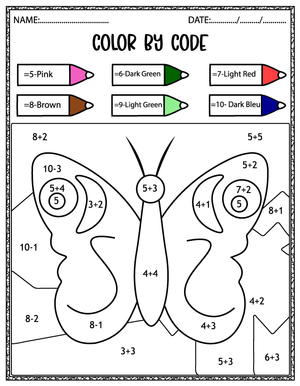
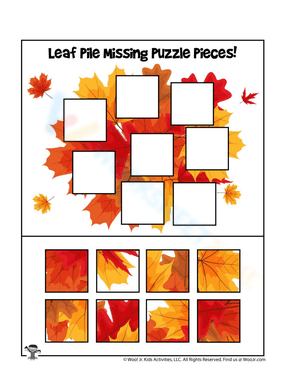
These 1st grade others science worksheets resources cover the broad mix of foundational topics—five senses, living and nonliving things, weather, plants, animals, seasons—that appear throughout the year without belonging to one tightly defined unit. What teachers actually get is a bank of printable pages organized around the classification and observation work that forms the backbone of early science instruction.
Concepts and Task Types Across the Set
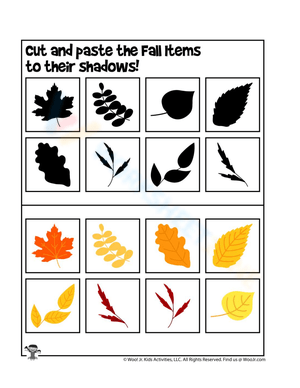
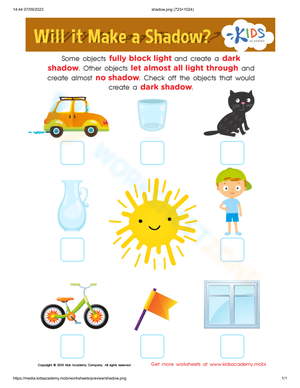
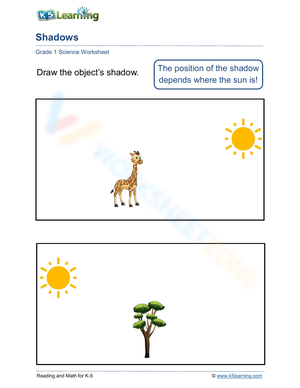
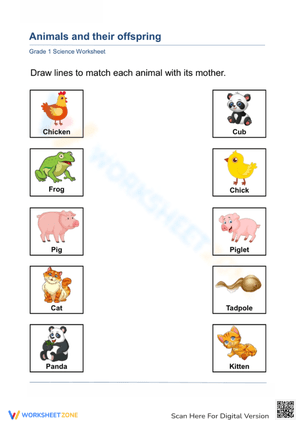
Each worksheet isolates a single action: label, sort, match, circle, or draw and identify. That narrow focus matters in Grade 1 because reading multi-step directions while also tracking a visual layout fragments the attention students need for the actual science concept. A page that asks students to sort eight pictures into "living" and "nonliving" columns does one thing—and at this age, one thing done carefully is more instructive than three things done quickly.
- Five senses: Matching each sense to its body part, and identifying which sense applies to a given object—smell for a candle, touch for a pinecone.
- Living and nonliving things: Picture-based sorting with two labeled columns; some worksheets in the set add a third category for "once living."
- Plant parts: Labeling diagrams using a word bank that includes roots, stem, leaves, and flower—with the diagram oriented in varying directions across worksheets to prevent rote memorization of position rather than actual part-to-word understanding.
- Animals and habitats: Matching animals to their environment using pictures rather than paragraph descriptions.
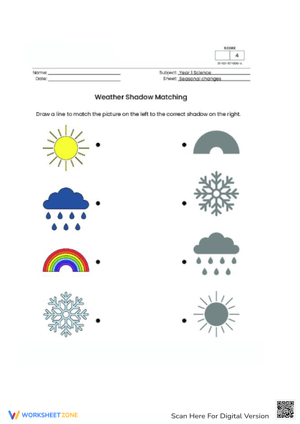
- Weather and seasons: Observation pages where students mark current weather conditions, and matching tasks that connect clothing and outdoor scenes to the correct season.
- Basic properties of matter: Sorting objects by texture, state, or size using image cues, with trace-and-write vocabulary lines for the relevant terms.
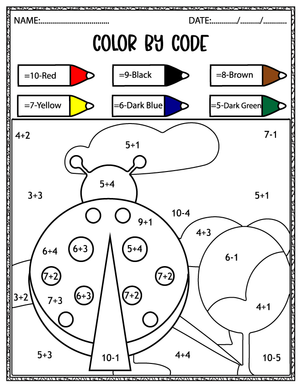
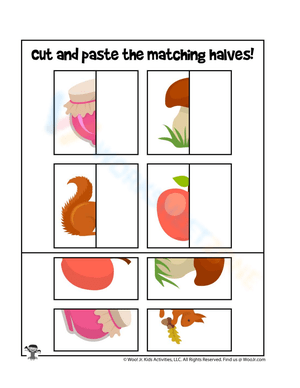
Across the set, teachers will find cut-and-paste sorting pages, labeled-diagram exercises, trace-and-write vocabulary practice, and short observation recording boxes. None of them require extended written responses. For Grade 1, that means students can focus on recalling and applying the science concept instead of composing sentences while simultaneously trying to hold a new idea in working memory. A well-designed collection of 1st grade others science worksheets keeps the language demand deliberately low so the science thinking can be deliberate instead.
Frequent Student Errors Worth Catching Early
The living and nonliving distinction produces the most reliable misconception in Grade 1. Students who correctly sort a dog and a chair will often classify fire, a river, or a cloud as living because all three move. This isn't guessing—it reflects a genuine and coherent rule the child has constructed: if it moves on its own, it's alive. Worksheets that include fire or moving water as answer choices surface this reasoning quickly. When a student marks the river as living, that error is a starting point for a brief whole-class conversation, not just a mark in red. The worksheet has done its job by revealing the thinking.
On five-senses pages, taste and smell generate predictable confusion because both activate when eating. A worksheet that asks students to identify which sense is responsible for enjoying pizza—and requires them to choose between nose and tongue—produces genuine disagreement in almost every classroom. That disagreement is worth five minutes of talk time before marking anything wrong.
Plant-labeling worksheets reveal a different pattern: students frequently swap stem and root when the diagram is oriented horizontally or upside-down from the classroom anchor chart. They've memorized the word-to-position pairing from one diagram, not the word-to-part relationship itself. Seeing this in student work is a signal to spend a few minutes with a real plant before reviewing the paper.
How to Work These Worksheets Into Your Lesson Planning
The format that gets the most out of these pages is consistent: concrete or discussion-based activity first, worksheet as follow-up. In Grade 1, a student who has sorted real picture cards into living and nonliving groups before encountering the worksheet version arrives at the page with something to remember. A student who encounters the worksheet cold has to figure out the concept and interpret the task simultaneously, which is where errors compound.
During science centers, running one station with physical manipulatives and a second station with the corresponding worksheet creates a productive pairing. Students who rotate through the hands-on station first complete the printable with noticeably more accuracy and speed. The worksheet records and reinforces what the cards introduced.
One of the most practical uses is the end-of-unit review session—usually the day before a simple check for understanding. One worksheet per topic covered gives students spaced retrieval practice without introducing new content. The familiar format keeps cognitive load low; students spend their attention on recalling concepts, not interpreting directions.
Teachers who maintain a classroom binder of ready-to-use science pages get considerably more flexibility from a set of 1st grade others science worksheets when that binder is organized by task type rather than by topic. Sorting pages in one section, labeling pages in another, observation pages in a third. When a lesson ends eight minutes early or a center rotation needs a quick filler, pulling by task type is faster than hunting by unit theme.
Differentiating These Worksheets Across Student Readiness Levels
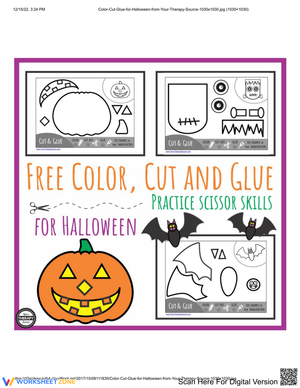
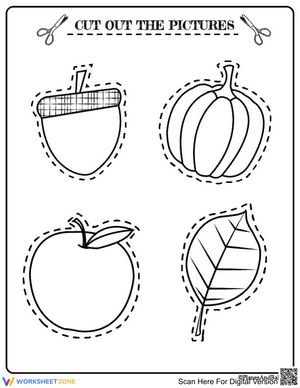
For students still developing fine motor control or early reading skills, the most effective adjustment is usually a lighter version of the same worksheet rather than a different one entirely. Pre-cutting the sorting pieces removes the scissor demand, leaving only the classification task. Reading directions aloud and covering the lower half of a busy page with a blank sheet reduces visual load without altering the science content. Both adjustments take under a minute to prepare.
For students who move through the page quickly, oral extension is faster to facilitate than a second printable. A student who finishes the seasons worksheet can explain one sorting decision to a partner—"I put the raincoat with spring because..."—before the class reconvenes. That brief narration produces more explicit scientific reasoning than most extension tasks would. On plant-labeling worksheets, an easy stretch is to ask the student to draw one plant part not shown on the diagram and label it in their own words.
Standard Alignment
These worksheets address foundational concepts in the NGSS K–2 progression. Living and nonliving sorting tasks build toward 2-LS4-1, which asks students to compare the diversity of life in different habitats—but that standard requires students to already hold a stable category for "living thing," which this material develops. Five-senses pages connect to early science practice standards around using observation to gather information, a thread that runs through every NGSS domain from the earliest grades. Weather observation worksheets extend the work of K-ESS2-1, which kindergarten introduces and many Grade 1 classrooms continue building on before the concept deepens in second grade. These worksheets occupy the reinforcement layer of instruction rather than the performance task layer, giving students the repeated exposure to vocabulary and category knowledge that makes later, more rigorous standards-aligned tasks more accessible.
Frequently Asked Questions
Can these worksheets go home as science homework?
The picture-based format travels well. Because most tasks pair images with short text, caregivers can support their child without needing science-specific vocabulary. A sorting worksheet with clear visuals communicates the task even when an adult's English is limited or when a student reads the page independently. Matching and labeling pages require very little explanation from a family member helping at the kitchen table.
How many worksheets fit into a single science session?
One. First graders who complete a worksheet after a hands-on opener have typically used the focused portion of their science attention for that session. Assigning two or three pages in a row produces rushed responses on the second and third—responses that reflect task fatigue more than understanding. One careful worksheet tells teachers more than three hurried ones.
Are these reliable for substitute lesson plans?
They're among the strongest sub-plan options for Grade 1 science precisely because the directions are visual and brief. A substitute without a science background can manage a five-senses matching page or a weather sorting worksheet without knowing the unit context. Pairing one worksheet with a short read-aloud gives a substitute a complete 20-minute science block with minimal prep on their end. Many Grade 1 teachers keep a printed collection of 1st grade others science worksheets in the sub folder alongside the read-aloud book as a standing part of the emergency plan.