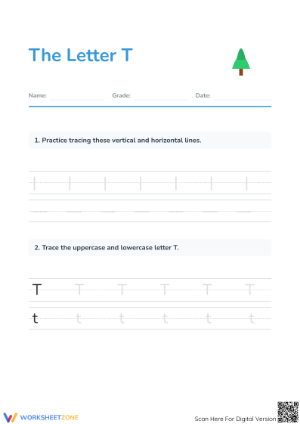
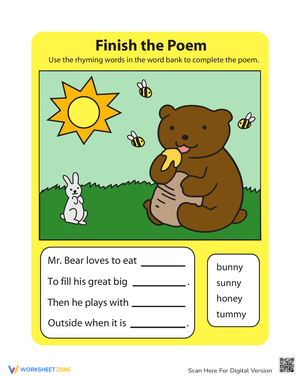
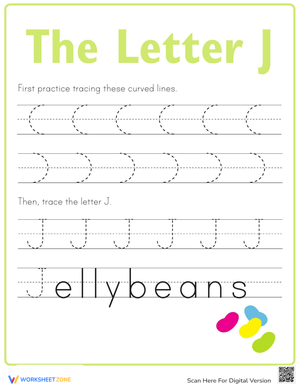
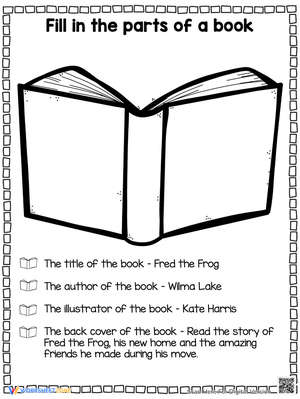
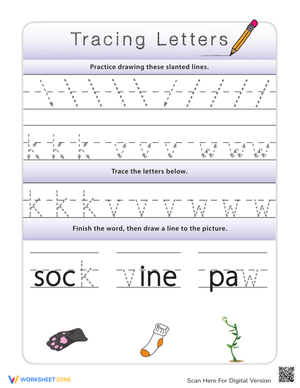
These 1st grade early literacy pdf worksheets give first-grade teachers a ready-made set of targeted practice tools covering phonics decoding, high-frequency word recognition, sentence construction, and early reading comprehension. The set spans the full instructional arc of Grade 1 literacy — from short-vowel CVC words through consonant blends, digraphs, and vowel teams — so teachers can pull the right worksheet at the right moment without building materials from scratch each week.
The Specific Skills Covered Across the Set
Each worksheet targets a defined skill, which matters in first grade because the phonics sequence is genuinely cumulative — a student who hasn't internalized short /a/ will struggle to distinguish pan from pen when short /e/ is introduced. The set addresses four main skill clusters:
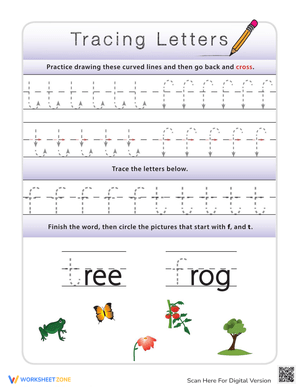
- Phonics and decoding: blending and segmenting CVC words, reading short-vowel word families, working with consonant blends (st-, bl-, cr-), consonant digraphs (sh, ch, th, wh), and vowel teams (ai, ee, oa). Students underline the vowel pattern, sort words into categories, or rewrite a decodable sentence after correcting a misspelled word.
- High-frequency word recognition: activities drawn from Fry and Dolch lists, including tracing, writing from memory, and locating sight words embedded in short decodable sentences — not isolated drills.
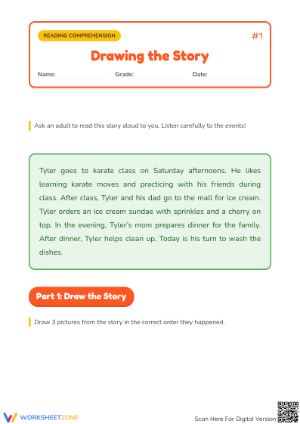
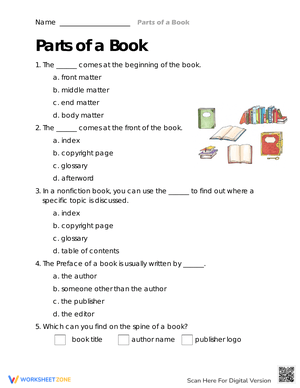
- Early sentence comprehension: short passages of three to five sentences followed by text-based questions that require students to return to the text rather than guess from pictures alone.
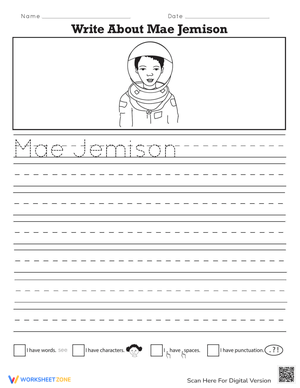
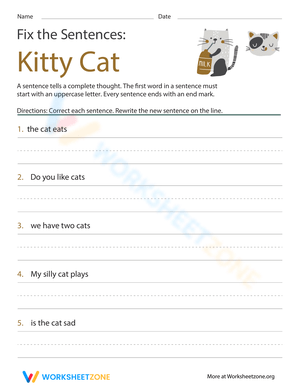
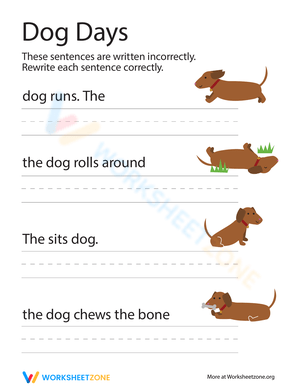
- Sentence construction and syntax: unscrambling word-order errors, adding terminal punctuation, and writing a complete sentence in response to a picture prompt — activities that reinforce the connection between spoken and written language.
Frequent Student Errors Worth Watching For and Addressing
The most consistent decoding error in first grade is not letter-name confusion — it is vowel substitution under time pressure. A student who reads ship correctly on Monday's phonics sort will write "shep" in Tuesday's sentence dictation because the short /i/ hasn't fully consolidated. These worksheets generate enough varied exposure — same phoneme, different word, different activity type — that this fragility surfaces before it becomes a reading habit. When a student marks the wrong vowel on a word-sort worksheet, that paper becomes a record to bring to the next small-group session.
A second pattern worth watching: first graders who have memorized a bank of sight words often over-apply that strategy to decodable words. They will guess where for were or write said when the sentence calls for sad because the visual shape feels familiar. The comprehension worksheets in this set — where a wrong word breaks sentence meaning — make that substitution error visible in a way that isolated word-recognition drills do not.
Why Systematic Repetition Works for This Age
First grade is the year when most students shift from sounding out every letter serially to recognizing chunks — onsets and rimes, common endings, familiar blends — which dramatically speeds decoding. That chunking process requires repeated exposure in multiple contexts, not a single introduction. A worksheet that has a student read train, brain, plain, sort them by spelling pattern, and then write a sentence using one of the words hits the same phoneme cluster three times in three different cognitive modes: reading, categorizing, producing. That repetition-with-variation is what moves a pattern from effortful recall to automatic recognition. These 1st grade early literacy pdf worksheets are built around that principle — each phonics skill appears in at least two distinct activity formats within the same worksheet, so students process the pattern rather than simply complete a rote task.
Recommended Lesson-Planning Strategies for These Worksheets
The most reliable use is as the independent-practice component of a small-group rotation. While the teacher works with a leveled reading group, the rest of the class completes a worksheet matched to the phonics pattern introduced that week. This works because each worksheet has a narrow focus — students aren't reading a full-page menu of instructions; they're doing one kind of thinking for eight to twelve minutes, which is a realistic attention window for six-year-olds.
These 1st grade early literacy pdf worksheets also work well as Monday warm-ups to reactivate skills practiced the previous Friday. Spaced retrieval research consistently shows that a brief retrieval attempt at the start of the week outperforms simply re-doing the same practice from the prior session. A phonics warm-up worksheet takes about five minutes and tells the teacher immediately — before the lesson even begins — which students retained the pattern over the weekend and which need re-teaching. One honest tradeoff: students who are still building fine motor control sometimes spend more time forming letters than thinking about phonics, which is worth noting if written-response items are the primary format on a given worksheet. In those cases, a quick oral rehearsal before students write keeps the cognitive focus on the sound pattern.
Laminating a subset of worksheets and providing dry-erase markers extends their use in literacy centers. Students can practice the same phonics sort or sight-word activity multiple times across the week without consuming additional paper, and the teacher gets an informal snapshot of accuracy during center check-ins.
Standard Alignment
The phonics and decoding worksheets address CCSS.ELA-LITERACY.RF.1.3, which requires students to know and apply grade-level phonics and word analysis skills when decoding words — including consonant digraphs, long vowel spellings indicated by final e, and vowel teams. In classroom terms, RF.1.3 governs the bulk of first-grade phonics instruction. It is what a teacher is working on when she introduces the -ake word family or pulls a small group for blend practice.
Phonemic awareness activities — segmenting spoken words into individual phonemes, blending phoneme sequences — align with CCSS.ELA-LITERACY.RF.1.2. The comprehension worksheets connect to CCSS.ELA-LITERACY.RI.1.1 and RL.1.1, asking students to ask and answer questions about key details in both informational and literary texts. Sentence construction activities support CCSS.ELA-LITERACY.L.1.1 (grammar conventions) and L.1.2 (capitalization and punctuation in sentences).
Differentiating the Worksheets Across Student Levels
For students working below grade level — particularly those who have not yet consolidated short vowels — pulling worksheets from the CVC and short-vowel sections and using them as primary practice material (rather than supplementary) gives those students structured exposure to foundational phonics without the cognitive overload of encountering blends before single-vowel patterns are secure. The narrow scope of each worksheet makes this practical: matching a student's instructional level is easier when each worksheet addresses exactly one phonics feature.
These 1st grade early literacy pdf worksheets extend naturally for students who are working above grade level. Adding an open-ended writing prompt at the bottom — "write two more words with the same pattern" or "use one word from this worksheet in a sentence of your own" — pushes those students toward generative practice rather than rote completion. That extension requires no new materials and takes about thirty seconds to write on the board while other students settle in.
For English language learners, the picture-matching activities on phonics worksheets are particularly accessible because students don't need to read a prompt to engage with the sound pattern. One adjustment worth making: pre-check that the pictured objects are culturally familiar. A picture of a sled for the sl- blend means nothing to a student who has never seen snow, and that vocabulary barrier has nothing to do with the phonics skill being assessed.
Frequently Asked Questions
Do these worksheets follow the Science of Reading framework?
Yes. The activities are built around explicit, systematic phonics instruction — the approach the Science of Reading identifies as essential for early decoding development. Students aren't guessing words from pictures or context; they are applying letter-sound knowledge to decode. Phonemic awareness, phonics, and fluency practice are all represented, which maps directly onto the Simple View of Reading's emphasis on decoding as a foundational component of reading comprehension.
At what point in the year should I introduce the vowel-team worksheets?
Most Grade 1 scope-and-sequence maps place vowel teams in the second half of the year, after short vowels, CVC patterns, consonant blends, and digraphs are secure. A reliable readiness marker: if students are consistently reading short-vowel words in decodable texts without finger-pointing or sounding out each phoneme individually, they are ready to encounter vowel teams. Introducing them too early — before blends are consolidated — tends to produce confusion rather than acceleration.
Can these worksheets be sent home for family practice?
They work well as take-home practice with one caveat: parents need a brief note about what the worksheet is practicing and what correct looks like. A student who completes a blend-sorting worksheet and places half the words in the wrong column will reinforce errors if no one at home catches it. A simple answer key or a two-sentence explanation at the top of the sheet solves this.
How many worksheets per week is reasonable for first graders?
Two to three per week is a workable range for most classrooms — one aligned to the current phonics pattern, one for sight-word maintenance, and one for comprehension or writing if the week's schedule allows. More than that tends to produce completion-focused behavior rather than careful reading, which defeats the purpose of the practice.












 Interactive Worksheet Maker
 Quiz Maker
 Word Search Maker
 Crossword Puzzle Maker
 Word Scramble Generator
 Sentence Scramble Generator
 Handwriting Worksheet Generator
 Name Tracing Generator
 Fill In The Blank Generator