


























Views
Downloads

Essential Letter Formation Practice — Grade 1 Printable
Paste this activity's link or code into your existing LMS (Google Classroom, Canvas, Teams, Schoology, Moodle, etc.).
Students can open and work on the activity right away, with no student login required.
You'll still be able to track student progress and results from your teacher account.
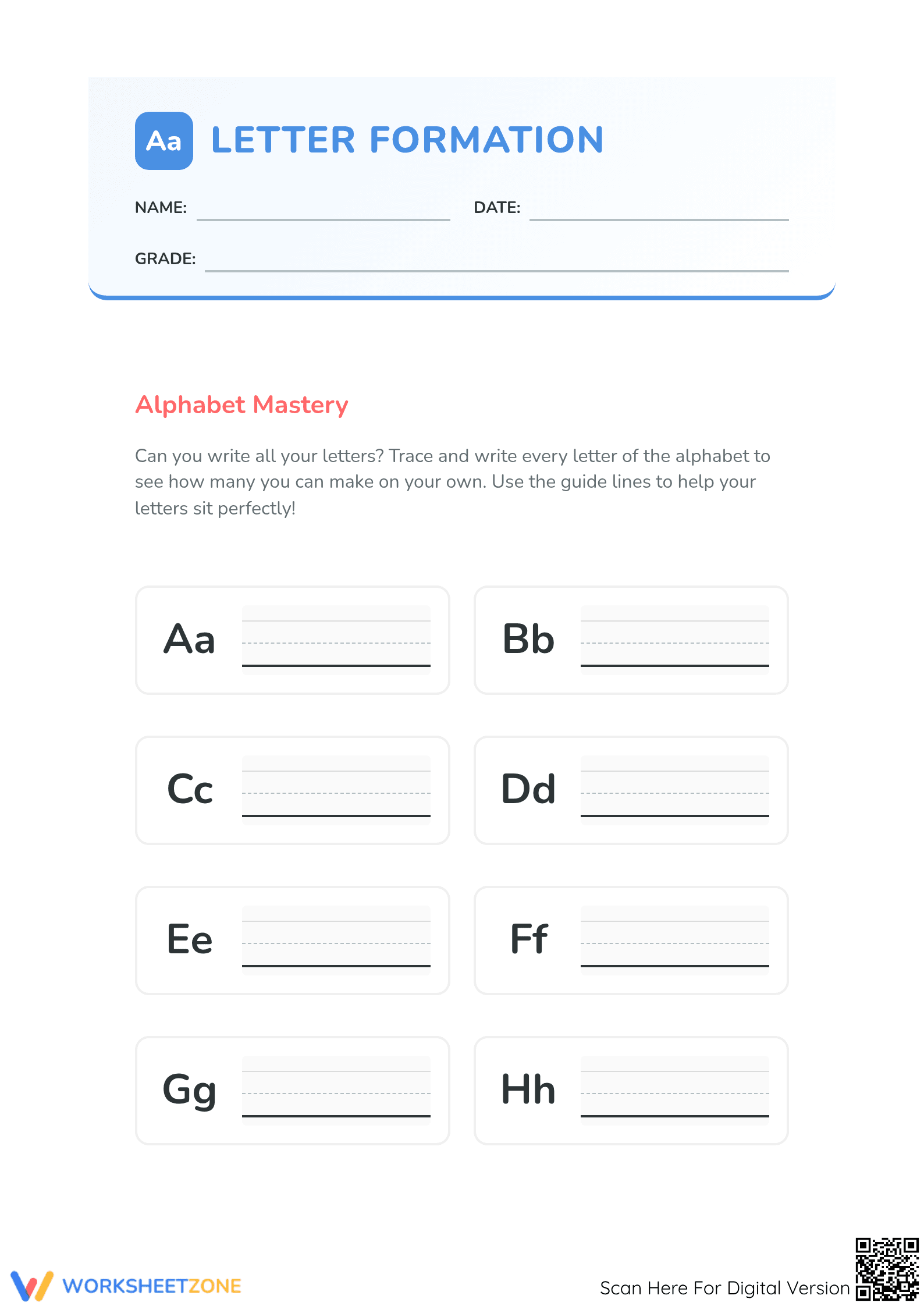
This comprehensive letter formation assessment empowers Kindergarten and Grade 1 students to master the entire alphabet through structured tracing and independent writing. By providing clear guide lines and a logical progression from A to Z, this resource ensures that early learners build necessary fine motor skills for legible handwriting while reinforcing letter recognition.
At a Glance
- Grade: Kindergarten · Subject: Handwriting
- Standard:
CCSS.ELA-LITERACY.L.K.1.A— Print many upper- and lowercase letters with precision and control- Skill Focus: Uppercase and lowercase letter formation
- Format: 3 pages · 27 problems · Answer key included · PDF
- Best For: End-of-unit assessment or baseline handwriting check
- Time: 15–20 minutes
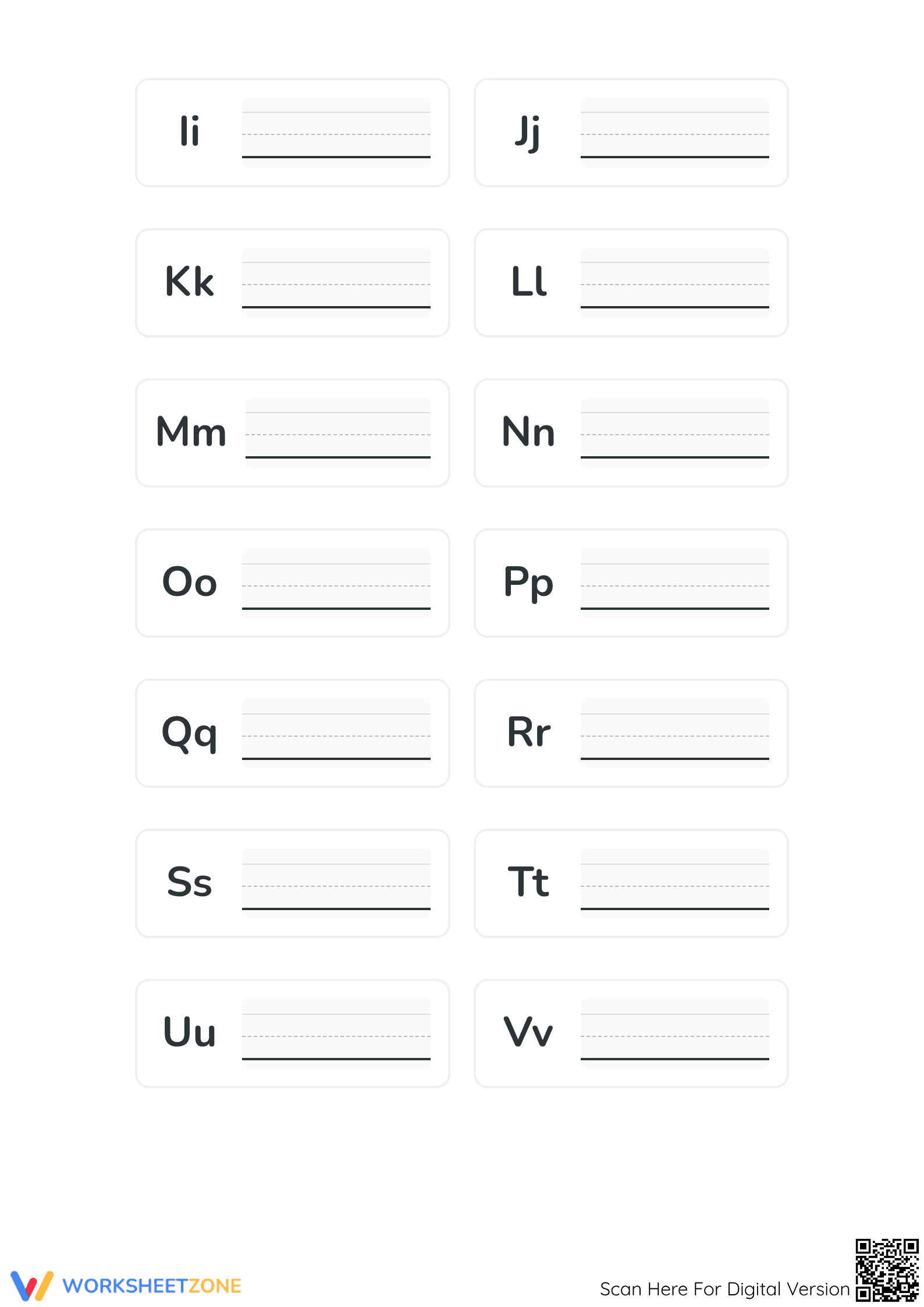
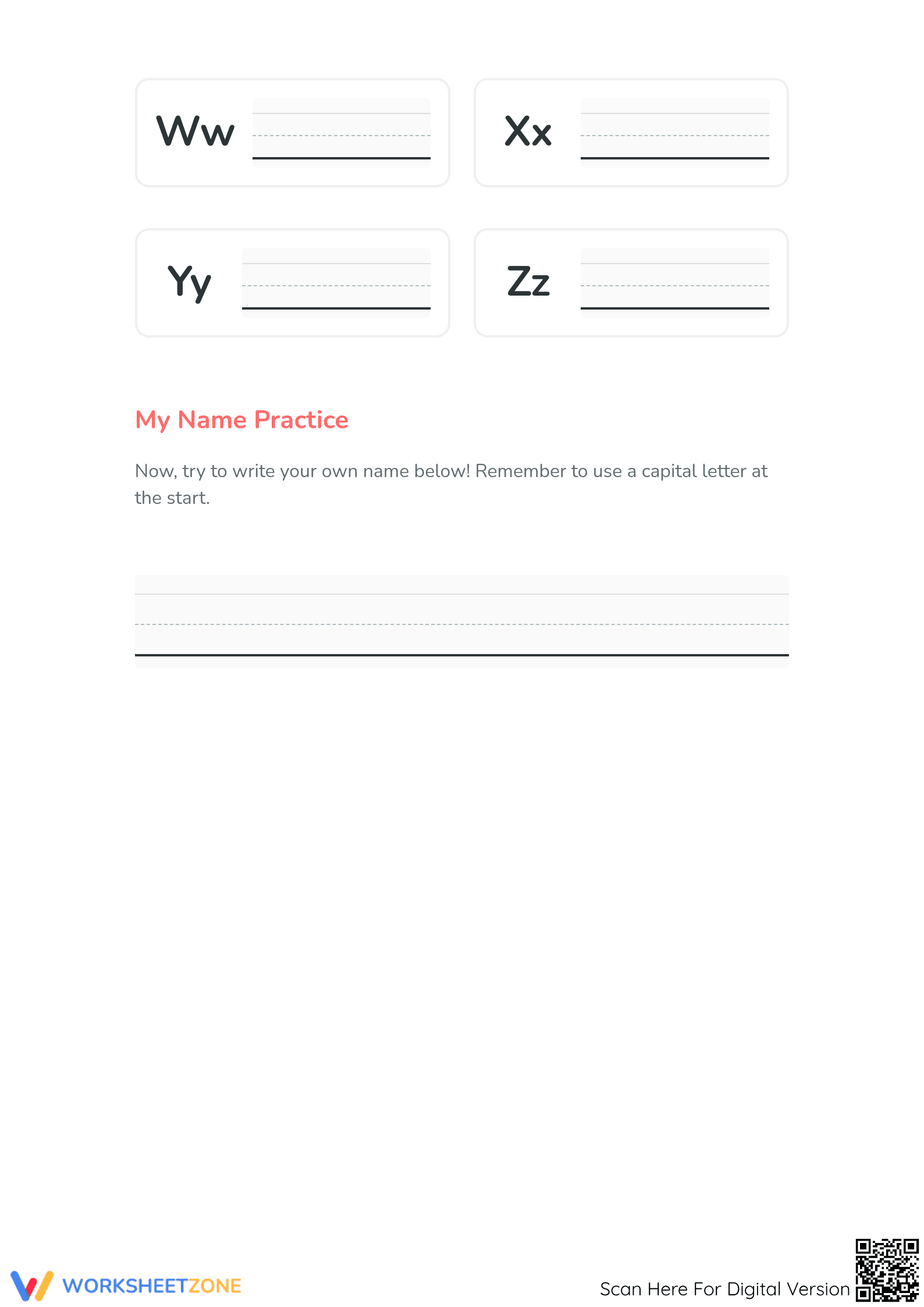
Inside this three-page packet, you will find a clean, distraction-free layout featuring individual boxes for every letter from Aa to Zz. Each box includes a model letter and a dedicated practice area with primary guide lines (top, middle, and bottom lines) to support correct sizing and placement. The final page includes a specialized "My Name Practice" section, prompting students to apply their handwriting skills to their own names while remembering proper capitalization.
Using this worksheet requires absolutely no teacher preparation. Simply print the three-page PDF for your class, which takes seconds. Distribute the packets to students along with pencils; the instructions are self-explanatory, allowing for an immediate start. Use the included answer key to review the 27 tasks in under two minutes, identifying letters that require additional intervention or small-group support.
This resource is directly aligned to `CCSS.ELA-LITERACY.L.K.1.A`, which requires students to "print many upper- and lowercase letters." It also supports `CCSS.ELA-LITERACY.L.1.1.A` for Grade 1 students focusing on printing all letters. Both standard codes can be copied directly into lesson plans, IEP goals, or district curriculum mapping tools to demonstrate compliance with rigorous state and national handwriting requirements.
Use this as a summative assessment after completing an alphabet unit to verify that students can write letters without direct visual models. During direct instruction, you can also use individual pages as a formative check; observe how students grip their pencils and the stroke order they use as they move from tracing to independent writing. Completion usually takes 15 to 20 minutes depending on individual student motor speed.
This packet is designed for Kindergarten and first-grade students, as well as older students in occupational therapy or those requiring IEP accommodations for fine motor development. It pairs naturally with an alphabet anchor chart or a letter-of-the-day passage, providing a concrete way for students to demonstrate their growth in early literacy and mechanical writing skills.
Handwriting is a foundational skill for early academic success. According to the RAND AIRS 2024 report, explicit practice in letter formation is essential for developing the orthographic mapping required for fluent reading. This worksheet facilitates that process with 27 focused tasks that move students from supported tracing to independent production of the 26 letters and their names. By mastering `CCSS.ELA-LITERACY.L.K.1.A` early, students reduce the cognitive load associated with the mechanics of writing, allowing them to focus more energy on composition as they progress. This structured approach ensures every child develops a legible hand, which research shows is positively correlated with higher self-efficacy and better performance on standardized assessments throughout their career. Furthermore, automating these motor movements in Kindergarten provides a durable bridge to future written expression and literacy.


