




























Views
Downloads

Printable Alphabet Match Up Worksheet | Grade K-1 Essential

Paste this activity's link or code into your existing LMS (Google Classroom, Canvas, Teams, Schoology, Moodle, etc.).
Students can open and work on the activity right away, with no student login required.
You'll still be able to track student progress and results from your teacher account.
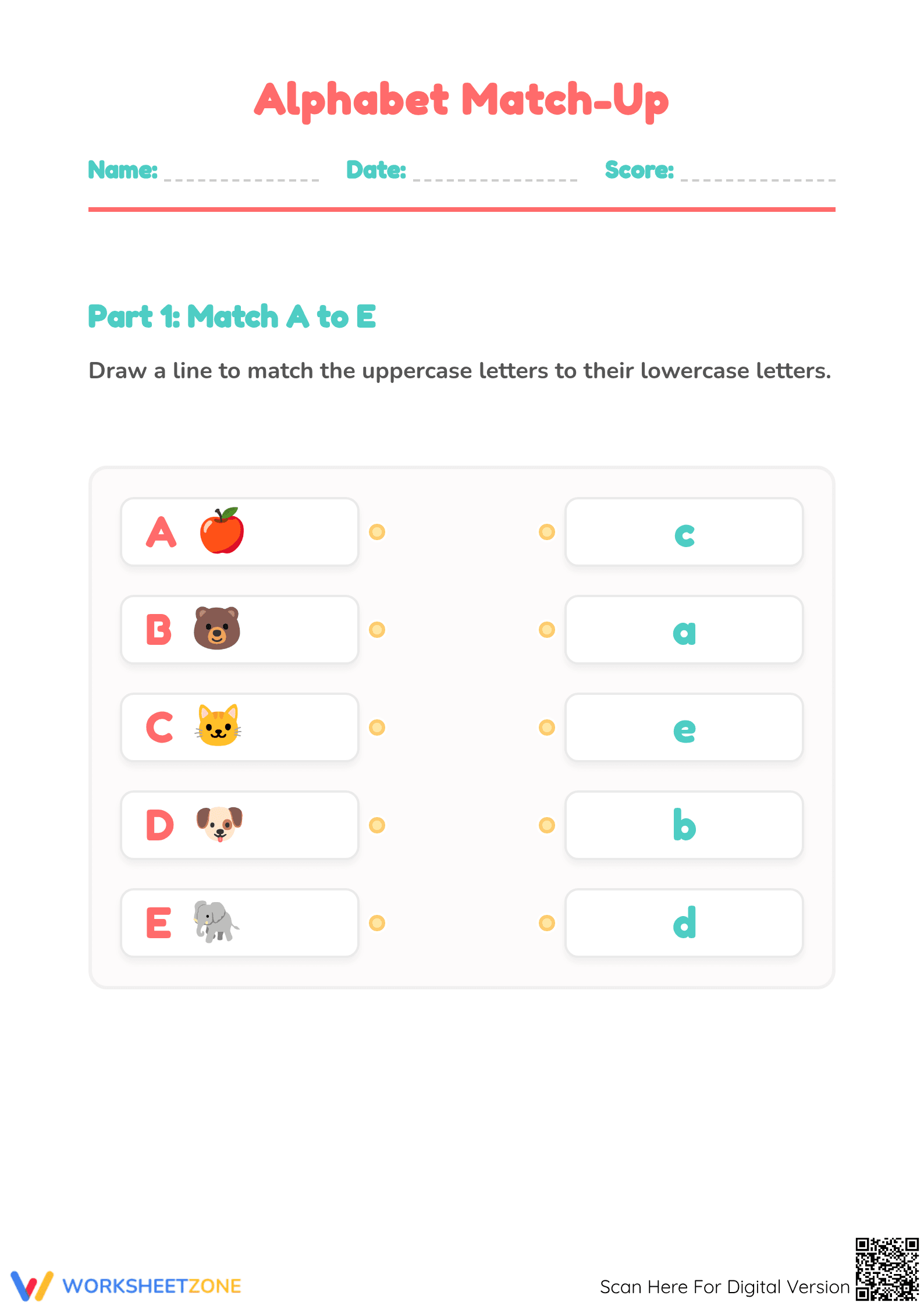
Mastering the alphabet is a foundational milestone for early readers. This Alphabet Match Up worksheet provides a clear, engaging way for Kindergarten and Grade 1 students to practice identifying uppercase and lowercase letter pairs. By connecting visual symbols with familiar beginning-sound images, students build the letter-recognition fluency necessary for future phonics success and reading confidence.
At a Glance
- Grade: Kindergarten · Subject: English Language Arts
- Standard:
RF.K.1.D— Recognize and name all upper- and lowercase letters of the alphabet- Skill Focus: Uppercase and lowercase letter matching
- Format: 2 pages · 10 problems · Answer key included · PDF
- Best For: Literacy centers and independent morning work
- Time: 10–15 minutes
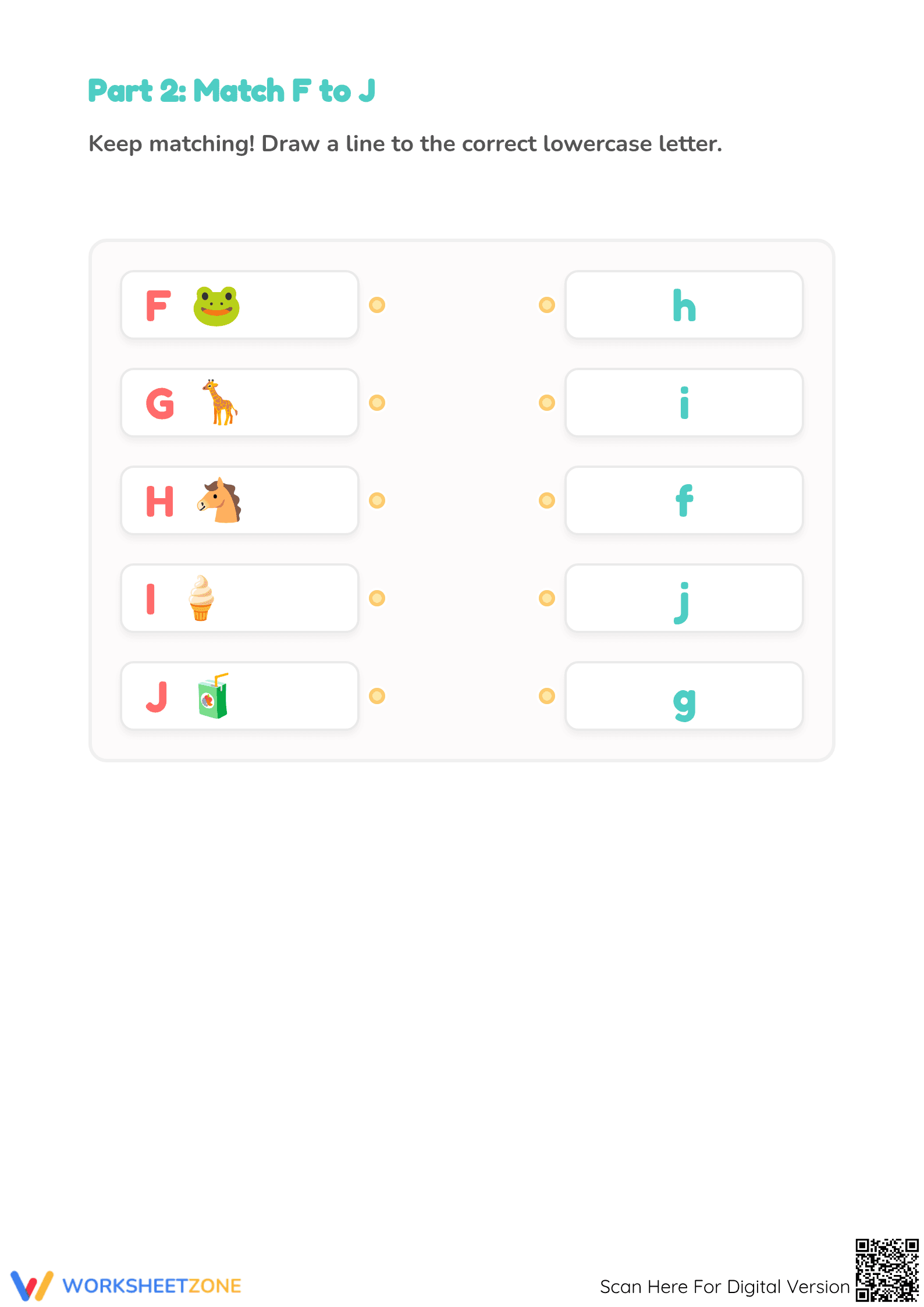
This comprehensive two-page PDF includes 10 distinct matching tasks covering letters A through J. Each problem features a large, colorful uppercase letter accompanied by a representative image—such as an apple for 'A' or a bear for 'B'—to reinforce phonemic awareness. The right column provides the corresponding lowercase letters in a clear, legible font. A complete answer key is provided for quick grading or student self-checking.
Zero-Prep Workflow
This resource is designed for maximum efficiency in busy classrooms. First, print the two-page document (30 seconds). Second, distribute the sheets to students; the instructions are self-explanatory and require minimal verbal direction (1 minute). Finally, use the included answer key to review student work or have students check their own lines during literacy rotations (1 minute). The total prep time is under two minutes, making it an ideal choice for emergency sub plans.
Standards Alignment
The primary focus is RF.K.1.D, which requires students to recognize and name all upper- and lowercase letters of the alphabet. Additionally, the inclusion of beginning-sound imagery supports RF.K.3.A, helping students demonstrate basic knowledge of one-to-one letter-sound correspondences. Both standard codes can be copied directly into lesson plans, IEP goals, or district curriculum mapping tools to ensure instructional accountability and student progress tracking.
How to Use It
Use this worksheet during direct instruction as a guided practice activity to model how uppercase and lowercase letters correspond. Alternatively, assign it as a formative assessment after teaching a specific cluster of letters to gauge student mastery. For a quick check, observe students as they draw lines; hesitating or searching for a pair indicates a need for additional intervention or multi-sensory letter formation practice during small group time.
Who It's For
This worksheet is perfect for Kindergarten students beginning their literacy journey and Grade 1 students requiring a quick review of foundational concepts. It is particularly helpful for English Language Learners (ELLs) who benefit from the visual cues provided by the illustrations. For extended learning, pair this resource with an alphabet anchor chart or a letter-tracing passage to reinforce the connection between visual recognition and motor formation skills.
Effective letter recognition is the strongest predictor of later reading achievement in early childhood education. According to the NAEP (National Assessment of Educational Progress), students who enter first grade with automaticity in identifying both uppercase and lowercase letters are significantly more likely to meet literacy benchmarks by the end of the year. Research analyzed by ScienceDirect TpT Analysis suggests that print-and-go foundational skills worksheets like this Alphabet Match Up reduce teacher burnout while maintaining high instructional fidelity across diverse classroom settings. By aligning directly with CCSS RF.K.1.D, this resource ensures that students move beyond rote memorization toward true alphabetic fluency. Educators can confidently integrate this worksheet into daily literacy routines as a reliable tool for building the essential decoding skills required for lifelong reading success.


