


























Views
Downloads
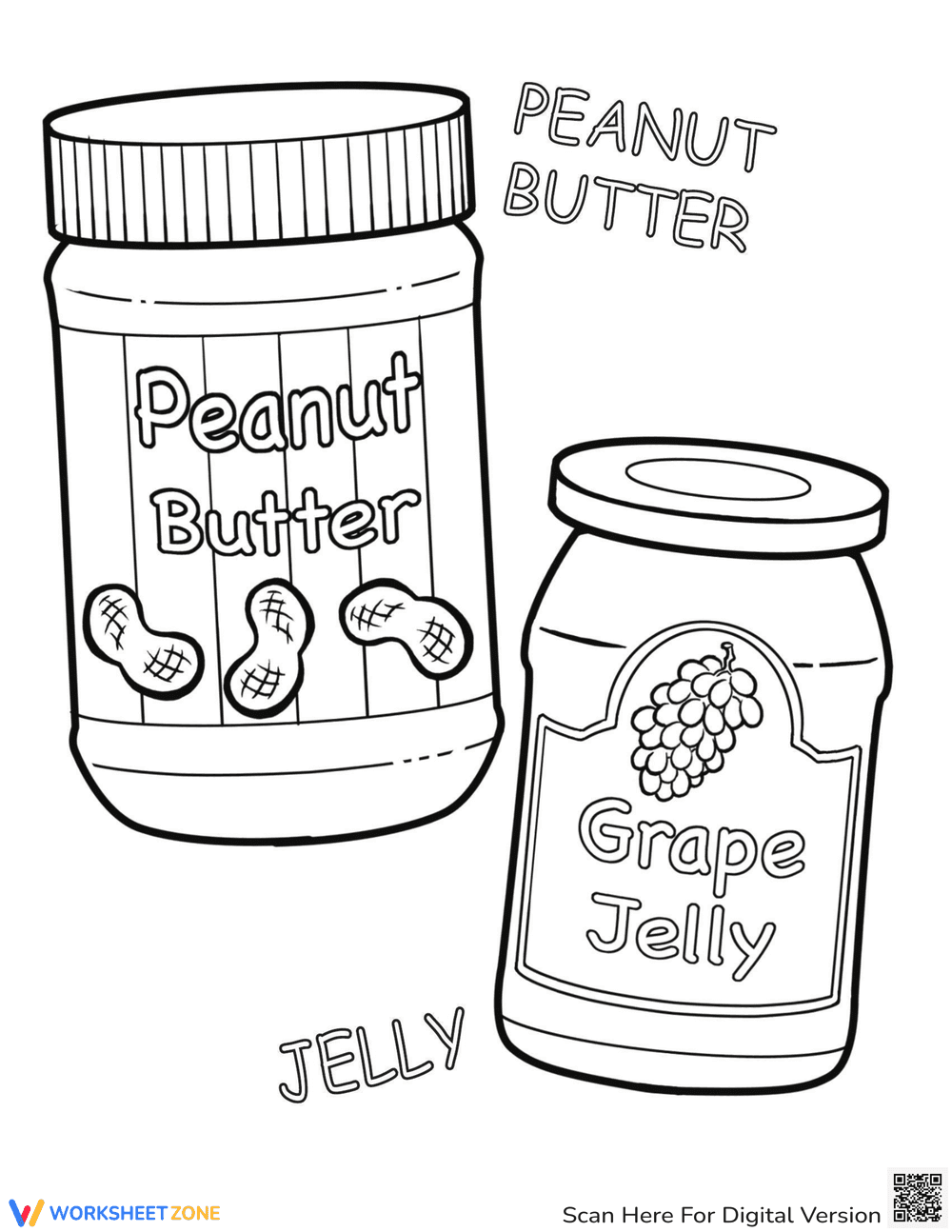

Peanut Butter and Jelly Printable Coloring Page
Paste this activity's link or code into your existing LMS (Google Classroom, Canvas, Teams, Schoology, Moodle, etc.).
Students can open and work on the activity right away, with no student login required.
You'll still be able to track student progress and results from your teacher account.
This printable coloring sheet helps young learners build fine motor control and early literacy skills through engaging food-themed art. Students color detailed illustrations of peanut butter and grape jelly jars while identifying corresponding word labels. This activity reinforces print awareness and vocabulary development in early childhood classrooms.
At a Glance
At a Glance
- Grade: Kindergarten · Subject: Early Literacy
- Standard:
CCSS.ELA-LITERACY.RF.K.1— Recognize print concepts and match words to illustrations- Skill Focus: Fine motor coloring and word recognition
- Format: 1 page · 4 tasks · No answer key · PDF
- Best For: Morning work or fine motor practice
- Time: 15–20 minutes
What's Inside
This single-page PDF features high-quality line art depicting a classic peanut butter jar and a grape jelly jar. The page includes bold, clear text labels ("PEANUT BUTTER" and "JELLY") designed for coloring and letter recognition. The simple layout provides ample space for coloring, making it accessible for preschool, kindergarten, and first-grade students developing pencil grip.
Zero-Prep Workflow
This resource requires zero teacher preparation. First, print the single-page PDF (takes 1 minute). Second, distribute the sheets along with crayons, colored pencils, or markers to your students (takes 1 minute). Finally, review the completed coloring pages to assess student pencil grip and word recognition (takes 2 minutes). The entire workflow requires under 2 minutes of active teacher setup, making it an ideal option for emergency sub plans or transition activities.
Standards Alignment
This activity aligns with the Common Core State Standard CCSS.ELA-LITERACY.RF.K.1, which requires students to demonstrate understanding of the organization and basic features of print. By coloring the labels next to the corresponding jars, students connect written words to visual representations. Both standard codes can be copied directly into lesson plans, IEP goals, or district curriculum mapping tools.
How to Use It
Use this worksheet during morning arrival to settle students and practice fine motor skills, or assign it as a quiet transition activity after lunch. For a formative assessment, observe how students hold their coloring tools and check if they can point to and read the labels "PEANUT BUTTER" and "JELLY" aloud. Most students will complete the coloring page in 15 to 20 minutes.
Who It's For
This worksheet is designed for preschool, kindergarten, and first-grade students who are developing early literacy and fine motor control. You can differentiate the activity by asking advanced students to write the letters on the back of the page. Pair this coloring sheet with a read-aloud book about making sandwiches or a simple sequencing lesson on food preparation.
Early childhood research emphasizes the critical link between fine motor development and early literacy success. According to a study by Fisher & Frey (2014), integrating visual arts with print concepts helps young learners build cognitive pathways for word recognition and reading readiness. This coloring worksheet targets CCSS.ELA-LITERACY.RF.K.1 by pairing clear illustrations of peanut butter and jelly with bold text labels, allowing students to practice print concepts in a low-stakes, creative format. Engaging in coloring activities strengthens the small hand muscles necessary for writing, while the word labels reinforce vocabulary acquisition. Educators can use this resource to support foundational literacy skills, ensuring students connect spoken words to written text. The simple design makes it a versatile tool for early childhood classrooms, supporting diverse learners as they develop essential pre-reading skills.


