1st grade grammar pdf worksheets give teachers a practical way to build language convention skills during the narrow instructional window before independent writing habits calcify. The set described here covers the core ELA language conventions first graders are expected to control by June — nouns, verbs, pronouns, adjectives, capitalization, and end punctuation — with one skill isolated per worksheet so student attention stays on the target.
The Specific Skills Targeted
Each worksheet addresses one convention from the first-grade language strand, and the range covers what students most need before second grade expects them to apply these rules automatically in their own drafts.
- Common and proper nouns: Students sort, identify, and rewrite nouns — then practice capitalizing proper nouns in sentence context, not just in isolation where the rule feels obvious.
- Singular and plural nouns: Activities move from regular plurals (-s, -es) into irregular forms like child/children and foot/feet, which is where most students hit a wall.
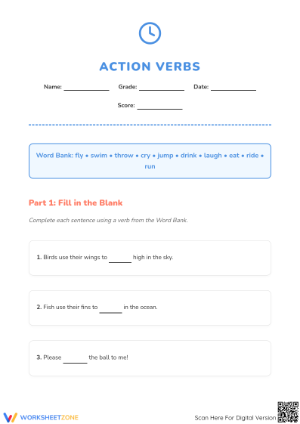
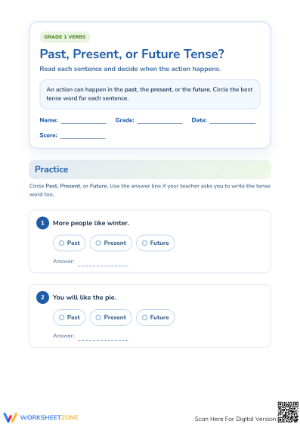
- Action verbs and basic tense: Students underline verbs in sentences, sort actions by when they happen, and choose between present and past forms in cloze exercises.
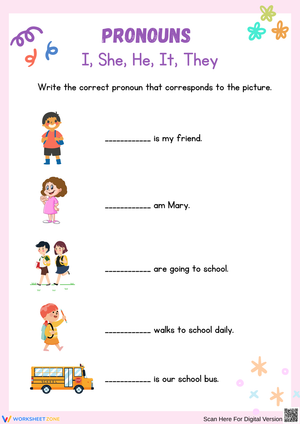
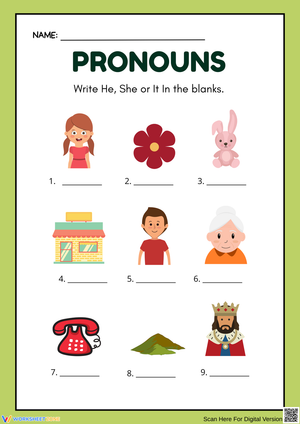
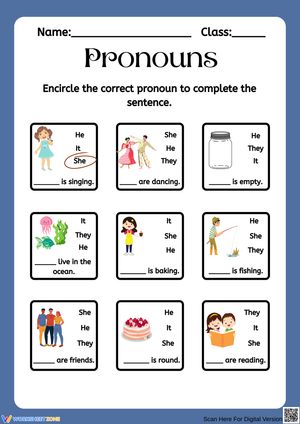
- Personal and indefinite pronouns: Worksheets ask students to replace named characters with the correct pronoun — a task that exposes subject/object confusion quickly.
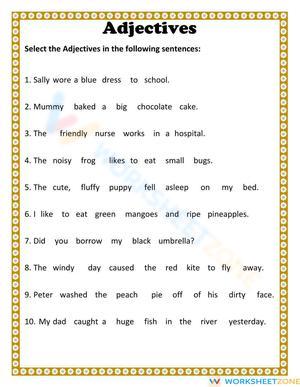
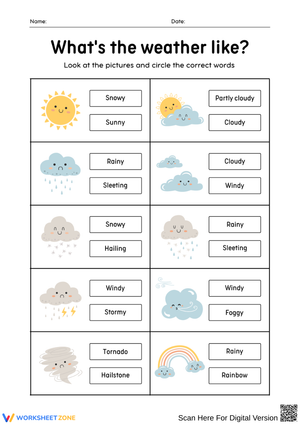
- Adjectives: Descriptive word activities push students past "big" and "small" by requiring them to select an adjective from a list that actually fits the noun, pairing vocabulary growth with grammar work.
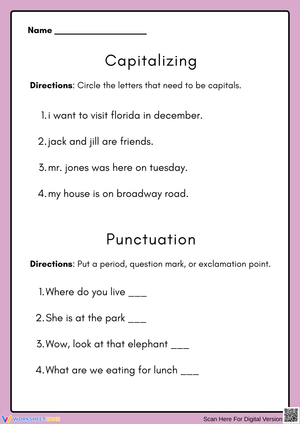
- Capitalization: Separate exercises target the first word of a sentence, the pronoun I, names, and days of the week — treated as distinct rules, not bundled into a single review.
- End punctuation: Students identify sentence types, mark the correct end mark, then rewrite sentences to shift type — turning a statement into a question, for instance.
Student Error Patterns Worth Addressing Before They Calcify
The mistakes that surface in first-grade writing are specific and consistent. Students who correctly capitalize "Tuesday" on an identification exercise will still write "my tuesday was great" in a journal entry, because the rule has not transferred from drill to context. Pronoun errors follow a clear pattern: students overgeneralize "him" and "her" into subject position — "Him went to the store" appears constantly in independent writing and often goes uncorrected because students don't catch the problem when they read their own sentences aloud.
Irregular past-tense verbs reveal another predictable gap. Students write "runned," "goed," and "thinked" because the -ed pattern they've just internalized feels universal. End punctuation produces its own classroom-specific confusion: many students place a period at the end of every line rather than every sentence, a pattern that comes directly from noticing line breaks in picture books. These worksheets surface each of these error types in a controlled format that makes the mistake visible before it becomes a habit students carry into second grade.
Where These Worksheets Fit in the Daily Lesson
The most reliable placement is the eight to ten minutes of morning work while attendance is taken and the classroom settles. A single focused exercise — one noun-sorting task, one end-punctuation worksheet — done consistently across a week produces more retention than a longer Friday grammar block. The gradual release model applies here: model two or three items on the document camera, release students to try two items with a partner, then have them finish independently. That sequence takes about twelve minutes and turns the exercise into an actual lesson rather than seat work.
For centers, each worksheet works best when a concept is in the review phase rather than the introduction phase. A student working through 1st grade grammar pdf worksheets at a station is practicing something already seen — the station is not where new content gets introduced. Because the PDF format prints cleanly regardless of printer, teachers can slide printed sheets into protective sleeves and use them as dry-erase activities, which extends the life of each worksheet and adds a novelty factor that genuinely holds first-grade attention. After whole-class instruction, collecting one completed worksheet as a formative check reveals which students need reteaching — and the pattern of wrong answers tells you more than the score does.
Standard Alignment
These worksheets align to CCSS ELA Language Standards L.1.1 and L.1.2. L.1.1 governs grammar and usage — nouns, pronouns, verbs, adjectives, conjunctions, and determiners — and L.1.2 covers writing conventions: capitalization, punctuation, and spelling. Both standards appear on first-grade report cards and feed directly into L.2.1 and L.2.2 the following year, which require students to apply these same conventions with increasing independence and without reminders. Because each worksheet isolates one sub-standard — L.1.1a through L.1.1j are distinct enough to warrant separate exercises — teachers using standards-based grading can map results to specific codes without difficulty.
Adjusting for the Full Range in a First-Grade Room
Students reading below grade level often struggle with grammar exercises not because they misunderstand the target convention but because the sentences on the page contain too many unfamiliar words. Reading the sentence aloud before students pick up a pencil removes that barrier without altering the grammatical task. Pairing the worksheet with a desk reference — a noun anchor chart, a pronoun card — keeps cognitive load on the grammar skill rather than on decoding the instructions.
For students who have already internalized the target rule, the productive move is synthesis rather than more repetition. Instead of completing another noun identification exercise, they write three original sentences that each include a proper noun, an action verb, and a descriptive adjective — then trade with a partner to check capitalization and end punctuation. That extension uses 1st grade grammar pdf worksheets as a launching point, and the writing produced gives the teacher authentic evidence of transfer, not just performance on a controlled task.
Frequently Asked Questions
What grammar concepts should first graders control by the end of the year?
By June, students are expected to identify and use common and proper nouns correctly in writing, form regular and several irregular plural nouns, use personal and indefinite pronouns in the correct sentence positions, choose adjectives that expand simple sentences, and apply consistent capitalization and end punctuation. Subject-verb agreement in the present tense is also expected. These are conventions students must demonstrate in independent writing — not just on identification exercises.
How many worksheets should students complete each week?
Two to three focused exercises per week is the right target. More than that shifts the balance toward drill and away from the authentic writing tasks where these conventions need to appear. Each worksheet works best when it directly precedes or follows a real writing activity — not as the main grammar event of the week, but as focused practice that feeds into one.
Can these worksheets serve as assessment data?
Completed 1st grade grammar pdf worksheets tell you whether a student can apply a rule in a controlled, decontextualized exercise — not whether they transfer it when writing independently. Use worksheet results to drive small-group reteaching decisions, then look at student writing drafts to confirm whether the skill has actually moved into authentic use. The worksheet is the diagnostic; the writing sample is the confirmation.












 Interactive Worksheet Maker
 Quiz Maker
 Word Search Maker
 Crossword Puzzle Maker
 Word Scramble Generator
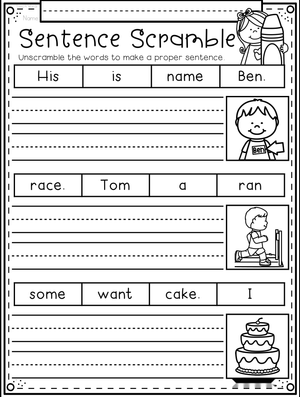
 Sentence Scramble Generator
 Handwriting Worksheet Generator
 Name Tracing Generator
 Fill In The Blank Generator