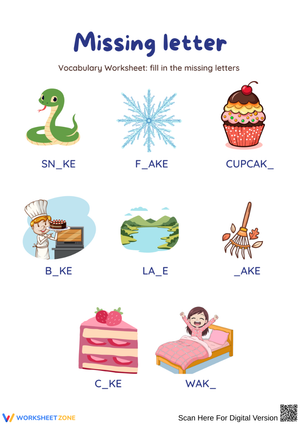
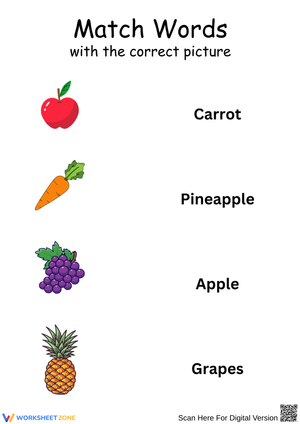
These 1st grade spelling printable worksheets address one of the most consequential transitions in early literacy — the shift from invented, phonetic spelling to the conventional patterns that make written English predictable. First graders who arrive in September comfortable with phonetic guesses often hit a wall when "kat" stops being accepted in writing. This set gives teachers the print-ready, sequenced practice to move students through that shift deliberately and without gaps.
The Specific Skills These Worksheets Build
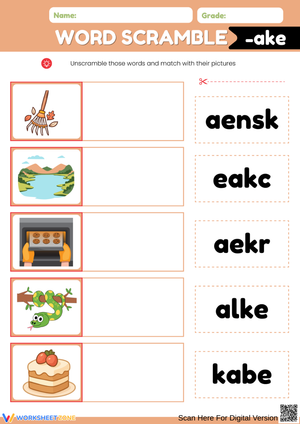
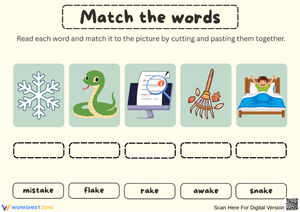
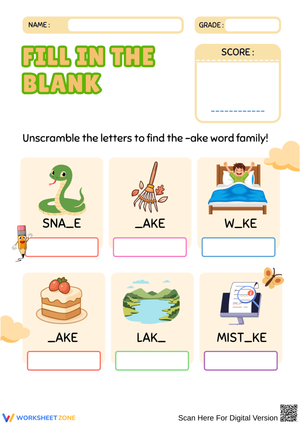
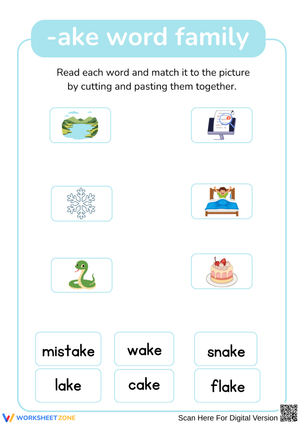
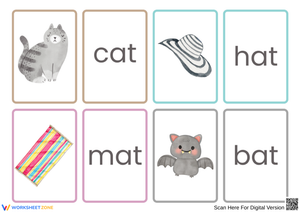
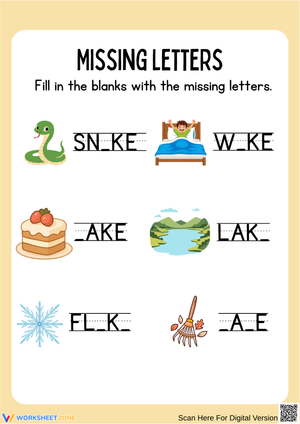
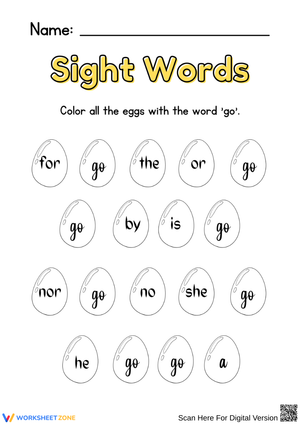
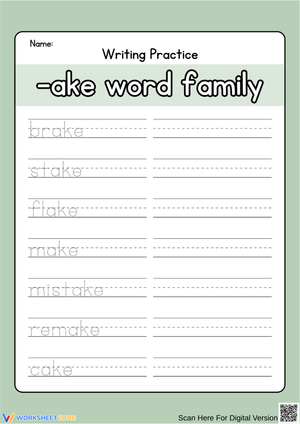
The set covers three domains that first-grade spelling instruction must address simultaneously. Phonics-based patterns move in developmental order: CVC words (cat, pin, hop) anchor the early-year worksheets, followed by consonant blends (st, bl, fr), common digraphs (sh, ch, th), and eventually the CVCe long-vowel pattern — the silent-e construction that surprises students who have worked only with short vowels. High-frequency irregular words from the Dolch and Fry lists appear throughout, because words like "said," "was," and "because" cannot be decoded phonetically and require a different kind of practice. A third strand targets word-family sorting, grouping words by ending pattern (-at, -an, -op) to build the orthographic memory that transfers into independent writing.
Each worksheet draws on one or more of these activity types:
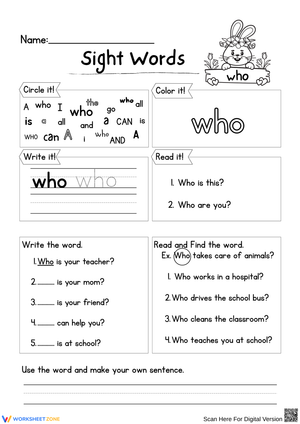
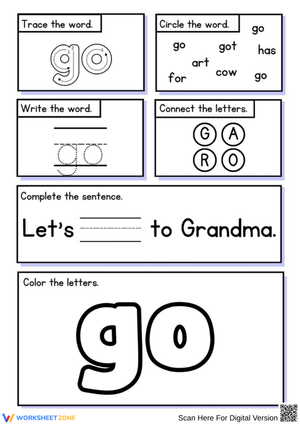
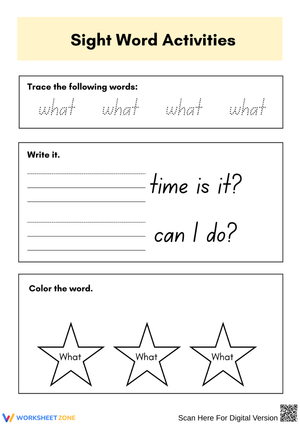
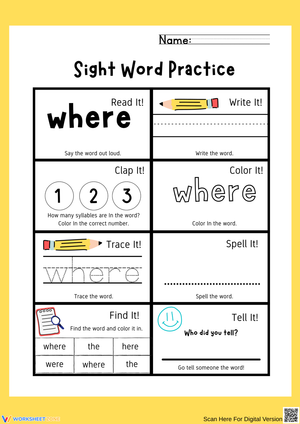
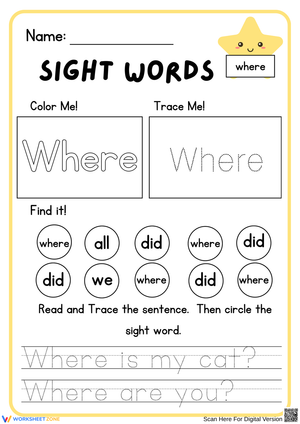
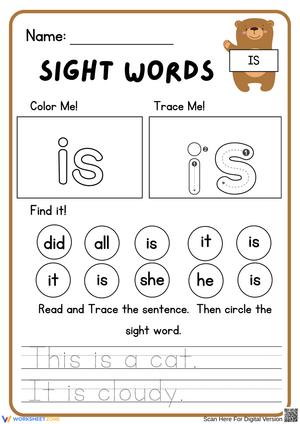
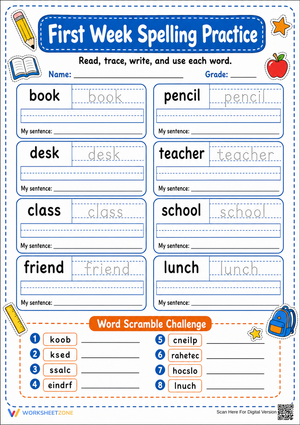
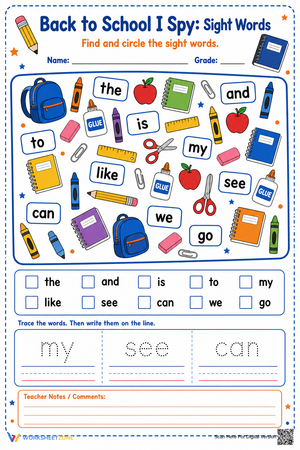
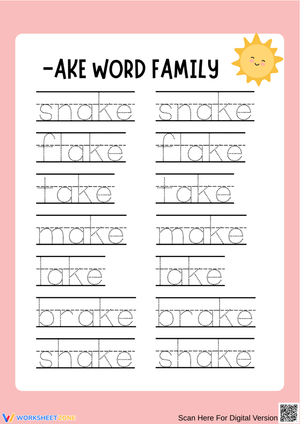
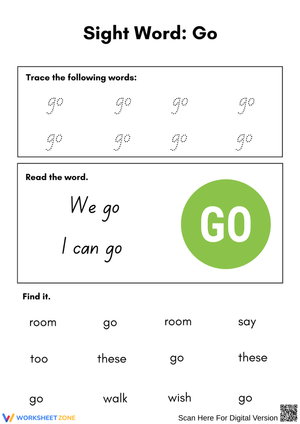
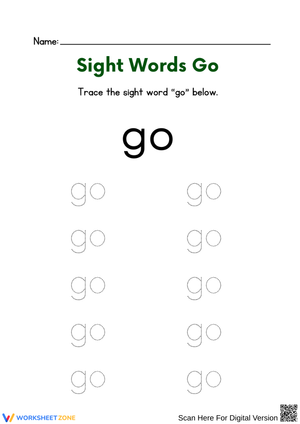
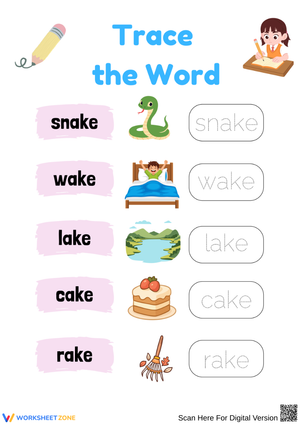
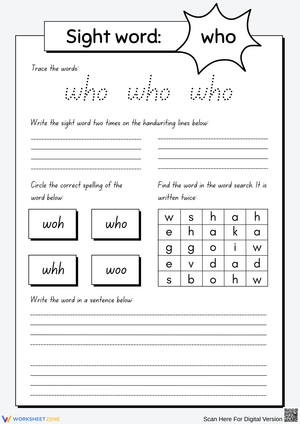
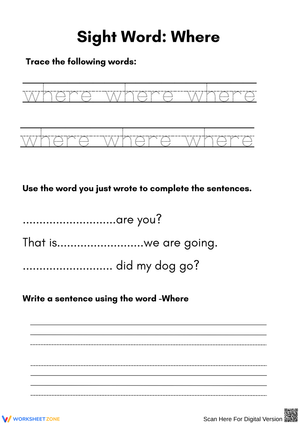
- Trace-and-rewrite sequences that build muscle memory for letter formation alongside spelling
- Word-shape boxes that reinforce height differences between tall, short, and descending letters
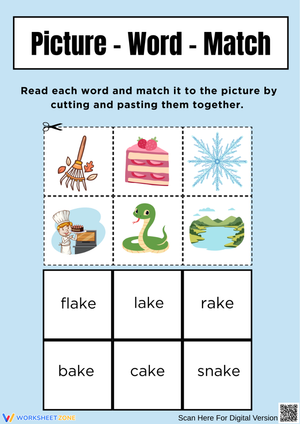
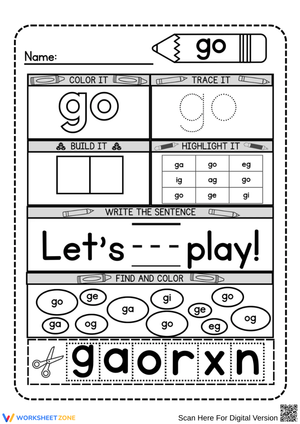
- Cut-and-sort tasks grouping words by vowel pattern
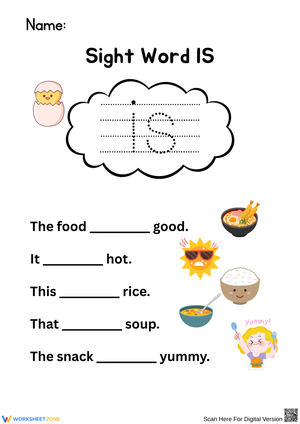
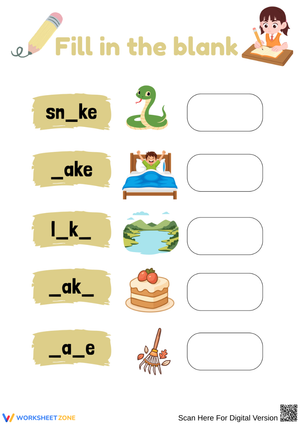
- Sentence-completion items where students write target words in context
- "Cover and write" columns where students attempt spelling from memory, then self-check
Standard Alignment
Common Core State Standards L.1.2 requires first graders to demonstrate command of standard English conventions in writing. Substandard L.1.2.D narrows this specifically to spelling: students must apply conventional spelling for words with common phonetic patterns and for frequently occurring irregular words. Both targets are addressed directly here — not incidentally worked in.
In practical classroom terms, a teacher using these worksheets in September is building toward L.1.2.D through CVC and word-family work. By late winter, the digraph and blend worksheets move the same students through the next tier of the standard. The instructional sequence mirrors the pacing structures most district ELA curriculum guides recommend, which means these worksheets function as a reliable companion to core reading programs rather than a competing resource.
Frequent Mistakes to Watch For and Correct
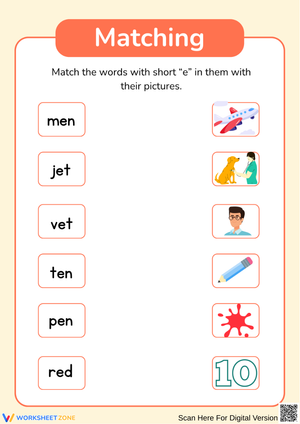
Several error patterns appear predictably in first-grade spelling work, and recognizing them early saves instructional time. The most common is short-vowel substitution in CVC words: a student who correctly identifies the initial and final consonants will still write "pit" for "pet" or "hot" for "hat" because short vowel sounds sit close together acoustically. The minimal-pair comparisons built into several worksheets — pin/pen, cap/cup — sharpen that discrimination in a way that whole-word memorization does not.
Letter reversals are nearly universal at this age. The b/d confusion appears so consistently that worksheets include a small reference anchor in the corner — a dotted-line "b" beside a dotted-line "d" — so students can orient themselves without stopping to ask. A less-discussed but equally common error: students who have learned the CVCe pattern correctly will over-apply it, spelling "back" as "bake." That kind of over-extension tells a teacher the student has genuinely internalized a rule — they just haven't yet learned its limits. Naming that as progress during feedback matters, because students who receive only a correction mark tend to assume they've misunderstood the concept entirely.
How to Fit These Worksheets Into Your Weekly Lesson Plans
The 1st grade spelling printable worksheets that hold up best in practice are the ones placed at the start of the literacy block — the first eight minutes before whole-group instruction shifts students into listening mode. A quick trace-write-check activity at that slot establishes deliberate attention to spelling before new content competes for working memory. Teachers who save the worksheets for Friday review often find students treat them like a test, which raises anxiety and reduces the spaced retrieval effect that makes daily practice valuable in the first place.
Literacy centers are a reliable home for cut-and-sort and word-family worksheets. Laminating the sorting cards and pairing them with a plain recording sheet lets the same materials run for a full week without reprinting. For homework, the trace-and-write format travels better than anything requiring cutting — and a brief note in the margin about the week's phonics focus ("short /e/ words this week") gives parents a reference point without requiring extra communication from you.
Adjusting the Worksheets for a Range of Learners
Students still consolidating letter formation need the trace-first formats, where dotted-outline letters reduce motor demand so they can concentrate on the spelling pattern rather than letter shape. For these students, trimming the weekly list from twelve words to eight keeps the cognitive load at a productive level without removing them from the same phonics sequence as their peers. Students who move through the standard pacing quickly benefit from treating each completed worksheet as a starting point: after finishing the target words, they generate two or three new words that follow the same pattern independently — no additional materials required.
English language learners often need extended time on short-vowel and minimal-pair worksheets specifically. The distinctions that are acoustically straightforward for native English speakers — the difference between /ɪ/ and /ɛ/, for instance — are genuinely difficult for students whose home language uses a different vowel inventory. These worksheets make those contrasts visible on paper in a way that oral-only practice cannot replicate, and for ELL students that visual anchor carries more weight than additional spoken repetitions.
Frequently Asked Questions
How many spelling words per week is realistic for a first grader?
Most Grade 1 classrooms work with eight to twelve words per week — a mix of phonics-pattern words and two or three sight words. Keeping the count at the lower end early in the year lets students learn the underlying rule rather than defaulting to rote memorization of each word as an isolated string. When the list grows too fast, pattern transfer breaks down, and students stop applying what they've learned to words they haven't seen before.
Can these worksheets stand in for a formal spelling program?
These 1st grade spelling printable worksheets work alongside a core literacy program, not in place of one. Where they add consistent value is in the daily review slot that most programs leave under-specified — the five to ten minutes at the start of a literacy block, or the independent work time during centers when students need a focused, low-prep activity they can complete without teacher direction.
What should I do when students rush through without retaining anything?
The tell-tale sign is neat paper and no retention at Friday check. For those students, replace the standard trace-and-write with a "cover and write" column: they see the word once, cover it immediately, and write it from memory. The retrieval attempt — even after five seconds — does more for spelling retention than multiple tracing passes of the same word. That one structural change to how a student uses the worksheet often shifts performance more than adding extra repetitions.
How do I address the b/d reversal without making a student feel singled out?
Normalize it at the class level first — tell every student, not just the ones struggling, that b and d are the most commonly confused letters in first grade, and that keeping a reference nearby is something writers at every level do. Attaching a small desk strip with the orientation anchor to every student's workspace removes the social weight from the habit. These 1st grade spelling printable worksheets print that anchor directly on any worksheet where b and d words appear, so the reminder is always in view without requiring a separate classroom system to maintain.












 Interactive Worksheet Maker
 Quiz Maker
 Word Search Maker
 Crossword Puzzle Maker
 Word Scramble Generator
 Sentence Scramble Generator
 Handwriting Worksheet Generator
 Name Tracing Generator
 Fill In The Blank Generator