These sequencing worksheets resources give K–3 teachers a concrete way to build one of reading's most transferable thinking skills: the ability to track what happened, in what order, and why that order matters. The set covers picture-based three-step sequences for pre-readers through text-heavy multi-step arrangements for students in grades 3 and up, making each worksheet usable across a range of instructional contexts without hunting for separate materials at each level.
The Specific Skills Each Worksheet Targets
Each worksheet focuses on a distinct dimension of sequential thinking rather than treating sequencing as a single, uniform ability. Students work across several task types:
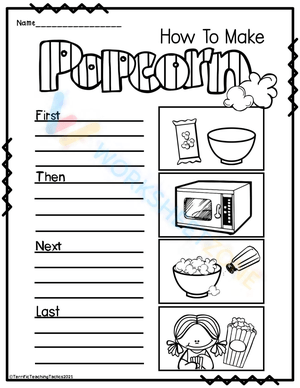
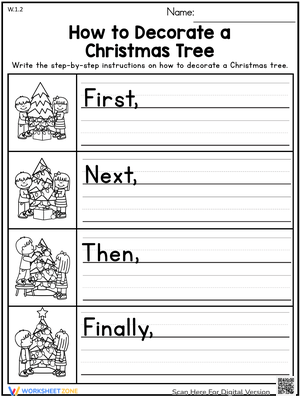
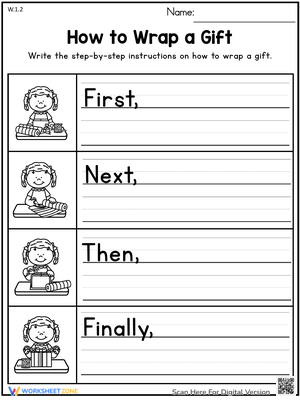
- Arranging cut-apart picture cards in chronological order and labeling each stage with an appropriate transition word
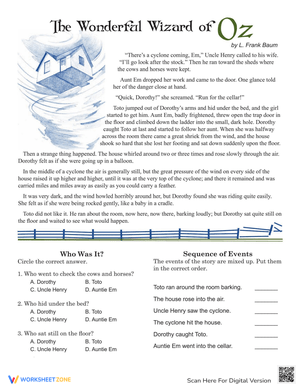
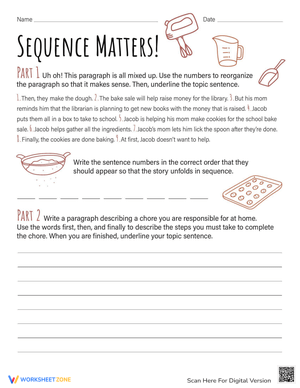
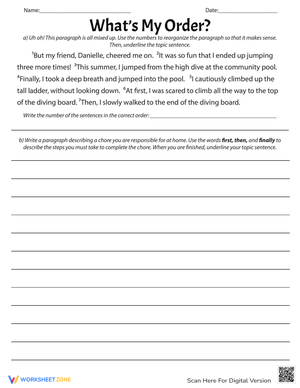
- Reading a short passage and numbering sentences to reflect correct story order
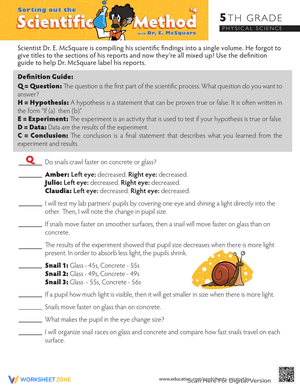
- Identifying the event in a series that doesn't belong and writing a sentence explaining why it disrupts the sequence
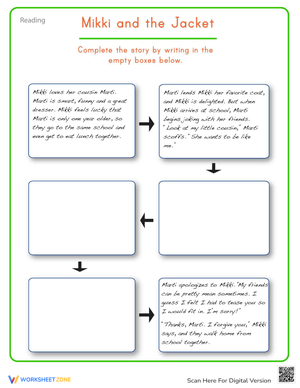
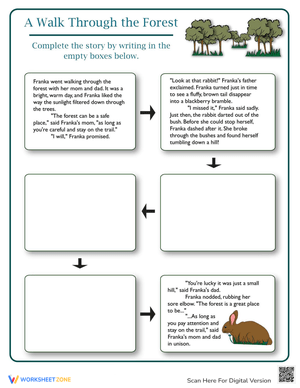
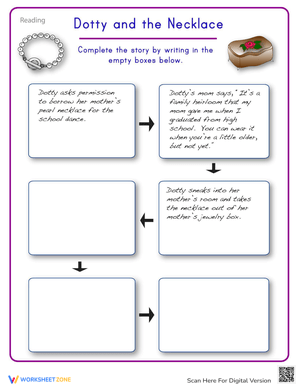
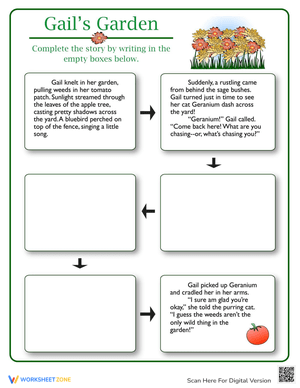
- Completing a partially ordered sequence by supplying the missing middle or final step
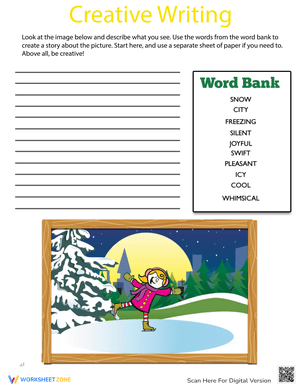
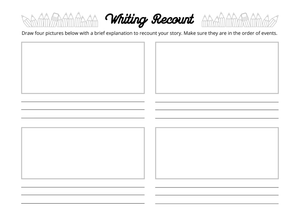
- Using an ordered image set as a prompt to write a brief retelling in full sentences
That last task type — the writing-integrated sequence — surfaces comprehension gaps that cut-and-paste formats miss entirely. A student who arranges five life-cycle images correctly but then writes "the egg hatched, then the frog jumped, then the tadpole grew legs" has demonstrated picture-matching, not genuine understanding of biological sequence. These worksheets' written-response components catch that distinction during instruction rather than on a unit assessment.
Sequential Thinking Across the Curriculum
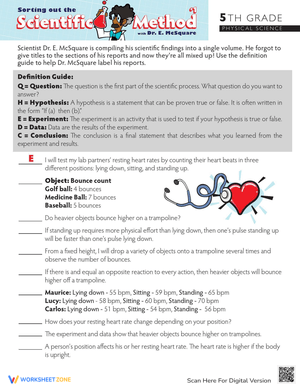
Science and writing teachers draw on this set just as heavily as reading teachers do. In a life-cycles unit, students ordering the stages of metamorphosis are doing the same cognitive work as students ordering plot events — constructing a mental model of a process rather than memorizing isolated facts. In procedural writing, students who skip a pre-sequencing step almost always produce "how-to" directions that loop back on themselves or omit a critical stage. A sequencing worksheets used as the pre-write before a drafting session eliminates most of that structural confusion — students arrive at the blank page with the steps already sorted. In early math, arranging objects by size or ordering numbers on a number line calls on the same underlying logic as story sequencing, and students who practice the skill in one domain transfer it to the others with noticeably less prompting.
Student Mistakes That Surface in This Work
The most persistent error isn't scrambled order — it's anchoring. Students latch onto the scene they found emotionally memorable (the wolf blowing down the house, the caterpillar spinning the cocoon) and build their sequence backward and forward from that anchor point rather than following text logic. On a five-sentence reordering task, this produces one correct placement surrounded by four that are subtly off — an error pattern that's easy to miss during a quick whole-class scan.
A second issue appears specifically in completion tasks where students must supply a missing step. Students who have heard a story before sequence from memory, skipping events the author included but the student didn't find interesting. Asking students to point to the corresponding sentence in the source text before they write their answer slows that reflex and shifts the task from recall to close reading, which is where the real comprehension work happens.
Building These Worksheets Into a Lesson Arc
The most effective placement for a sequencing worksheets is immediately after a read-aloud, while the story is still active in working memory. Students aren't burning cognitive effort on recall — they're directing it at the sequencing task itself. That 10-to-15-minute window between finishing a book and transitioning to independent work is where this kind of structured activity does its heaviest lifting. Saving the worksheet for the following day introduces a memory load that changes what the task is actually measuring.
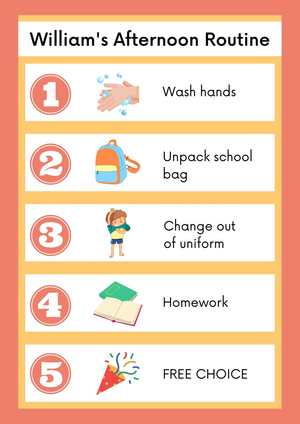
For procedural writing units, introduce the relevant worksheet two or three days before students begin drafting. Students who have physically arranged the steps of a process — and then labeled each with a transition word — arrive at the drafting stage with a working outline already in hand. The blank-page paralysis that derails most primary writers during how-to units largely disappears when the sequence work comes first. The picture-sequence worksheets also work well as Monday morning warm-ups during a new read-aloud unit: a brief three-image routine sequence (making a sandwich, getting dressed) lets students practice the skill without the vocabulary load of unfamiliar story text.
Adjusting the Set for Different Student Levels
Pre-readers and students with limited print exposure start on the picture-only worksheets, which let them demonstrate chronological reasoning without the added weight of decoding. The move to text-sentence versions should come after a student can arrange and explain a three-image sequence aloud without prompting — not before.
Students who find three-step sequences straightforward benefit most from two adjustments: increasing the sequence length to five or six events drawn from a multi-paragraph passage, and switching to completion tasks where they must infer a missing step rather than sort given events. The missing-step format demands inferential thinking — the student decides what must have happened between two events instead of just arranging what's provided. That distinction matters, and most strong readers find it genuinely harder than they expect.
English language learners work particularly well with the picture-to-sentence format because the image anchors meaning while students process the English text. Pairing an ELL student with a sentence-level ordering worksheet before a whole-class discussion gives them a structured entry point — they can reference their ordered cards rather than producing unprompted oral language under time pressure.
Standard Alignment
These worksheets align most directly with CCSS.ELA-LITERACY.RL.1.3 and RL.2.5, which ask students to describe the connection between story events and explain how structure — beginning, middle, end — shapes meaning. At the K–1 level, the picture-sequence worksheets address foundational retelling standards (RL.K.2, RL.1.2) before students have the independent reading fluency to work with text-only formats. Teachers using these resources in science contexts will find connections to NGSS practices around organizing and using information, though the primary standards alignment is ELA. The transition-word focus across the set also supports language standards at each grade band, particularly those addressing the use of temporal words and phrases in writing.
Frequently Asked Questions
Are these appropriate for kindergarten students who can't yet read independently?
Yes. The picture-sequence worksheets require no reading — students arrange images and explain their thinking orally, or write a single transition word beneath each image. A student who hasn't yet cracked the code can complete those worksheets successfully and demonstrate genuine sequential reasoning.
How long does a typical worksheet take to complete during a class period?
Picture-sequence worksheets run roughly 8 to 12 minutes at the primary level. Text-based sentence-ordering worksheets take 12 to 18 minutes, depending on passage length and whether the written-retelling prompt is included. The cut-and-paste versions run a few minutes longer when students are assembling physical cards rather than numbering pre-printed items.
Can this set support students with IEPs who struggle with working memory?
The cut-and-paste and moveable card formats are particularly useful for students with working memory challenges because they externalize the ordering task entirely. Rather than holding the sequence in mind, students move pieces until the arrangement looks right, then verify against the text. A sequencing worksheets in that format functions as a cognitive support structure — students reason about order without taxing recall simultaneously. Pairing the worksheet with a verbal retelling after completion adds an expressive language component that many IEP goals target directly.












 Interactive Worksheet Maker
 Quiz Maker
 Word Search Maker
 Crossword Puzzle Maker
 Word Scramble Generator
 Sentence Scramble Generator
 Handwriting Worksheet Generator
 Name Tracing Generator
 Fill In The Blank Generator