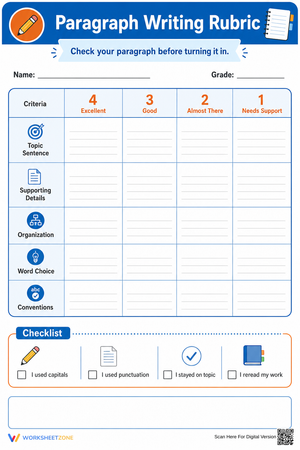
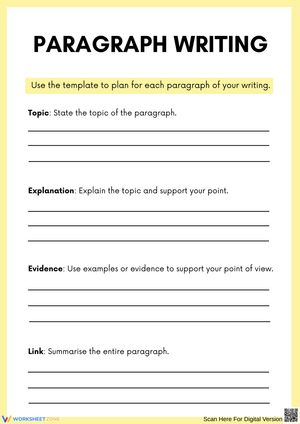
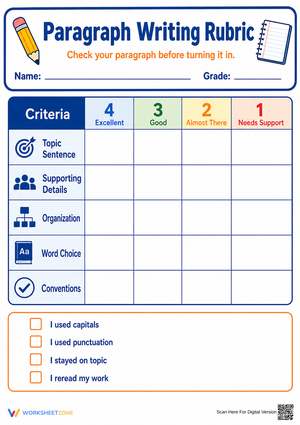
These paragraph structure worksheets give teachers a focused set of practice tools for what is often the most persistent friction point in grades 2 through 5: building a paragraph that actually holds together from opening sentence through closing thought. Each worksheet targets a specific skill — identifying a topic sentence, selecting relevant supporting details, sorting scrambled sentences, or writing an original paragraph from a prompt — rather than asking students to manage the full composing process at once. The set is built for repeated use across a unit, not a single lesson.
The Specific Skills Each Worksheet Targets
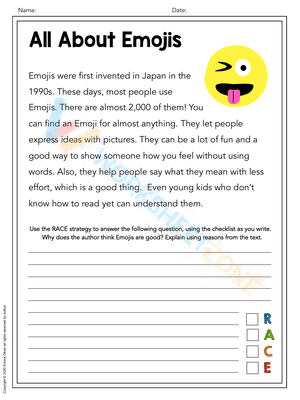
Students work through five distinct task types across the set:
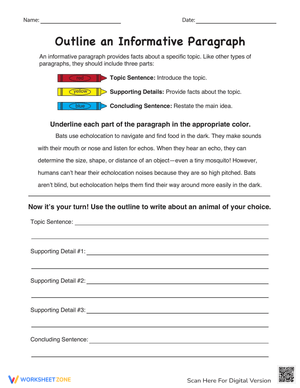
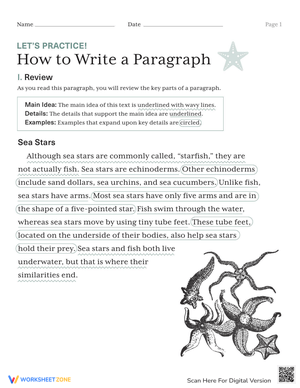
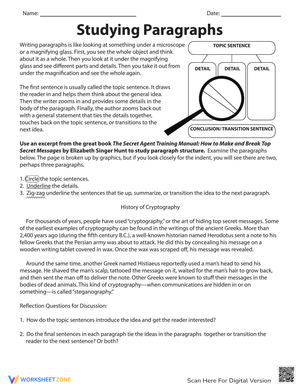
- Topic sentence identification: students read a short paragraph and underline the sentence that announces the main idea
- Relevance sorting: given a topic sentence and a list of six candidate sentences, students mark which three belong as supporting details and which three drift off-topic
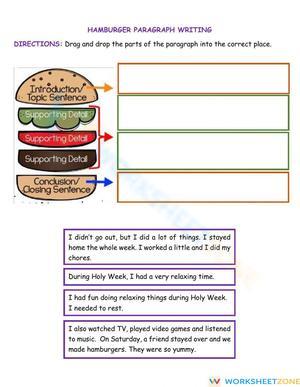
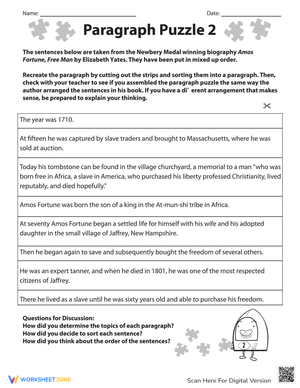
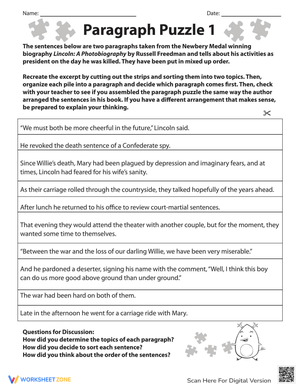
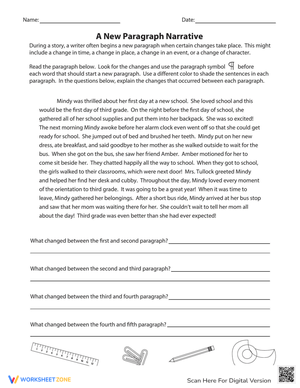
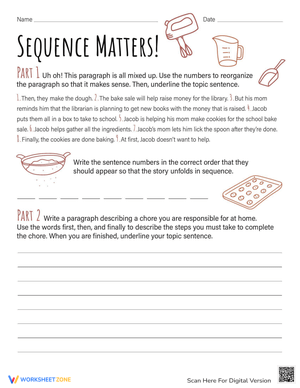
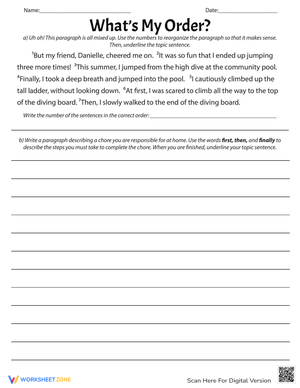
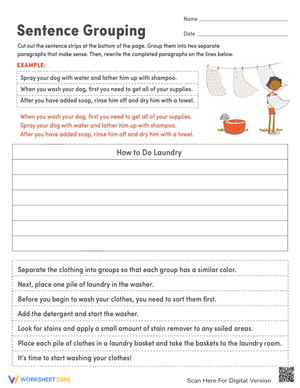
- Sentence sequencing: students receive four to six scrambled sentences and arrange them into a logical paragraph
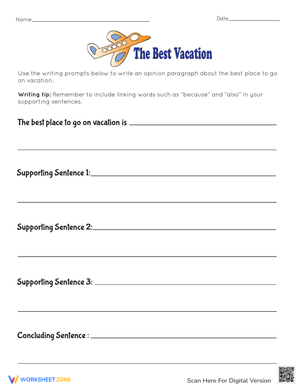
- Cloze completion: worksheets supply the topic sentence and one supporting detail; students write the remaining details and the concluding sentence
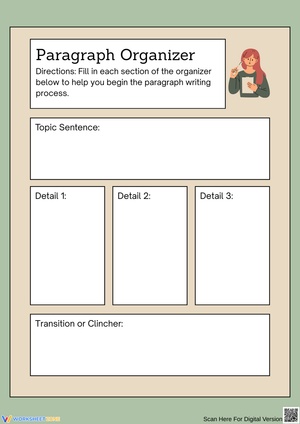
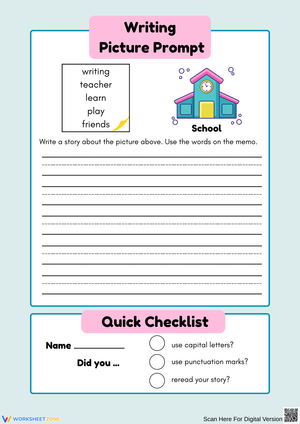
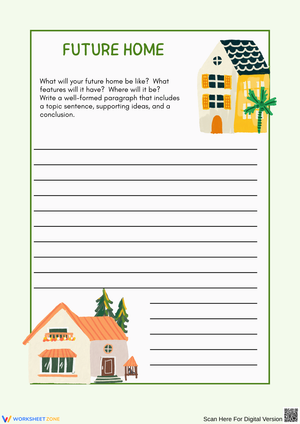
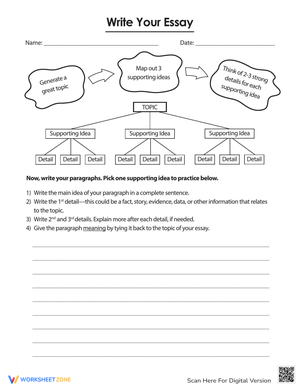
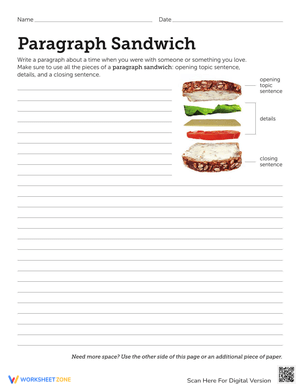
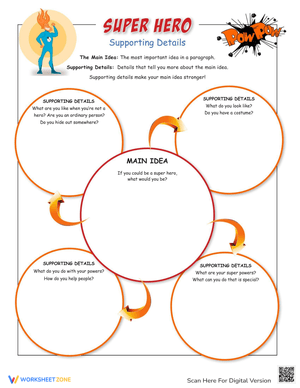
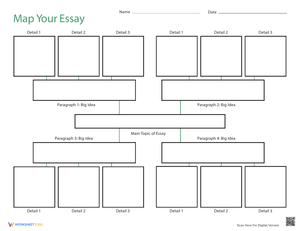
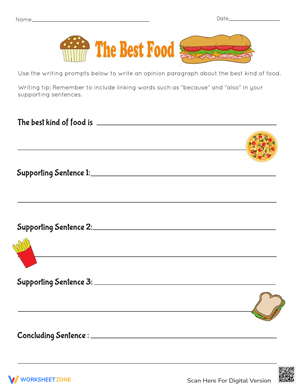
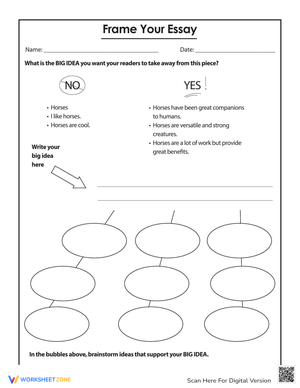
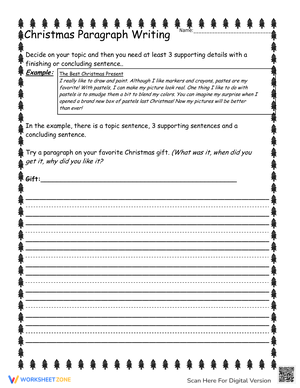
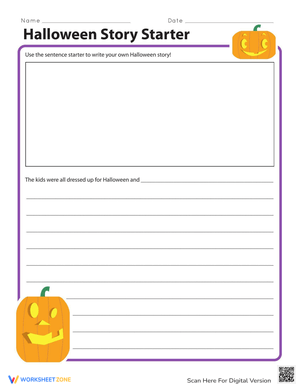
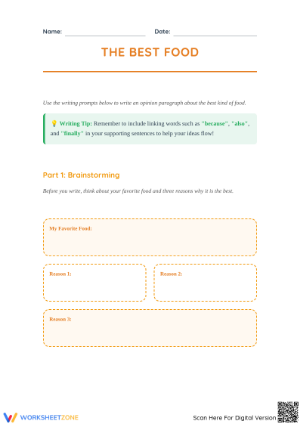
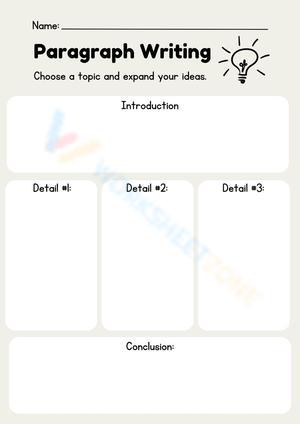
- Independent paragraph writing: an open prompt paired with a graphic organizer, no prewritten sentences provided
The sequencing matters. Students who jump straight to independent writing often produce a topic sentence followed by two restatements of the same idea — what reads like three sentences but is functionally one. The earlier task types train the eye to see what a relevant detail actually looks like before students have to generate their own. Most of the task types in a paragraph structure worksheets set serve as preparation for that independent paragraph, not standalone drills.
Student Error Patterns Worth Knowing Before You Assign These Worksheets
The most consistent mistake is a concluding sentence that simply restates the topic sentence word for word. A student writes "Dogs make great pets" at the top, then writes "That's why dogs are great pets" at the bottom. It looks complete on the page, but there's no synthesis — the student hasn't pulled the supporting details together into a genuine closing thought. Naming this problem explicitly before students draft helps more than marking it on their papers afterward.
A close second: students write supporting details that are sub-claims with no evidence underneath them. "Dogs are loyal" appears as a supporting detail, but the student moves immediately to the next sentence without ever providing the example that gives the claim meaning. The exercises that ask students to expand one bare claim into a full detail — by supplying a specific example — address this directly.
Watch also for topic sentences that are actually titles. "My Favorite Season" is not a topic sentence. Students who correctly identify topic sentences in reading passages will still default to writing a label when it's their turn to draft. The sentence-writing exercises in this set require students to add a predicate — "Fall is my favorite season because the air finally cools down" — which forces them to commit to a real claim rather than a heading.
Building These Worksheets Into Your Writing Instruction
The most effective placement for most of these resources is early in a paragraph writing unit, during guided practice in small groups rather than as independent seat work from the start. The sorting tasks work well as a brief opening activity — about eight to ten minutes before a mini-lesson. Students arrive, pick up the sentence strips, arrange them, and then the class discusses two or three solutions together. That conversation about why the topic sentence can't go second is often more instructive than any direct-teach explanation.
The paragraph structure worksheets set works just as well for intervention as it does for initial instruction. If a student is several weeks into your writing unit but still producing paragraphs without a discernible topic sentence, the identification exercises let you back up and target that component specifically — without starting the student over from the beginning of a full unit.
Mentor text analysis pairs naturally with the sentence-sequencing exercises. When students see how a published paragraph unfolds in their current reading, then immediately apply that understanding by reassembling a scrambled paragraph on the worksheet, the concept carries in a way that isolated skill practice alone rarely produces.
Standard Alignment
Paragraph organization sits at the center of several CCSS writing standards across grades 2 through 5. The clearest alignment is CCSS.ELA-LITERACY.W.3.2a, which expects students to introduce a topic and group related information together — in practical classroom terms, that means opening a paragraph with a clear topic sentence and following it with connected, on-topic details. The same expectation threads through W.4.2a, where grouping applies across multiple paragraphs. Teachers using these resources in second grade are building toward those benchmarks; teachers in fourth and fifth grade are frequently using them to close gaps for students who never developed a reliable internal sense of how paragraphs hold together.
Adjusting the Work for a Range of Writers
For students still building fluency, the sentence-sorting tasks are the right entry point. Give them a pre-cut set of sentence strips and have them physically move the sentences rather than writing anything — that step reduces the cognitive load enough that they can focus on meaning and sequence rather than handwriting mechanics.
Students who are ready to move past guided formats benefit from a targeted revision move: identify the weakest supporting detail on their completed worksheet and ask them to replace it with a sentence that includes a specific name, number, place, or moment. That's a higher-order task that pulls the paragraph toward the elaboration upper elementary writing demands.
For students in the middle, the cloze exercises in a paragraph structure worksheets set land at exactly the right level — enough structure to prevent the blank-page freeze, enough open space that they're generating real language. Pair them with a class-made word bank or a short mentor text on the same topic and most students will produce something they can then revise independently.
Frequently Asked Questions
What grade levels do these worksheets fit?
The core skills — topic sentence, supporting details, concluding sentence — are introduced explicitly in second and third grade and reinforced through fifth. The task types in this set scale naturally: identification and sorting tasks suit grades 2 and 3, while cloze completion and independent writing fit grades 3 through 5. Teachers in middle grades use the set for targeted catch-up work rather than initial instruction.
How long does a well-structured paragraph need to be at this stage?
Length is less important than structure. A four-sentence paragraph with a clear topic sentence, two specific supporting details, and a genuine concluding sentence is more developed than a seven-sentence paragraph that repeats the same point in different words. When students internalize the three-part structure, sentence count tends to grow on its own as they find more to say within each supporting detail.
Do these worksheets work for students who resist open-ended writing tasks?
Yes — the identification and sorting tasks require minimal sustained writing, so students who shut down when faced with a blank page can still engage with paragraph structure at a meaningful level. The cloze exercises add a small writing demand within a bounded space, which is often easier to sustain than open-ended drafting. Students who complete those tasks without difficulty are ready for the independent writing prompts in the set.












 Interactive Worksheet Maker
 Quiz Maker
 Word Search Maker
 Crossword Puzzle Maker
 Word Scramble Generator
 Sentence Scramble Generator
 Handwriting Worksheet Generator
 Name Tracing Generator
 Fill In The Blank Generator