


























Views
Downloads

Writing Recount Worksheet | Grade 1 Essential
Paste this activity's link or code into your existing LMS (Google Classroom, Canvas, Teams, Schoology, Moodle, etc.).
Students can open and work on the activity right away, with no student login required.
You'll still be able to track student progress and results from your teacher account.
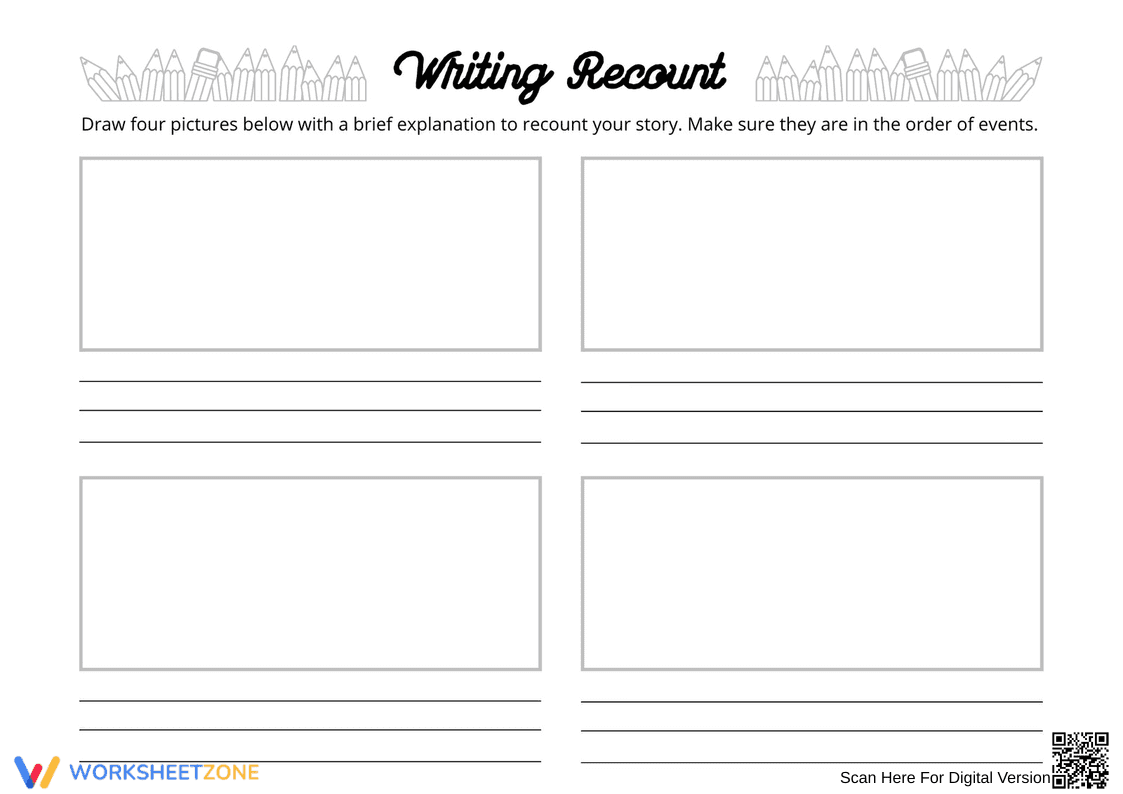
This Grade 1 Writing Recount worksheet helps young learners master the art of narrative sequencing by combining visual storytelling with written expression. Students practice organizing thoughts chronologically, ensuring their stories follow a logical beginning, middle, and end. By bridging the gap between drawing and writing, this resource builds foundational literacy skills essential for narrative mastery.
At a Glance
- Grade: 1 · Subject: ELA
- Standard:
CCSS.ELA-LITERACY.W.1.3— Write narratives in which they recount two or more appropriately sequenced events- Skill Focus: Narrative Sequencing and Visual Storytelling
- Format: 1 page · 4 tasks · Answer key not included · PDF
- Best For: Early narrative writing and sequencing practice
- Time: 20–30 minutes
What's Inside
This single-page PDF features a clean, four-panel layout designed for early elementary students. Each panel includes a dedicated space for an illustration and three primary-ruled lines for a brief written explanation. This structure provides a clear visual scaffold, helping students manage the cognitive load of simultaneous drawing and writing while maintaining a strict chronological order.
Zero-Prep Workflow
Teachers can implement this resource in under two minutes. First, print the single-page PDF for your class (1 minute). Next, distribute the sheets and explain the prompt, whether it is a personal narrative or a retelling of a shared text (30 seconds). Finally, review the completed sequences to assess student understanding of temporal transitions and event order (ongoing). This simplicity makes it an ideal addition to emergency sub plans.
Standards Alignment
The primary focus is `CCSS.ELA-LITERACY.W.1.3`, which requires students to write narratives in which they recount two or more appropriately sequenced events, include some details regarding what happened, use temporal words to signal event order, and provide some sense of closure. This worksheet provides the physical framework to meet these requirements. This standard code can be copied directly into lesson plans, IEP goals, or district curriculum mapping tools.
How to Use It
Use this worksheet as a formative assessment after a read-aloud to check for comprehension of plot sequence. Alternatively, assign it as a "Weekend News" activity where students recount a personal experience from their time away from school. Observe if students can maintain the same subject across all four panels. Expect completion within 20–30 minutes depending on drawing detail.
Who It's For
This resource is ideal for first-grade students, but also serves as an excellent scaffold for second-grade struggling writers or English Language Learners (ELLs) who benefit from visual aids. It pairs naturally with anchor charts focused on transition words like "First," "Next," "Then," and "Last" to further support the writing process.
According to research by Fisher & Frey (2014) on the gradual release of responsibility, visual scaffolding such as the four-panel drawing method used in this Writing Recount worksheet is critical for early literacy development. By allowing students to sketch their ideas before or during the writing process, the cognitive demand of generating text is reduced, leading to higher-quality narrative output. This resource aligns with `CCSS.ELA-LITERACY.W.1.3`, focusing on sequencing events in a logical order. Studies in the NAEP framework suggest that students who practice structured sequencing early on show significantly better organizational skills in later expository writing tasks. This 1-page printable provides 4 distinct tasks that bridge the gap between oral storytelling and formal composition, making it a reliable tool for classroom teachers seeking evidence-based literacy interventions that require zero preparation time.


