


























Views
Downloads


Printable Scientific Method Worksheet | Grade 5 Science
Paste this activity's link or code into your existing LMS (Google Classroom, Canvas, Teams, Schoology, Moodle, etc.).
Students can open and work on the activity right away, with no student login required.
You'll still be able to track student progress and results from your teacher account.
This Grade 5 worksheet empowers students to master the scientific method through classification and application. Learners demonstrate understanding of how inquiries are structured by engaging with realistic reports. This resource transforms complex vocabulary into a practical, hands-on experience.
At a Glance
At a Glance
- Grade: 5 · Subject: Science & ELA
- Standard:
RI.5.5— Analyze structural organization of concepts and information within scientific reports- Skill Focus: Scientific Method Application
- Format: 3 pages · 12 problems · Answer key included · PDF
- Best For: Independent practice or sub-plan activities
- Time: 20–30 minutes
What's Inside
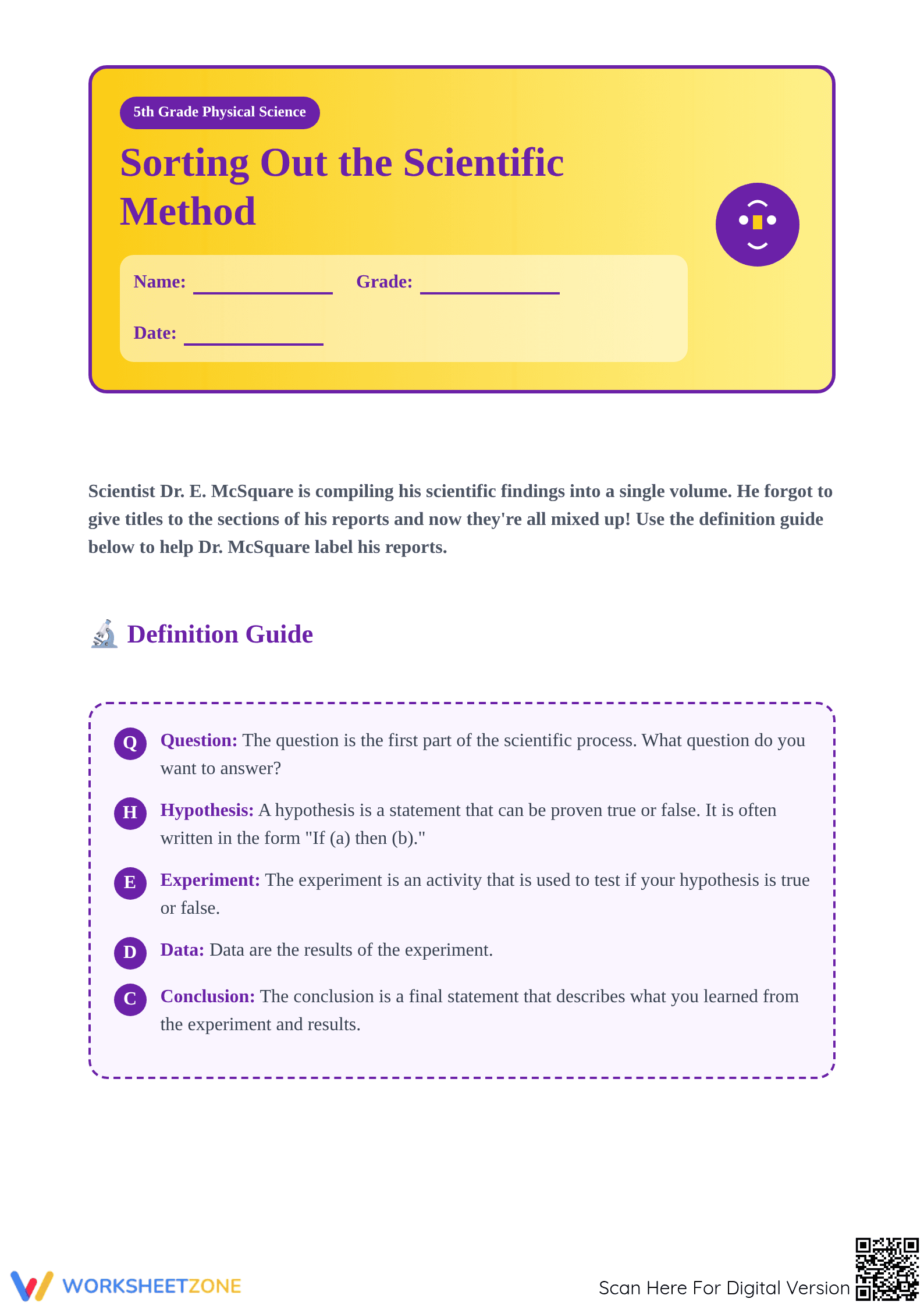
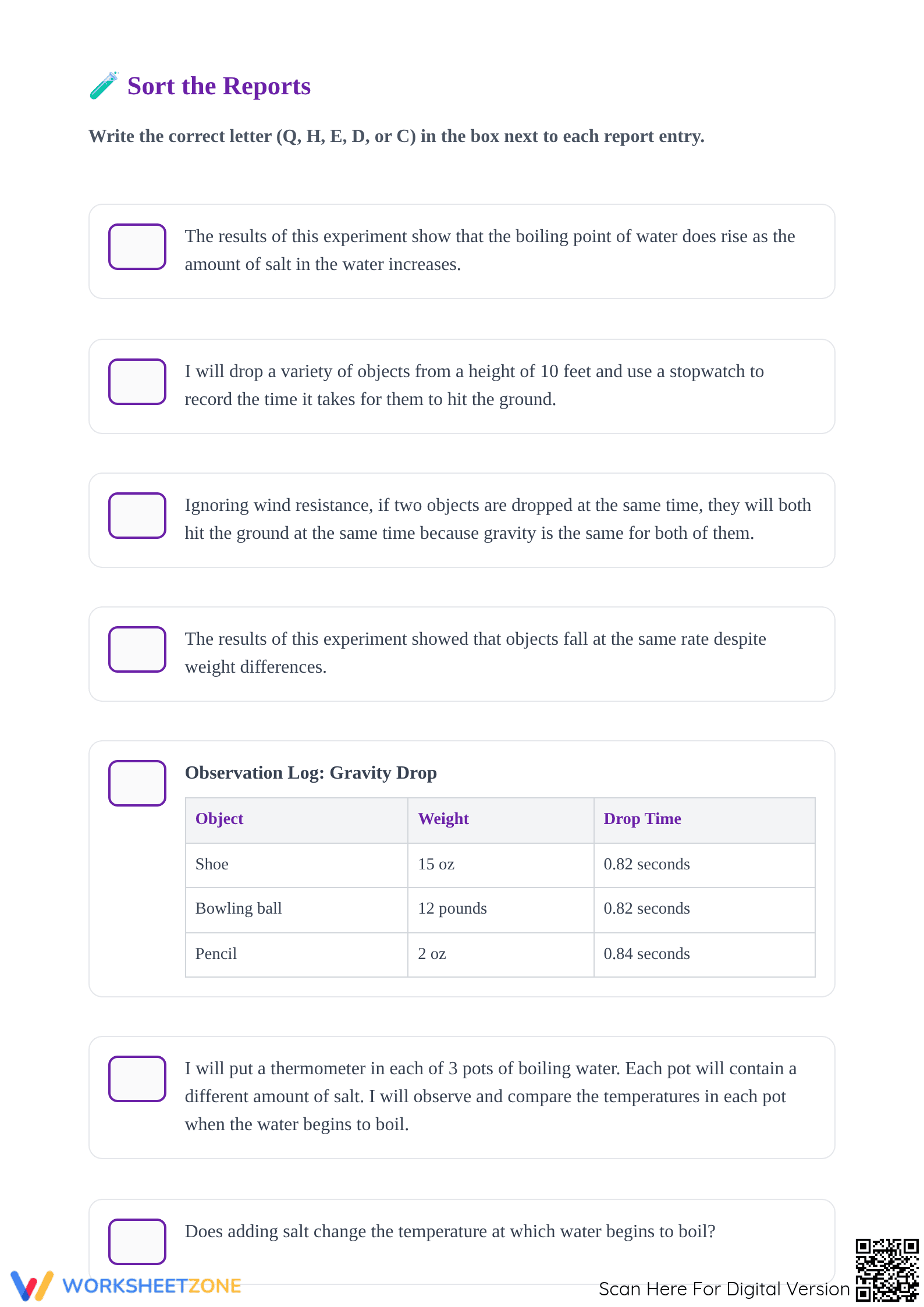
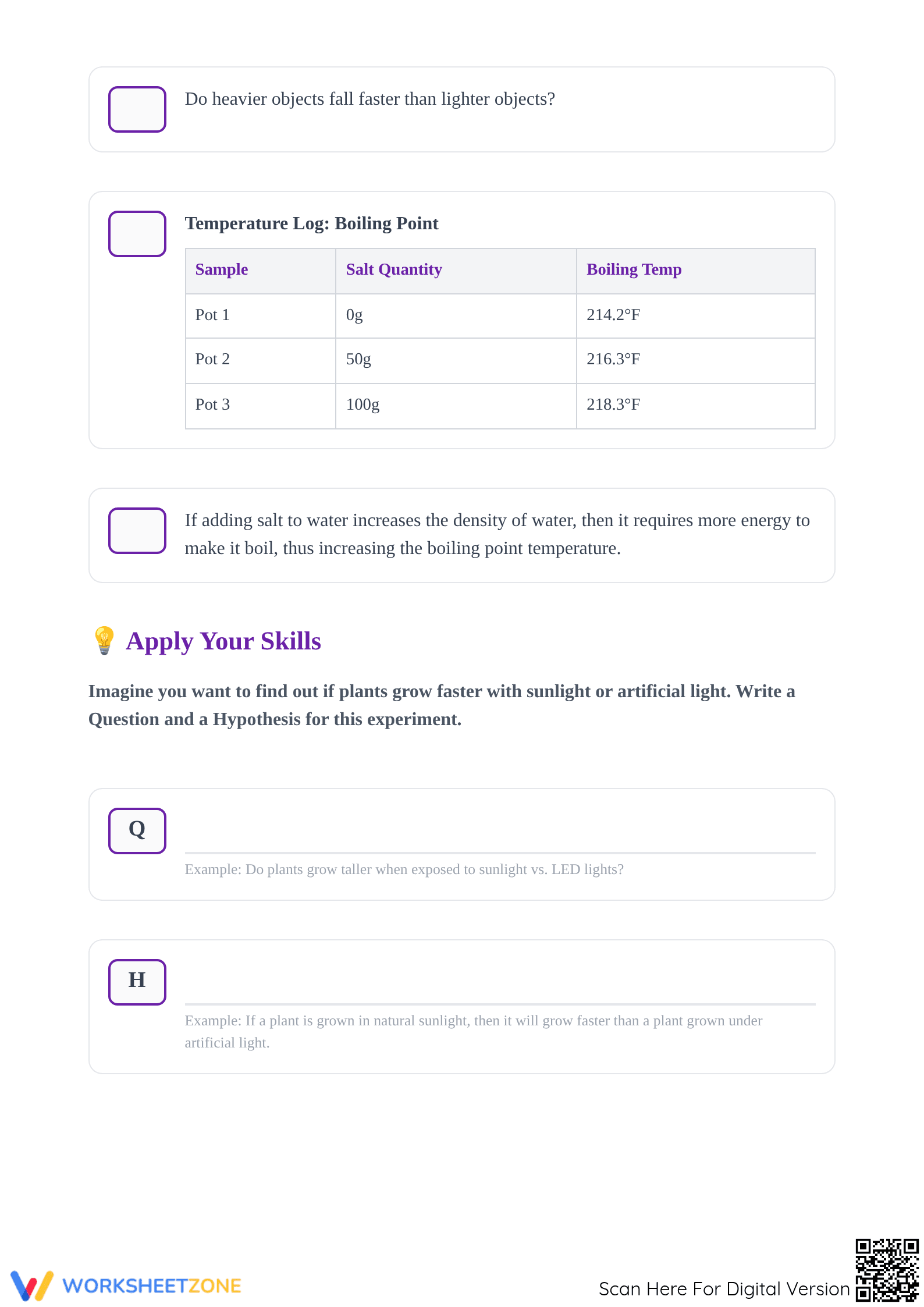
This instructional packet includes a Definition Guide for scientific steps. Students analyze ten report snippets, including gravity and boiling point logs, labeling each with the correct step. The final section challenges students to write original questions and hypotheses for a plant experiment, ensuring direct application of learned concepts.
Skill Progression
- Guided Analysis: Use the Definition Guide to anchor understanding of core scientific steps (1 page).
- Supported Practice: Classify ten realistic report entries using varied scenarios like gravity and boiling point logs (10 tasks).
- Independent Application: Draft an original question and hypothesis for a plant experiment (2 tasks).
This gradual-release approach follows the I Do, We Do, You Do model to ensure students move confidently from identification to creation.
Standards Alignment
The primary alignment is RI.5.5, which focuses on comparing the structure of concepts and information across texts. By identifying the sequence and logical relationship between scientific steps, students demonstrate mastery of complex text organization. This alignment supports the integration of literacy and science. Both standard codes can be copied directly into lesson plans, IEP goals, or district curriculum mapping tools.
How to Use It
Use this worksheet as a formative assessment during the independent practice phase of a direct instruction lesson on lab report writing. It allows teachers to observe if students can differentiate between data (results) and conclusions (interpretations). Alternatively, assign it as a high-quality sub plan to ensure rigorous scientific thinking continues. Expected completion time is 25 minutes.
Who It's For
This activity is ideal for fifth-grade classrooms, but it is also effective for small-group intervention for students who struggle with logical sequencing. The clear definitions provide necessary scaffolding for English Language Learners (ELLs). It pairs naturally with a non-fiction reading passage on famous scientific discoveries or a direct instruction lesson on variable control.
Aligning science instruction with rigorous literacy standards like RI.5.5 is a proven method for improving cross-curricular outcomes. This worksheet focuses on the plain-English skill of analyzing text structure to identify and classify logical steps in a process. According to EdReports 2024, high-quality instructional materials that integrate informational text analysis with domain-specific science content lead to significantly higher retention rates in late elementary learners. By requiring students to classify twelve different components of the scientific process, this resource ensures that learners engage in active retrieval rather than passive reading. Tasks bridge the gap between understanding definitions and applying them to real-world scenarios like gravity experiments and temperature logs. Educators can trust that this standards-aligned material provides the structured practice necessary for students to develop the foundational skills required for middle school laboratory work and advanced scientific inquiry. It provides a clear, actionable path to mastery for all learners in the fifth-grade classroom.


