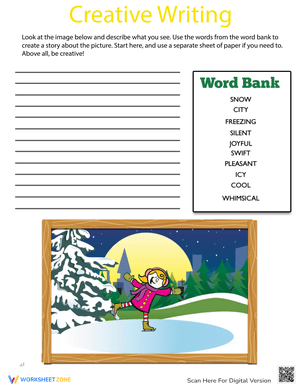
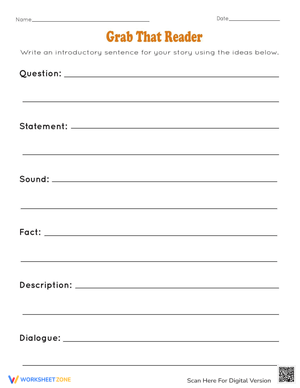
These writing a strong introduction worksheets give upper elementary and middle school teachers a structured way to teach the hook, bridge, and thesis statement as three separate, teachable skills — each one practiced in isolation before students attempt a full introductory paragraph. The set addresses the complete arc from first sentence to final claim, with enough variety in exercise format that students encounter the same structural thinking across multiple contexts.
The Three Skills Covered in the Set
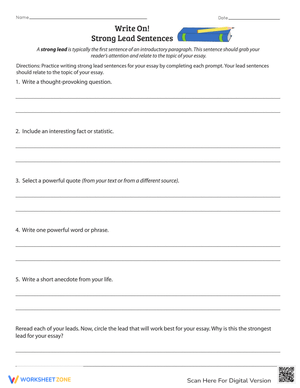
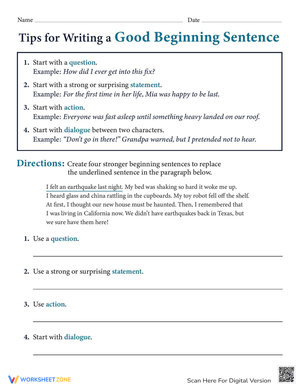
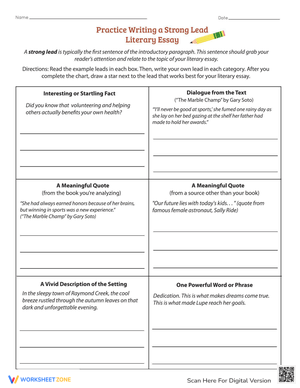
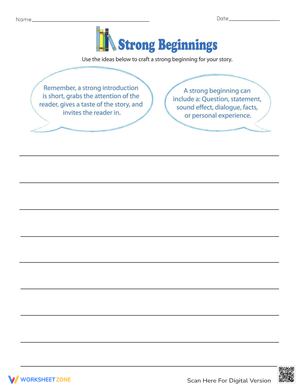
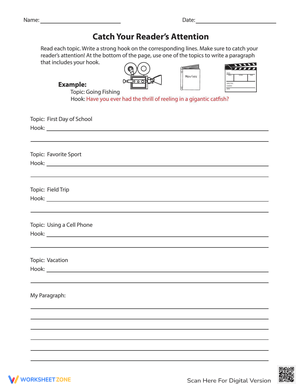
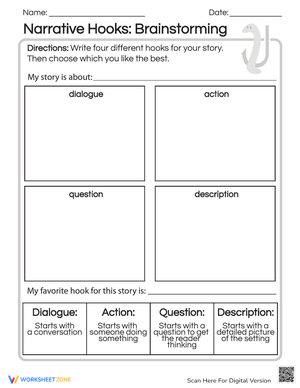
Hook practice comes first. Each worksheet targeting this skill presents four or five opening sentences on the same topic and asks students to rank them and explain why one pulls the reader in while another falls flat. Students also write their own hooks using four distinct strategies: the rhetorical question, the surprising statistic, the vivid anecdote, and the direct quote. Moving through all four forces students to see that a hook is a deliberate choice, not a formula.
Bridge work occupies the middle section of the sequence. Students are given a pre-written hook and a finished thesis, then asked to compose the two or three sentences that connect them. This is harder than it sounds — which is exactly why isolating it matters. The labeled-box format in each worksheet keeps students focused on the transition rather than letting them jump straight to their thesis.
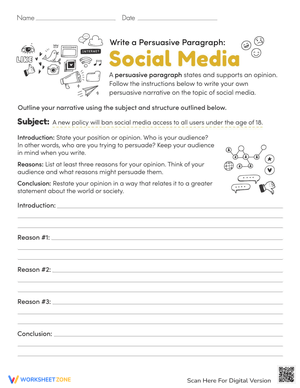
Thesis practice tends to generate the most rewriting. Exercises ask students to look at a list of statements and sort them into two columns: arguable claims and statements of fact. That sorting task alone surfaces the central misconception many students carry into the work. Students then practice rewriting flat factual statements into defensible claims and eventually draft their own thesis sentences from given topics.
Where Student Writing Actually Breaks Down
The hook gets the most classroom attention, but the bridge is where introductions most reliably fall apart. A student might write a genuinely sharp opening line — something specific and surprising — and then follow it immediately with the thesis, skipping the two or three sentences that orient the reader to the topic. The result reads like a conversation where someone opened a door and walked straight into an argument. Teaching the bridge as its own named component, not just "background information," gives students a category to think with rather than a vague instruction to add more.
Thesis errors tend to cluster in one of two directions. Some students write statements so broad they commit to nothing: Pollution is a problem in many parts of the world today. Others write statements so narrow they summarize rather than argue: This essay will explain three causes of World War I. The sorting and rewriting exercises push against both tendencies by making students name what an arguable claim actually does — it stakes a position that someone could reasonably disagree with.
Hook errors are predictable enough that you can almost set a timer for them. Within the first two minutes of independent work, several students will produce some version of "In this essay, I will tell you about..." The hook worksheets address this directly with a compare-and-contrast format: students see that opener alongside a more specific alternative on the same topic and write out what makes one more effective than the other. Getting the reasoning in writing matters — it slows down the student who would otherwise move on without internalizing why the change is necessary.
Building These Into Your Lesson Plans Without Losing the Week
The most effective sequencing treats each part of the introduction as its own two-day focus before asking students to put all three together. Teach the hook on Monday and Tuesday, the bridge on Wednesday and Thursday, and use Friday to examine complete introductions where all three elements work together. That pacing gives students time to practice each component while the previous one is still fresh, rather than introducing all three simultaneously and watching students gravitate toward whichever part feels most comfortable while glossing over the rest.
Color-coding works well during whole-class instruction. Put a sample introduction on the board, hand students three different colored markers, and work through it together — one color for the hook, a second for the bridge sentences, a third for the thesis. This takes about eight minutes and gives you an immediate read on who already has an intuitive sense of the structure and who is guessing. Students who color the entire paragraph one color are telling you something important about where instruction needs to go next.
For independent drafting, the graphic organizer worksheets — including the inverted pyramid format — give students a place to put each piece before writing connected prose. Requiring students to fill in the organizer before writing the paragraph in full sentences catches planning problems before they become drafting problems. That sequence also makes revision conversations more productive: when you sit with a student, you can look at the organizer alongside the paragraph and ask why a sentence ended up in a different location than planned.
Adjusting the Set for a Range of Writers
Students who struggle to begin can work with what might be called a "two-thirds given" version of the bridge exercise: provide a finished hook and a finished thesis, then ask only for the connecting sentences in the middle. This removes the blank-page paralysis from two of the three parts and lets the student practice the specific skill — narrowing and connecting — without also having to generate a hook and thesis from scratch. Once that step becomes fluent, take away the provided thesis and ask students to write their own.
Writers who move through the exercises quickly benefit from a different kind of challenge: take a published introduction from a magazine or newspaper column, identify all three components, and then rewrite the hook using a different strategy. If the original used a quote, rewrite it as an anecdote and explain whether the new version changes the tone of the whole paragraph. That task applies the structure analytically rather than generatively, which is a harder cognitive move than filling in a graphic organizer.
For classes with a wide range of writing experience, the set works well as a station rotation. Some students continue with hook practice while others move into thesis work. Because each worksheet addresses a contained skill, a student who needs more time on one component does not fall behind a sequence — they simply work that station longer. The writing a strong introduction worksheets are particularly useful in this configuration because teachers can assign specific worksheets rather than handing the entire set to every student at once.
Standard Alignment
These worksheets address CCSS.ELA-Literacy.W.6.1a, which asks students to "introduce claim(s) and organize the reasons and evidence clearly," and CCSS.ELA-Literacy.W.7.1a, which extends that expectation to acknowledging alternate or opposing claims within the introduction itself. The thesis exercises build directly toward W.6.1a by asking students to write arguable, specific claims rather than summaries. The more advanced thesis worksheets push students toward the W.7.1a standard by asking them to account for a counterargument in the thesis sentence itself — a skill that matters at seventh grade and beyond.
For informational writing contexts, CCSS.ELA-Literacy.W.6.2a asks students to "introduce a topic; organize ideas, concepts, and information." The hook and bridge work in this set transfers to that standard directly, since an effective hook in informational writing still needs to draw the reader in while the bridge establishes conceptual context before the thesis frames the explanation.
Frequently Asked Questions
At what grade level are these worksheets appropriate?
The set works best from fifth grade through ninth grade, though the hook strategy exercises are accessible to strong fourth-grade writers. The thesis work — especially the arguable claim versus statement of fact sorting — is most productive in sixth grade and up, when students are beginning to write position essays and need to distinguish between naming a topic and staking a claim. High school teachers have used the bridge exercises specifically with students who already write decent hooks and thesis statements but keep producing introductions that feel disjointed in between.
How is this different from a standard five-paragraph essay template?
The five-paragraph template tells students where things go. These worksheets focus on what each part actually does and why it belongs where it does. A student who learns the template can produce a recognizable introduction; a student who understands the function of the hook, bridge, and thesis can write one a reader actually wants to follow. The distinction shows up most clearly when a student must write an introduction for an unfamiliar topic — the template writer freezes, while the student who understands the structure has a way in.
Can the writing a strong introduction worksheets be used for both argument and informational essays?
Yes. The hook strategies work across essay types. The thesis exercises are written primarily around argumentative writing because that is where the "arguable claim versus fact" distinction is sharpest and most teachable. For informational writing, the thesis section still transfers — students practice writing thesis sentences that frame an explanation rather than defend a position. The graphic organizer worksheets are format-neutral and work for any essay type without modification.
What do I do when a student refuses to give up the "In this essay I will tell you about" opener?
Don't argue about quality — ask about effect. Have the student read the opening sentence aloud, then ask: what do you want me to feel or think when I hear that? Most students recognize immediately that the answer is "nothing in particular." Follow that conversation with the hook comparison activity from the set, where the student rewrites the opener using two different strategies and evaluates which version makes them want to keep reading. Getting the student to notice the difference is more durable than simply telling them the difference.












 Interactive Worksheet Maker
 Quiz Maker
 Word Search Maker
 Crossword Puzzle Maker
 Word Scramble Generator
 Sentence Scramble Generator
 Handwriting Worksheet Generator
 Name Tracing Generator
 Fill In The Blank Generator