


























Views
Downloads
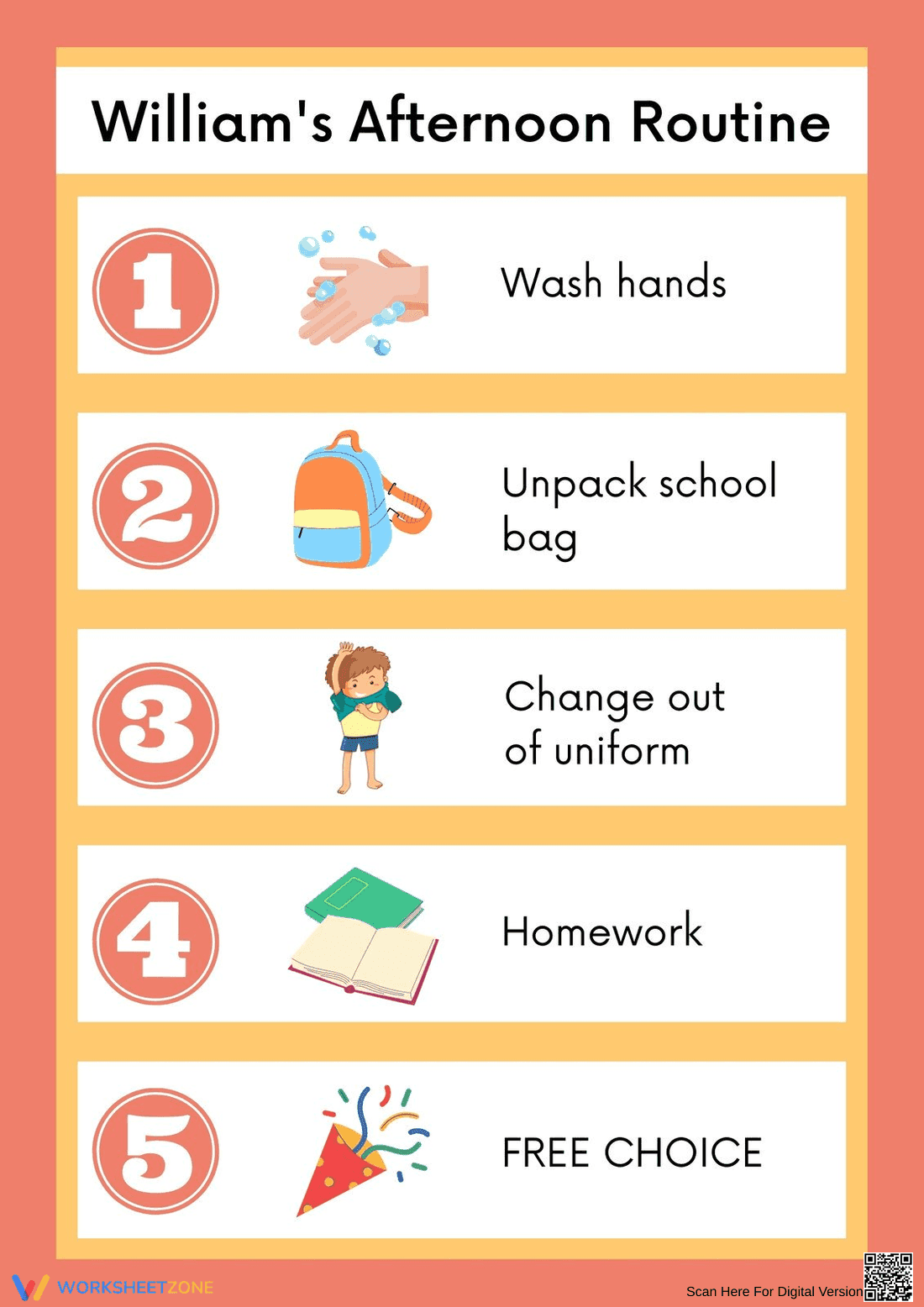

Afternoon Routine Checklist | Printable Kindergarten PDF
Paste this activity's link or code into your existing LMS (Google Classroom, Canvas, Teams, Schoology, Moodle, etc.).
Students can open and work on the activity right away, with no student login required.
You'll still be able to track student progress and results from your teacher account.
This visual afternoon routine checklist helps young learners build independence and sequence daily tasks effectively. By following five clear, illustrated steps, students transition smoothly from school to home life, reinforcing personal responsibility and executive functioning skills in a structured, easy-to-understand format.
At a Glance
- Grade: Kindergarten · Subject: Life Skills
- Standard:
CCSS.ELA-LITERACY.W.K.3— Sequence events in the correct order- Skill Focus: Following routines and sequencing
- Format: 1 page · 5 tasks · No answer key · PDF
- Best For: Classroom transitions and home communication
- Time: 5–10 minutes
This single-page printable features a highly visual, five-step sequence designed specifically for early readers. It includes clear, colorful icons paired with simple text for tasks like washing hands, unpacking a school bag, changing clothes, completing homework, and enjoying free choice time. The straightforward layout eliminates visual clutter, making it highly accessible for young children or students requiring visual supports.
Zero-Prep Workflow
This resource is designed for immediate implementation with no teacher preparation required. Follow these three simple steps:
- Print (1 minute): Generate a high-quality color or black-and-white copy directly from the PDF file.
- Distribute (1 minute): Hand out to students at the end of the school day, or place in take-home folders for parent communication.
- Review (3 minutes): Briefly walk through the five visual steps with the class before dismissal to ensure comprehension.
With a total prep time of under two minutes, this checklist is an ideal, self-explanatory tool for substitute teachers or busy educators needing a quick end-of-day management solution.
Standards Alignment
This checklist aligns with CCSS.ELA-LITERACY.W.K.3, requiring students to narrate linked events in the order they occurred. By following this visual sequence, students practice ordering events chronologically. Both standard codes can be copied directly into lesson plans, IEP goals, or district curriculum mapping tools.
How to Use It
Introduce this checklist during the final ten minutes of the school day to prepare students for a successful transition home. Teachers can project the PDF and model each step. As a formative assessment observation tip, watch how independently students recount the five steps in order. Expect the initial introduction to take ten minutes, with daily reviews taking two minutes.
Who It's For
This resource is primarily designed for Kindergarten and Pre-K students developing early executive functioning skills. It serves as an excellent differentiation tool for special education students or English Language Learners who benefit from visual schedules and clear, step-by-step expectations. Pair this checklist with a classroom anchor chart about morning routines to create a comprehensive daily management system.
Effective implementation of visual schedules and structured routines significantly enhances student self-management and reduces transition-related anxiety. According to Fisher & Frey (2014), providing explicit, visually supported frameworks allows young learners to internalize behavioral expectations and develop greater autonomy over their daily tasks. This afternoon routine checklist directly supports these findings by offering a clear, five-step visual sequence that bridges the gap between school and home environments. Aligned with CCSS.ELA-LITERACY.W.K.3, the resource helps students practice how to sequence events in the correct order, a foundational skill for both literacy and executive functioning. By integrating this simple, evidence-based tool into daily dismissal procedures, educators can foster independence, improve task initiation, and ensure students leave the classroom feeling organized and prepared for their after-school responsibilities.


