What Pronouns and Antecedents Worksheets Actually Practice
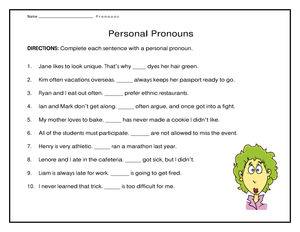
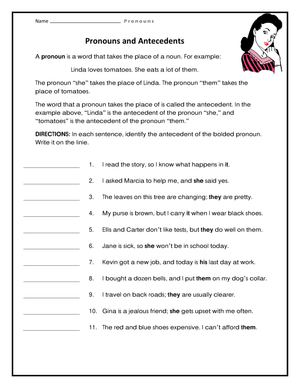
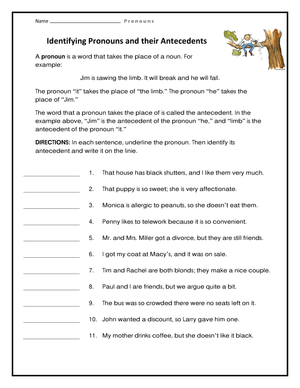
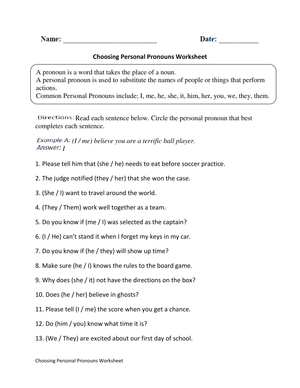
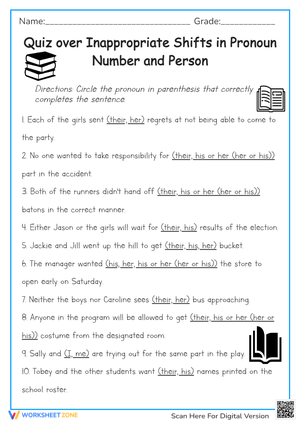
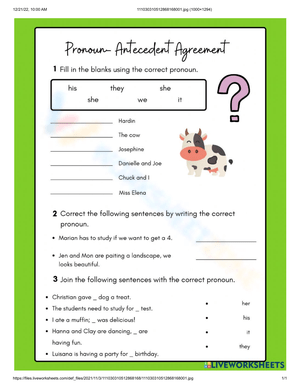
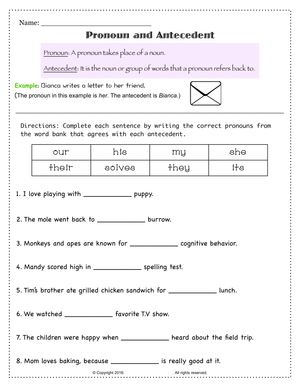
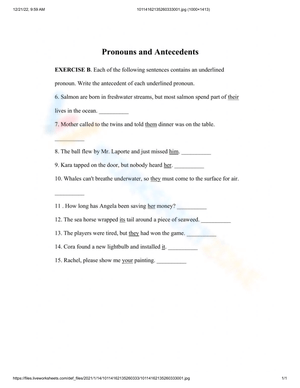
A pronoun-antecedent worksheet asks students to do two connected jobs: find the noun a pronoun stands in for, and confirm the pronoun matches that noun in number, gender, and person. When a third grader writes The students packed their bags, the sheet trains them to see that their points back to students and agrees because both are plural. That link is easy to state and surprisingly hard for young writers to hold steady across a full paragraph.
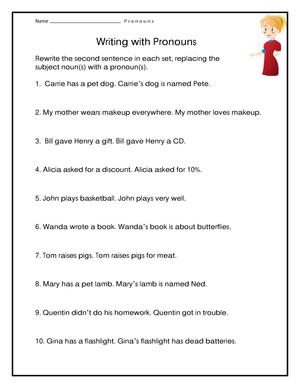
Strong worksheets for this skill do more than ask for definitions. They give students sentences and short passages where the antecedent sits a few words away, or in the sentence before, so learners have to track reference instead of guessing. The most useful sets mix identification, matching, and correction tasks, so students move from recognizing agreement to producing it while they edit their own writing.
Where This Skill Fits in the Grade 3 Standards
Pronoun-antecedent agreement is not a side topic. It is written directly into the Grade 3 Common Core Language standards as part of L.3.1, which asks students to demonstrate command of the conventions of standard English grammar and usage when writing or speaking. That placement means the skill is fair game on any grammar check, writing rubric, or benchmark that samples Grade 3 conventions.
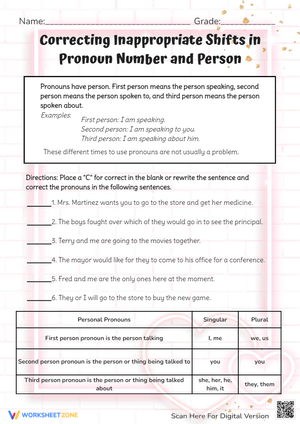
Because L.3.1.f pairs pronoun-antecedent agreement with subject-verb agreement in the same sub-standard, a worksheet that isolates only one of the two leaves half the standard unpracticed. Teachers who plan backward from the standard often choose sets that surface both error types on the same page, so students learn to scan a sentence for two kinds of agreement at once instead of treating them as separate units taught weeks apart.
According to the Common Core State Standards for Grade 3 Language, standard L.3.1.f requires students to ensure subject-verb and pronoun-antecedent agreement. This single sub-standard places agreement among the core conventions third graders must control in both writing and speaking, which gives teachers a concrete, measurable target they can point to when they explain why the practice matters.
Sequencing Worksheets from Simple to Complex
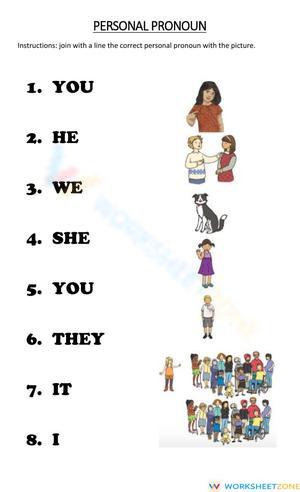
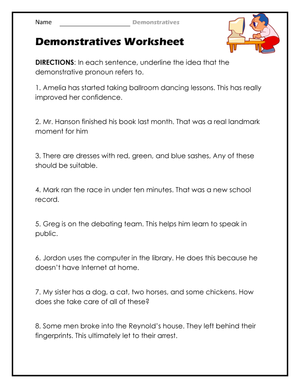
The fastest way to frustrate a class is to open with an editing passage before students can name an antecedent. A cleaner path moves through four stages. First, single-sentence identification, where students circle the pronoun and underline its antecedent. Second, matching, where they pick the pronoun that agrees with a given noun. Third, two-to-three sentence passages, where the antecedent appears in an earlier sentence and reference has to be tracked. Fourth, editing, where students correct agreement errors inside a short paragraph.
Keeping the same skill but raising the text length lets you reuse the same standard across a week without repeating identical items. Students who breeze through stage one often stumble at stage three, and that stumble is exactly the diagnostic signal you want before a writing unit begins.
Classroom Implementation
For a whole-class mini-lesson, project one sentence and think aloud as you find the antecedent, then ask whether the pronoun agrees in number and person. Hand out a short identification sheet for guided practice, and circulate while students mark antecedents in pairs. Ten to fifteen minutes of this, three or four times across two weeks, usually does more than one long grammar block.
For small-group intervention, pull the students who mismatch singular and plural pronouns. Give them a reduced sheet with only four to six sentences and a color code: one color for the antecedent, another for the pronoun. Saying the sentence aloud helps here, because many number errors that slip past the eye are caught by the ear.
To turn practice into transfer, close the block by having students find one pronoun in their own writing folder and check its antecedent. That single move connects the worksheet to the writing it is meant to protect, and it keeps the skill from living only on the printed page.
Keeping the Skill Alive in Grades 4-6
Grade 3 introduces pronoun-antecedent agreement, but the skill does not finish there. In grades 4 through 6 students write longer pieces, and the distance between a pronoun and its antecedent grows, so inconsistent agreement resurfaces even in strong writers. Short review sheets built from multi-sentence passages keep the skill sharp without spending a full grammar unit on something students first met years earlier.
The upper-grade version leans on passages and revision rather than isolated sentences. Ask students to track a single antecedent across a paragraph, or to fix agreement while they also tighten wording. Framed this way, the worksheet becomes a revision tool, reinforcing a Grade 3 standard inside the more demanding writing those students are actually producing.
Frequently Asked Questions
1. What grade level introduces pronoun-antecedent agreement?
In the Common Core sequence the skill is introduced in Grade 3 under standard L.3.1.f, which asks students to ensure subject-verb and pronoun-antecedent agreement. Later grades reinforce it in longer and more complex writing rather than teaching it as brand-new content.
2. How do teachers tell a subject-verb error from a pronoun-antecedent error?
A subject-verb error is a mismatch between a subject and its verb, such as the dogs runs. A pronoun-antecedent error is a mismatch between a pronoun and the noun it replaces, such as a singular pronoun pointing to a plural noun. Both live under L.3.1.f, so worksheets often practice them together.
3. How often should these worksheets be used for review versus first instruction?
For initial instruction, short daily practice across a two-week span builds the skill faster than one long session. For review in later grades, a brief passage-based sheet every couple of weeks is usually enough to keep agreement consistent in student writing.
4. What is an effective way to use these worksheets for small-group intervention?
Pull students who confuse singular and plural pronouns, shorten the sheet to four to six sentences, and color-code the antecedent and pronoun. Have students read each sentence aloud, since the ear often catches number mismatches the eye skips.
5. How do these worksheets support editing and revision?
Editing-style sheets ask students to find and fix agreement errors inside a paragraph, which is the same move they need in their own drafts. Practicing correction on someone else's paragraph first makes it easier for students to catch the same problems in their own writing later.












 Interactive Worksheet Maker
 Quiz Maker
 Word Search Maker
 Crossword Puzzle Maker
 Word Scramble Generator
 Sentence Scramble Generator
 Handwriting Worksheet Generator
 Name Tracing Generator
 Fill In The Blank Generator