Introduction to Word Patterns in Early Reading
Building a strong foundation in literacy requires more than just memorizing sight words. Teachers recognize that helping students identify recurring structures within words is a primary step toward independent reading. These structures, often referred to as word patterns, allow young learners to predict sounds and decode unfamiliar text with accuracy. When children see that 'cat', 'hat', and 'bat' share a common ending, they understand the logic of English. This transition from recognizing words to identifying phonetic patterns is a significant milestone in any early childhood classroom.
Worksheetzone provides printable resources designed to support this developmental stage. By using structured practice, teachers guide students through phonics without overwhelming them. These worksheets focus on predictable sequences of letters representing specific sounds, helping students move beyond simple recognition. Whether working with Kindergarteners or 1st Grade students, having access to clear practice materials is essential for maintaining momentum. The goal is to provide enough repetition so that these patterns become second nature, allowing students to focus on comprehension.
Understanding Foundational Phonics Patterns
The journey into word patterns begins with basic structures: VC (vowel-consonant) and CVC (consonant-vowel-consonant). Patterns like 'am', 'it', and 'up' introduce children to the idea that vowels and consonants work together. Once comfortable with these, students progress to CVC words. This pattern is the backbone of early reading because it features a short vowel sound between two consonants. Words like 'dog', 'pig', and 'run' are easy to visualize and decode, building confidence in emerging readers.
Instruction often focuses on word families. By grouping words with the same ending, such as the '-ap' family (cap, map, tap), teachers help students see relationships between words. This approach reduces frustration when encountering new vocabulary. Instead of seeing a new word, they see a familiar pattern with a different starting sound. Using worksheets that involve tracing and identifying these words ensures students engage with material in multiple ways, reinforcing understanding of how letters form meaning. This repetition is key to effective literacy instruction in primary grades.
Transitioning to Complex Vowel Patterns
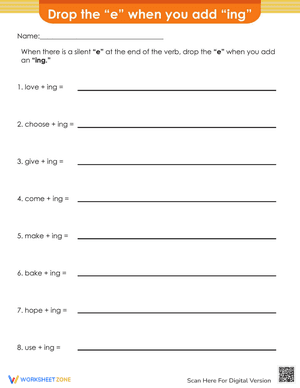
As students master short vowels, the curriculum shifts toward complex arrangements like the CVCe pattern, often called the 'magic e'. This pattern is a source of confusion because the final 'e' changes the sound of the preceding vowel without making a sound of its own. For instance, 'can' becomes 'cane' and 'hop' becomes 'hope'. Helping students recognize this visual cue is vital for their progression into advanced texts. Worksheets contrasting CVC and CVCe words are effective for illustrating this rule clearly.
Beyond the silent 'e', students must learn CVVC patterns, known as vowel teams. When two vowels appear together, like 'ai' in 'rain' or 'oa' in 'boat', they usually represent a single long vowel sound. This concept is challenging because there are many teams to learn. Teachers use sorting activities to help students categorize words by their vowel team. Providing a clear visual structure through printables helps students internalize these rules. Understanding these patterns also improves spelling accuracy as students begin to understand why words are constructed in specific ways.
Developing Decoding Skills Through Structured Practice
Structured practice ensures that phonics instruction sticks. Students need exposures to a word pattern before they can reliably decode it in variety of contexts. High-quality worksheets provide a controlled environment where students focus on a single skill, such as identifying r-controlled vowels or consonant digraphs like 'sh' and 'th'. By isolating these elements, teachers identify exactly where a student might be struggling and provide targeted intervention. This precision is difficult to achieve with general reading alone.
Reach All Readers highlights that phonics and word recognition are the bedrock of literacy. Their research indicates that structured practice with specific word patterns significantly improves a student's ability to decode novel texts, providing the necessary scaffold for early readers to achieve mastery in phonemic awareness. This systematic reinforcement helps bridge the gap between classroom instruction and independent reading. Practitioners observe that students who master the 'magic e' pattern often show a 25% faster progression toward reading multi-syllabic words compared to those who rely solely on sight-word recognition. This data suggests that spending focused time on foundational patterns yields long-term benefits for reading fluency.
Using Visual Aids and Sorting in Phonics Instruction
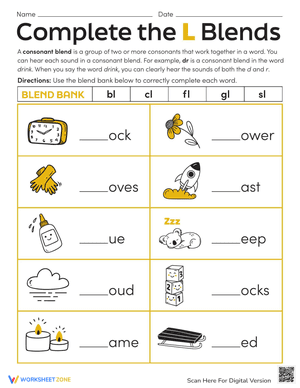
Visual aids help students connect abstract letter patterns to concrete sounds and meanings. Many word pattern worksheets include images corresponding to the words practiced. This dual coding—seeing the word and image simultaneously—solidifies the connection in the student's mind. For example, seeing a 'cake' next to the word 'cake' reinforces the CVCe pattern while providing an engaging context. For students still developing vocabulary, these cues are helpful for ensuring they understand what they are reading.
Sorting activities are another powerful tool. When students sort words into categories based on patterns, they look closely at internal structures. A worksheet might ask students to cut out words and glue them into columns for CVC, CVCe, and CVVC patterns. This kinesthetic approach appeals to learning styles and keeps students active. It also encourages critical thinking, as students analyze each word rather than guessing. These activities are perfect for small group work or literacy centers where students collaborate.
Teacher Tips for Effective Classroom Use
To get the most out of word pattern worksheets, integrate them into a broader strategy. One method is a 'gradual release of responsibility' model. Start by modeling the pattern, complete examples together, then let students work independently. This ensures everyone understands the objective. You can also use printables as formative assessments to see which students have mastered a pattern and which need support during small-group time.
Differentiate worksheets based on student needs. Some students may work on basic CVC words, while others are ready for complex patterns like diphthongs. Having variety allows you to meet every student where they are. You can also laminate worksheets and use dry-erase markers, making them a reusable resource for centers. This saves paper and allows students to practice skills multiple times. Finally, consider sending home worksheets as extra practice, providing parents with a clear way to support their child's learning journey.
Integrating Patterns into Daily Literacy Blocks
Consistency is key when teaching phonics. Incorporating word pattern practice into your daily routine ensures students constantly build on previous knowledge. Morning work is a great time to introduce a word pattern activity that reviews a previously taught concept. This keeps information fresh and sets a positive tone. You can also weave these patterns into shared reading, pointing out structures in books. This helps students see that patterns they practice are the ones they encounter in real-world texts.
Word patterns can be integrated into writing instruction. Encourage students to use patterns when drafting stories. If a student writes about a 'boat', remind them of the 'oa' vowel team practiced. This approach reinforces that phonics, reading, and writing are interconnected. By making word patterns a central part of your classroom—through posters and daily practice—you create a culture of literacy where students feel empowered. The resources at Worksheetzone are designed to make this integration straightforward for busy teachers.
Frequently Asked Questions
1. What are word patterns in phonics?
Word patterns are predictable sequences of vowels and consonants representing specific sounds. Examples include the CVC (consonant-vowel-consonant) pattern in 'cat' or the CVCe pattern in 'bike'. Recognizing these patterns helps students decode words efficiently rather than memorizing them individually.
2. Why is learning word patterns important for beginning readers?
Learning patterns is fundamental in developing decoding skills. Instead of treating words as unique puzzles, students learn to recognize structures, which increases reading speed and accuracy. This foundation is necessary for achieving long-term reading fluency and allows students to focus on understanding the text.
3. What is the difference between a CVC and CVCe word pattern?
A CVC pattern consists of a consonant, short vowel, and another consonant, such as 'map'. A CVCe pattern includes a final silent 'e' that changes the preceding vowel from a short sound to a long sound, as seen when 'map' becomes 'maze'. This distinction is a major turning point for 1st Grade readers.
4. How can I use these worksheets to help my child at home?
Parents can use printable worksheets to provide practice in a structured format. It is helpful to sit with the child and have them say the sounds of the letters as they write them. Encouraging them to find words with the same patterns in favorite books also reinforces what they are learning.
5. At what age should children start learning word patterns?
Most children begin learning basic VC and CVC patterns in Kindergarten, between ages 5 and 6. As they progress into 1st Grade, they are introduced to more complex structures like vowel teams and blends. Early exposure sets the stage for success in later elementary years.















 Interactive Worksheet Maker
 Quiz Maker
 Word Search Maker
 Crossword Puzzle Maker
 Word Scramble Generator
 Sentence Scramble Generator
 Handwriting Worksheet Generator
 Name Tracing Generator
 Fill In The Blank Generator