Worksheetzone logo

Affixes Worksheets That Actually Build Word-Attack Skills (Grades 2-6)

Affixes worksheets are one of the highest-leverage tools in a word-study block: teach one prefix or suffix well and students gain a key that unlocks dozens of words across every subject. This guide shows US K-12 teachers how to choose, sequence, and use affixes worksheets so they build real morphological awareness and pay off in reading comprehension.

What Affixes Worksheets Actually Teach

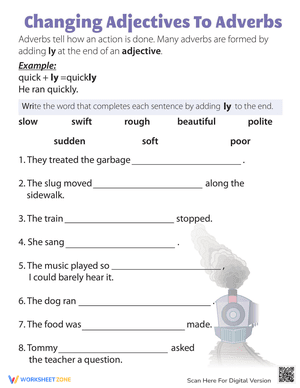
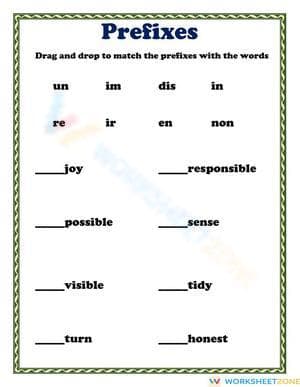
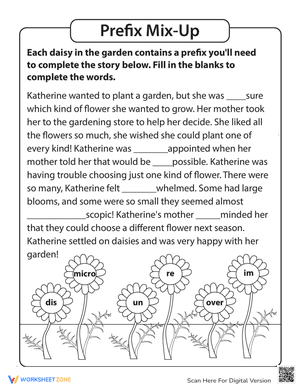
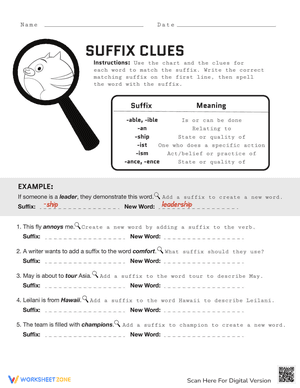
Affixes worksheets give students structured practice with prefixes and suffixes, the meaningful word parts that attach to a base or root to change meaning or grammatical function. Instead of memorizing vocabulary word by word, students learn transferable patterns: re- means again, -less means without, -tion turns a verb into a noun. For US K-12 teachers, that shift matters because a single well-taught affix unlocks dozens of words students meet in grade-level texts.

The best affixes worksheets are not random word lists. They isolate one pattern at a time, ask students to build and break apart words, and then push toward meaning: what does the word mean now, and how do you know? That build-and-check routine is what turns a worksheet into morphology instruction rather than spelling drill.

Where Affix Instruction Starts in the Standards

Common Core sequences affix work across several grades, and matching your worksheets to that progression keeps instruction on grade. CCSS RF.2.3.d introduces prefixes and suffixes in grade 2 as a foundational decoding skill, with students reading one- and two-syllable base words plus common affixes. This is the entry point, and it is squarely about decoding, not yet deep meaning analysis.

By the upper-elementary grades, the standards pivot from decoding to meaning. CCSS L.4.4.b and L.5.4.b ask students to use grade-appropriate Greek and Latin affixes and roots as clues to word meaning, using examples like photograph and photosynthesis. CCSS L.6.4.b extends the same skill to more advanced morphemes, such as the shared root in audience, auditory, and audible. Choosing worksheets tagged to the right standard keeps your word study vertically aligned.

In practice, that means a second-grade affixes worksheet and a sixth-grade one should not look the same. Watch the standard tag when you pull a printable so a decoding-focused grade 2 sheet does not end up in a grade 5 meaning-focused unit, or the other way around.

Sequencing Affixes From Inflectional to Greek and Latin

Order matters more than volume. Instructional research on morphology recommends a predictable progression: start with inflectional suffixes such as -s, -ed, and -ing in the early grades, move to common derivational prefixes and suffixes like un-, re-, -ful, and -ness, and only then introduce advanced Greek and Latin morphemes in grades 4-6.

Worksheets make that sequence visible. A grade 2 set might focus on adding -ed and -ing to base words and noticing spelling changes. A grade 4 set might sort words by the prefix trans- or the root port. Sequencing this way prevents the common mistake of handing striving readers advanced Latin roots before they can reliably decode a two-syllable base word with a common suffix.

Worksheets also let you make the meaning of each affix explicit rather than assumed. When a grade 3 sheet pairs un- with a short definition and three example words, students build a rule they can carry into new texts. Skipping that explicit step is why some students collect worksheets without ever transferring the pattern to their reading.

How Affixes Connect to Reading Comprehension

According to NWEA, morphological awareness instruction improves reading comprehension because recognizing predictable affix patterns lowers the cognitive load of decoding unfamiliar words. With roughly 2,500 morphological word families accounting for most academic vocabulary, a student who masters 20 high-frequency affixes gains reusable tools that generalize across science, social studies, and literary texts.

Here is the leverage point many teachers miss: affix instruction pays off most when students meet unfamiliar words in the wild, not on the worksheet itself. A student who owns 20 common affixes can reason through hundreds of untaught words during independent reading, a far higher return than a weekly list of 15 unrelated vocabulary words. Worksheets that ask students to define a word after splitting its parts rehearse exactly that comprehension move.

Differentiating Affixes Worksheets Across Grades 2-6

The same topic can serve very different learners when you adjust the worksheet, not the standard. For whole-class word study, use worksheets that introduce one affix, provide guided examples, and end with a short application in context. For small-group intervention with striving readers, slow the pace: fewer affixes, more repetitions, and explicit modeling of how to split a word before defining it.

Enrichment learners can push into multi-affix words and Greek and Latin roots earlier, analyzing how trans-, -port, and -ation combine in transportation. The point is to keep every group working on morphology while matching the difficulty of the words to each reader's decoding and vocabulary level.

You can also differentiate by response format. A support-level worksheet might give students the base word and ask them to add the affix, while a stretch version supplies only a definition and asks students to build the word from parts. Same standard, same affix, different scaffolding, so every reader is doing grade-level morphology at a level they can access.

Using Affixes Worksheets for Formative Assessment

Short affix worksheets make excellent quick checks. A five-word exit ticket asking students to split each word into base and affix, then write the meaning, tells you in minutes who has internalized the pattern and who needs another pass. Because the task is pattern-based, you are measuring transferable skill, not memory of a specific list.

Track results over a unit rather than a single day. If most students can decode words with un- and re- but stumble on -tion and -sion, that data tells you exactly which worksheet to pull next. This kind of targeted, standards-aligned progress monitoring is hard to get from a generic vocabulary quiz.

Classroom Implementation

Build affix worksheets into a weekly word-study routine rather than treating them as one-off busywork. A workable cycle: introduce the affix on Monday with a short worksheet, practice building and breaking words midweek, and use a brief affix worksheet as a Friday exit ticket to check who can apply the pattern to a new word.

For small-group intervention, keep a rotating set of single-affix worksheets so you can reteach a specific pattern the moment a running record or comprehension check shows a student stumbling over multisyllabic words. Pair each worksheet with a quick oral check: ask students to split the word, name each part's meaning, and then define the whole. That thirty-second protocol turns a printable into formative assessment and tells you whether to move on or reteach.

Keep a simple record of which affixes each group has mastered. Because a small number of high-frequency prefixes and suffixes covers so much academic vocabulary, tracking mastery of even 15 to 20 affixes gives you a clear, standards-aligned map of student progress from grade 2 through grade 6.

Frequently Asked Questions

1. What grade should prefixes and suffixes instruction start?

Explicit affix instruction typically starts in grade 2. CCSS RF.2.3.d introduces prefixes and suffixes as a foundational decoding skill, with students reading one- and two-syllable base words plus common affixes. Earlier grades build toward it through inflectional endings like -s and -ed.

2. How do affixes worksheets align with Common Core language standards?

They map directly to the progression from CCSS RF.2.3.d in grade 2 to CCSS L.4.4.b and L.5.4.b in grades 4-5 and CCSS L.6.4.b in grade 6. Early worksheets emphasize decoding common affixes; later ones use Greek and Latin roots as clues to word meaning.

3. How are affixes worksheets different from vocabulary lists?

A vocabulary list teaches specific words one at a time. An affixes worksheet teaches a transferable pattern, so students can unlock many untaught words. Because about 2,500 morphological word families cover most academic vocabulary, affix patterns generalize far more efficiently than isolated word lists.

4. How can teachers use affixes worksheets for small-group intervention?

Use single-affix worksheets to reteach one pattern at a time, model how to split and define words, and add repetitions for striving readers. A short oral check after each worksheet turns it into formative assessment and shows whether students can apply the affix to a new word.

5. How many affixes should students learn per unit?

Focus beats coverage. Teaching a handful of high-frequency affixes per unit, then cycling back for review, works better than long lists. Mastering roughly 15 to 20 common prefixes and suffixes across a year gives students reusable tools for decoding grade-level academic texts.

Clear All

Need help finding the perfect worksheet?

AI Search Genie

Find perfect worksheets

*

Quick Finder

Grade + Topic search

Select your Grade level, Topic and Subject to find worksheets instantly or you can use keyword below to search what you need.