Mastering Inflectional Endings in the Elementary Classroom
For many young learners, the transition from reading simple base words to recognizing complex variations can be challenging. Inflectional endings, which include common suffixes like -s, -es, -ed, and -ing, are added to the end of a word to change its tense, number, or degree without altering its fundamental meaning. By integrating these concepts into daily instruction, teachers help students unlock the ability to decode thousands of new words independently. Providing high-quality inflectional endings printable worksheets resources ensures that students have the necessary practice to solidify these rules in their long-term memory.
Understanding the Core Four: -s, -es, -ed, and -ing
The four primary inflectional endings taught in the early grades serve distinct grammatical purposes. The endings -s and -es are typically used to indicate plurality in nouns or to indicate the third-person singular in verbs. For example, changing 'cat' to 'cats' or 'run' to 'runs' involves simple inflectional changes that students must recognize to understand the meaning of a sentence. While the addition of -s is straightforward, the suffix -es requires more careful instruction, as it is used after words ending in sounds like ch, sh, x, z, or s. These nuances are essential for students as they progress from basic decoding to more sophisticated reading tasks.
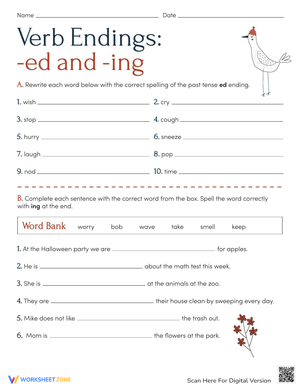
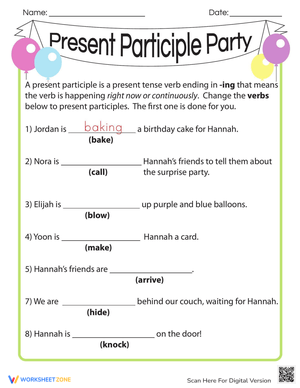
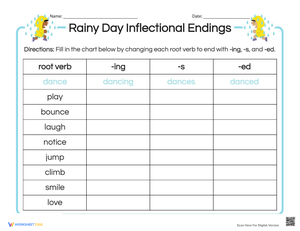
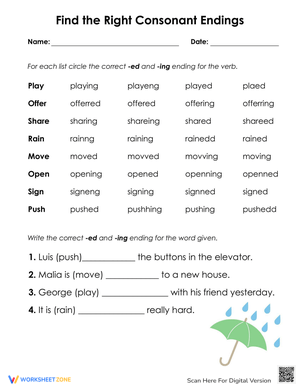
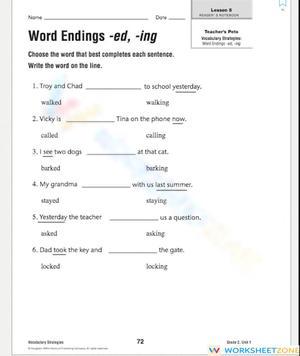
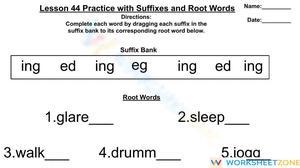
The suffixes -ed and -ing are used to indicate verb tense. The ending -ed typically signals the past tense, while -ing indicates an ongoing or continuous action. Learning to identify these endings helps students determine the timing of events within a story, which is a key component of reading comprehension. In many classrooms, teachers introduce these endings through word sorts and fill-in-the-blank activities that highlight the relationship between a base word and its inflected form. These printable worksheets provide a structured way for students to practice these transformations until they become automatic.
Three Spelling Rules Every Student Should Know
Adding inflectional endings often involves more than just attaching letters to the end of a word; it frequently requires a change to the base word itself. There are three primary spelling rules that students must master to become proficient spellers and readers. The first is the 'doubling the consonant' rule, which applies to many one-syllable words with a short vowel sound ending in a single consonant. Before adding an ending like -ed or -ing, the final consonant must be doubled, as seen in the transition from 'hop' to 'hopping'. Without this rule, the vowel sound could be misinterpreted, changing the meaning of the word entirely.
While many teachers treat inflectional endings as simple spelling rules, they actually serve as a student's first exposure to morphological awareness. Mastering these endings allows learners to recognize base words rapidly, which significantly reduces cognitive load during decoding and increases overall reading speed by up to thirty percent in early elementary grades. This morphological approach encourages students to look for familiar patterns within unfamiliar words, making the reading process more efficient and less frustrating for those who are still developing their foundational skills.
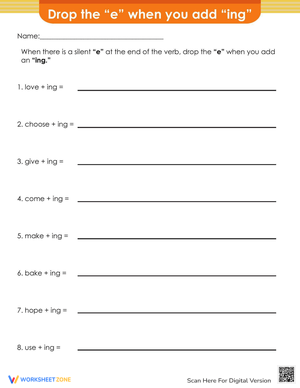
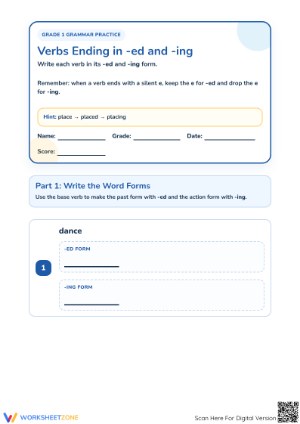
The second essential rule is 'dropping the silent e'. When a base word ends in a silent e, that e is typically dropped before adding an ending that starts with a vowel, such as -ing or -ed. For instance, 'bake' becomes 'baking' and 'skate' becomes 'skated'. Teaching this rule explicitly helps students avoid common spelling errors and reinforces their understanding of how vowels function within words. Finally, students must learn the 'change y to i' rule. When a word ends in a consonant followed by y, the y is changed to i before adding endings like -es or -ed. This transformation, seen in words like 'carry' becoming 'carries', is a frequent point of confusion for students that requires consistent reinforcement through targeted practice.
Classroom Implementation and Literacy Integration
Effective phonics instruction requires a balanced approach that combines direct teaching with meaningful practice. Teachers often find success by introducing one inflectional ending at a time, allowing students to fully grasp the rules and patterns before moving on to the next. Literacy blocks can be enhanced by including word-building activities where students use letter tiles or whiteboard practice to add endings to various base words. This hands-on approach makes the abstract rules of spelling more concrete and accessible for diverse learners in the classroom. Integrating inflectional endings printable worksheets into small-group instruction allows teachers to provide immediate feedback and support. During these sessions, teachers can observe how students apply spelling rules in real-time and address any misconceptions before they become habit.
Reading Rockets notes that inflectional endings are suffixes that change the grammatical form of a word without changing its core meaning. For instance, adding -ed to a verb like 'walk' creates 'walked', signaling the past tense, which is a foundational skill for 2nd-grade reading fluency (Reading Rockets, 2024). This citation underscores the importance of explicit instruction in morphology and its direct impact on a student's ability to read with speed and accuracy. By providing students with ample opportunities to practice these skills, teachers can help them build a strong foundation for future academic success.
Teacher Tips for Phonics Success
To get the most out of inflectional endings printable worksheets, teachers should consider several instructional strategies. First, always start with a clear modeling session. Show students exactly how to apply a rule, such as doubling the consonant, and think aloud as you do it. This transparency helps students understand the logic behind the spelling changes. Second, use word sorts to help students categorize words based on their endings or the spelling rules applied. Sorting activities encourage students to look for patterns and make connections between different words, which is a powerful way to reinforce learning. Another tip is to integrate writing into phonics practice. Ask students to use the words they have created in original sentences.
Differentiating Phonics Instruction
Every classroom is home to students with a wide range of abilities, making differentiation a necessity for effective instruction. For students who are just beginning to learn about inflectional endings, focus on the simplest transformations first, such as adding -s to plurals. As they become more comfortable, gradually introduce more complex rules like dropping the silent e. Providing scaffolds, such as word banks or rule reminders, can help struggling learners participate in the same activities as their peers while still receiving the support they need to succeed.
Frequently Asked Questions
1. What are the four basic inflectional endings taught in elementary school?
The four most common inflectional endings taught in early elementary grades are -s, -es, -ed, and -ing. These suffixes are essential because they appear frequently in beginner-level texts. The endings -s and -es are used to indicate plurality or subject-verb agreement, while -ed and -ing are used to change the tense of a verb. Mastery of these four endings allows students to read and understand a wide variety of sentences and stories. In many classrooms, these are the first morphological changes students learn to recognize.
2. How do you teach students when to double the final consonant?
Teaching the 'doubling the consonant' rule involves helping students recognize the CVC (consonant-vowel-consonant) pattern in one-syllable words. When a word follows this pattern and has a short vowel sound, the final consonant must be doubled before adding an ending that starts with a vowel, such as -ed or -ing. For example, 'run' becomes 'running' and 'clap' becomes 'clapped'. Teachers often use visual aids and repetitive practice with printable worksheets to help students internalize this rule and apply it accurately in their own writing.
3. Why is it important to teach inflectional endings explicitly?
Explicit instruction in inflectional endings is vital because these suffixes are the building blocks of English grammar and morphology. Without clear guidance, students may struggle to recognize the relationship between a base word and its inflected form, which can hinder their reading fluency and comprehension. By teaching the rules for adding endings—such as dropping the silent e or changing y to i—teachers provide students with a reliable framework for decoding new words. This structured approach builds student confidence and supports long-term literacy development in the classroom.
4. Are there specific resources for ESL students learning English inflectional endings?
Yes, ESL students often benefit from highly visual and interactive resources that highlight the connection between a base word and its inflected form. Many inflectional endings printable worksheets include pictures or matching activities that help students understand the meaning of the word changes. Furthermore, focusing on the oral pronunciation of endings like -ed, which can sound like /t/, /d/, or /ed/, is particularly helpful for English language learners. Providing plenty of opportunities for both oral and written practice ensures that these students can successfully master the complexities of English inflectional endings.
5. At what grade level should inflectional endings be introduced?
Inflectional endings are typically introduced in late first grade and reinforced throughout second and third grade. Most curricula begin with the simplest endings, like plural -s, before moving on to verb tenses like -ed and -ing. By the end of second grade, most students are expected to know and apply the three primary spelling rules for adding suffixes. Continuous practice and review in subsequent grades help ensure that these skills are fully integrated into a student's reading and writing repertoire, providing a solid foundation for more advanced literacy tasks.












 Interactive Worksheet Maker
 Quiz Maker
 Word Search Maker
 Crossword Puzzle Maker
 Word Scramble Generator
 Sentence Scramble Generator
 Handwriting Worksheet Generator
 Name Tracing Generator
 Fill In The Blank Generator