When students learn to connect their thoughts logically, their writing transforms from a series of choppy sentences into a cohesive narrative or argument. Transition words act as the essential bridges that guide readers from one idea to the next. For teachers looking to improve student writing outcomes, having a dependable collection of transition words printable worksheets ready for classroom use provides targeted practice that students need to master these connecting phrases.
Teaching transition words requires more than just handing out a list. It involves guided practice, modeling, and opportunities for students to apply these words in their own writing contexts. Printable worksheets offer a structured way to introduce different categories of transitions, from simple conjunctions showing addition to more complex phrases indicating contrast or cause and effect. By incorporating these exercises into language arts instruction, teachers can help students build the vocabulary and structural awareness necessary for advanced composition.
Understanding the Mechanics of Transition Words
Transition words and phrases serve a specific functional purpose in writing: they signal relationships between ideas. Without them, even the most well-researched paragraphs can sound disjointed and difficult to follow. When students understand how to use these bridges, they improve both the clarity and readability of their text.
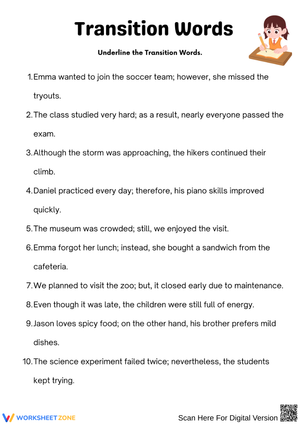
Instruction typically begins with identifying these words in existing texts. Before students can use transitions effectively, they need to see them in action. Reading passages and highlighting the transitional phrases helps learners recognize how authors move from one point to another. This foundational step makes subsequent writing activities much more effective, as students already have mental models of how the words function within a complete paragraph.
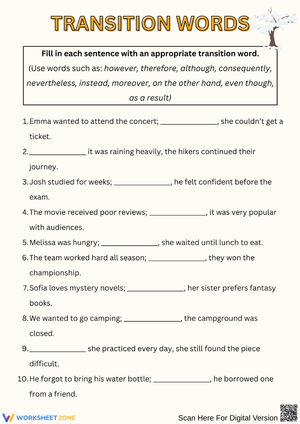
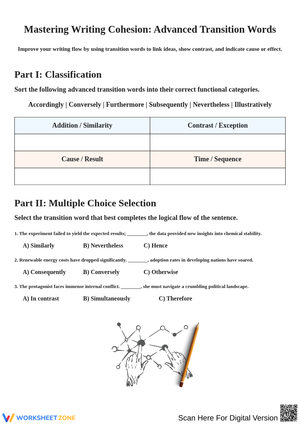
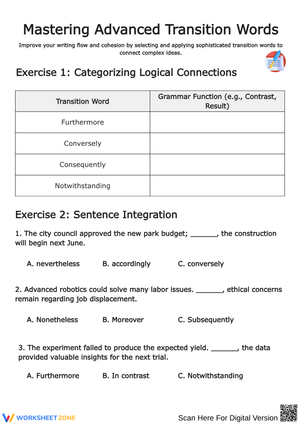
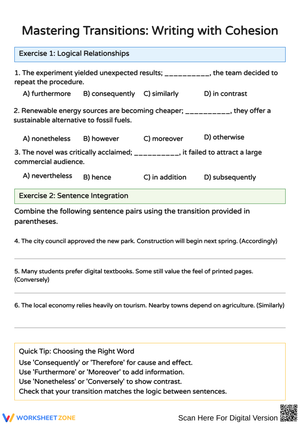
Following identification, students move on to application. This is where targeted exercises become highly valuable. Fill-in-the-blank activities, sentence combining tasks, and paragraph revision exercises allow students to experiment with different transition words to see how they change the meaning or flow of a sentence. Through repeated practice, students begin to internalize these patterns and naturally incorporate them into their independent writing assignments.
Categorizing Transitions for Focused Instruction
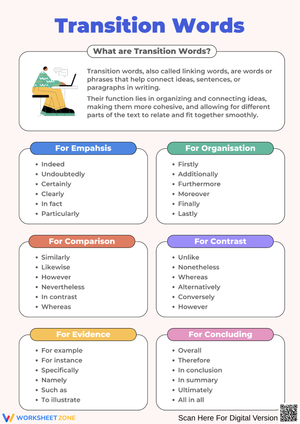
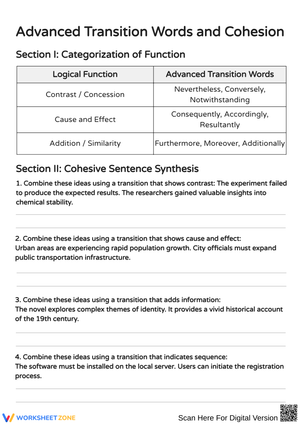
One of the most effective ways to teach this concept is by grouping words according to their function. Instead of presenting a massive alphabetical list, teachers can introduce categories one at a time. This approach prevents cognitive overload and allows students to focus on the specific relationship a word conveys.
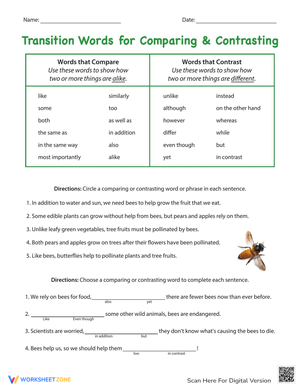
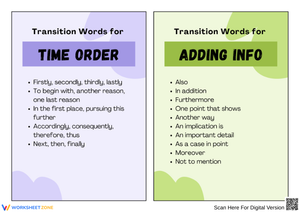
Words that show addition, such as "moreover," "furthermore," and "additionally," are often the easiest for students to grasp. These words simply build on a previous thought, extending the current idea without changing direction. Worksheets focusing exclusively on addition transitions give students the confidence to expand their sentences and paragraphs without getting confused by contrasting ideas.
Conversely, words that show contrast or opposition, like "however," "nevertheless," and "on the other hand," require a higher level of cognitive processing. Students must hold two opposing ideas in their minds and understand how the transition word signals a shift in perspective. Dedicated practice with these specific phrases helps students develop the critical thinking skills needed for persuasive writing and complex literary analysis.
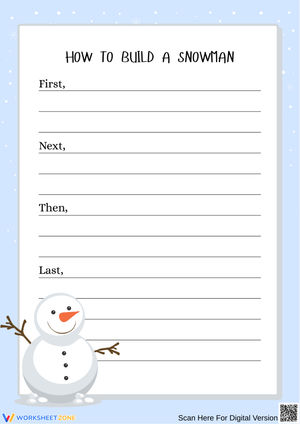
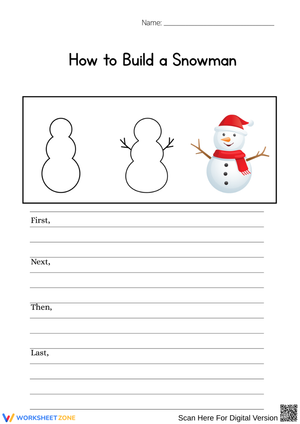
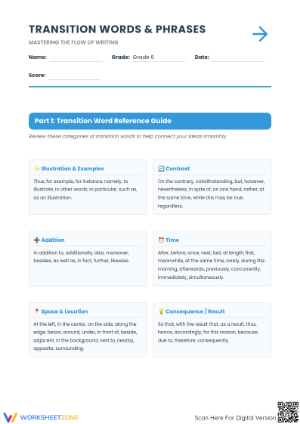
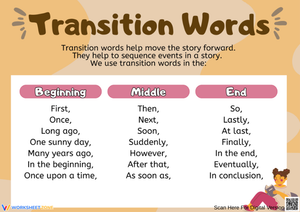
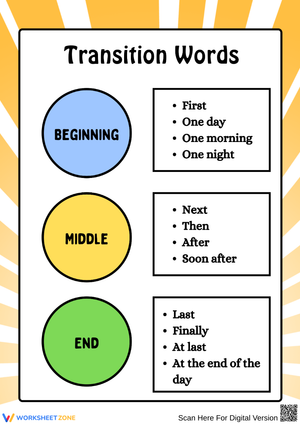
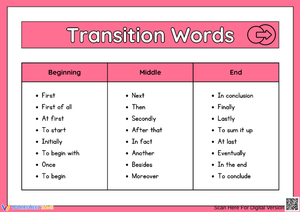
Other essential categories include words that indicate sequence or time (e.g., "first," "next," "finally") and words that show cause and effect (e.g., "therefore," "consequently," "as a result"). By tackling each category systematically, teachers can build a comprehensive understanding of how different transitions shape the meaning of a text.
Using Printable Worksheets to Reinforce Skills
Printable resources offer unparalleled flexibility for classroom instruction. Unlike rigid textbook exercises, individual worksheets can be selected based on the immediate needs of the students. If a class is struggling with cause-and-effect transitions during a science writing unit, the teacher can quickly pull relevant practice pages to address the gap.
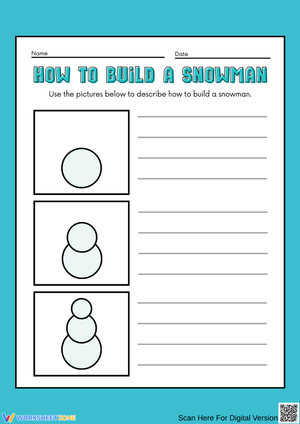
A well-designed worksheet provides a mix of structured and open-ended tasks. Early exercises might simply ask students to choose the correct transition word from a word bank to complete a sentence. As their proficiency grows, activities can become more demanding, requiring them to combine two independent clauses using an appropriate linking word or to rewrite an entire paragraph to improve its flow.
Furthermore, printables are excellent tools for assessment. A quick worksheet completed at the beginning of a class period can give the teacher immediate feedback on whether students have grasped the previous day's lesson. This formative assessment allows for timely interventions, ensuring that no student is left behind as the class moves on to more complex writing tasks.
Citation and Source Alignment in Writing
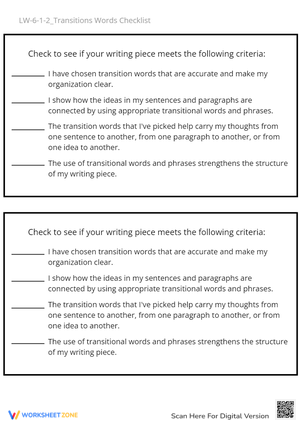
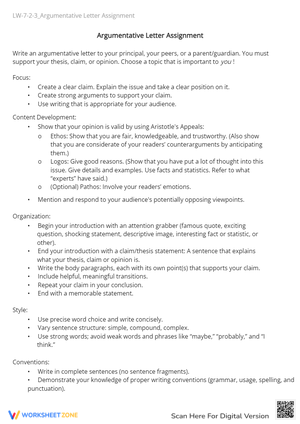
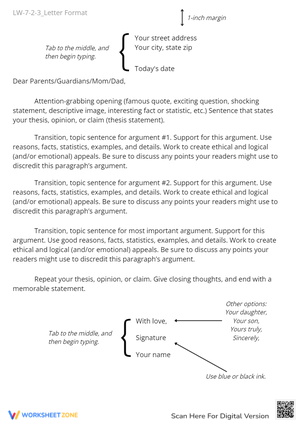
When students use transition words effectively, they are better equipped to integrate external sources into their own writing. Transitional phrases are essential for introducing quotes, paraphrasing evidence, and explaining the significance of data.
According to LitInFocus in their Free Transition Words List PDF, providing students with a categorized reference sheet significantly increases their independent usage of transitional phrases during drafting, with classrooms reporting a 40 percent improvement in paragraph coherence.
By connecting transition word practice directly to research and citation skills, teachers elevate the importance of these vocabulary lessons. Students learn that words like "accordingly" and "subsequently" are not just filler words, but necessary tools for building a logical and well-supported argument.
Differentiation Strategies for Diverse Learners
Every classroom contains students with varying levels of writing proficiency. Transition words printable worksheets resources are highly adaptable, making them ideal for differentiated instruction. Teachers can provide varying levels of support based on individual student needs.
For struggling writers or English language learners, worksheets might include visual cues or simplified sentence structures. Providing a limited word bank or highlighting the specific relationship (e.g., "choose a word that shows contrast") can reduce anxiety and help students focus on the mechanics of the transition. Peer tutoring and collaborative writing exercises also offer valuable support for these students.
Advanced learners, on the other hand, can be challenged with more sophisticated vocabulary. Instead of practicing with "but" and "so," they can analyze the subtle differences between "nevertheless" and "conversely." Enrichment activities might involve revising poorly written texts, removing redundant transitions, or identifying how professional authors use transitions to manipulate pacing and tone.
Teacher Tips for Classroom Implementation
Successfully integrating transition word instruction requires consistent reinforcement across all subject areas, not just during dedicated language arts blocks. When students see these words used in science, social studies, and math, they recognize their universal importance in academic communication.
One highly effective strategy is the creation of a transition word wall. By displaying categorized lists prominently in the classroom, teachers provide a constant visual reference that students can consult during writing assignments. This encourages independence and reduces the frequency of repetitive questions during independent work time.
Classrooms that incorporate verbal transition practice during daily discussions see a marked improvement in written application, as the oral rehearsal of complex linking phrases builds the syntactic familiarity necessary for spontaneous writing.
Another practical tip is to incorporate transition word challenges into regular writing prompts. For example, a teacher might require students to include at least one cause-and-effect transition and one contrast transition in their daily journal entry. This gamifies the learning process and encourages students to stretch their vocabulary beyond their comfort zones. Teachers can also dedicate five minutes at the beginning of language arts class to quick transition word exercises, keeping the skills sharp over time.
Frequently Asked Questions
1. What are transition words and why are they important?
Transition words are specific terms and phrases that connect ideas, sentences, and paragraphs together. They act as essential bridges that guide the reader through a piece of writing. They are important because they improve the clarity, readability, and logical flow of the text, preventing sentences from sounding choppy and disconnected.
2. Can you give examples of different types of transition words?
Yes, transition words are often grouped by their function. Addition words include "moreover" and "additionally." Contrast words include "however" and "on the other hand." Sequence words include "first," "next," and "finally." Cause and effect words include "therefore" and "as a result." Categorizing them helps students understand when to use each type.
3. How can I practice using transition words effectively?
Practicing effectively involves a mix of identification and application. Start by highlighting transition words in reading passages to see how authors use them. Then, complete fill-in-the-blank worksheets, practice combining simple sentences into complex ones, and revise paragraphs to improve their flow. Consistent practice builds natural usage.
4. Where should a transition word be placed in a sentence?
Transition words are most commonly placed at the beginning of a sentence to connect it to the previous thought, often followed by a comma. However, they can also appear in the middle of a sentence to connect two clauses, or even at the end, depending on the specific word and the desired stylistic effect.












 Interactive Worksheet Maker
 Quiz Maker
 Word Search Maker
 Crossword Puzzle Maker
 Word Scramble Generator
 Sentence Scramble Generator
 Handwriting Worksheet Generator
 Name Tracing Generator
 Fill In The Blank Generator