Understanding Compound Words in the Primary Classroom
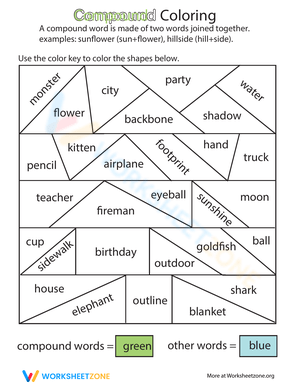
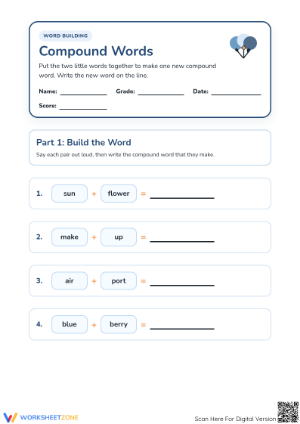
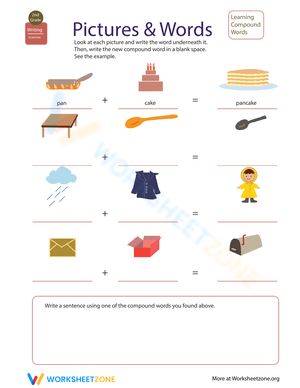
In the foundational years of literacy development, teaching compound words serves as a significant milestone. A compound word is formed when two distinct, smaller words combine to create a new term with its own unique meaning. For young learners in kindergarten through third grade, this concept is often their first introduction to morphology. By recognizing that 'sun' and 'flower' join to become 'sunflower,' students begin to see the architecture of the English language. Teachers find that once a student grasps this logic, their confidence in reading multi-syllabic words increases. These words act as a bridge between simple phonics and advanced vocabulary. In the classroom, this is often introduced through visual aids where pictures of base words are placed together. Using a compound words worksheets collection allows for structured practice that reinforces these mental pathways, providing the repetition necessary for mastery.
The Three Types of Compound Words Every Teacher Should Know
To guide students effectively, teachers must understand the three structures of compound words: closed, open, and hyphenated. Closed compound words are most common in early literacy. These are words where two base words are fused without spaces, such as 'notebook' or 'pancake.' In primary grades, these are easiest to identify because they look like single words. Students enjoy 'dissecting' them to find hidden smaller words, which builds phonological awareness and helps with spelling. Open compound words consist of two words that remain separate but act as one unit, such as 'ice cream' or 'full moon.' Teachers must explicitly teach that the space does not change their status as one concept. The third category, hyphenated compound words, includes terms like 'mother-in-law.' While less common in K-3, introducing them early helps students understand that hyphens serve specific grammatical purposes.
Why Teaching Compound Words is Vital for Reading Fluency
Research consistently highlights the link between morphological awareness and reading fluency. Compound words are a student's first entry point into this field. When students learn how words are built, they see a puzzle that can be solved rather than an intimidating wall of letters. This shift is essential for fluency. A student who identifies 'backpack' as a compound word will read it with higher speed and accuracy than one who sounds out every individual phoneme.
According to Reading Rockets, teaching compound words to kids involves helping them see the relationship between the parts and the whole. This morphological approach has been shown to improve reading speed by up to 25% in early elementary students who utilize structured visual word-blending activities during daily literacy blocks. This instruction helps students understand that English is a predictable system. When they learn the logic behind compound words, they start applying it to prefixes and suffixes. A strong understanding of word parts also aids in spelling. Students who know that 'rain' and 'coat' make 'raincoat' are less likely to misspell the middle because they understand the components. Integrating compound words worksheets activities ensures these skills are reinforced across different contexts.
Classroom Implementation: Effective Strategies for Literacy Centers
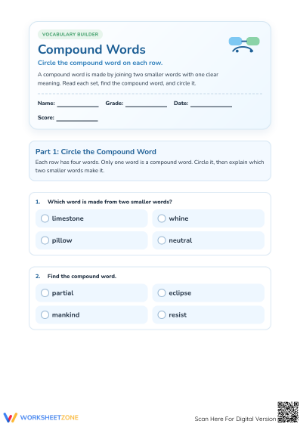
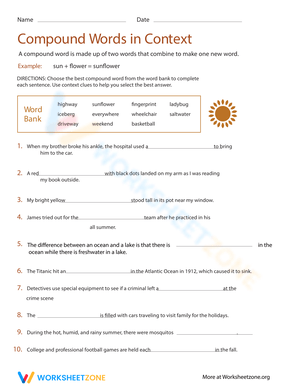
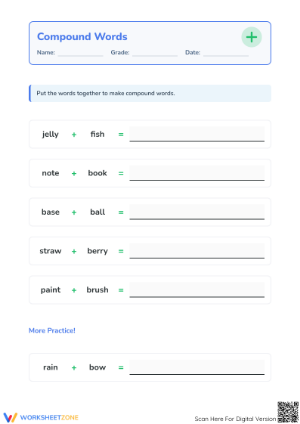
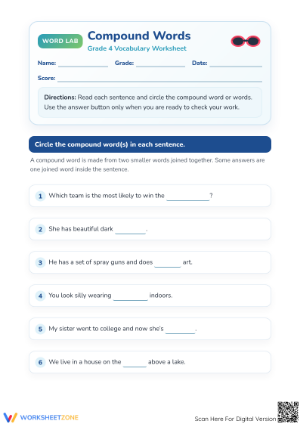
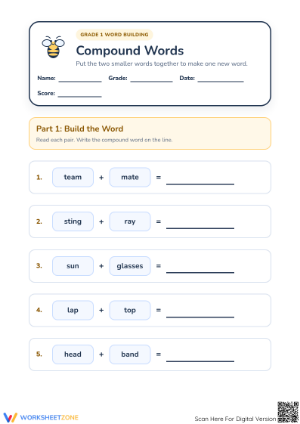
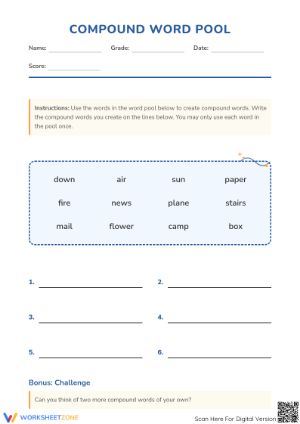
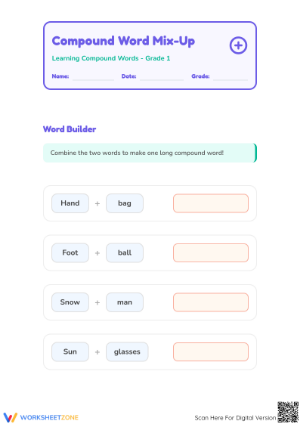
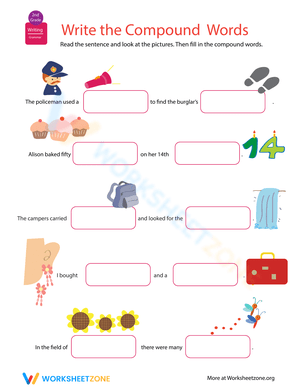
Implementing compound word instruction requires a mix of direct instruction and hands-on exploration. Literacy centers are ideal for this. One strategy is using 'Word Building Blocks.' Teachers write base words on individual blocks, and students must snap them together to create valid compound words. This tactile experience reinforces the concept of joining parts. Another tool is 'Compound Word BINGO.' Instead of numbers, cards feature compound words, and the teacher calls out base words. This requires students to mentally blend sounds and identify the result. For independent practice, a well-structured compound words worksheets offers the necessary scaffold. These should include several activity types:
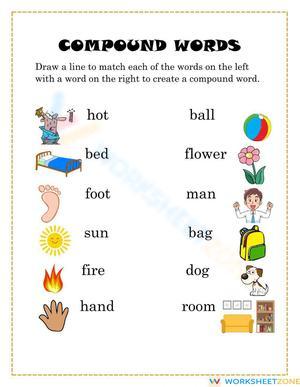
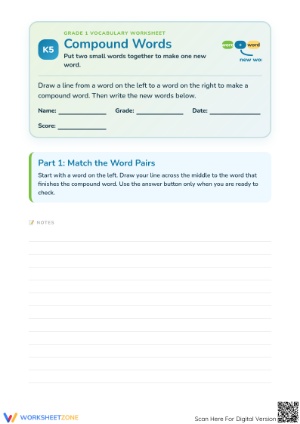
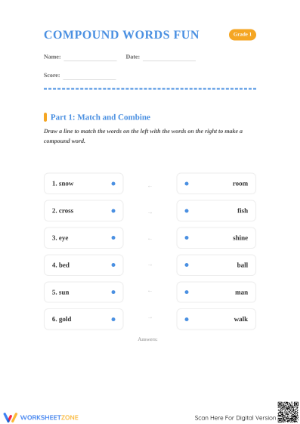
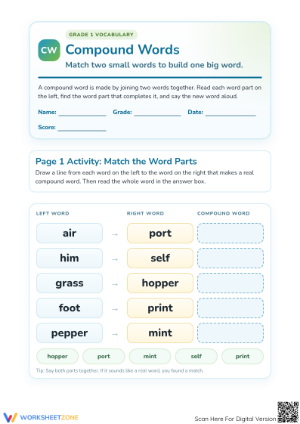
- Matching exercises pairing base words with their compound counterparts.
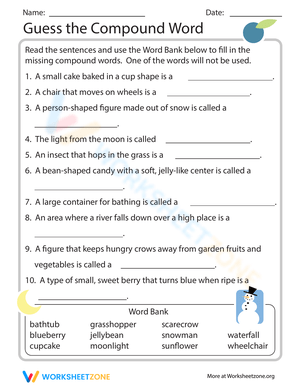
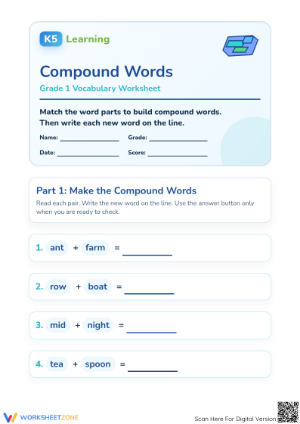
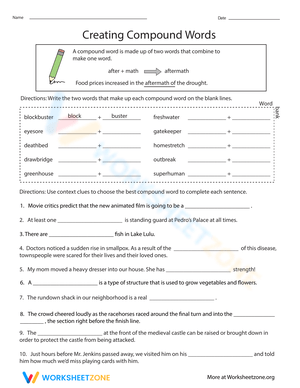
- Fill-in-the-blank sentences requiring students to choose the correct word.
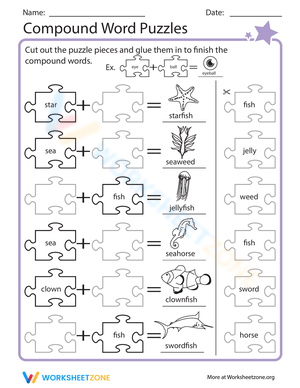
- Drawing prompts where students illustrate the parts and the whole.
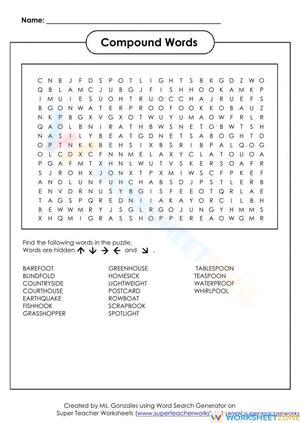
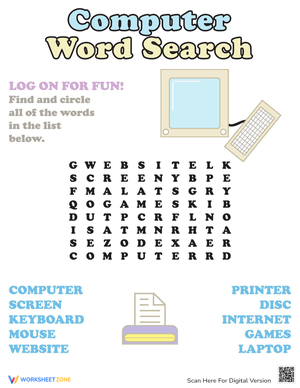
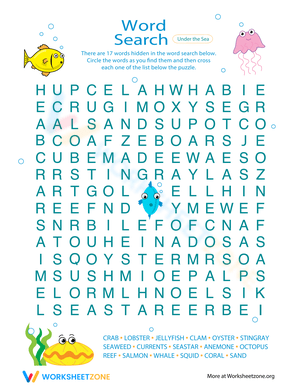
- Word search puzzles focusing on specific compound word categories.
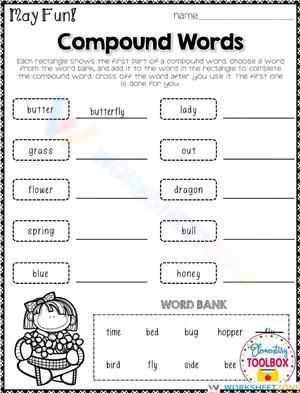
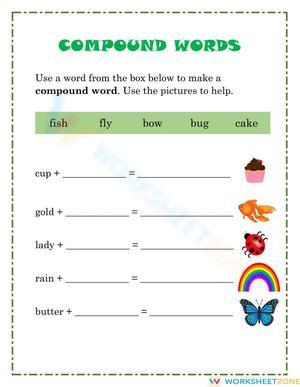
For instance, a worksheet might ask a student to draw a 'butterfly' and circle its components. This connects abstract concepts with concrete visuals. Teachers should encourage students to become 'Word Detectives' during independent reading, keeping a log of compound words found in library books. By rotating these activities, teachers ensure every student has multiple opportunities to interact with material.
Expert analysis suggests that the transition from recognizing compound words to identifying complex Greek and Latin roots is a critical hurdle in intermediate reading development. Students who master compound words early develop the pattern-recognition skills necessary for advanced multisyllabic decoding. The cognitive process of splitting 'snowball' into known entities mirrors splitting 'transport' into 'trans' and 'port.' By focusing heavily on compound words in grades K-2, teachers are essentially pre-loading the skills required for complex informational texts. This early intervention helps reduce the 'fourth-grade slump' where reading scores often dip as texts become more morphologically dense.
Differentiating Compound Word Instruction for Diverse Learners
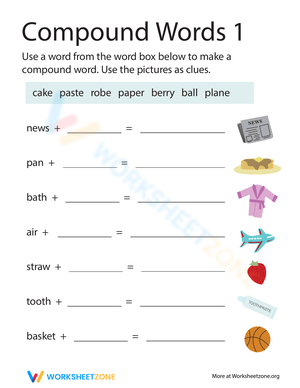
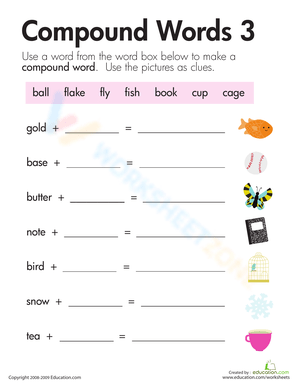
Every classroom is a mix of students at different stages, making differentiation key. For students struggling with phonics, teachers should focus on high-frequency, literal compound words like 'bedroom.' Using visual cues is essential; a worksheet pairing the word with a picture bridges the gap between decoding and comprehension. For English Language Learners (ELLs), compound words can be tricky because many are non-literal. A 'butterfly' is not a fly made of butter. Explicitly teaching these non-literal or idiomatic words is vital for ELL students to avoid confusion. Conversely, for advanced students, teachers can introduce words with more than two parts, like 'never-ending.' Providing tiered compound words worksheets options allows students to work at their own pace. Offering tasks from simple matching to complex sentence construction ensures every student is appropriately challenged. Differentiation ensures the right work for each child.
Engaging Literacy Games and Activities for Small Groups
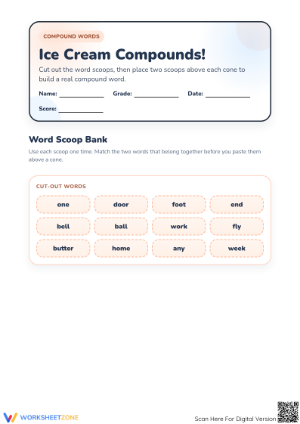
Small group instruction offers the opportunity for intensive, targeted practice. One successful game is 'Compound Word Charades.' A student is given a word like 'basketball' and must act it out while peers guess the components and the combined word. This physical movement solidifies the concept in a low-pressure way. Another activity involves 'Word Scramble' cards where compound words are split and scrambled. The group must work together to match pairs. This collaborative problem-solving encourages peer learning. Teachers can also focus on the 'why' behind compound words. Discussing why we use 'firefighter' instead of a longer description helps students understand language efficiency. Incorporating specialized compound words worksheets sets for small groups provides data for formative assessment. These might focus on specific types or include challenging vocabulary. Observing students in this setting helps identify specific areas where they need support, such as blending sounds or understanding non-literal meanings.
Using Compound Word Worksheets for Formative Assessment
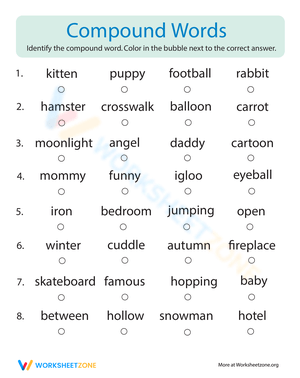
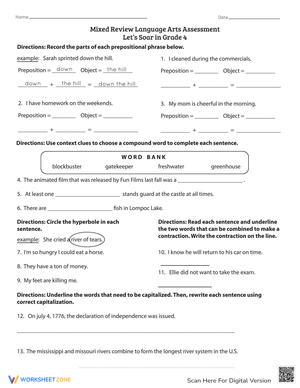
Assessment is an ongoing process, and compound word mastery provides a window into literacy progress. Formative assessment can be as simple as an 'Exit Ticket' where students write a compound word they learned. For a comprehensive view, a structured compound words worksheets is highly effective. Assessments should look at identification, construction, and meaning. Can the student find a compound word in a sentence? Can they join two words? Do they understand the new meaning? Tracking performance across these domains creates a detailed profile of student needs. Data gathered should inform future instruction. If many struggle with open compound words, the teacher knows to dedicate more time to that concept. This data-driven approach ensures instructional time is used efficiently. Sharing results with parents helps them understand progress and provide support at home. Providing parents with a compound words worksheets for extra practice bridges the home-school connection.
Frequently Asked Questions About Compound Words
1. What are the three main types of compound words?
The three main types are closed, open, and hyphenated. Closed words have no space, like 'sunshine.' Open words have a space but act as one unit, like 'hot dog.' Hyphenated words use hyphens, like 'merry-go-round.' Understanding these helps students with recognition and spelling across various texts.
2. At what grade level should compound words be introduced?
They are typically introduced in first grade and reinforced through third grade. Basic concepts can start in kindergarten through oral games. Building this foundation supports more complex reading tasks later in elementary school and helps students develop a stronger grasp of word morphology early on.
3. How can I help a student struggling to blend compound words?
Start with literal words and use visual aids. Break the word into parts and have the student say each separately before combining them. Using tactile tools like blocks can help them physically see the connection. Consistent practice with a compound words worksheets provides necessary repetition.
4. Are compound words always literal in meaning?
No, some are idiomatic or non-literal, like 'butterfly.' It is important to explicitly teach these meanings, especially to English Language Learners, so they are not confused by individual components. Exploring these words can be an engaging classroom activity that sparks interest in etymology.
5. Why is morphological awareness important for early readers?
It is a key predictor of reading success. Understanding how words are built helps students decode longer words, reducing cognitive load and allowing focus on comprehension. It also aids in spelling and vocabulary, providing a comprehensive boost to literacy skills.












 Interactive Worksheet Maker
 Quiz Maker
 Word Search Maker
 Crossword Puzzle Maker
 Word Scramble Generator
 Sentence Scramble Generator
 Handwriting Worksheet Generator
 Name Tracing Generator
 Fill In The Blank Generator