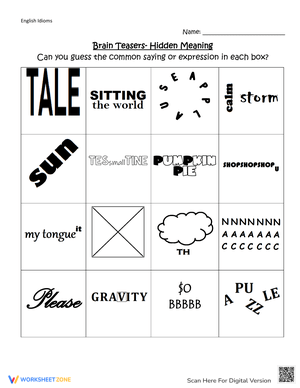
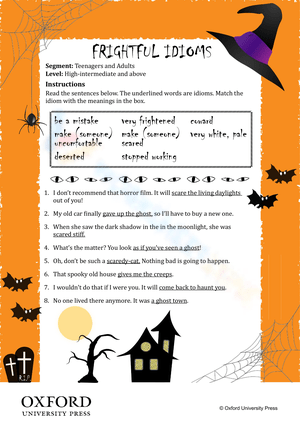
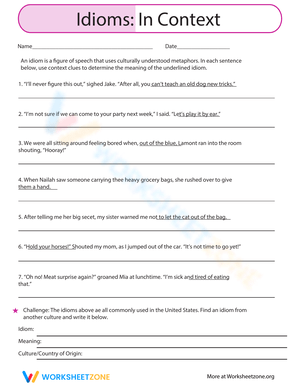
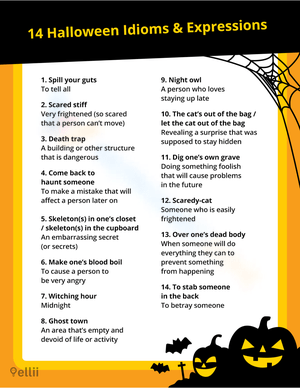
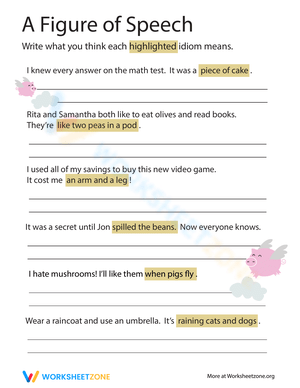
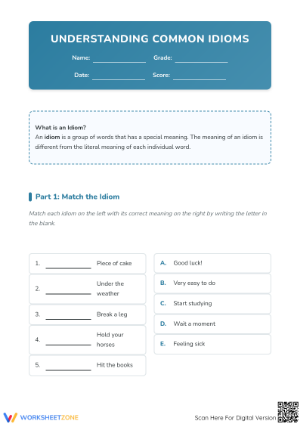
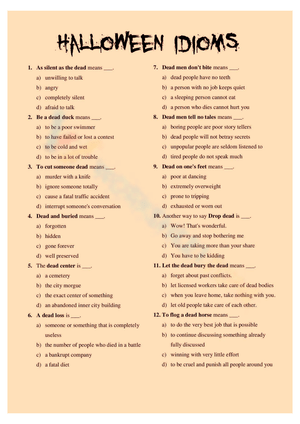
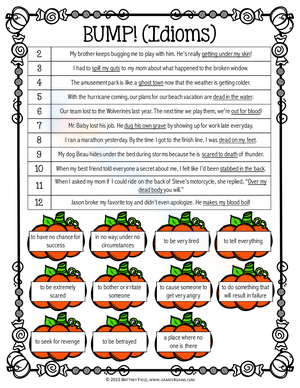
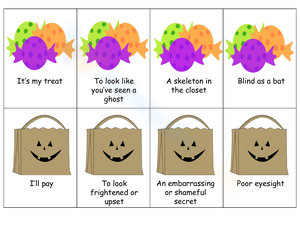
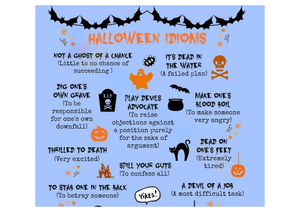
A student who reads she was over the moon and pictures an astronaut isn't struggling to decode the words. She's missing the figurative layer underneath them. That gap is exactly what idioms worksheets are built to close, and it shows up most often in grades 3-6, right as texts start leaning on figurative language that can't be solved with literal, word-by-word reading. If you teach ELA, run reading intervention, or support multilingual learners, you've watched this happen in real time during a read-aloud.
The good news is that idioms are a teachable, high-frequency skill. A focused set of worksheets gives students repeated, low-stakes practice recognizing an idiom, separating its literal picture from its intended meaning, and then using it correctly in a sentence of their own. That progression matters more than memorizing a list.
What Idioms Worksheets Should Cover in Grades 3-6
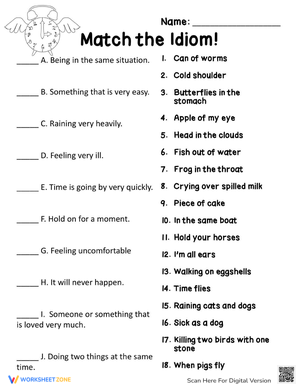
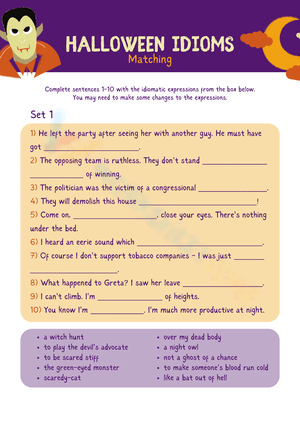
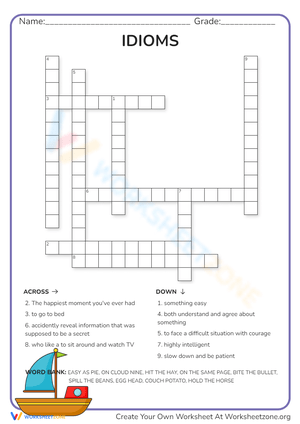
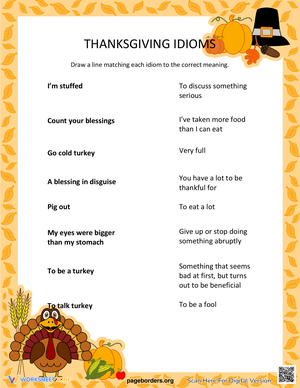
Strong idioms worksheets move students through three jobs, not one. First, recognition: spotting that a phrase like bite the bullet isn't meant literally. Second, interpretation: explaining what it really means using context. Third, production: using the idiom accurately in speaking or writing. Worksheets that stop at matching leave the hardest cognitive work undone.
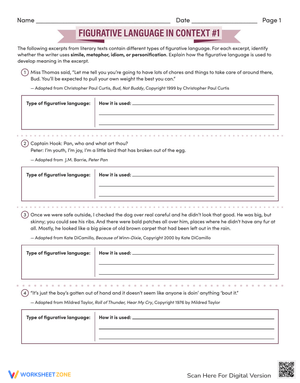
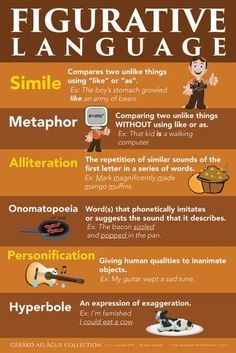
On Worksheetzone, idioms practice lives under English Language Arts, Grammar, Language and Vocabulary, Figurative Language, so it slots naturally beside similes, metaphors, and personification. Sequencing them together helps students build a mental category for non-literal language instead of treating each device as an isolated trick.
How Idioms Worksheets Align to Common Core Standards
Idiom instruction isn't a side quest. It's named directly in the Common Core language standards for the upper-elementary grades, which is why worksheet practice pays off on standards-based assessments.
According to the Common Core State Standards Initiative, standard CCSS.ELA-Literacy.L.4.5b asks grade 4 students to recognize and explain the meaning of common idioms, adages, and proverbs, and L.5.5b carries that same skill into grade 5, placing idiom instruction squarely within the figurative language strand across grades 3-6.
That framing tells you two useful things. Idioms are grouped with adages and proverbs, so your worksheets can and should distinguish among them. And the standard emphasizes explaining meaning, not just labeling, which means a worksheet that only asks students to circle idioms is under-serving the standard. Look for tasks that ask why and how do you know.
Classroom Implementation
You don't need a full lesson block to make idioms worksheets count. They flex into the routines you already run. Use a short matching or illustration page as morning work to prime the day's read-aloud. Drop a four-idiom page into a small-group intervention rotation so students get targeted reps while you confer. Or hand out a quick interpret-in-context task as an exit ticket to see who can transfer the skill to a new sentence.
A simple weekly arc works well: introduce five idioms Monday with visuals, practice interpretation midweek, and finish Friday with a short production task where students write or illustrate their own use. Rotating in idiom of the day keeps the category warm without eating instructional time.
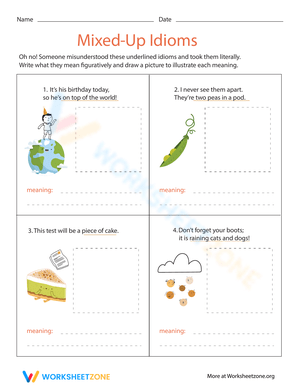
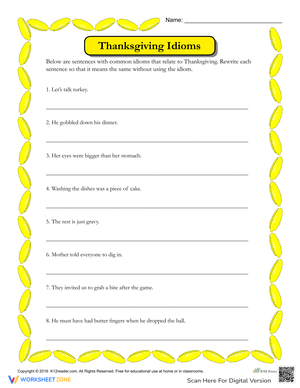
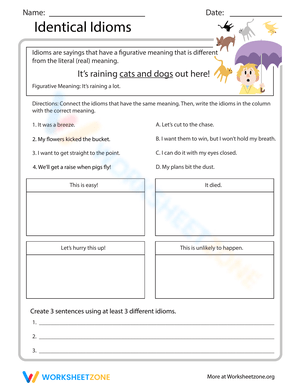
For assessment, illustration tasks are quietly diagnostic. When a student draws the literal image and then writes the figurative meaning, you can see precisely where comprehension breaks. A drawing of a real raining cat instantly tells you the figurative layer hasn't landed yet.
Pairing Idioms With Context-Clue Strategies
Idioms and context clues reinforce each other, so teach them as a pair. Most idioms in authentic text aren't glossed; students have to lean on surrounding sentences to infer meaning. Worksheets that embed each idiom inside a short paragraph, rather than listing it in isolation, mirror how students actually meet idioms while reading.
Model the move explicitly. Read the sentence before and after, ask what would make sense here, then test the guess against the phrase. This connects idiom work to the broader reading-comprehension habit of monitoring meaning and self-correcting, and it pushes students past guessing toward evidence-based interpretation. Over grades 3-6, that shift, from simple matching toward explaining an idiom in context, is exactly the progression the standards expect.
Frequently Asked Questions
1. What grade level are idioms typically taught at under Common Core?
Idioms appear explicitly in the grade 4 and grade 5 language standards, CCSS.ELA-Literacy.L.4.5b and L.5.5b, which ask students to recognize and explain common idioms, adages, and proverbs. Many teachers introduce simpler idiom matching in grade 3 to build readiness before that formal expectation arrives.
2. How can teachers use idiom worksheets to support English Language Learners?
Choose worksheets with visual cues, sentence frames, and a home-language column, and teach a small set deeply rather than a long list quickly. Because idioms can't be understood through literal translation, pairing the worksheet with oral rehearsal and acting out the phrase helps multilingual learners attach figurative meaning securely.
3. What is the difference between an idiom, an adage, and a proverb?
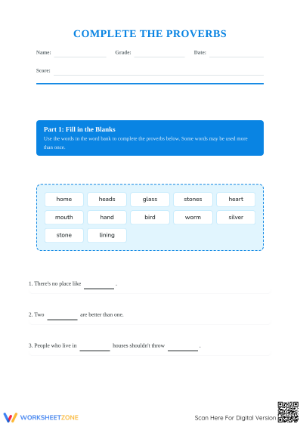
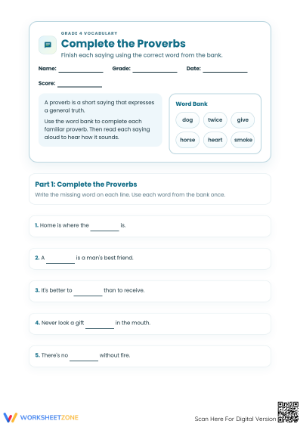
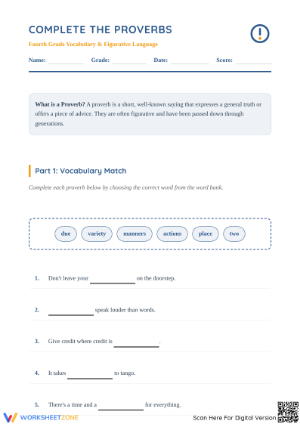
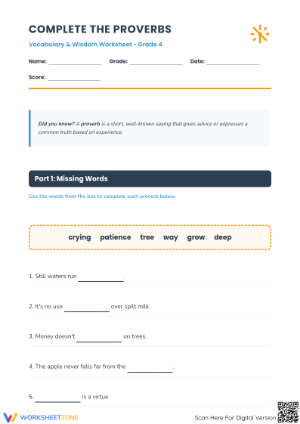
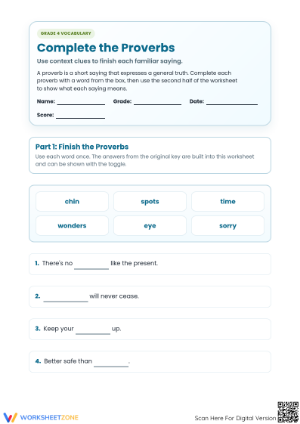
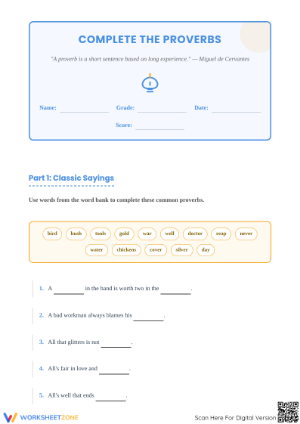
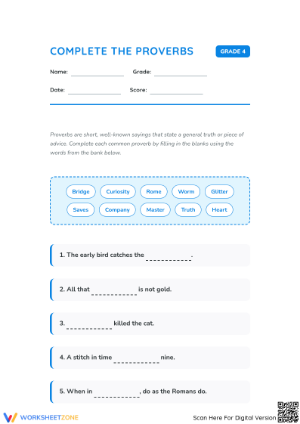
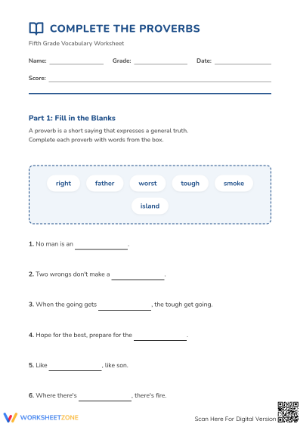
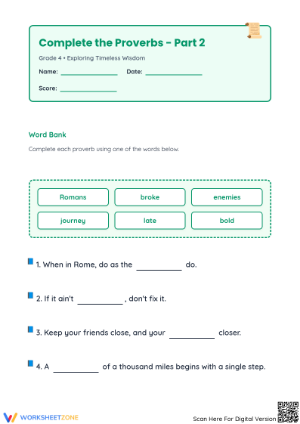
An idiom is a phrase whose meaning differs from its literal words, such as hit the books. An adage is a short, widely accepted observation, and a proverb offers practical advice, like the early bird catches the worm. The Common Core groups all three together, so worksheets can teach them side by side.
4. How should idiom worksheets be sequenced within a figurative language unit?
Start with recognition, move to interpretation in context, then finish with production where students use idioms in their own writing. Embedding idioms in short paragraphs rather than isolated lists builds the context-clue habit, and revisiting a few idioms across several days cements them better than one heavy session.












 Interactive Worksheet Maker
 Quiz Maker
 Word Search Maker
 Crossword Puzzle Maker
 Word Scramble Generator
 Sentence Scramble Generator
 Handwriting Worksheet Generator
 Name Tracing Generator
 Fill In The Blank Generator