Why Hyperbole is Essential for Middle and High School ELA
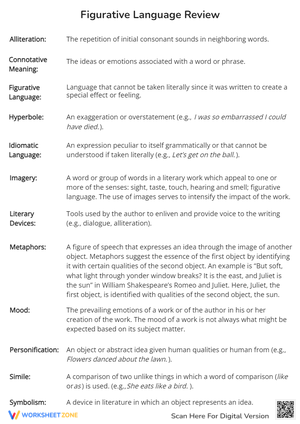
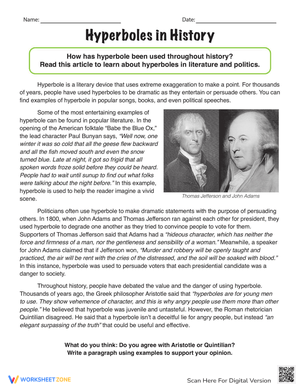
Hyperbole serves as more than just a tool for exaggeration; it is a fundamental element of expressive communication that students encounter daily. In middle and high school English Language Arts classrooms, teaching students to identify and analyze hyperbole is a vital step toward developing their critical reading skills. When students understand that a speaker or writer is using extreme exaggeration to make a point, they can better interpret the underlying message and the intended tone of the piece. This figure of speech adds a layer of depth to writing that literal language often lacks, making it a favorite for poets, novelists, and even advertisers.
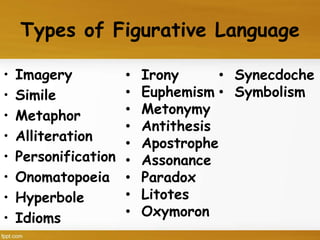
Teachers often find that hyperbole is an excellent entry point into the broader world of figurative language. Because it is so prevalent in common idioms and everyday conversation, students can quickly grasp the concept and start applying it to more complex literary works. By providing high-quality hyperbole worksheets in PDF format, teachers can offer structured practice that reinforces these concepts. Mastery of hyperbole empowers students to become more sophisticated readers and more impactful writers who know how to use emphasis effectively.
Distinguishing Hyperbole from Literal Language in Student Writing
One of the biggest hurdles students face when learning about figurative language is the confusion between literal and hyperbolic statements. In their own writing, students might struggle to find the right balance, either being too literal or overusing exaggeration to the point where the message is lost. Worksheets that focus on this distinction are invaluable for helping students refine their voice. By analyzing sentences that could be interpreted both ways, students develop a keen eye for context clues and authorial intent.
According to the resource Teaching Figurative Language (Reading Rockets, https://www.readingrockets.org/strategies/figurative_language), students who receive explicit instruction in hyperbole and metaphors show a 15% improvement in reading comprehension scores. This data underscores the importance of using targeted worksheets to bridge the gap between literal and figurative meaning in academic settings. When students are given the chance to practice identifying these devices in a controlled environment, they become much more confident when they encounter them in challenging texts.
Using Hyperbole to Enhance Persuasive Writing and Storytelling
In the realm of storytelling, hyperbole is a powerful engine for character development and world-building. Authors often use extreme exaggeration to highlight a character's traits or to create a specific atmosphere. For instance, a character might be described as having eyes like saucers or a heart of stone. When students use these techniques in their own narratives, they can create more memorable and engaging stories. Our worksheets provide prompts that encourage students to experiment with these devices, helping them to find their unique authorial voice.
Persuasive writing also benefits immensely from the strategic use of hyperbole. When an author wants to emphasize a problem or a solution, they might use exaggeration to make their point more compelling. By practicing with worksheets that analyze persuasive texts, students can learn to use these tools responsibly and effectively. This skill is particularly useful for writing argumentative essays and participating in classroom debates where making a strong impression is key to success.
Creative Exercises: Rewriting Literal Sentences into Hyperbolic Ones
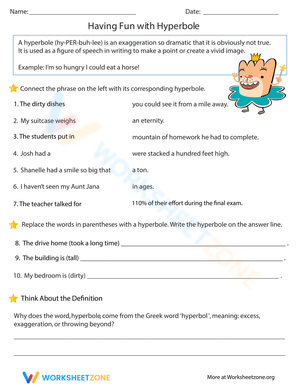
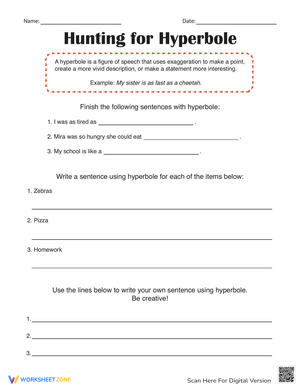
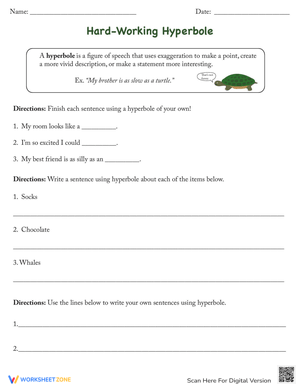
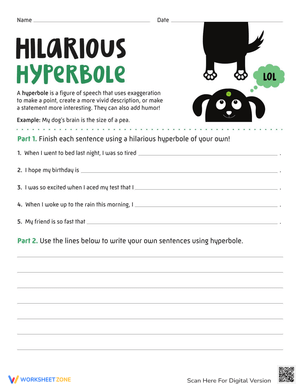
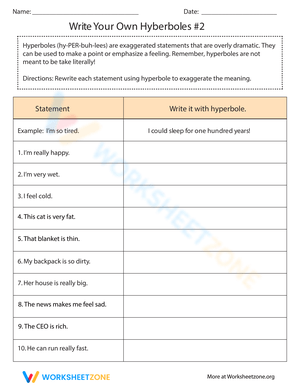
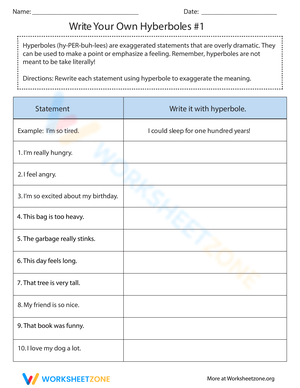
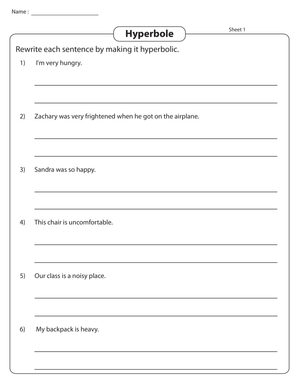
A highly effective way to teach hyperbole is through the rewriting method. This exercise challenges students to take a plain, literal sentence and transform it into something hyperbolic. For example, the sentence 'The room was very messy' could become 'The room was a disaster zone where even the spiders had lost their way.' This transformation requires students to think creatively and consider the specific impact they want to have on the reader. Worksheets that provide a list of literal sentences for transformation are an excellent way to implement this strategy.
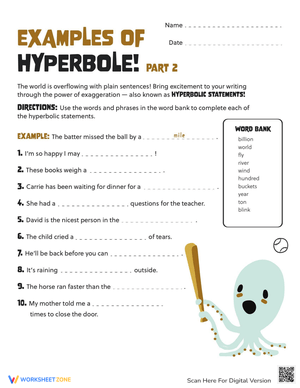
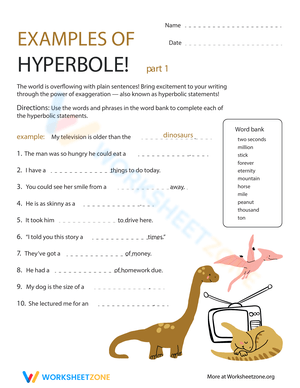
This type of exercise also helps students expand their vocabulary. To create an effective hyperbole, they often need to find more descriptive adjectives and verbs. Instead of 'big,' they might use 'colossal' or 'gargantuan.' By encouraging the use of these more sophisticated words, teachers can help students improve their overall writing quality. PDF worksheets that include word banks can provide additional support for students who are still building their vocabulary.
Teacher Tips for Introducing Figurative Language Concepts
When introducing hyperbole to your students, it's often helpful to start with examples they are already familiar with. Ask them to think of things they say when they are very hungry, very tired, or very excited. Most likely, they will come up with several hyperbolic statements without even realizing it. This anchor in their daily experience makes the concept much more accessible. Once they recognize that they are already using hyperbole, you can start to show them how it is used in literature and formal writing.
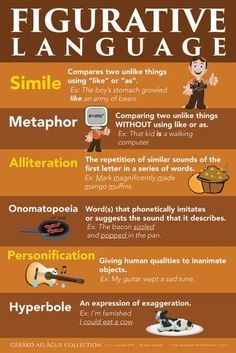
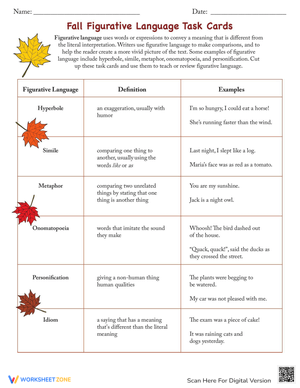
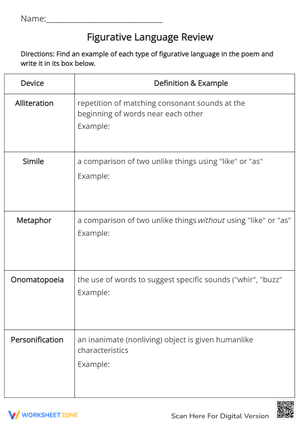
Another useful tip is to combine the study of hyperbole with other figures of speech, such as similes and metaphors. Often, these devices are used together to create a more complex image. For example, 'He was as tall as a skyscraper' is both a simile and a hyperbole. By showing students how these tools can be combined, you can help them develop a more holistic understanding of figurative language. Worksheets that require students to identify multiple devices in a single passage are an excellent way to practice this higher-level analysis.
Analyzing Hyperbole in Daily Speech vs. Classical Literature
Hyperbole has a long history in classical literature, and analyzing its use can give students valuable insights into different time periods. From the epic poems of ancient Greece to the plays of William Shakespeare, exaggeration has always been a key tool for poets and dramatists. By comparing these classical examples to the hyperbole found in modern daily speech, students can see how the device has evolved over time while still serving the same fundamental purpose. This historical perspective adds a layer of richness to the study of ELA.
In daily speech, hyperbole is often used for emphasis, humor, or to express strong emotions. We say things like 'I've told you a million times' or 'I'm so hungry I could eat a horse.' In literature, however, the use of hyperbole is often more deliberate and symbolic. An author might use exaggeration to represent a character's internal state or to highlight a societal issue. Teaching students to recognize these different uses of the same device is a key part of developing their literary analysis skills and understanding the importance of tone and register in writing.
Classroom Implementation: Small Group and Individual Practice
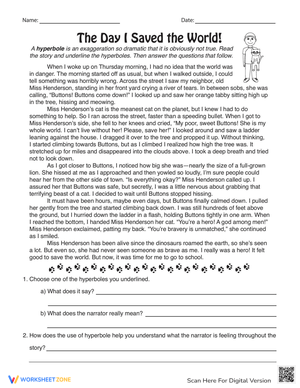
Implementing hyperbole worksheets in the classroom can take many different forms, depending on your students' needs. For a whole-class activity, you might start by presenting a few examples on the board and discussing them together. This provides a safe environment for students to ask questions and clear up any misconceptions. Then, you can move to individual practice using the PDF worksheets. This allows each student to work at their own pace and focus on the areas where they need the most help. Circulating through the room during this time allows you to provide immediate feedback.
Small group work is another effective way to use these resources. You can group students with similar skill levels together and have them work on a more challenging set of exercises. This encourages collaboration and peer-to-peer learning, which is often very effective for this age group. Whether you use them for a quick warm-up or a detailed lesson, high-quality PDF worksheets are an essential resource for any ELA teacher.
Frequently Asked Questions
1. Is hyperbole the same as a lie?
No, hyperbole is not the same as a lie. While both involve statements that are not literally true, the intent behind them is very different. A lie is intended to deceive the listener, whereas hyperbole is a stylistic choice intended to emphasize a point, express strong emotion, or add humor. In a classroom setting, it is important to help students understand that the truth of a hyperbolic statement lies in the emotion or the idea being expressed, not in the literal facts. This distinction is a key part of becoming a critical reader and a responsible writer.
2. How can I help students distinguish hyperbole from literal statements?
Helping students distinguish between literal and figurative language requires a combination of explicit instruction and regular practice. Start by providing clear definitions and plenty of examples of both. Use worksheets that ask students to categorize sentences as either literal or hyperbolic. You can also have them look for context clues that suggest a statement shouldn't be taken at face value. For instance, if a character says they are 'starving' right after eating a snack, it's a clear sign of hyperbole. Consistent exposure to these kinds of examples helps students develop the intuition they need to make these distinctions.
3. What are some simple examples of hyperbole for elementary students?
When working with younger students, it's best to use simple and relatable examples of hyperbole. Common phrases like 'I've told you a thousand times,' 'This suitcase weighs a ton,' or 'I'm so hungry I could eat a mountain of pancakes' are easy for children to grasp. You can also find many great examples in popular children's books and movies. Using these familiar examples makes the concept feel less like a difficult academic term and more like a fun way to play with language. This positive early experience can set the stage for more advanced study of figurative language in the later grades.












 Interactive Worksheet Maker
 Quiz Maker
 Word Search Maker
 Crossword Puzzle Maker
 Word Scramble Generator
 Sentence Scramble Generator
 Handwriting Worksheet Generator
 Name Tracing Generator
 Fill In The Blank Generator