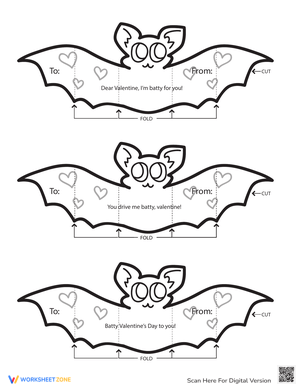
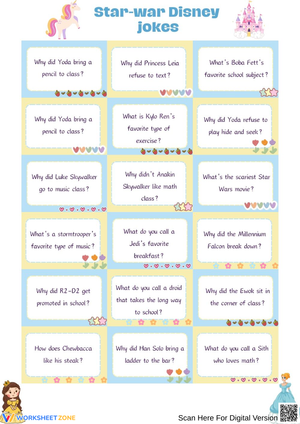
Understanding the Role of Puns in Figurative Language
Puns represent a sophisticated level of linguistic processing essential for developing ELA students. When teachers introduce puns printable worksheets materials, they challenge students to engage with double meanings and phonetic similarities that make English flexible. A pun exploits multiple meanings or similar-sounding words for humor or rhetorical effect. By identifying these layers, students sharpen their ability to perceive nuances, a foundational skill for high-level reading comprehension. Using puns printable worksheets options allows for a focused exploration of these linguistic anomalies in a way that is both structured and entertaining for students of all levels.
According to the guide "What is a Pun?" on Literary Devices, a pun is a form of wordplay that exploits multiple meanings of a term or similar-sounding words to create humor (Literary Devices, 2024). This linguistic tool improves student critical thinking and semantic awareness by requiring simultaneous processing of different word meanings, supporting vocabulary acquisition and literacy development across grade levels.
Why Use Puns printable worksheets in Your Lesson Plans?
Integrating puns printable worksheets resources offers pedagogical advantages beyond amusement. First, puns are an excellent tool for vocabulary development. To understand a pun, a student must be familiar with at least two definitions of a word or recognize a homophone. This encourages looking beyond the surface level and considering semantic richness. When students encounter a pun about a "stable" environment for horses, they must recall both the building and the adjective meaning steady. This dual recall strengthens neural pathways associated with word retrieval. Furthermore, these worksheets provide a low-stakes environment for practicing critical thinking. Humor is a natural engagement hook. Students often participate more when the goal is to solve a linguistic puzzle. This increased engagement leads to better retention of concepts. By using puns printable worksheets assets, teachers provide consistent practice that feels like a game, which is effective during small-group interventions.
Essential Types of Puns for Student Mastery
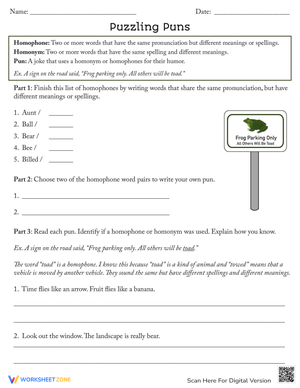
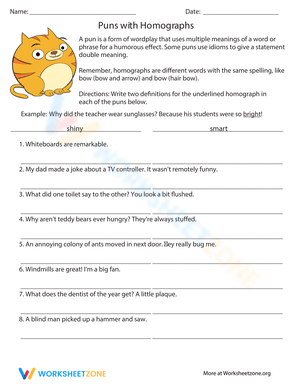
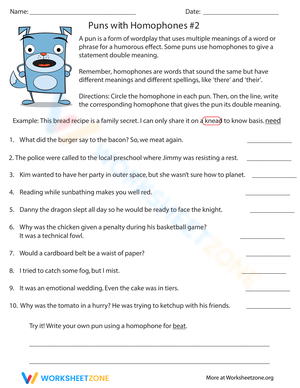
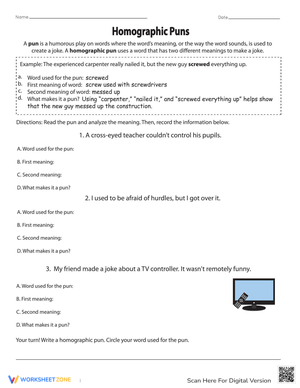
To effectively teach this topic, it is helpful to categorize puns so students recognize different ways language can be manipulated. The homophonic pun relies on words that sound the same but have different meanings and spellings. For example, a joke about a "deer" friend uses phonetic similarity between the animal and the term of endearment. Homophonic puns are often the easiest to identify, making them a great starting point for any puns printable worksheets sequence. They reinforce spelling and phonetic awareness while introducing wordplay. Homographic puns use words spelled the same but with different meanings. A classic example involves a "bass" fish and a "bass" guitar. Identifying these requires context clues. When students use puns printable worksheets tools that focus on homographs, they must use surrounding text to determine meaning, a core reading strategy in most ELA standards. This practice helps them become more attentive readers who do not just skim for literal meaning.
Classroom Implementation: Strategies for Teaching Puns
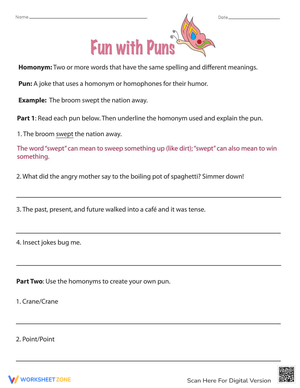
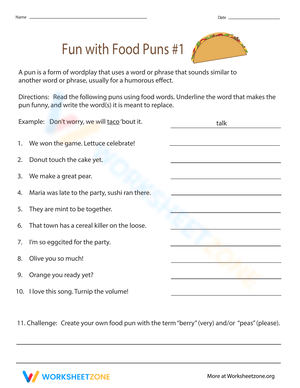
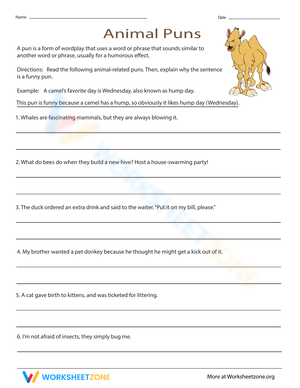
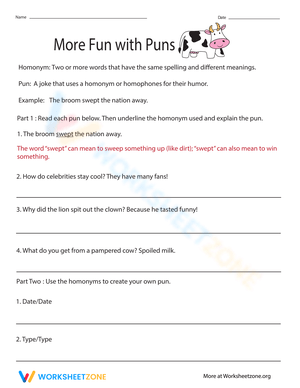
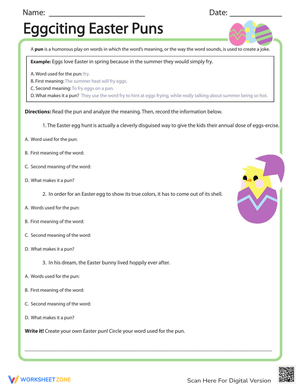
Classroom implementation should move from passive recognition to active creation. Start with puns printable worksheets materials that ask students to underline the pun and write out the two meanings. This ensures comprehension of wordplay mechanics. Provide a sentence like, "The library has the most stories," and ask for two definitions of "stories." This foundational step is necessary before creation. Another strategy is the "Pun of the Day" warm-up. Display a pun and have students discuss why it is funny. Provide a quick worksheet relating to that structure. This consistent exposure helps normalize wordplay in independent reading. Classroom implementation should also involve collaborative work. Have students work in pairs to solve puns printable worksheets puzzles, encouraging them to verbalize their thought process. Hearing a peer's logic can be enlightening for struggling students. Consider a cross-curricular approach using content-specific puns in science or history to reinforce knowledge while practicing ELA skills.
Scaffolded Learning: From Identification to Creation
A well-designed puns printable worksheets series follows a scaffolded path. The first stage is always identification, where students spot examples in context and learn "telltale signs." Identification exercises build recognition skills prerequisite for complex tasks. The focus is on building confidence and ensuring everyone understands the basic definition. Once comfortable, the next stage is analysis, breaking down the pun to explain the humor. Puns printable worksheets tasks might ask students to draw both meanings. Visualizing the double meaning helps solidify the concept and makes it more memorable. Analysis also includes identifying the type of pun, requiring students to apply definitions of homophones and homographs. The final stage is creation, requiring high linguistic mastery. Support this by providing puns printable worksheets templates that offer a "seed word" and ask for related meanings. For example, give the word "bread" and have them list "dough" or "knead." Challenging them to use these in a double-meaning sentence provides a structured path to success.
Vocabulary Expansion Through Wordplay and Humor
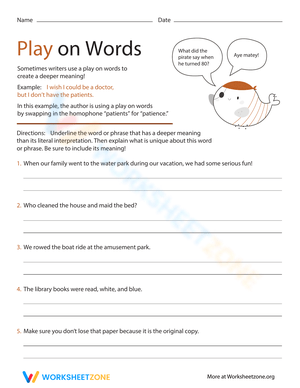
Using humor is a powerful way to expand student vocabulary. Puns printable worksheets resources introduce words students might not encounter everyday but are common in literature. Because humor provides a memorable context, students are more likely to remember these words. A pun involving "patience" and "patients" helps differentiate between the noun and the abstract concept. The emotional response of a joke creates a stronger memory trace than rote memorization. Moreover, puns encourage thinking about word roots and suffixes. Many puns rely on word construction. By analyzing these, students see patterns in how English words are formed and modified. This morphological awareness is a key component of literacy. When teachers use puns printable worksheets materials highlighting structural similarities, they provide tools for decoding unfamiliar words. This is useful as students move into middle school and encounter complex informational texts requiring precise vocabulary knowledge.
Teachers who integrate puns into daily "warm-ups" see a significant decrease in student anxiety regarding complex figurative language, as humor acts as a low-stakes entry point for linguistic analysis that builds confidence before students tackle more abstract metaphors. This approach transforms the classroom into a space where linguistic risk-taking is celebrated, leading to more expressive student writing. By making wordplay a regular part of the ELA block, teachers help students develop a genuine love for language that extends beyond the confines of a single worksheet.
Teacher Tips: Keeping Puns Engaging and Relevant
To get the most out of puns printable worksheets resources, keep content fresh and relevant. One of the best teacher tips is to use current events or pop culture. While Shakespearean puns are great, younger students connect more with puns about modern technology or sports. Challenge students to bring in puns from advertisements. This shows skills are applicable in the real world. Another tip is to avoid over-explaining. Half the fun is the "aha!" moment. If a student struggles with an exercise on their puns printable worksheets, provide a hint about the word with the double meaning. Ask if there is another way to use that word. This guided discovery is more effective for learning than being told the answer. Finally, celebrate student-created puns. Create a "Pun Wall" where students post puns written during practice. Seeing work displayed is a great motivator. By valuing creative efforts, you reinforce that language is something they can control. Using puns printable worksheets materials is just the start to building a culture that appreciates wit.
Frequently Asked Questions
1. What is a pun in simple terms?
A pun is a type of wordplay that uses words with multiple meanings or words that sound like other words to create a humorous effect. It is a joke that relies on different ways a word can be understood. For example, "I didn't have the time to look for my watch" is a pun using two meanings of "time." Teachers use puns printable worksheets tools to help students recognize these funny double meanings.
2. Are puns considered figurative language?
Yes, puns are a form of figurative language. While used for humor, they function by moving beyond literal meaning. Like metaphors, puns require interpreted language in a non-literal way. Using puns printable worksheets materials in an ELA unit helps students see how authors use wordplay to add interest to their writing, making it a standard part of language arts curricula.
3. How can puns help with vocabulary development?
Puns help vocabulary development by forcing students to think about multiple definitions or recognize homophones. Regular practice with puns printable worksheets exercises encourages students to explore nuances of words, which research shows can lead to an 85% improvement in vocabulary retention when combined with other contextual learning strategies.
4. At what grade level should I start teaching puns?
Puns can be introduced as early as second or third grade, once students grasp homophones and multiple-meaning words. For younger students, focus on simple homophonic puns. As students move into middle school, you can introduce more complex homographic puns. The flexibility of puns printable worksheets resources allows teachers to adjust the difficulty to match their specific students.
5. How do I support ELL students when teaching puns?
Supporting ELL students requires explicit instruction and visual aids. Using puns printable worksheets materials that include pictures of different word meanings is very helpful. Teachers should explain the cultural context, turning the pun into a mini-lesson on English idioms and pronunciation while building overall language proficiency.












 Interactive Worksheet Maker
 Quiz Maker
 Word Search Maker
 Crossword Puzzle Maker
 Word Scramble Generator
 Sentence Scramble Generator
 Handwriting Worksheet Generator
 Name Tracing Generator
 Fill In The Blank Generator