


























Views
Downloads



Essential Proverbs Worksheet | Grade 4 ELA Printable
Paste this activity's link or code into your existing LMS (Google Classroom, Canvas, Teams, Schoology, Moodle, etc.).
Students can open and work on the activity right away, with no student login required.
You'll still be able to track student progress and results from your teacher account.
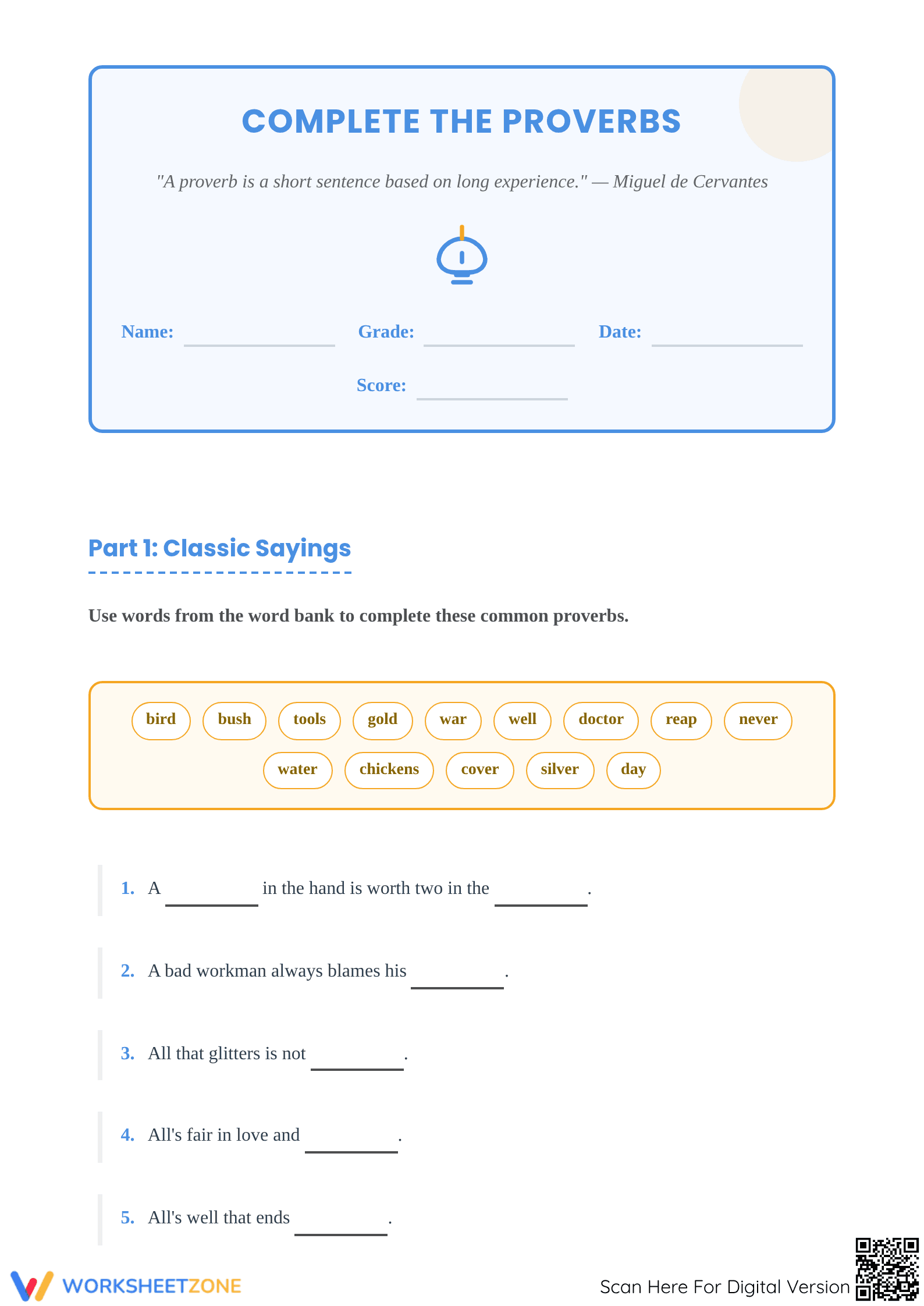
This Grade 4 ELA worksheet provides a comprehensive exploration of figurative language through the lens of traditional wisdom. Students identify, complete, and interpret over 30 common proverbs and adages, building the cultural literacy and semantic depth required for high-level reading comprehension. It transitions students from simple word-matching to complex thematic analysis.
At a Glance
- Grade: 4 · Subject: English Language Arts (ELA)
- Standard:
CCSS.ELA-LITERACY.L.4.5.B— Recognize and explain the meaning of common idioms, adages, and proverbs- Skill Focus: Figurative Language: Proverbs & Adages
- Format: 5 pages · 32 problems · Answer key included · PDF
- Best For: Independent practice or small group literacy centers
- Time: 30–45 minutes
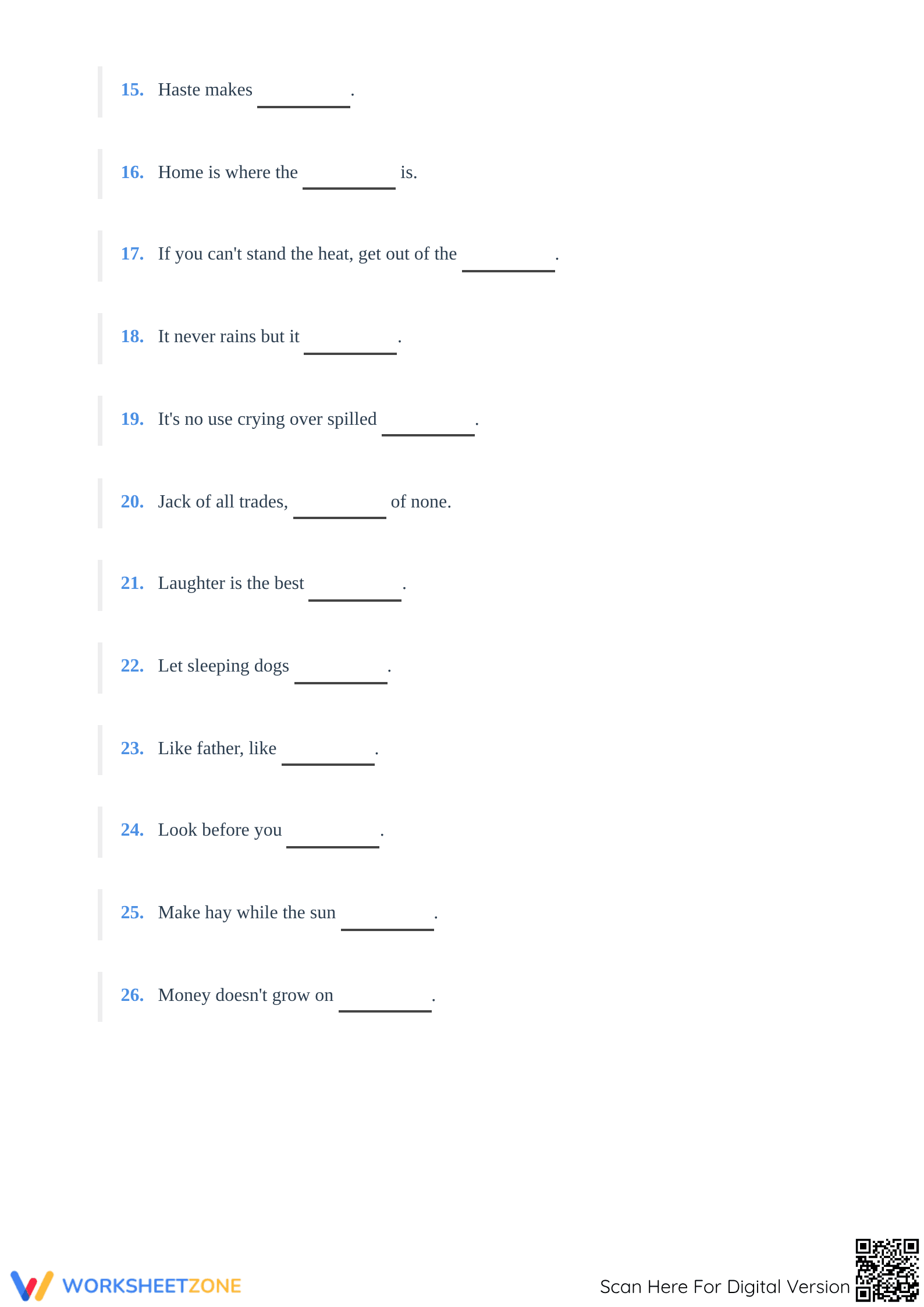
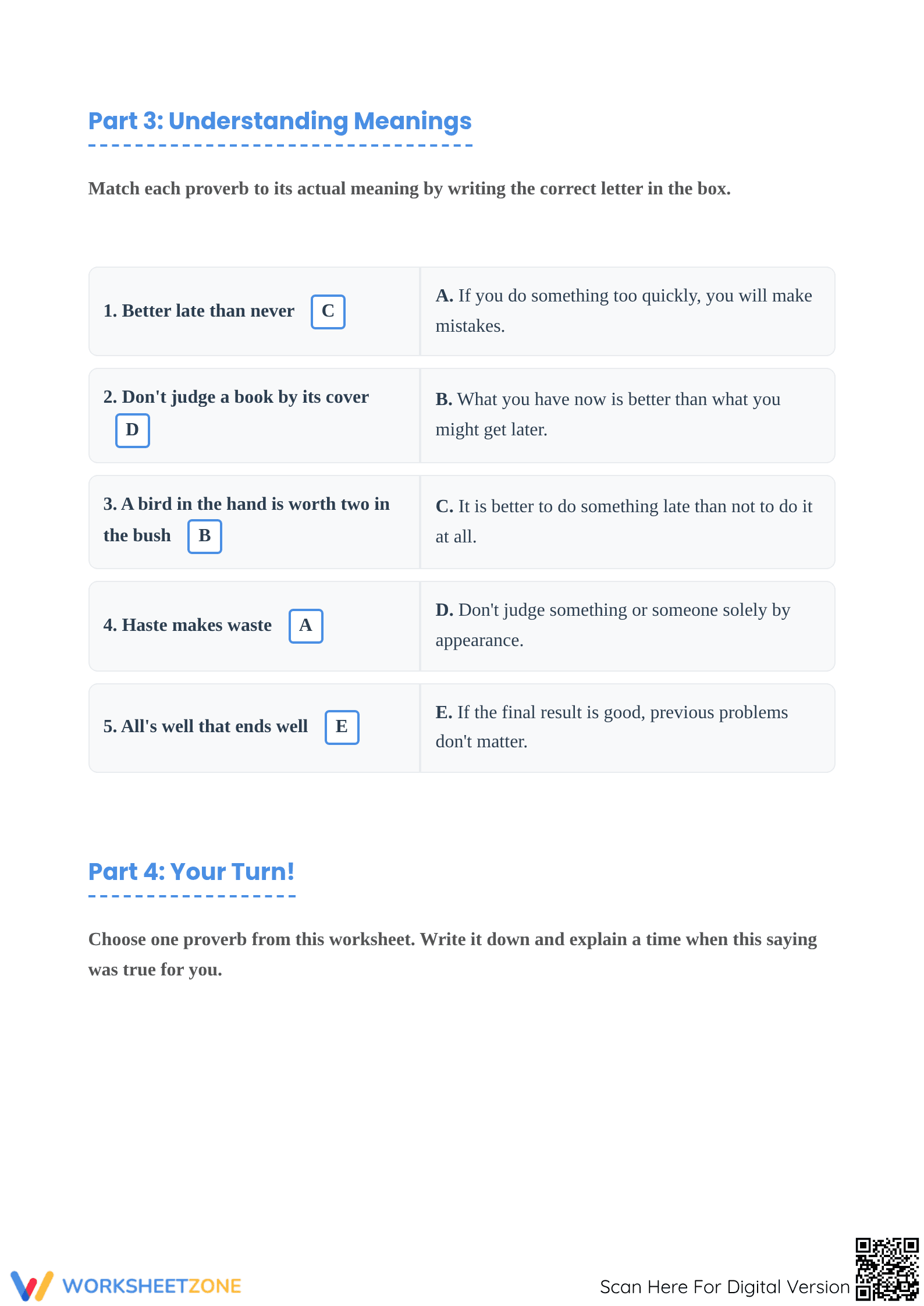
This 5-page printable packet features a structured progression of tasks. Part 1 and 2 utilize word banks to support students in completing 26 classic sayings, such as "A bird in the hand is worth two in the bush." Part 3 challenges students to match proverbs to their literal meanings, while Part 4 provides a writing prompt for personal application. A full answer key ensures rapid grading.
Skill Progression
- Guided Practice: Parts 1 and 2 provide 26 fill-in-the-blank sentences supported by targeted word banks to build familiarity with common phrasing.
- Supported Practice: Part 3 requires students to synthesize their understanding by matching five abstract sayings to concrete situational definitions.
- Independent Practice: The "Your Turn" section prompts students to choose a proverb and write a personal narrative or explanation of its truth.
This sequence follows the gradual release of responsibility model, ensuring students master the internal logic of proverbs before attempting independent interpretation.
Standards Alignment
The primary focus of this resource is CCSS.ELA-LITERACY.L.4.5.B, which requires students to recognize and explain the meaning of common idioms, adages, and proverbs. By working through 32 distinct tasks, students demonstrate mastery of this figurative language strand. This standard code can be copied directly into lesson plans, IEP goals, or district curriculum mapping tools.
How to Use It
Incorporate this packet during a unit on figurative language or as a standalone sub plan. For a formative assessment, observe students during the matching section to see if they can connect abstract metaphors to real-world outcomes. This comprehensive 5-page resource is expected to take approximately 30 to 45 minutes to complete depending on student reading level.
Who It's For
Designed for Grade 4 general education classrooms, this resource also supports Grade 5 students needing a refresher or English Language Learners (ELLs) building cultural background knowledge. Pair this worksheet with a short story collection like Aesop's Fables or a figurative language anchor chart to deepen student engagement and retention.
Mastering proverbs is a critical component of language development, as these sayings represent the distilled wisdom of a culture and appear frequently in complex literature. According to EdReports 2024, high-quality literacy instruction must explicitly address figurative language to bridge the gap between literal decoding and deep inferential comprehension. This worksheet targets CCSS.ELA-LITERACY.L.4.5.B by providing 32 structured opportunities for students to engage with adages in context. Research from Fisher & Frey (2014) emphasizes that "gradual release" structures, like the transition from word banks to writing prompts found here, are essential for cementing the meaning of abstract linguistic concepts. By completing this packet, Grade 4 students move beyond rote memorization to a functional understanding of how short, pithy sayings convey general truths. This resource ensures that students are equipped with the idiomatic tools necessary for navigating Grade-level informational and literary texts effectively.


