


























Views
Downloads

Grade 4 Proverbs — Printable No-Prep Worksheet
Paste this activity's link or code into your existing LMS (Google Classroom, Canvas, Teams, Schoology, Moodle, etc.).
Students can open and work on the activity right away, with no student login required.
You'll still be able to track student progress and results from your teacher account.
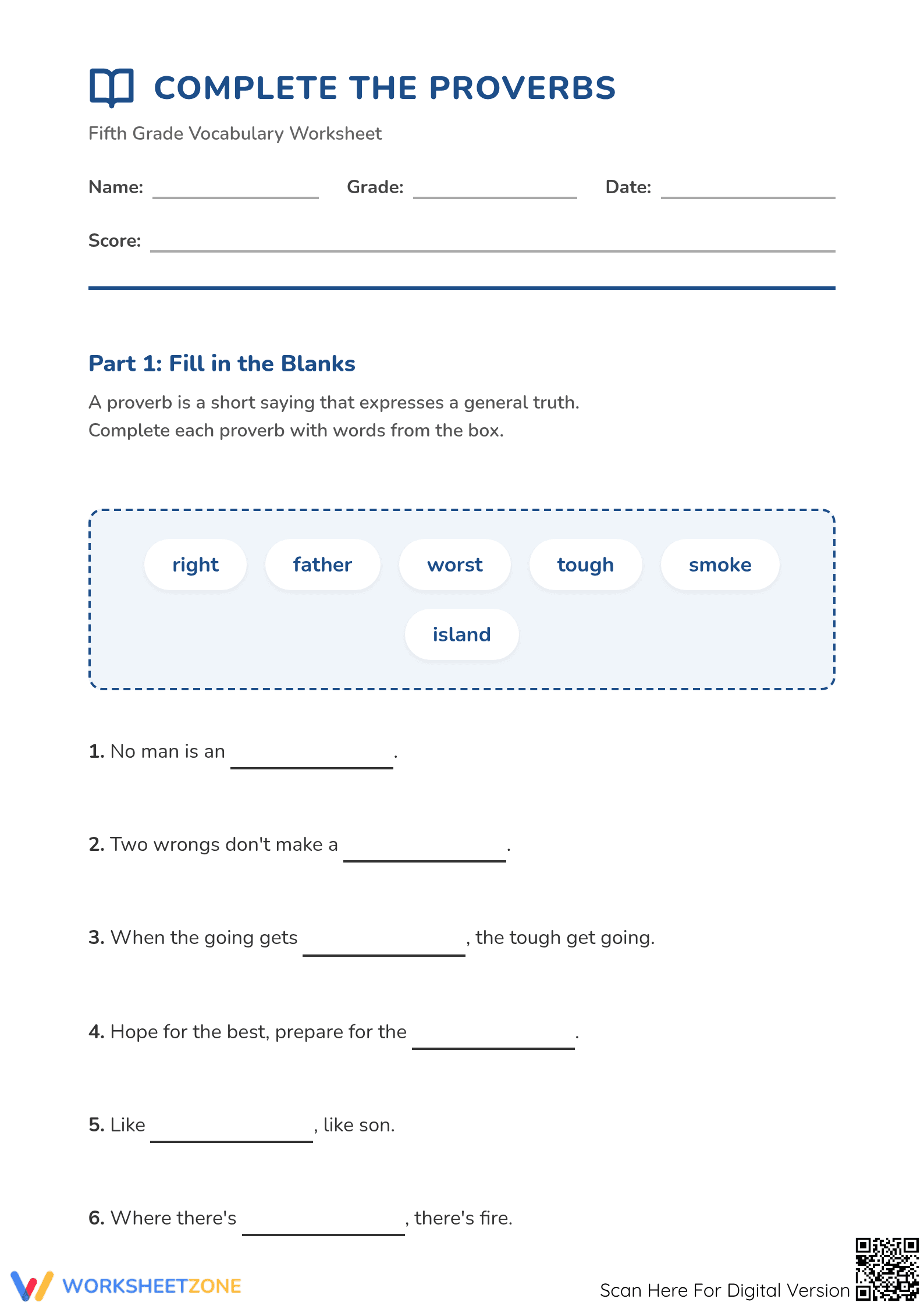
This printable proverbs worksheet provides Grade 4 students with a comprehensive 14-task practice set focused on common adages and sayings. By interpreting short truths, learners build critical figurative language skills and expand their working vocabulary. It serves as an essential tool for mastering complex cultural expressions through structured, multi-part activities.
At a Glance
- Grade: 4 · Subject: ELA
- Standard:
L.4.5.B— Explain the meaning of common idioms, adages, and proverbs- Skill Focus: Proverb interpretation and vocabulary
- Format: 3 pages · 14 problems · Answer key included · PDF
- Best For: Reading comprehension and figurative language lessons
- Time: 25–35 minutes
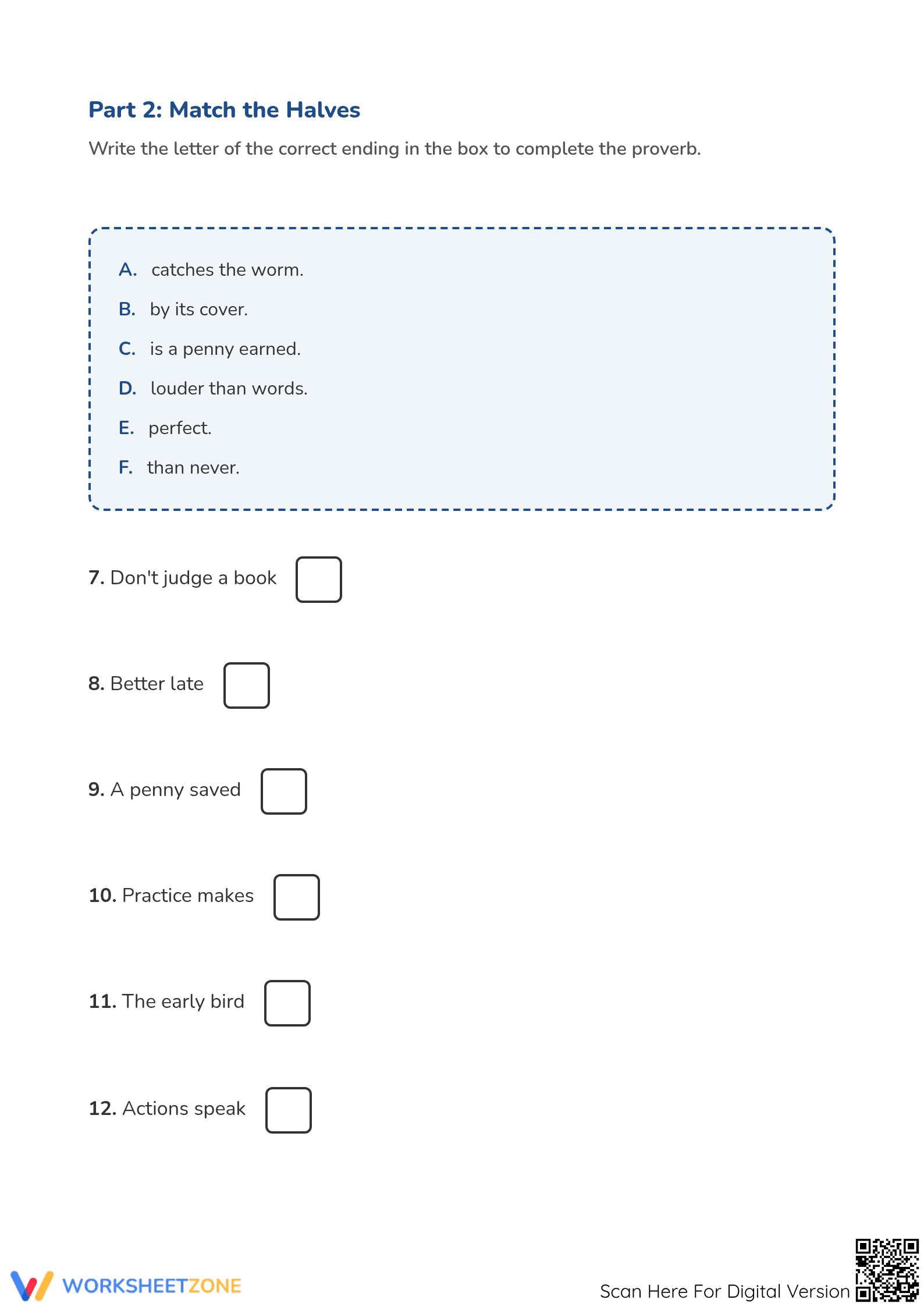
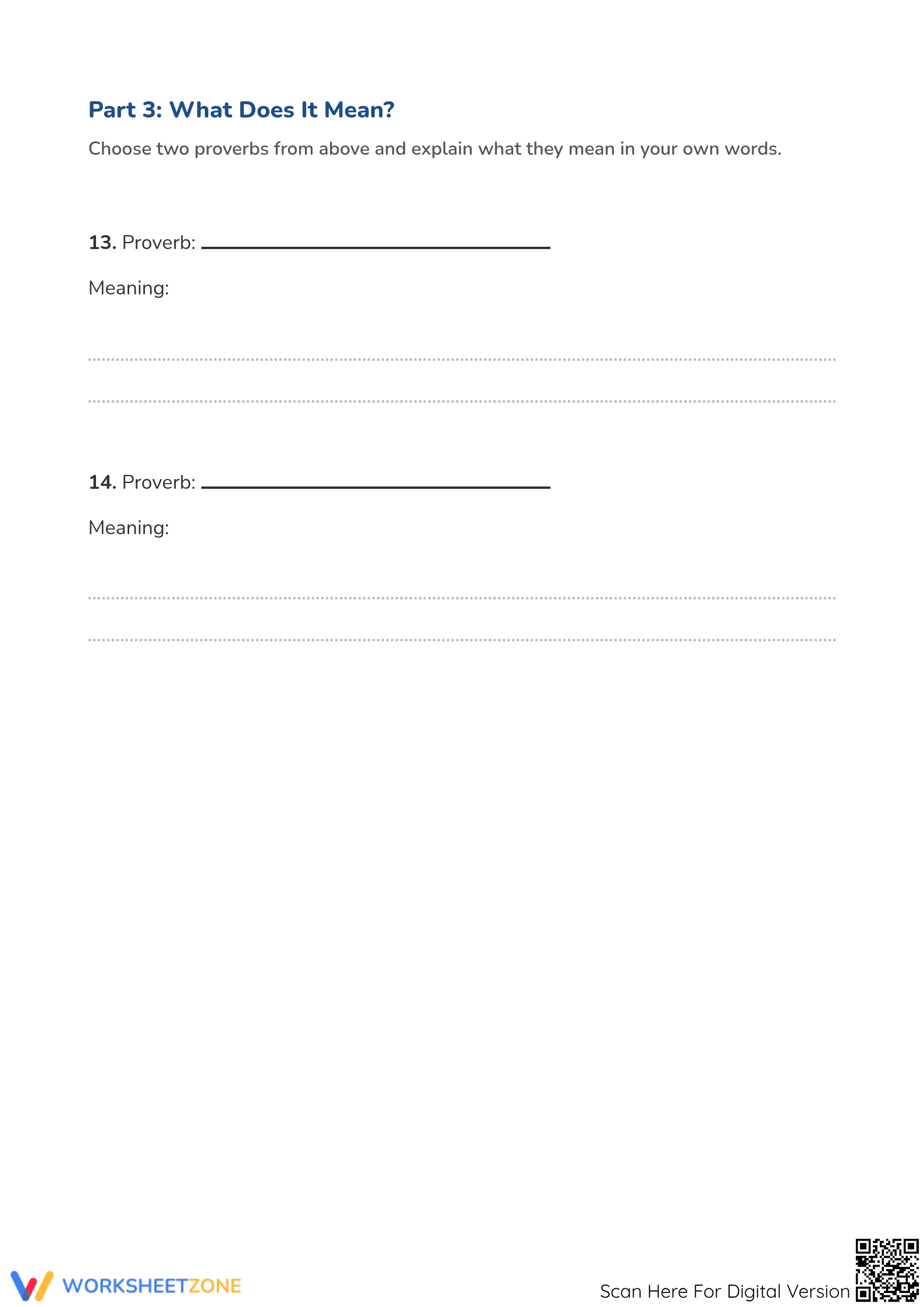
This three-page PDF packet contains three distinct sections to scaffold student understanding. Part 1 utilizes a word bank for proverb completion; Part 2 features a matching activity for popular sayings; and Part 3 challenges students with open-ended interpretation tasks. The clear layout, complete with an answer key, ensures that students can move from recognition to application with ease.
Teachers can implement this resource in under two minutes of total preparation time. Simply print the three-page PDF and distribute it to the class during your ELA block. The instructions are self-explanatory, making it an ideal choice for emergency sub plans or independent morning work. Reviewing the answers can be done as a whole-group activity to spark meaningful discussion about cultural truths.
The primary focus is CCSS.ELA-LITERACY.L.4.5.B, which requires students to explain the meaning of common idioms, adages, and proverbs. This worksheet directly assesses that capability by moving beyond rote memorization into written explanation. This standard code can be copied directly into lesson plans, IEP goals, or district curriculum mapping tools to demonstrate rigorous alignment with national ELA expectations.
Use this worksheet as a formative assessment after introducing figurative language concepts. Assign Part 1 and 2 during independent centers to gauge basic recall, then use Part 3 as a ticket-to-leave or graded assessment to evaluate deep interpretation. Observe how students bridge literal and figurative meanings to identify those needing additional support. Expect completion within a single instructional period of approximately 30 minutes.
This resource is designed for Grade 4 general education students, though it is highly effective for English Language Learners who need explicit instruction in cultural idioms. It pairs naturally with a classroom Proverb of the Day anchor chart or a short passage illustrating one of the included sayings. The tiered tasks provide natural differentiation for varying literacy levels.
Mastering figurative language through proverbs is a foundational component of reading comprehension and cultural literacy. According to research from Fisher & Frey (2014), explicit instruction in adages helps students bridge the gap between literal decoding and deep conceptual understanding. This worksheet aligns with L.4.5.B by providing 14 structured tasks that require learners to analyze, match, and explain common sayings such as "actions speak louder than words." By engaging with these short truths, students develop the mental models necessary for interpreting complex literary texts. The inclusion of a written interpretation section ensures that learners are not merely recognizing patterns but are actively constructing meaning. This approach supports the development of academic vocabulary and inferential thinking skills required for upper-elementary success. Educators can rely on this standards-aligned tool to provide high-quality, research-backed practice in a classroom-ready format.


