Enhancing Early Literacy Skills with Alliteration Worksheets
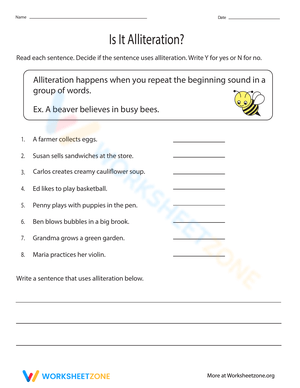
Alliteration serves as a fundamental building block in the development of phonetic awareness and creative expression. By focusing on the repetition of initial consonant sounds, teachers can help students recognize patterns in language that go beyond simple literal meaning. These patterns are not just decorative; they are functional tools that aid in memory, engagement, and the rhythmic flow of speech and writing. Using a variety of alliteration worksheets allows teachers to provide structured practice that moves students from basic identification to sophisticated application in their own prose and poetry.
Worksheetzone provides a comprehensive collection of resources tailored to the specific needs of primary classrooms. These materials are designed to minimize prep time while maximizing instructional impact. When students engage with these printable activities, they aren't just circling letters; they are developing an ear for the music of language. This auditory training is essential for reading fluency, as it helps learners anticipate sounds and group words into meaningful units. For teachers looking to bridge the gap between simple grammar lessons and more complex literary analysis, these worksheets offer a practical and accessible entry point.
Building Phonemic Awareness Through Consonant Repetition
Phonemic awareness is the ability to hear and manipulate the individual sounds in spoken words, and alliteration is one of the most effective ways to sharpen this skill. When students practice with worksheets that highlight recurring initial sounds, they become more attuned to the nuances of consonants. This attention to detail is a prerequisite for successful decoding and encoding in early reading and writing. By isolating the first sound of a series of words, learners can better understand how different letters produce distinct auditory signals.
According to Reading Rockets, alliteration serves as a critical bridge between sound recognition and reading fluency. Their research indicates that repetitive initial sounds can improve phonemic awareness by up to 30% in early elementary students who engage in structured literacy activities twice weekly. This data point underscores the importance of consistent, high-quality practice in the primary grades.
Scaffolding Figurative Language Instruction
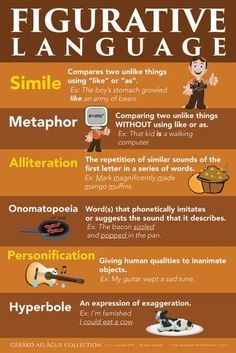
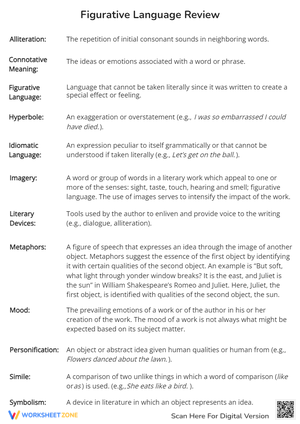
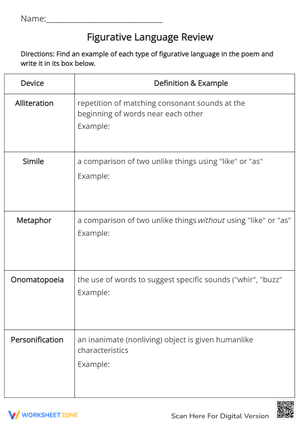
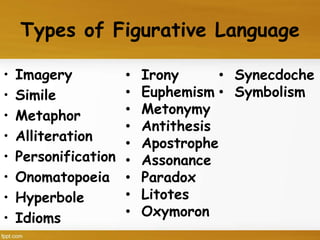
Teaching figurative language can often feel abstract to younger students, but alliteration provides a concrete starting point. Unlike metaphors or similes, which require a grasp of symbolic comparison, alliteration is rooted in the physical reality of sound. This makes it easier for students to identify and reproduce. By starting with alliteration worksheets, teachers can build a solid foundation upon which more complex literary devices can later be layered. This sequential approach ensures that students feel successful early on, building the confidence they need to tackle more challenging concepts.
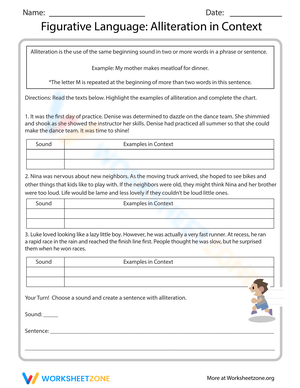
As students progress through different grade levels, the complexity of the worksheets can increase accordingly. For second graders, the focus might be on simple identification and completion of short phrases. By fifth grade, students should be analyzing how alliteration contributes to the mood or tone of a specific text. Worksheetzone offers a variety of difficulty levels, ensuring that every learner can find a resource that matches their current skill set. This differentiation is vital in a diverse classroom where students may be at vastly different points in their literacy development.
Key Features of Effective Printable Alliteration Activities
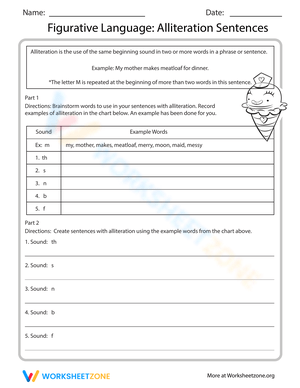
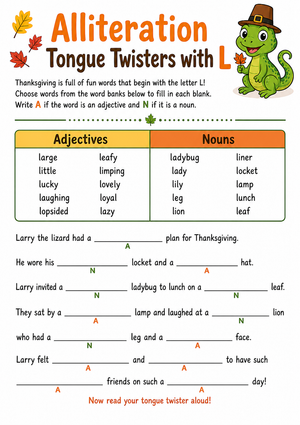
Not all worksheets are created equal, and high-quality resources share several key characteristics. First, they should provide clear, age-appropriate examples that illustrate the concept without overcomplicating it. Visual aids, such as illustrations that correspond to the alliterative phrases, can be particularly helpful for visual learners and English Language Learners. These images provide context that helps students connect the sound repetition to a concrete object or action.
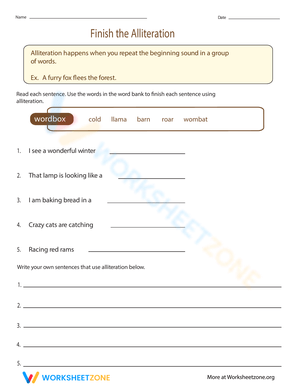
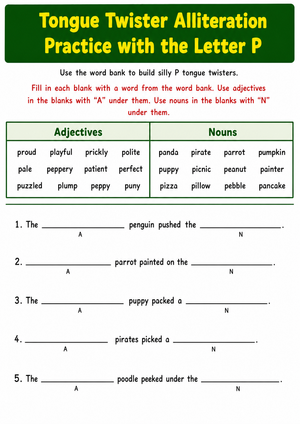
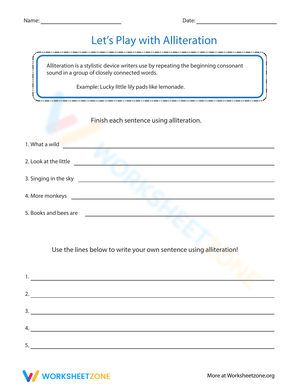
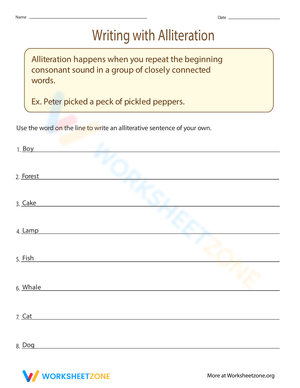
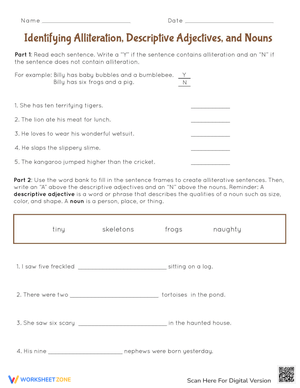
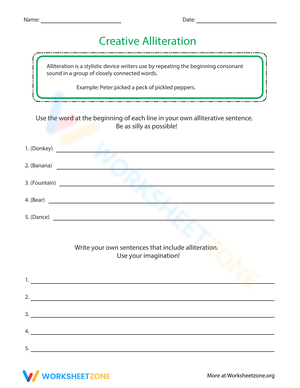
Second, effective alliteration worksheets should offer a variety of task types. Simple 'fill in the blank' exercises are a good starting point, but students also need opportunities for creative generation. Tasks that ask students to 'finish the story' using alliteration or to describe a specific animal using a set of alliterative adjectives are much more engaging and academically rigorous. By varying the format of the activities, teachers can keep the material fresh and prevent student burnout.
Integrating Alliteration into Creative Writing Units
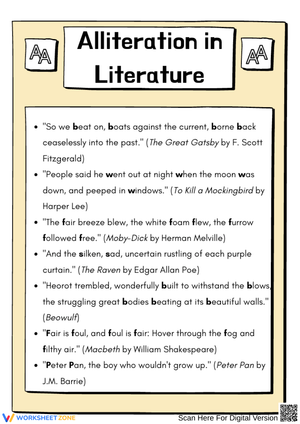
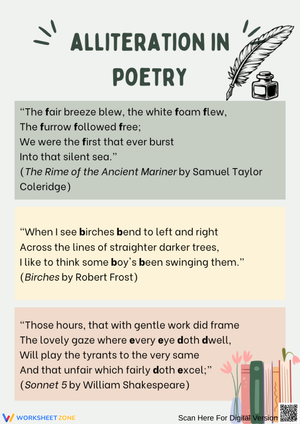
One of the most powerful ways to use alliteration is as a tool for creating specific moods and rhythms in narrative writing. While many students initially view it as a novelty, sophisticated writers use it to slow down or speed up the pace of a sentence. For instance, soft 's' and 'l' sounds can create a sense of calm or lethargy, while hard 'k' and 't' sounds can inject a paragraph with urgency or tension. Highlighting these subtle effects in classroom discussions transforms alliteration from a simple 'trick' into a professional-grade writing technique that students can use to elevate their storytelling.
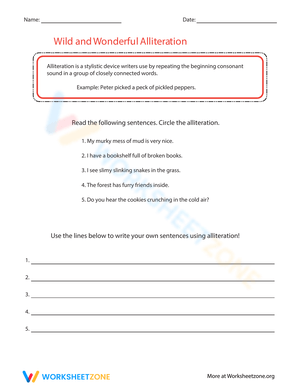
During a creative writing unit, alliteration worksheets can serve as excellent warm-up exercises. They get the 'creative gears' turning and encourage students to think about word choice more deliberately. Teachers might ask students to pick an alliterative phrase from their worksheet and use it as the opening line for a short story. This direct connection between the drill and the creative output helps students see the practical value of what they are learning. It moves the concept of figurative language out of the textbook and into the 'real world' of their own writing.
Teacher Tips for Classroom Implementation
To get the most out of alliteration worksheets, it is helpful to pair them with auditory and kinesthetic activities. Start by reading aloud books that are rich in alliteration, such as those by Dr. Seuss or traditional nursery rhymes. Ask students to clap or snap their fingers every time they hear a repeated initial sound. This multi-sensory approach helps solidify the concept in their minds before they ever put pencil to paper. It also makes the lesson more inclusive for students who may struggle with traditional written tasks.
Another effective strategy is to create a 'Word Wall' specifically for alliteration. When students find a particularly good example in their reading or on a worksheet, they can add it to the wall. This creates a living resource that they can refer back to during independent writing time. It also encourages them to become 'word detectives' who are always on the lookout for interesting uses of language in the world around them. This habit of close reading and observation is one of the most valuable skills a teacher can instill in their students.
Assessing Mastery of Phonetic Repetition
Assessment doesn't always have to be a formal test. You can use the completed alliteration worksheets as a form of formative assessment to see who has grasped the concept and who might need a bit more support. Look for students who are consistently choosing words with the correct initial sounds and those who are starting to use alliteration more naturally in their own writing. This ongoing observation allows for timely intervention and prevents students from falling behind.
Ultimately, the goal is for alliteration to become a natural part of the student's writing repertoire. When you see a student intentionally use a repeated sound to emphasize a point or create a specific rhythm without being prompted, you know they've achieved mastery. These worksheets are the stepping stones that lead to that level of proficiency. By providing consistent, engaging, and high-quality practice, you are giving your students the tools they need to become more effective and expressive communicators.
Frequently Asked Questions
1. How do I explain alliteration to my students simply?
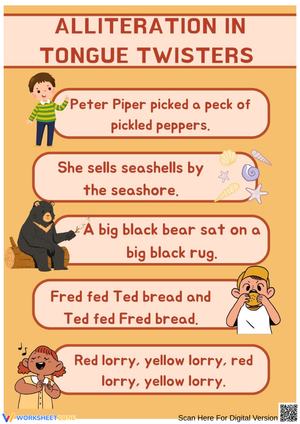
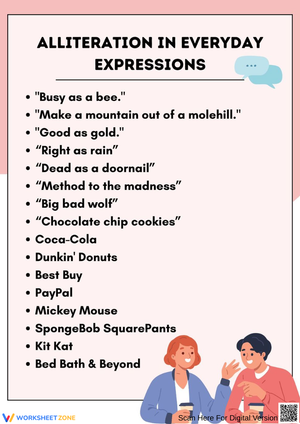
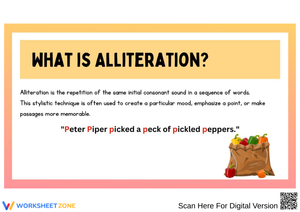
A simple way to explain it is to call it "word matching by sound." Tell them it's when we use a group of words that all start with the same sound. Using examples like "Busy bees buzz" or "Peter Piper" can make the concept immediately clear and relatable for young learners who are just beginning to explore figurative language concepts.
2. What is the difference between alliteration and rhyme?
The main difference is where the sound repetition happens. Rhyme focuses on the end sounds of words (like "cat" and "hat"), while alliteration focuses on the beginning sounds (like "cool" and "calm"). Highlighting this distinction helps students avoid confusion as they learn more literary devices and begin to categorize sounds more effectively.
3. Can alliteration be used in non-fiction or professional writing?
Absolutely. While it's common in poetry and fiction, alliteration is also used in speeches, advertising, and journalism to make a point more memorable. For example, a headline like "Sustainable Solutions for a Smarter Society" uses alliteration to grab attention and create a professional, rhythmic tone that sticks in the reader's mind.
4. At what grade level should I start teaching alliteration?
Most teachers begin introducing the concept in kindergarten or first grade as part of basic phonics and phonemic awareness. By second and third grade, students are usually ready to start using printable worksheets to practice identifying and creating their own alliterative phrases more independently as they develop their writing skills.
5. How can I support students who struggle with finding alliterative words?
Providing a word bank or a picture dictionary can be very helpful. You can also encourage them to use their five senses to brainstorm. If they are writing about a "beach," ask them what they see (sand), feel (sun), and hear (surf). This guided brainstorming makes the task feel much less overwhelming and helps build their confidence.












 Interactive Worksheet Maker
 Quiz Maker
 Word Search Maker
 Crossword Puzzle Maker
 Word Scramble Generator
 Sentence Scramble Generator
 Handwriting Worksheet Generator
 Name Tracing Generator
 Fill In The Blank Generator