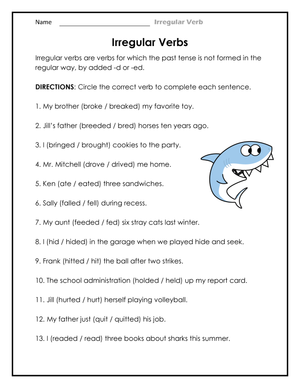
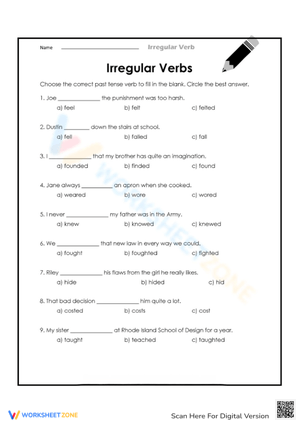
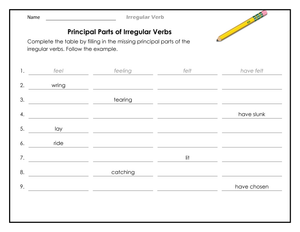
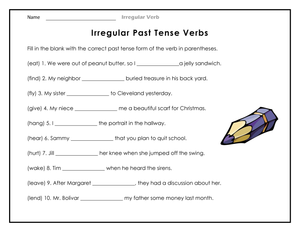
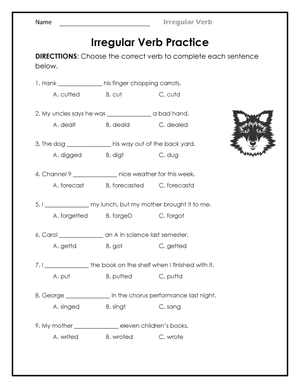
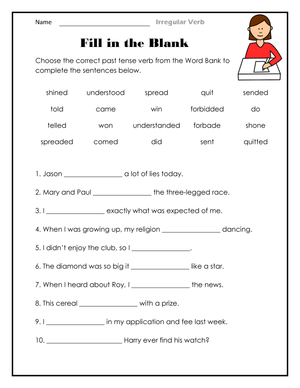
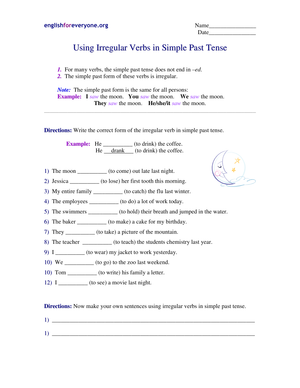
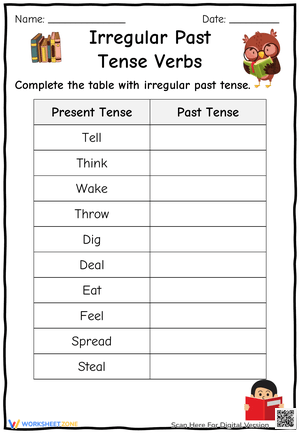
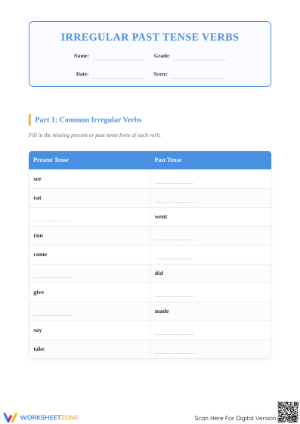
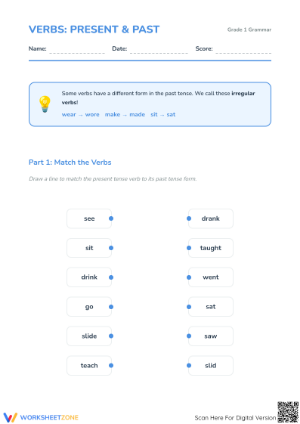
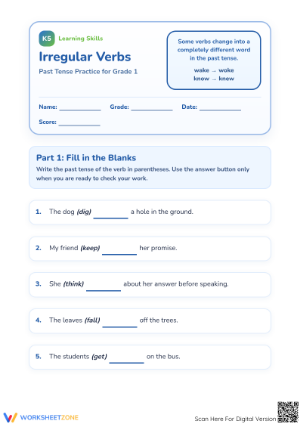
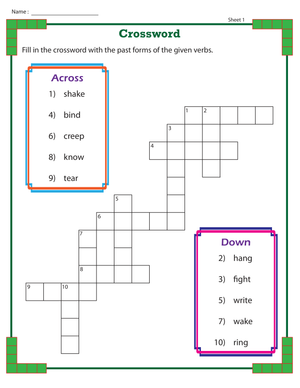
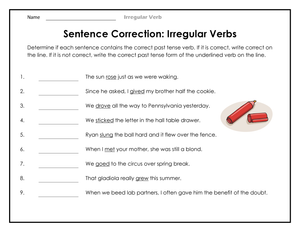
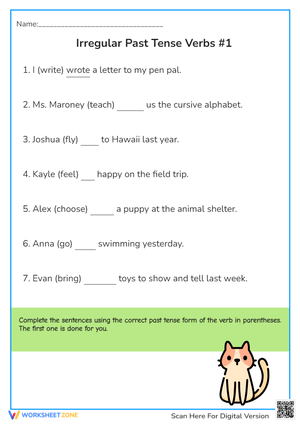
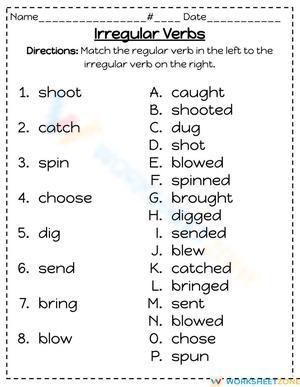
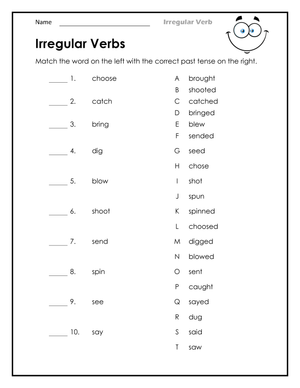
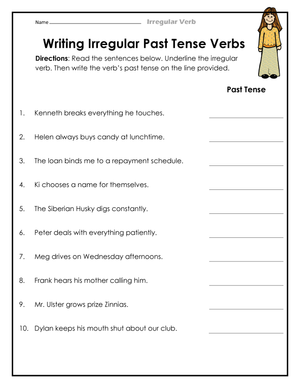
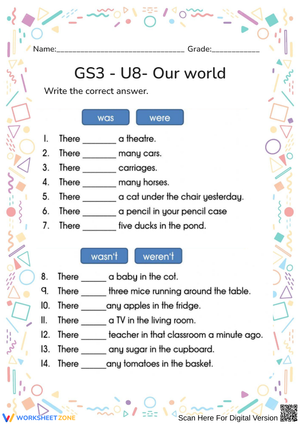
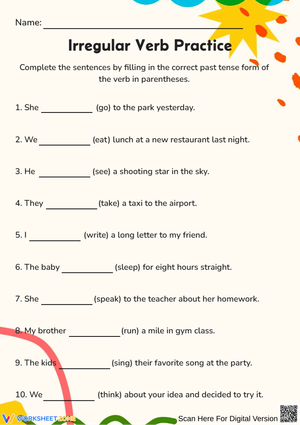
Teachers know the moment well: a student writes "I goed to the store" or "She runned home" and the entire sentence falls apart. Irregular past tense worksheets target this exact gap, giving learners structured practice with the verbs that refuse to follow standard rules. When students cannot rely on simply adding -ed, they need repeated exposure to forms like went, ran, brought, and caught until those shapes feel automatic in writing and speech.
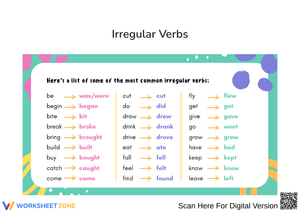
These resources work as a direct classroom solution because they isolate the most common irregular verbs and present them in patterns students can study. A typical worksheet groups verbs by sound change, such as sing-sang-sung or drink-drank-drunk, helping learners see the logic behind each transformation. Teachers can hand out a single page during a grammar block, use it as a warm-up activity, or assign sets of pages for differentiated review. Worksheetzone offers printable materials that fit into any lesson plan without requiring extra preparation time, and the complete guide to teaching irregular past tense verbs explains how to sequence these activities for the strongest results.
Parents working with children at home benefit just as much from this kind of targeted practice. A child struggling with verb forms during homework usually needs more reps, not more rules, and a printable worksheet provides that practice in a format that feels manageable. Parents can sit beside their child, read the prompts aloud, and watch which verbs trigger hesitation. That observation alone tells a parent which verbs to revisit during reading time or casual conversation, turning a worksheet into an ongoing learning tool that supports school instruction across the week.
The tactile quality of pencil-and-paper grammar work also matters more than many parents and teachers realize. Students who spend hours on screens often skim and tap rather than processing language deeply, but writing each past tense form by hand forces the brain to slow down and notice the difference between regular and irregular patterns. A printable page removes notifications, autocomplete suggestions, and the temptation to guess and click. Pairing these worksheets with a broader study of irregular verb practice activities gives students the variety they need to internalize verb tenses across spoken and written contexts.
Worksheetzone designs every irregular past tense worksheet with classroom realities in mind, so the layout is clean, the print quality is reliable, and the answer keys save grading time for busy educators. Whether you teach third graders meeting these verbs for the first time or middle schoolers polishing their writing, you can find a printable that matches the right skill level and lesson goal. Download the irregular past tense worksheets that fit your students best and give them the confident grammar foundation they need.
Frequently Asked Questions
Question 1: Which grade levels benefit most from irregular past tense worksheets?
Students in grades two through six typically benefit the most from these worksheets, since this is when irregular verb forms become a regular feature of writing assignments. Younger learners use the pages to build initial recognition, while older students use them to repair gaps and refine accuracy. English language learners at any age also gain strong support from this kind of focused, repeatable verb practice.
Question 2: How often should students practice irregular past tense verbs?
Short, frequent sessions work better than long, occasional ones. Three to four practice rounds of ten to fifteen minutes per week usually produce stronger retention than a single forty-minute drill. Teachers can rotate worksheets through morning warm-ups, literacy centers, or homework folders, while parents can fold a quick page into the routine after dinner or before reading time at home.
Question 3: What is the difference between regular and irregular past tense verbs?
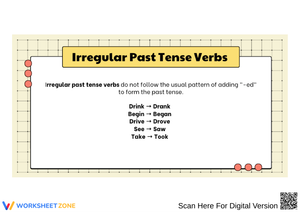
Regular past tense verbs follow a predictable rule by adding -ed, such as walk-walked or jump-jumped. Irregular past tense verbs change form in unpredictable ways, like go-went, eat-ate, or bring-brought. Because no single rule covers every irregular verb, students need direct memorization, repeated exposure, and contextual reading practice to master them with confidence.
Question 4: How can I tell if a worksheet is the right fit for my students?
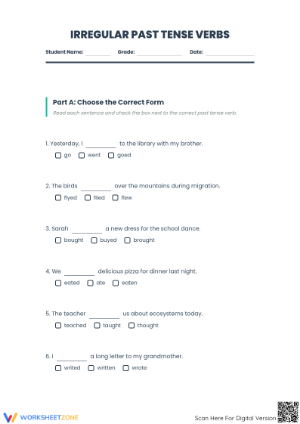
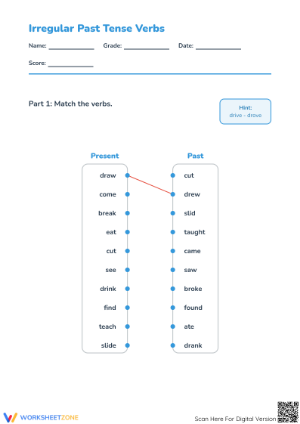
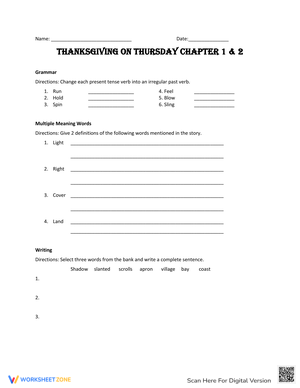
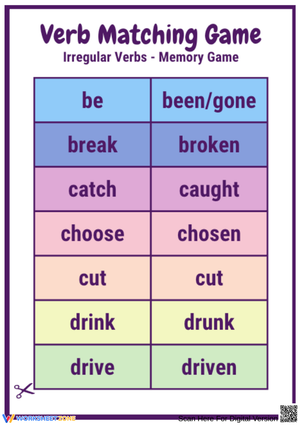
Look at the verbs included, the activity format, and the amount of writing required. A good fit challenges students without frustrating them, so beginners do well with matching and fill-in-the-blank tasks, while stronger learners benefit from sentence-writing prompts and short paragraph rewrites. Worksheetzone organizes its irregular past tense worksheets by skill level so teachers and parents can pick the right page quickly.












 Interactive Worksheet Maker
 Quiz Maker
 Word Search Maker
 Crossword Puzzle Maker
 Word Scramble Generator
 Sentence Scramble Generator
 Handwriting Worksheet Generator
 Name Tracing Generator
 Fill In The Blank Generator