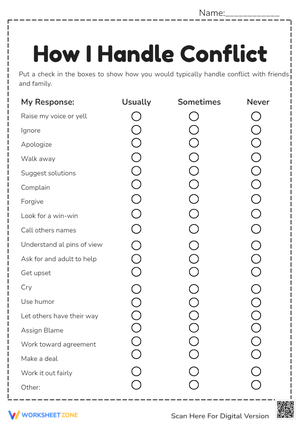
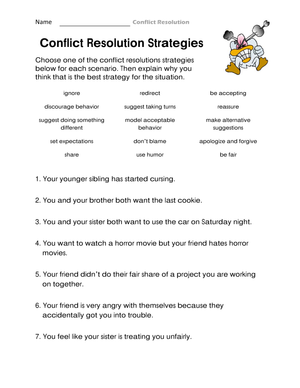
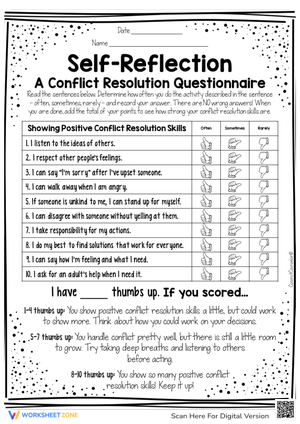
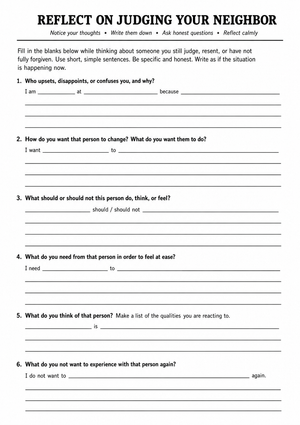
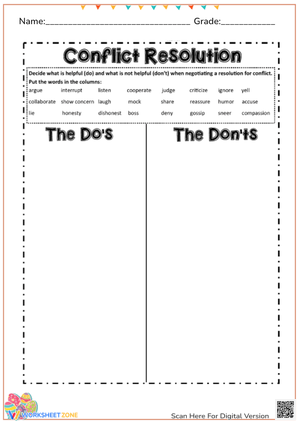
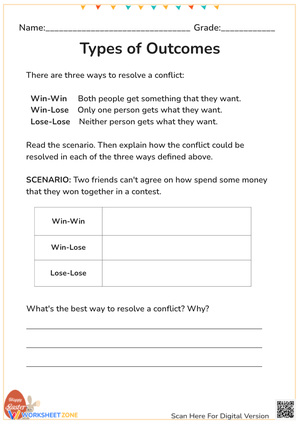
The ability to transition from anecdotal observation to quantifiable behavioral data is paramount when guiding teenagers through interpersonal challenges. Conflict resolution skills for youth worksheets give counselors, teachers, and parents a measurable framework to track how adolescents identify triggers, articulate feelings, and select de-escalation strategies. Each worksheet is engineered to function as both a structured lesson tool and a behavioral assessment metric, replacing guesswork with documented progress benchmarks.
The structured progression embedded in every worksheet reveals specific learning gaps that traditional discussion alone cannot expose. Early exercises focus on recognizing common conflict types in classroom and peer settings, while subsequent sheets introduce active listening prompts, perspective-taking scenarios, and I-statement construction drills. This sequential design lets instructors pinpoint exactly where a student stalls, whether at emotional identification, response selection, or follow-through, and adjust instruction to address that precise gap.
Built-in answer keys and reflection rubrics support rapid grading and immediate feedback loops, two factors directly correlated with skill retention in adolescent learners. Teachers can review a class set of completed worksheets in minutes, flag students whose responses indicate avoidance or aggression patterns, and route them toward targeted small-group lessons. Parents working at home gain the same advantage, comparing weekly responses against the rubric to determine whether their teen is internalizing core principles or repeating surface-level answers without genuine reflection.
Tracking performance across multiple exercises produces a longitudinal record that supports personalized instruction in any classroom or counseling caseload. By logging scores on role-play scripts, peer-mediation flowcharts, and post-conflict journaling sheets, educators build a data set that highlights consistent strengths and recurring obstacles for each youth. This evidence base proves invaluable during parent-teacher conferences, IEP reviews, and behavior intervention plan updates, where concrete documentation carries more weight than general impressions. To extend the framework into broader emotional development, pair these resources with supplemental social emotional learning activities that reinforce the same vocabulary outside of formal lessons.
Educators who pair conflict resolution practice with parallel communication skills exercises report stronger transfer of strategies into real classroom interactions, hallway disputes, and family conversations. Worksheetzone provides a complete printable PDF library aligned with grade-level expectations, peer-reviewed counseling frameworks, and standard lesson plan structures used across public and private schools. Download the assessment-ready set, distribute it during the next advisory block or counseling session, and begin generating the measurable behavioral progress data that drives meaningful intervention for every youth in the room.
Frequently Asked Questions
Question 1: How do conflict resolution skills for youth worksheets support measurable progress?
These worksheets include scoring rubrics, response prompts, and reflection sections that convert abstract behavior into trackable data points. Teachers and counselors can record completion accuracy, response depth, and strategy selection across multiple sessions, giving them a clear before-and-after picture. The structured format means progress is documented in writing rather than estimated, which strengthens parent communication, intervention planning, and grade-level reporting.
Question 2: Which grade levels benefit most from these worksheets?
The youth-focused materials target adolescents in middle school and high school, generally ages eleven through eighteen, when peer dynamics and identity development heighten interpersonal tension. Younger students benefit from the elementary versions, while teen-specific sheets address dating disagreements, social media disputes, and group project friction. Counselors also adapt the content for transitional learners and small advisory groups where developmental readiness varies across the room.
Question 3: Can parents use these worksheets outside the classroom?
Yes, parents working at home gain a structured conversation framework that replaces lectures with guided practice. The exercises walk teens through identifying their feelings, considering the other persons perspective, and rehearsing calm responses before a real disagreement occurs. Worksheetzone formats every sheet for easy home printing, and the included reflection prompts help families revisit conflicts after they cool down without escalating tensions further.
Question 4: How long does each worksheet take to complete?
Most exercises require fifteen to twenty-five minutes, fitting comfortably into a single class period, advisory block, or counseling appointment. Longer role-play scenarios and peer-mediation flowcharts may extend across two sessions, especially when paired with partner discussions or written reflections. Educators can shorten or extend any activity by adjusting the reflection section, which makes the materials flexible enough for both quick warm-ups and deeper instructional units.












 Interactive Worksheet Maker
 Quiz Maker
 Word Search Maker
 Crossword Puzzle Maker
 Word Scramble Generator
 Sentence Scramble Generator
 Handwriting Worksheet Generator
 Name Tracing Generator
 Fill In The Blank Generator