


























0
Views
0
Downloads

0.0
0
Save
0 Likes
Share
Conflict Resolution Response Worksheet
0 Views
0 Downloads
Paste this activity's link or code into your existing LMS (Google Classroom, Canvas, Teams, Schoology, Moodle, etc.).
Students can open and work on the activity right away, with no student login required.
You'll still be able to track student progress and results from your teacher account.
Information
Description
What It Is:
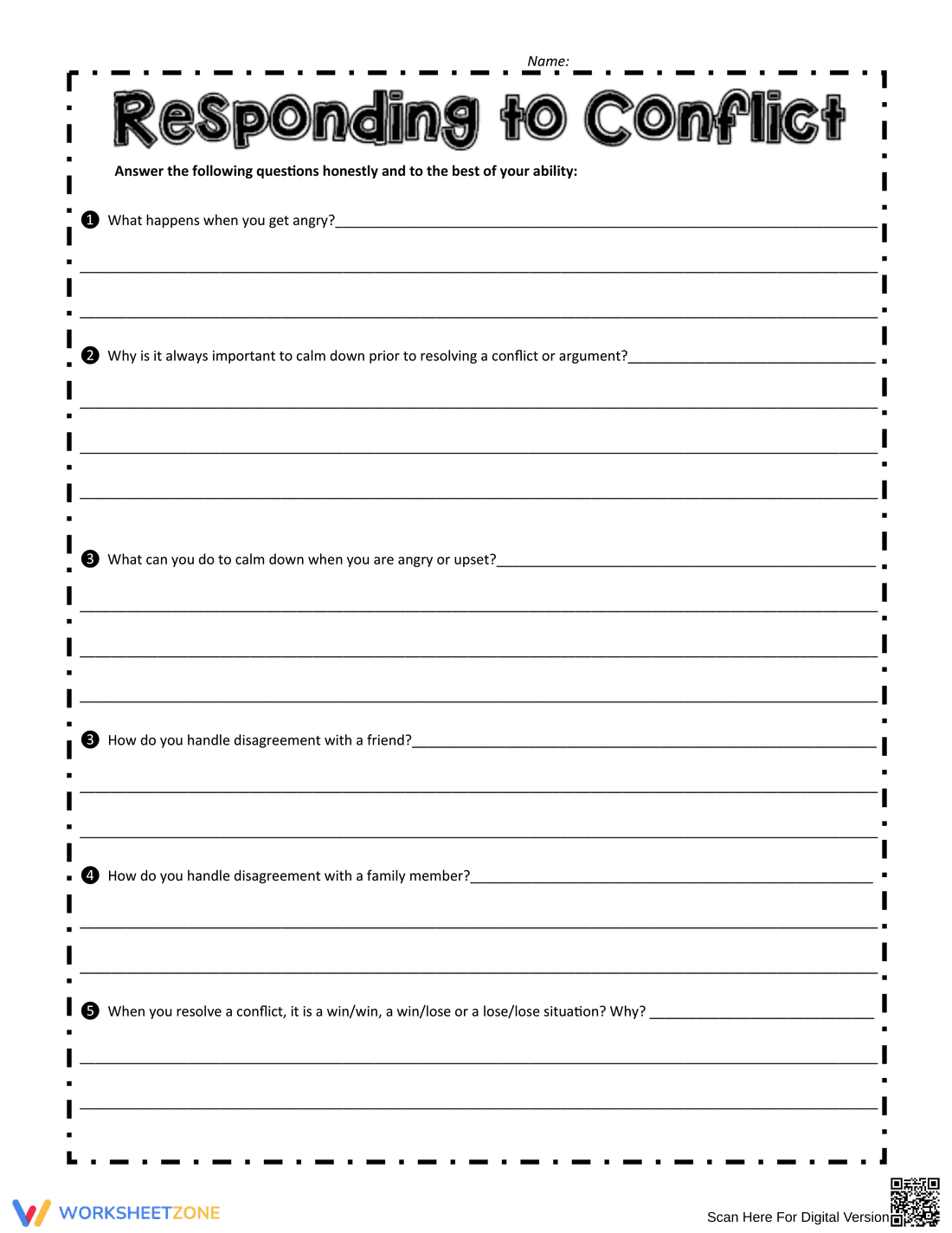
This is a worksheet titled 'Responding to Conflict.' It presents a series of open-ended questions designed to encourage students to reflect on their personal responses to conflict and anger. The questions prompt students to consider their physical and emotional reactions to anger, the importance of calming down before resolving conflict, strategies for self-soothing, and how they handle disagreements with friends and family. The worksheet includes lined spaces for written answers.
Grade Level Suitability:
This worksheet is suitable for grades 4-8. The questions require critical thinking and self-reflection, making it appropriate for upper elementary and middle school students. The language used is accessible, but the concepts require a degree of emotional maturity.
Why Use It:
This worksheet promotes self-awareness and emotional regulation skills. It helps students identify their triggers, develop coping mechanisms, and understand the importance of constructive communication in resolving conflict. It encourages empathy and helps students consider different perspectives in disagreements.
How to Use It:
Distribute the worksheet to students and instruct them to answer the questions honestly and thoughtfully. Allow sufficient time for reflection and writing. The worksheet can be used as an individual activity, a small group discussion starter, or a whole-class lesson on conflict resolution. Teachers can use the responses as a basis for further discussion and role-playing activities.
Target Users:
This worksheet is ideal for teachers, counselors, and parents who want to help children and adolescents develop healthy conflict resolution skills. It can be used in classroom settings, counseling sessions, or at home to foster emotional intelligence and effective communication.
This is a worksheet titled 'Responding to Conflict.' It presents a series of open-ended questions designed to encourage students to reflect on their personal responses to conflict and anger. The questions prompt students to consider their physical and emotional reactions to anger, the importance of calming down before resolving conflict, strategies for self-soothing, and how they handle disagreements with friends and family. The worksheet includes lined spaces for written answers.
Grade Level Suitability:
This worksheet is suitable for grades 4-8. The questions require critical thinking and self-reflection, making it appropriate for upper elementary and middle school students. The language used is accessible, but the concepts require a degree of emotional maturity.
Why Use It:
This worksheet promotes self-awareness and emotional regulation skills. It helps students identify their triggers, develop coping mechanisms, and understand the importance of constructive communication in resolving conflict. It encourages empathy and helps students consider different perspectives in disagreements.
How to Use It:
Distribute the worksheet to students and instruct them to answer the questions honestly and thoughtfully. Allow sufficient time for reflection and writing. The worksheet can be used as an individual activity, a small group discussion starter, or a whole-class lesson on conflict resolution. Teachers can use the responses as a basis for further discussion and role-playing activities.
Target Users:
This worksheet is ideal for teachers, counselors, and parents who want to help children and adolescents develop healthy conflict resolution skills. It can be used in classroom settings, counseling sessions, or at home to foster emotional intelligence and effective communication.


