


























Views
Downloads

Conflict Resolution Guide | Grade 2-5 Printable
Paste this activity's link or code into your existing LMS (Google Classroom, Canvas, Teams, Schoology, Moodle, etc.).
Students can open and work on the activity right away, with no student login required.
You'll still be able to track student progress and results from your teacher account.
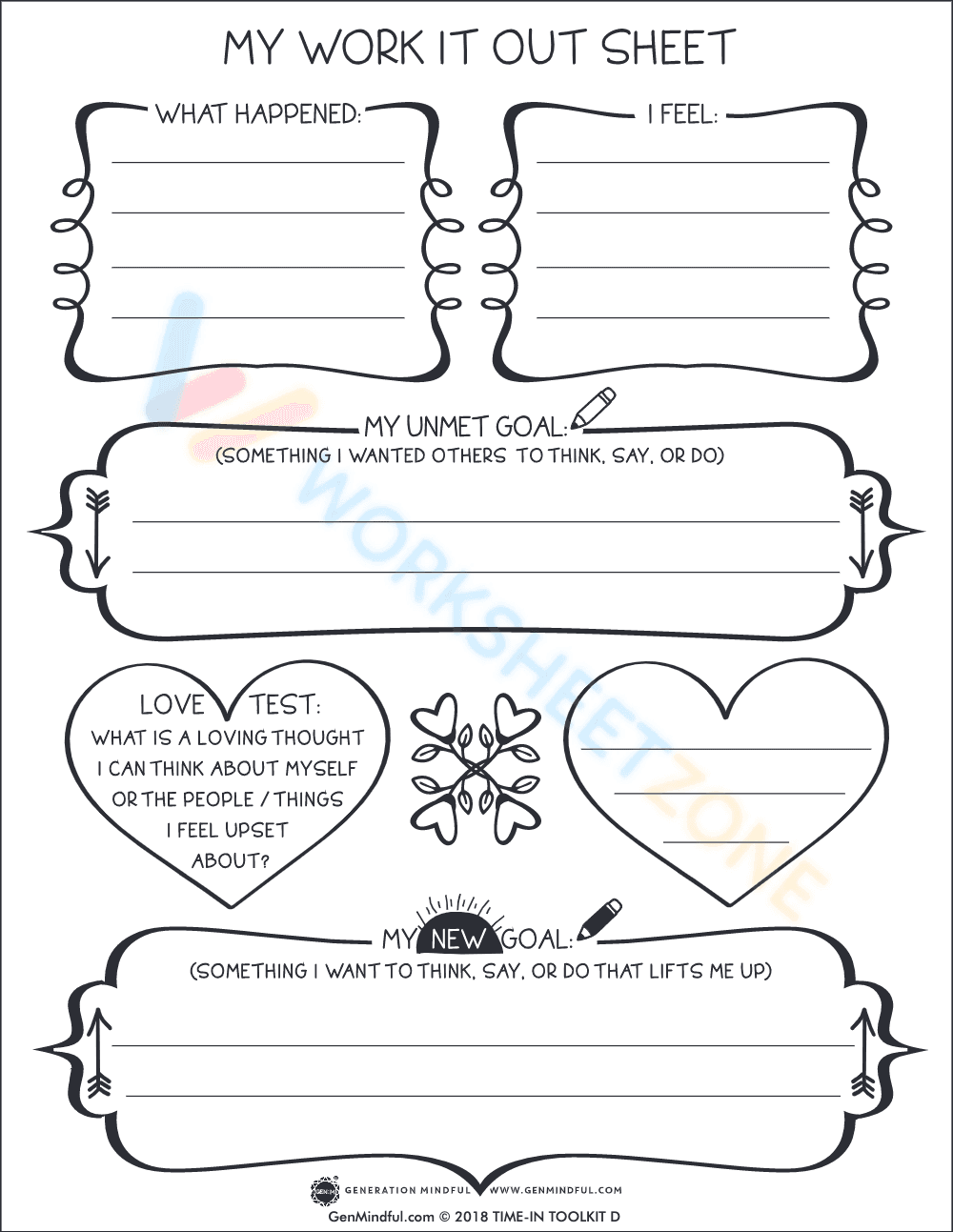
This Grade 2-5 conflict resolution worksheet provides a structured framework for students to process interpersonal disagreements and emotional triggers. By guiding learners through a five-step reflection process, it transforms reactive behaviors into proactive problem-solving opportunities. Students learn to articulate their feelings and identify unmet needs while developing a positive path forward for future interactions.
At a Glance
- Grade: 2-5 · Subject: Behavior & English
- Standard:
CCSS.ELA-LITERACY.SL.3.1— Engage effectively in a range of collaborative discussions and reflections- Skill Focus: Emotional regulation and conflict resolution
- Format: 1 page · 5 prompts · No answer key · PDF
- Best For: De-escalation and restorative justice circles
- Time: 10–15 minutes
The worksheet features five distinct reflection zones designed with engaging, hand-drawn borders. It includes sections for describing the event, identifying specific emotions, and articulating "unmet goals" regarding what the student wanted from others. A unique "Love Test" heart section encourages positive self-talk, while the final "New Goal" box focuses on uplifting future actions.
This resource is designed for immediate implementation with a total teacher prep time of under 2 minutes. First, print the single-page PDF for the student in distress or as a whole-class activity. Second, distribute the sheet during a "cool-down" period to allow for silent reflection. Third, review the responses with the student to facilitate a restorative conversation and resolve the conflict.
This resource aligns with CCSS.ELA-LITERACY.SL.3.1, which requires students to engage effectively in collaborative discussions and express their own ideas clearly. By writing down their perspectives and feelings, students prepare for the verbal component of conflict resolution. Both standard codes can be copied directly into lesson plans, IEP goals, or district curriculum mapping tools.
Use this worksheet as a formative assessment tool during social-emotional learning (SEL) blocks to observe how students internalize emotional vocabulary. It is particularly effective during the "during instruction" phase of a behavior management lesson. Expect students to spend 10 to 15 minutes completing the prompts, depending on the complexity of the conflict being addressed.
This tool is ideal for general education students in elementary grades, as well as those requiring Tier 2 behavioral supports or IEP accommodations for social skills. It pairs naturally with an "I Feel" anchor chart or a direct instruction lesson on restorative justice practices to provide a complete emotional regulation toolkit.
Research from Fisher & Frey (2014) emphasizes the importance of structured reflection in developing student agency and self-regulation skills. This conflict resolution worksheet, aligned to CCSS.ELA-LITERACY.SL.3.1, applies these principles by providing a scaffolded writing task that moves students from emotional reactivity to cognitive processing. By requiring students to identify an "unmet goal" and then pivot to a "new goal," the resource mirrors the cognitive behavioral therapy (CBT) techniques often cited in NAEP behavioral health frameworks. The 5-step progression ensures that students do not just vent their frustrations but actually engage in the higher-order thinking required to change future behavior. This evidence-based approach to social-emotional learning helps reduce classroom disruptions and builds a more empathetic school culture. Educators can utilize this tool to document student growth in emotional intelligence over time, providing tangible data for parent-teacher conferences or behavioral intervention team meetings.


