What These Bee Life Cycle Worksheets Teach
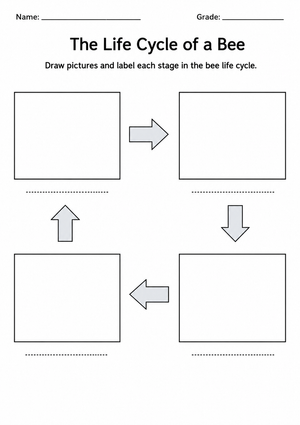
If you're planning an insect or pollinator unit, life cycle of a bee worksheets give your class a clear, sequential way to see how one insect changes from egg to adult. These printables usually ask students to label stages, put images in order, and match vocabulary to each phase. That structure makes them a good fit for elementary science, where students are learning that living things follow predictable patterns of birth, growth, reproduction, and death.
This guide walks through what each stage means, how development differs across the three kinds of bees in a hive, and how to turn a single worksheet into stations, small-group review, and a quick formative check. Everything here is written for a US K-12 classroom, so the framing points back to grade-level science instruction rather than general background reading.
The Four Stages of a Bee's Life Cycle
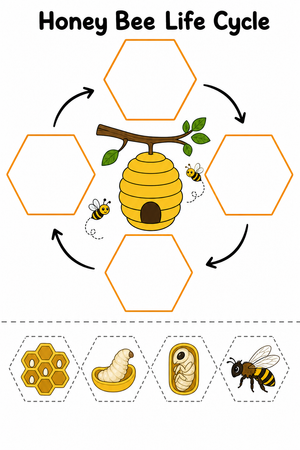
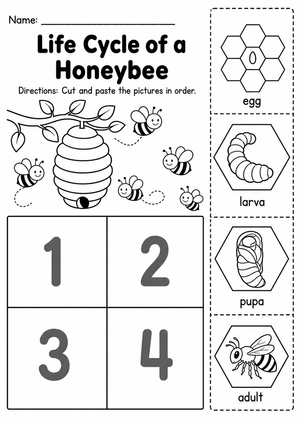
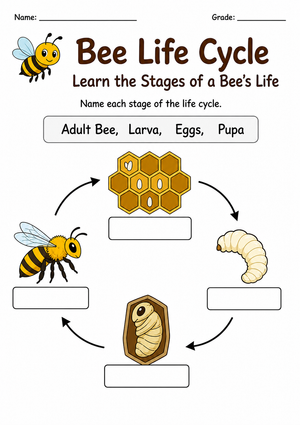
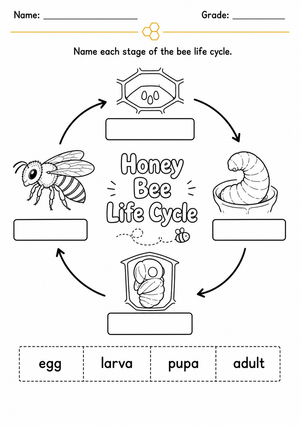
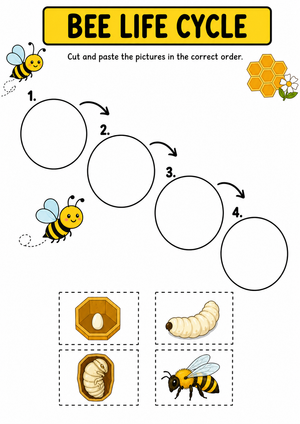
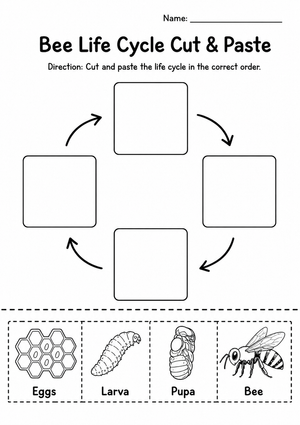
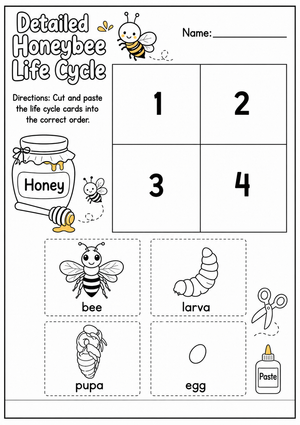
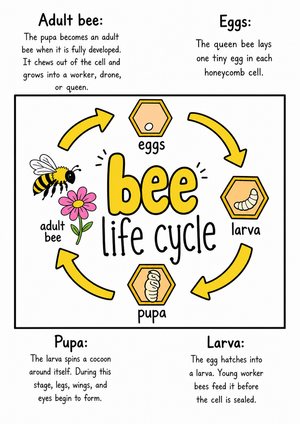
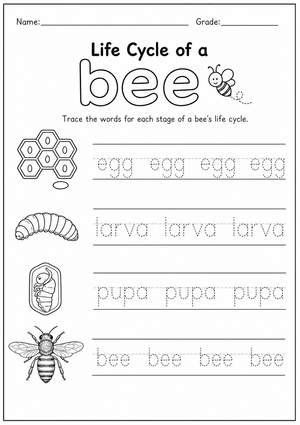
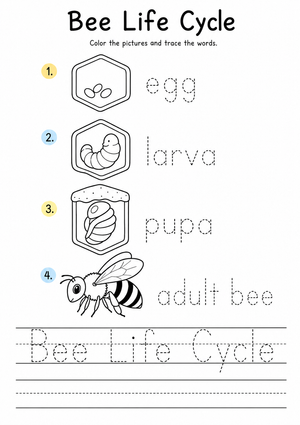
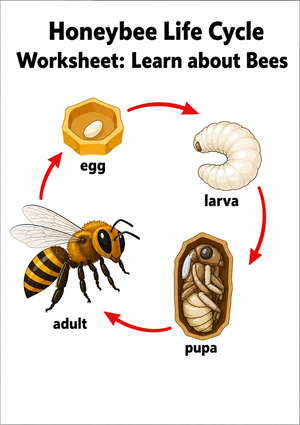
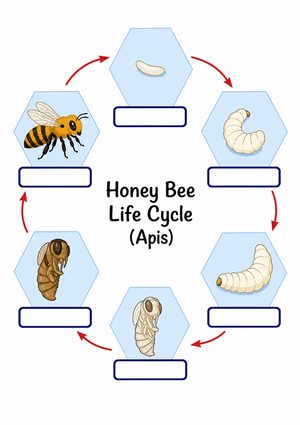
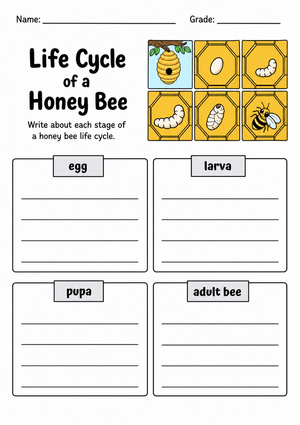
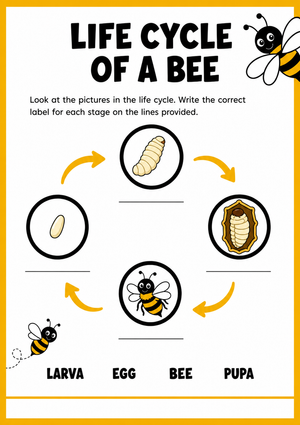
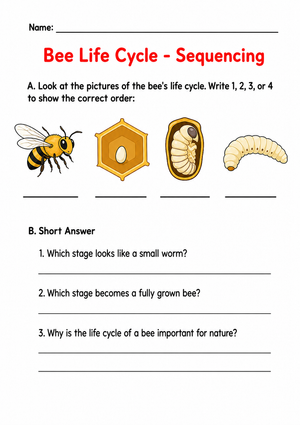
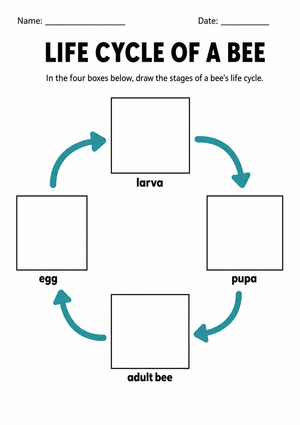
Honey bees go through complete metamorphosis, which means they pass through four distinct stages that look nothing alike: egg, larva, pupa, and adult. Complete metamorphosis is the same pattern students see in butterflies and beetles, so a bee worksheet reinforces a concept your class may already be building.
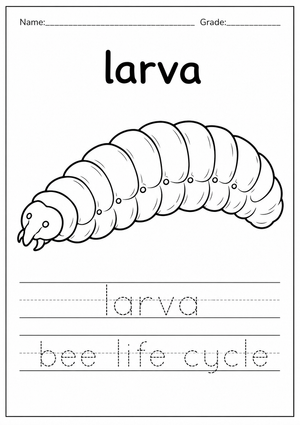
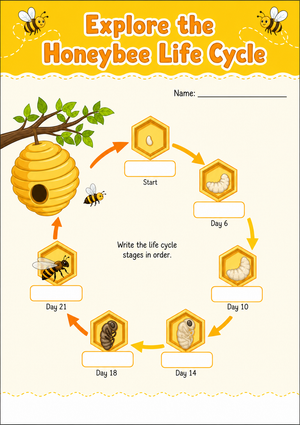
In the egg stage, the queen lays a single tiny egg in a wax cell. After about three days, the egg hatches into a larva, a small, legless, grub-like form that does almost nothing but eat. Worker bees feed the larva constantly, and it grows quickly inside its cell.
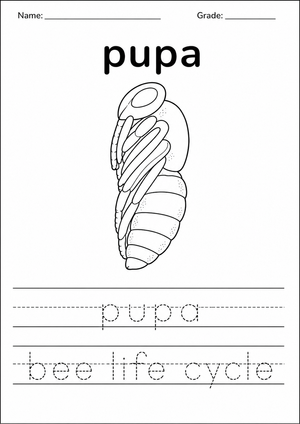
Next comes the pupa stage, when the cell is capped and the larva transforms. On the outside little seems to happen, but inside the body reorganizes into recognizable bee features: eyes, legs, wings, and a striped abdomen. Finally the fully formed adult chews its way out of the capped cell and takes on its role in the colony. Worksheets that ask students to label these four stages, and to explain what the bee is doing in each, push past simple memorization toward real understanding.
How Queen, Worker, and Drone Timelines Differ
One reason the bee is a rich classroom example is that not every bee develops on the same schedule. A worker bee takes about 21 days from egg to adult: roughly 3 days as an egg, 6 days as a larva, and 12 days as a pupa. Comparing that timeline across castes turns a labeling exercise into a reasoning exercise.
Here's a detail that surprises many students: the three types of bees share the same four stages but finish at different speeds. A queen develops fastest, reaching adulthood in about 16 days, while a worker takes about 21 days and a drone takes the longest at roughly 24 days. Because all three start as similar eggs, the difference comes largely from diet and cell size, not from a different life cycle. That gives upper-elementary students a concrete way to discuss how environment and care can shape how an organism grows.
Aligning the Worksheets with NGSS 3-LS1-1
Bee life cycle worksheets map cleanly onto third-grade life science. The Next Generation Science Standards performance expectation 3-LS1-1 asks students to develop models that describe how organisms have unique and diverse life cycles but all include birth, growth, reproduction, and death. A labeled bee diagram is essentially a student-built model, which is exactly the kind of evidence this standard is looking for.
To lean into the standard, ask students to do more than fill blanks. Have them draw arrows to show the cycle continuing, write a sentence about how a new queen keeps the pattern going, or compare the bee's stages to another animal they've studied. Those extensions move a worksheet from recall toward the modeling and explanation that NGSS rewards.
Linking Bee Development to Pollination
Once students understand how a bee grows up, it's natural to ask why bees matter beyond the hive. That question opens a cross-curricular door into agriculture and social studies.
According to the USDA, more than 100 crops grown in the United States depend on pollination, and bee pollination adds over $15 billion in crop value each year. That single statistic turns an abstract insect unit into a concrete lesson about food systems, farming, and the real economic stakes of keeping pollinators healthy across the country.
You can connect this back to the life cycle by pointing out that only the adult stage forages and pollinates. The egg, larva, and pupa stages are entirely supported by the colony, which helps students see that every stage of development has a purpose even before the bee does any visible work.
Classroom Implementation
A single bee life cycle worksheet can anchor a whole block of instruction if you vary how students use it. Try these approaches:
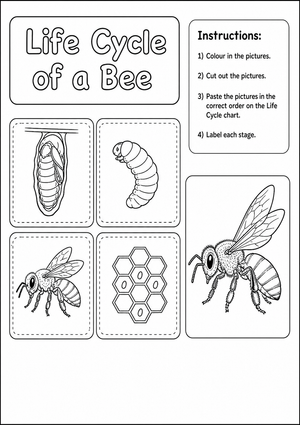
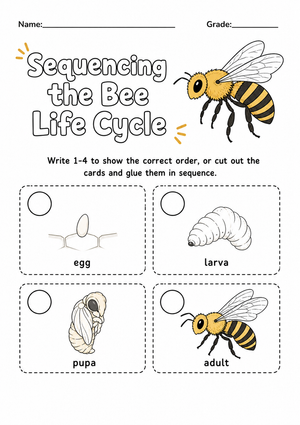
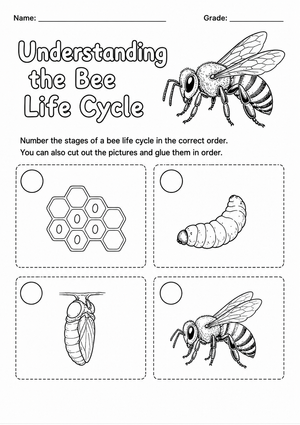
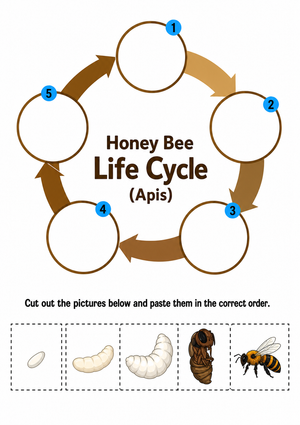
- Sequencing station: Cut apart the four stages and have students arrange egg, larva, pupa, and adult in order, then explain their reasoning to a partner.
- Vocabulary match: Pair each stage with its key term and a short description to build the academic language students need for assessments.
- Small-group review: Use the labeled diagram as a discussion anchor, asking each group to teach one stage to the class.
- Formative check: Collect a blank-label version as an exit ticket to see who can name all four stages without support.
For early elementary, keep the focus on ordering and naming. For third grade and up, add the caste comparison and the pollination tie-in so the worksheet stretches toward grade-level standards. Because the stages are visual and concrete, these printables also work well for small-group intervention and for enrichment, letting you meet a range of learners with the same core page.
Frequently Asked Questions
1. How many stages are in a bee's life cycle and what happens in each?
A bee has four stages: egg, larva, pupa, and adult. The queen lays an egg, it hatches into a feeding larva, the capped cell holds a transforming pupa, and the fully formed adult emerges to take on a role in the colony.
2. How long does it take a bee to go from egg to adult?
A worker bee takes about 21 days: roughly 3 days as an egg, 6 days as a larva, and 12 days as a pupa. Queens develop fastest at about 16 days, and drones take the longest at about 24 days.
3. How does a bee's metamorphosis differ from a butterfly's?
Both go through complete metamorphosis with the same four stages, so the pattern is very similar. The main differences are the setting and speed: a bee develops inside a wax cell in a hive rather than on a plant, and it is fed and cared for by worker bees.
4. What grade levels are bee life cycle worksheets appropriate for?
They fit kindergarten through upper elementary. Younger students focus on ordering and naming the stages, while third grade and up can compare castes and connect the cycle to standards and to pollination.
5. How can teachers connect the bee life cycle to NGSS life science standards?
The cycle aligns with NGSS 3-LS1-1, which asks students to model how organisms have unique life cycles that include birth, growth, reproduction, and death. Treat a labeled diagram as a student-built model and add explanation to meet the standard.