Where Personification Worksheets Fit in a Grades 4-6 ELA Unit
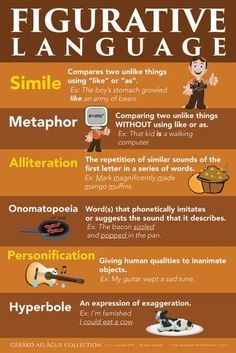
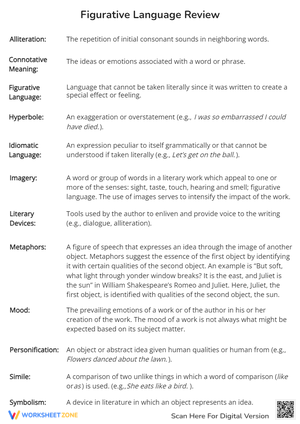
If you teach upper elementary reading or ELA, personification usually shows up right when students are getting comfortable with similes and metaphors. Rather than treating it as a stand-alone lesson, most teachers slot personification worksheets into a broader figurative language unit so students see how the devices connect. That sequencing matters because the Common Core builds toward personification gradually instead of dropping it in all at once.
In grade 4, students spend most of their figurative language time on similes, metaphors, idioms, and adages. By grade 5, personification joins the list of devices students are expected to interpret in context. Knowing that progression helps you pick worksheets at the right level: fourth graders benefit from heavy modeling and recognition tasks, while fifth graders need practice explaining what personification does to meaning and tone.
What Strong Personification Worksheets Actually Practice
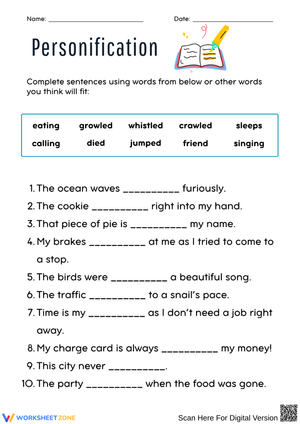
A worksheet that only asks students to circle examples will not move them toward grade-level mastery. The most useful personification practice cycles through three kinds of thinking, and good printable sets include all three rather than stopping at identification.
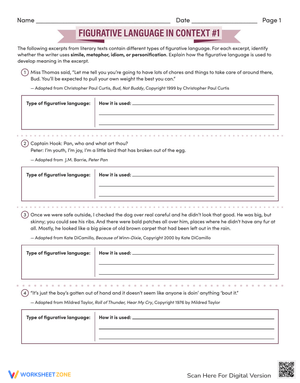
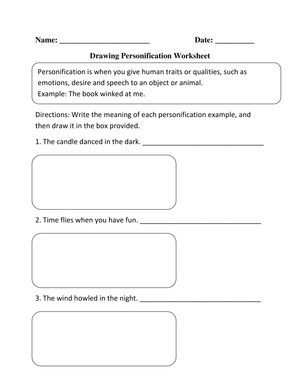
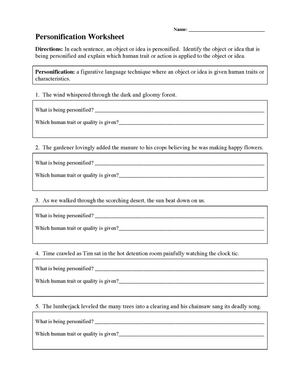
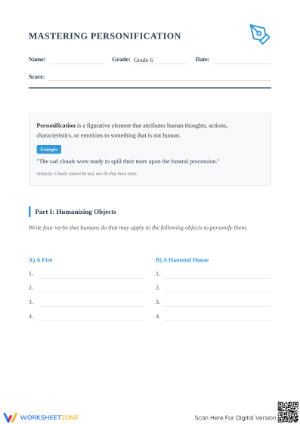
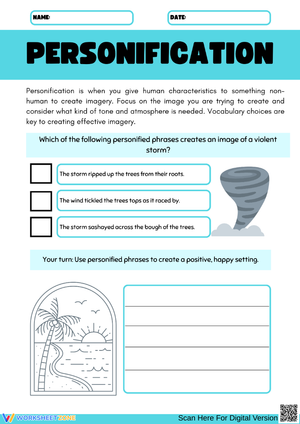
- Identify: Students find personification in isolated sentences, short passages, or lines of poetry.
- Explain: Students name the human trait being applied and why the author chose it.
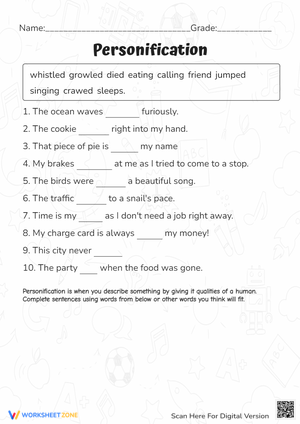
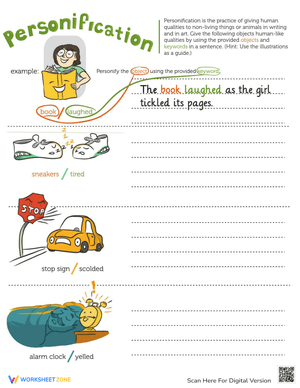
- Produce: Students write original personification sentences about everyday objects, weather, or animals.
The jump from identifying to explaining is where most students stall. A worksheet that pairs each example with a short "what does this make you picture?" prompt pushes students past surface recognition and into the interpretive work grade 5 expects. When you review pages together, ask students to point at the exact word that does the human action, so the class builds a shared habit of underlining verbs like whispered or reached before they write an explanation.
Grade-Level Expectations You Can Cite
When a coach or family member asks why personification appears in your fifth-grade plans, it helps to point to the standard itself and let the language do the explaining.
According to CCSS.ELA-Literacy.L.5.5, fifth graders must interpret figurative language, including similes, metaphors, and personification, in context. That single standard sets grade 5 as the checkpoint where students move from recognizing devices to explaining their effect, which shapes how much rigor a worksheet actually needs.
Because grade 4 concentrates on similes, metaphors, idioms, and adages, you can frame fourth-grade personification work as a preview rather than a mastery target. That framing keeps expectations realistic and lets you spend your assessment energy where the standard truly lands, in grade 5.
Pairing Worksheets With Poetry and Read-Alouds
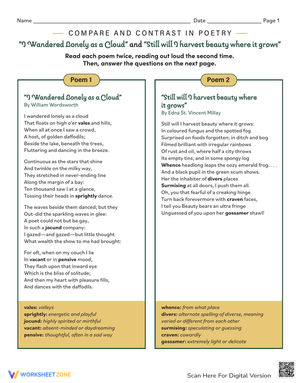
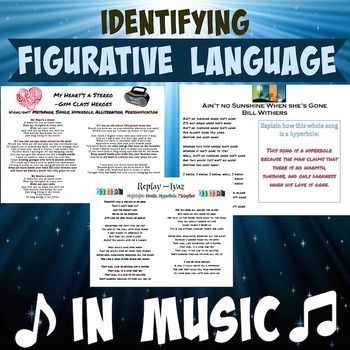
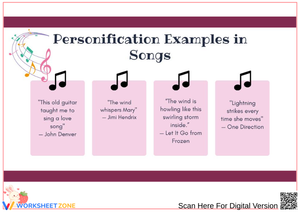
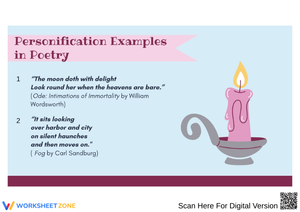
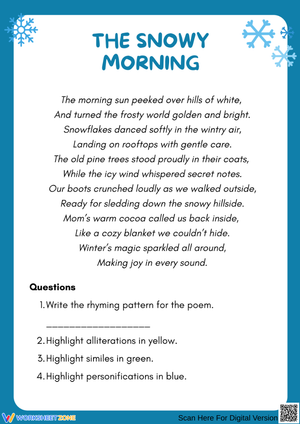
Personification lives in real texts, so worksheets work best next to the poems and stories students are already reading. Poetry is an ideal entry point because poets rely on personification to make abstract ideas concrete, and short poems give you a full example in only a few lines. After a read-aloud, a quick worksheet that asks students to pull two examples from the poem turns passive listening into targeted practice.
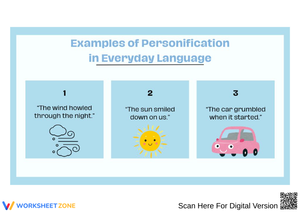
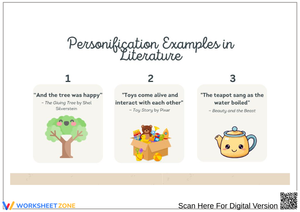
Narrative texts work the same way. When the wind "whispers" or a clock "stares," students can mark the phrase in a mentor sentence and then transfer that thinking to the worksheet. This back-and-forth between authentic text and structured practice keeps the skill from feeling like an isolated drill.
One time-saver is to build a short bank of mentor sentences pulled from the books your class already reads that year. When a worksheet example feels flat, swap in a line students recognize, and the practice instantly feels connected to real reading rather than a random set of sentences. Over a unit, that running list also becomes a quick reference students can revisit when they get stuck on the produce step.
Classroom Implementation
The most efficient way to use these worksheets is in short, repeated cycles rather than one long lesson. A ten-minute warm-up with three sentences on Monday, a poetry pairing midweek, and a produce-your-own task on Friday gives students spaced practice without eating a full block.
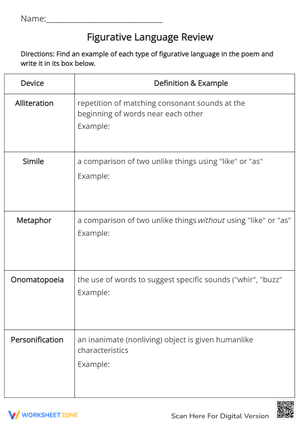
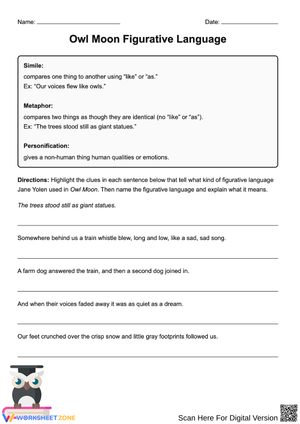
Here is a pattern worth planning around: students who can identify personification often still lose points on the explain step because they name the device without naming the human action. A worksheet column that forces two answers per item, one for the object and one for the human trait it borrows, closes that gap faster than simply adding more examples. And because CCSS L.5.5 groups personification with simile and metaphor, mixing all three on one review page surfaces the common misconception where students label any comparison as personification.
For rotations, keep the format predictable so students spend their energy on thinking, not directions. A simple station setup can look like this:
- A teacher-led table for the explain step, where you model naming the human trait aloud.
- An independent identify page students can self-check against an answer key.
- A partner produce task where students trade sentences and label each other's examples.
Frequently Asked Questions
1. What grade level typically learns personification under Common Core?
Personification is directly named at grade 5 in CCSS.ELA-Literacy.L.5.5, where students interpret figurative language in context. Grade 4 focuses on similes, metaphors, idioms, and adages, so fourth graders often preview personification before it becomes a grade-5 mastery target.
2. How is personification different from simile and metaphor?
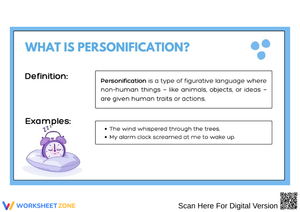
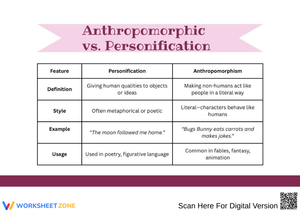
Personification gives human traits or actions to non-human things, such as a "grumbling" storm. A simile compares two things using like or as, and a metaphor states one thing is another. Showing all three together helps students avoid mixing them up.
3. How can teachers use personification worksheets in small-group intervention?
Use short, scaffolded pages that bold the examples and provide a word bank, then focus the group on the explain step. Because you are working with a few students, you can hear each one name the human action aloud and correct misconceptions on the spot.
4. What texts work best for introducing personification examples?
Poetry and narrative read-alouds work best because authors use personification to make ideas vivid. Short poems give a complete example in a few lines, and story sentences let students mark the device in context before practicing on a worksheet.
5. How should teachers assess mastery beyond worksheets?
Ask students to produce personification in a new context, like an exit ticket sentence or a caption, and have them underline the human action. Producing and explaining, not just circling examples, shows whether students have reached the grade-5 expectation.












 Interactive Worksheet Maker
 Quiz Maker
 Word Search Maker
 Crossword Puzzle Maker
 Word Scramble Generator
 Sentence Scramble Generator
 Handwriting Worksheet Generator
 Name Tracing Generator
 Fill In The Blank Generator