


























0
Views
0
Plays

0.0
0
Save
0 Likes
Fun Figurative Language Practice
0 Views
0 Plays
Paste this activity's link or code into your existing LMS (Google Classroom, Canvas, Teams, Schoology, Moodle, etc.).
Students can open and work on the activity right away, with no student login required.
You'll still be able to track student progress and results from your teacher account.
Information
Description
What It Is:
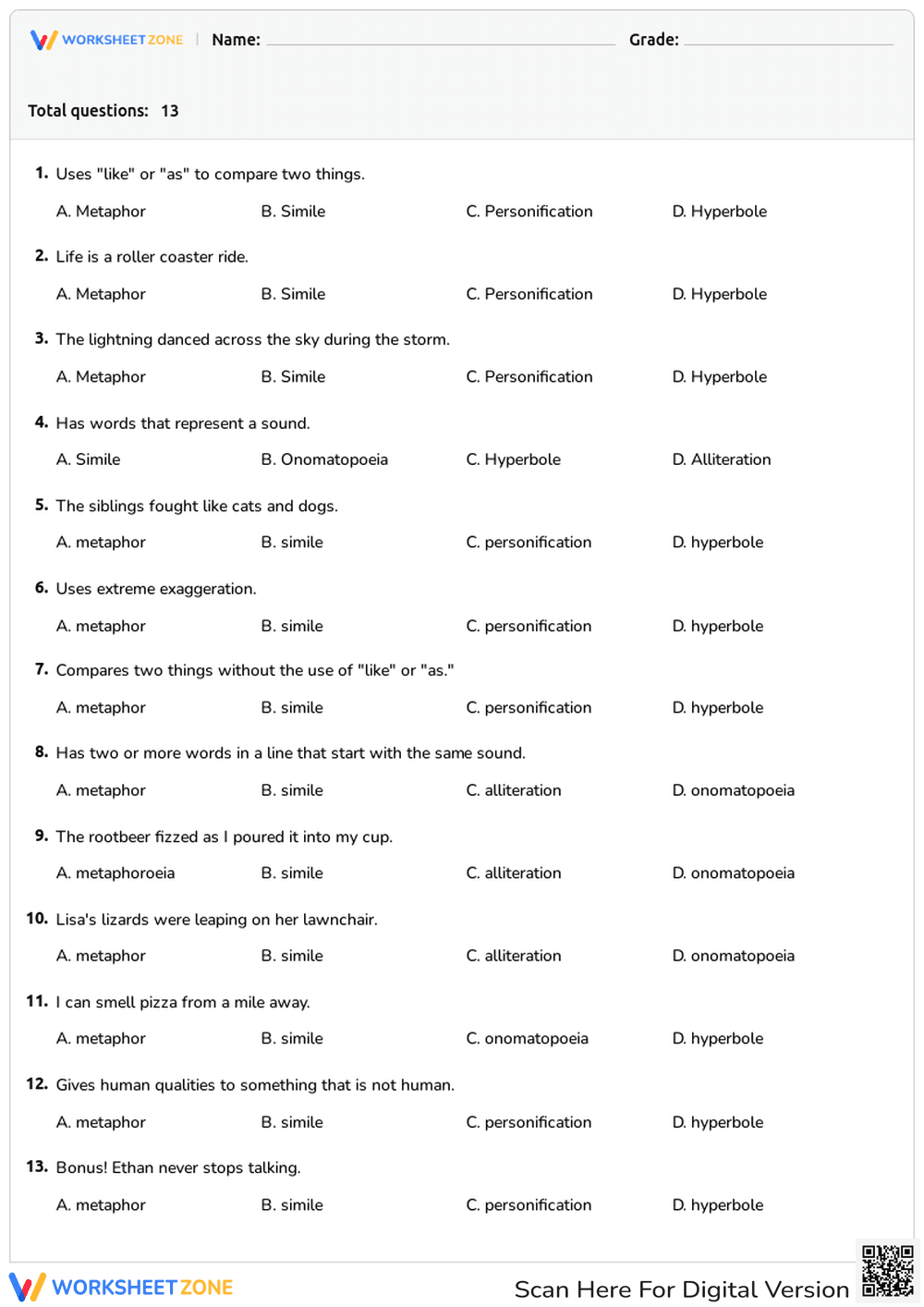
This Figurative Language multiple-choice worksheet includes thirteen questions covering similes, metaphors, personification, onomatopoeia, alliteration, and hyperboles through clear, example-based prompts.
Why Use It:
Helps students build strong comprehension and identification skills by examining figurative language in context. Ideal for reinforcing literary device recognition during reading and writing lessons.
How to Use It:
• Assign as class practice, a review quiz, or an assessment.
• Use as a warm-up, literacy station task, or homework.
• Pair with a figurative language anchor chart or note sheet for deeper understanding.
Grade Suitability:
Best for upper elementary and middle school learners.
• Supports ELA lessons on poetry, narratives, descriptive writing, and test prep.
• Great for reading comprehension and vocabulary development.
Target Users:
Teachers, homeschool parents, and students learning to identify figurative language in example sentences.
This Figurative Language multiple-choice worksheet includes thirteen questions covering similes, metaphors, personification, onomatopoeia, alliteration, and hyperboles through clear, example-based prompts.
Why Use It:
Helps students build strong comprehension and identification skills by examining figurative language in context. Ideal for reinforcing literary device recognition during reading and writing lessons.
How to Use It:
• Assign as class practice, a review quiz, or an assessment.
• Use as a warm-up, literacy station task, or homework.
• Pair with a figurative language anchor chart or note sheet for deeper understanding.
Grade Suitability:
Best for upper elementary and middle school learners.
• Supports ELA lessons on poetry, narratives, descriptive writing, and test prep.
• Great for reading comprehension and vocabulary development.
Target Users:
Teachers, homeschool parents, and students learning to identify figurative language in example sentences.


