


























1 / 3
0
Views
0
Plays



0.0
0
Save
0 Likes
Figurative Language Identification: Fun Visual
0 Views
0 Plays
Paste this activity's link or code into your existing LMS (Google Classroom, Canvas, Teams, Schoology, Moodle, etc.).
Students can open and work on the activity right away, with no student login required.
You'll still be able to track student progress and results from your teacher account.
Information
Description
What It Is:
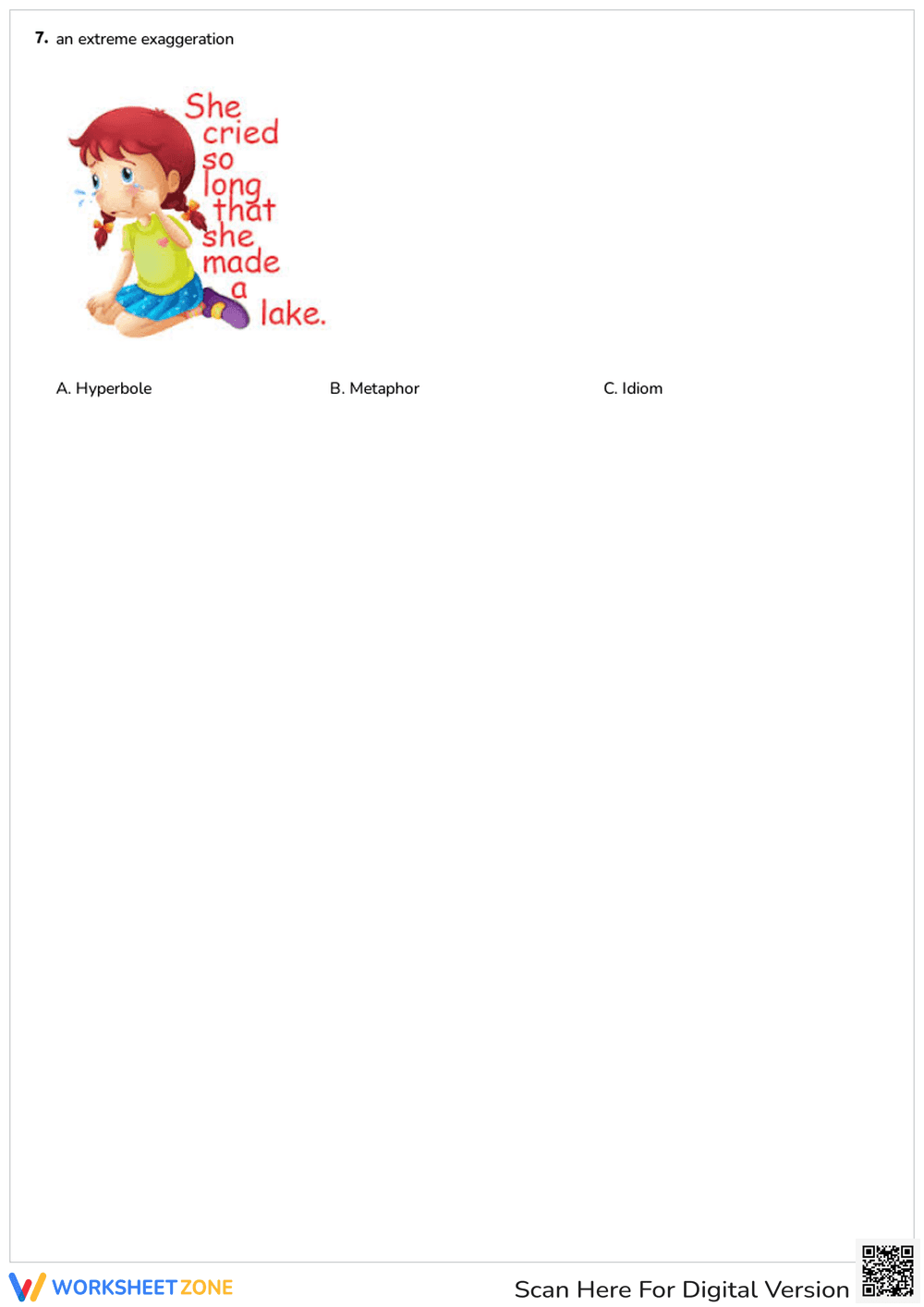
A figurative language multiple-choice worksheet featuring questions on onomatopoeia, personification, similes, and other common literary devices. Each item includes visuals to support understanding.
Why Use It:
This worksheet helps students strengthen reading and writing skills by identifying different types of figurative language. It builds foundational knowledge needed for poetry, storytelling, and descriptive writing.
How to Use It:
• Use as a warm-up for a figurative language lesson
• Assign as independent practice, group review, or formative assessment
• Pair with anchor charts or creative writing activities for reinforcement
Grade Suitability:
Ideal for learners developing figurative language recognition.
• Suitable for classroom use
• Helpful for tutoring or at-home study
Target Users:
Teachers, parents, and students who want clear, visual practice identifying literary devices.
A figurative language multiple-choice worksheet featuring questions on onomatopoeia, personification, similes, and other common literary devices. Each item includes visuals to support understanding.
Why Use It:
This worksheet helps students strengthen reading and writing skills by identifying different types of figurative language. It builds foundational knowledge needed for poetry, storytelling, and descriptive writing.
How to Use It:
• Use as a warm-up for a figurative language lesson
• Assign as independent practice, group review, or formative assessment
• Pair with anchor charts or creative writing activities for reinforcement
Grade Suitability:
Ideal for learners developing figurative language recognition.
• Suitable for classroom use
• Helpful for tutoring or at-home study
Target Users:
Teachers, parents, and students who want clear, visual practice identifying literary devices.


