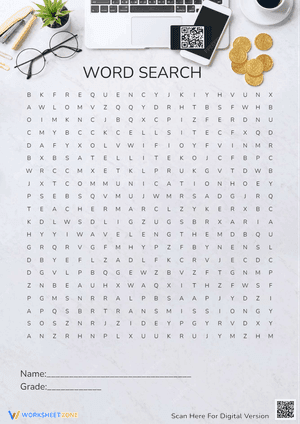
A computer science word search is one of the simplest tools a teacher can put in front of students who are still getting comfortable with terms like algorithm, debugging, and abstraction. It doesn't require a lab, a login, or a working computer. You print it, hand it out, and students spend ten focused minutes scanning for terms they'll need again on a quiz, in a discussion, or in their own code comments. For CS teachers juggling limited prep time, that low overhead matters as much as the content itself.
Aligning Word Search Terms to CSTA Grade Bands
Not every CS term belongs in every classroom. The CSTA K-12 Computer Science Standards organize expectations by grade band: K-2, 3-5, 6-8, and 9-12. Using that structure to choose word search vocabulary keeps the puzzle appropriately challenging instead of overwhelming younger students or boring older ones.
For K-2 classrooms, simple terms like code, command, and sequence work well. Middle school puzzles can introduce function, variable, and debugging. High school word searches can handle denser vocabulary such as abstraction, algorithm, and data structure, especially as students prepare for AP Computer Science Principles or a foundational CS course.
CSTA is set to release revised PK-12 CS Standards in summer 2026, unveiled at its Annual Conference in July. Teachers building vocabulary resources now should expect grade-band expectations to shift slightly once that update lands, which is a good reason to keep word search term lists easy to swap out rather than locked into a single fixed version.
Using a Word Search During Computer Science Education Week
Computer Science Education Week gives CS and non-CS teachers alike a natural moment to introduce foundational vocabulary, even in schools without a dedicated computer science course. A word search works well as a bell-ringer on day one of the week, setting up the core terms that will appear in whatever activities follow, whether that's an Hour of Code session or a short unplugged lesson on algorithms.
Because a word search doesn't require any device setup, it also works as a bridge activity in schools with limited computer access, letting every student engage with CS content on the same day even if lab time is staggered across classes.
Frequently Asked Questions
1. What computer science vocabulary terms are appropriate for a word search at each K-12 grade band?
Use simple terms like code, command, and sequence for K-2. Middle school puzzles can include function, variable, and debugging. High school word searches can handle denser vocabulary such as abstraction, algorithm, and data structure, following the grade-band structure in the CSTA K-12 Computer Science Standards.
2. How can teachers use a CS word search to support students in schools without a dedicated computer science course?
A word search gives any teacher, not just a certified CS teacher, a way to introduce core CS vocabulary without needing lab equipment or specialized training. This matters because a meaningful share of U.S. high schools still don't offer a foundational CS course, particularly in rural areas.
3. How does a word search fit into a broader vocabulary-building strategy for a CS unit?
It works best as a first step in a two-part routine: word recognition through the puzzle, followed by a short definition-matching activity or discussion to confirm students understand what each term actually means.
4. When during a CS unit or Computer Science Education Week is a word search most effective?
It's most effective at the start of a unit or as a day-one activity during Computer Science Education Week, when students are being introduced to new vocabulary they'll use throughout the rest of the lessons.















 Interactive Worksheet Maker
 Quiz Maker
 Word Search Maker
 Crossword Puzzle Maker
 Word Scramble Generator
 Sentence Scramble Generator
 Handwriting Worksheet Generator
 Name Tracing Generator
 Fill In The Blank Generator