




























Views
Downloads


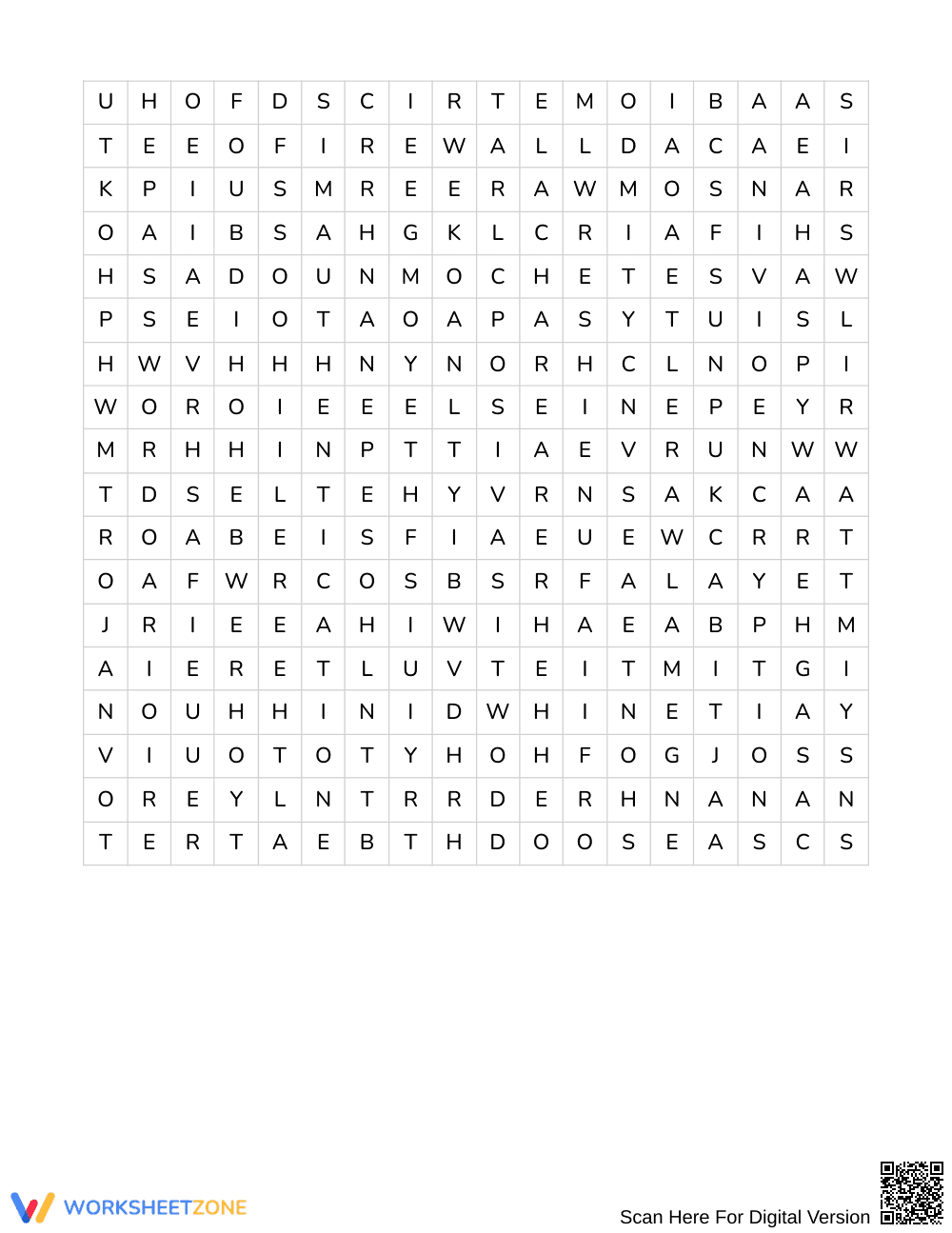

Complete Digital Security Word Search | Grades 6–7 ELA

Paste this activity's link or code into your existing LMS (Google Classroom, Canvas, Teams, Schoology, Moodle, etc.).
Students can open and work on the activity right away, with no student login required.
You'll still be able to track student progress and results from your teacher account.
This digital security vocabulary word search strengthens middle school students' grasp of vital computer science terminology through active retrieval. Learners read concise technical clues to deduce 16 essential concepts—including encryption, malware, and authentication—before locating them within an intricate puzzle grid. The activity reinforces domain-specific literacy and comprehension.
At a Glance
- Grade: Grades 6–7 · Subject: English Language Arts
- Standard: Not standards-assessed — vocabulary enrichment
- Skill Focus: Digital security technical vocabulary
- Format: 3 student pages · 16 hidden words · 4-page answer key included · Printable PDF
- Best For: Cross-curricular technical vocabulary practice, review, and early finishers
- Time: 25–35 minutes of focused student engagement
What's Inside
This 3-page printable activity challenges students to decode definitions rather than relying on a simple word list. Across the packet, learners encounter 16 clue-based tasks that test comprehension of fundamental cybersecurity terms like firewall, phishing, spyware, and ransomware. A comprehensive 4-page answer key provides full visual solutions highlighting each hidden word on the grid, making checking work quick and accurate.
Puzzle Mechanics and Structure
Unlike standard word finds, this activity features a rigorous no-bank design across an 18 x 18 letter grid. Students read each clue to identify the target term before scanning the board. Words are placed in all 8 directions—north, northeast, east, southeast, south, southwest, west, and northwest—requiring careful visual tracking, spatial awareness, and strong orthographic recall without giving away word spellings upfront.
Standards Alignment
This resource serves as targeted vocabulary enrichment and is not aligned to a specific state or national content standard. It reinforces essential computer science and informational reading terminology, supporting cross-curricular literacy across Grades 6–7 English language arts and introductory technology courses.
How to Use It
Introduce this word search after teaching a digital citizenship or cybersecurity unit to consolidate key terminology through retrieval practice. Alternatively, provide it during station rotations or as a meaningful independent task for early finishers. Teachers should circulate during the first 5 minutes to ensure students read the definitions before hunting for letter patterns. Most learners complete the full 16-word challenge within 25 to 35 minutes.
Who It's For
This word search is designed for Grades 6–7 learners building academic vocabulary in computer science, technology, and media literacy. For students needing support, teachers can provide the initial letter of each answer alongside the clues. Pair this packet with a digital privacy anchor chart or an introductory lesson on safe online habits to maximize conceptual retention.
Digital security vocabulary acquisition demands deliberate cognitive retrieval rather than passive recognition. While not standards-assessed, this Grades 6–7 vocabulary enrichment word search reinforces 16 domain-specific technical terms through definition-driven problem solving. According to Fisher & Frey (2014), intentional vocabulary instruction that pairs conceptual definitions with active orthographic processing significantly bolsters student comprehension of complex informational texts. By removing the traditional word bank and requiring learners to determine each term from functional descriptions—such as distinguishing spyware from ransomware or understanding encryption protocols—students engage in higher-level retrieval before scanning the 18 x 18 letter matrix. This multi-step process cements academic language in long-term memory, bridges computer science concepts with literacy development, and builds foundational knowledge necessary for safe digital citizenship. The 3-page layout and complete 4-page answer key offer educators an effective tool for structured independent practice, formative assessment, and purposeful cross-curricular learning.


