Why these worksheets earn a place in your water unit
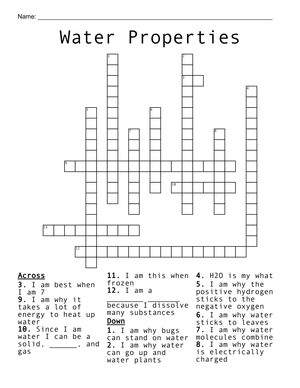
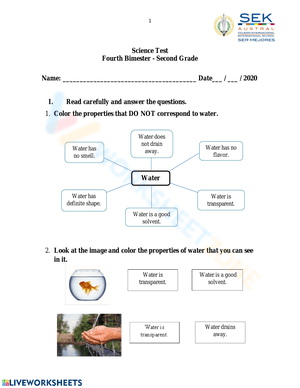
Water looks simple, but the concepts behind it are anything but. Polarity, hydrogen bonding, cohesion, adhesion, surface tension, and density all live at a molecular scale students can't see, which is exactly why so many kids memorize the words and miss the meaning. A well-built set of properties of water worksheets gives you a bridge: labeled diagrams, vocabulary practice, and short prompts that turn invisible molecular behavior into something students can predict, sketch, and explain. Used before a lab or after a demo, they anchor the abstract ideas in observable evidence. Below is how I'd sequence them across grades 3-8, the misconceptions to watch for, and the low-prep demos that make each worksheet page pay off.
From molecular polarity to what students can see
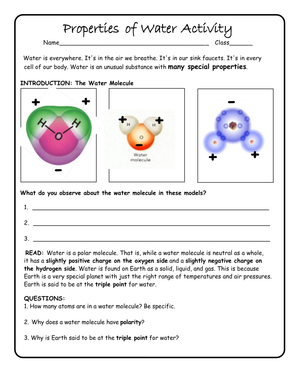
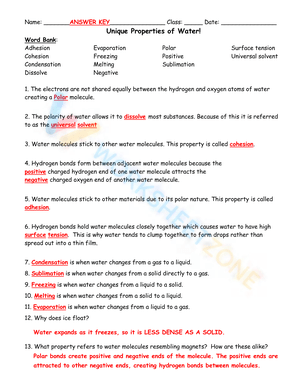
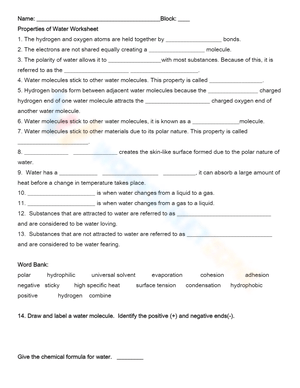
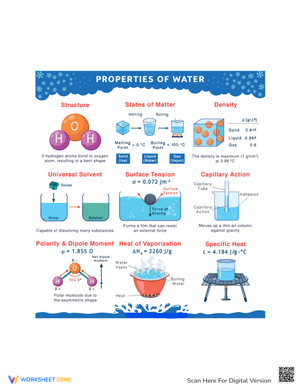
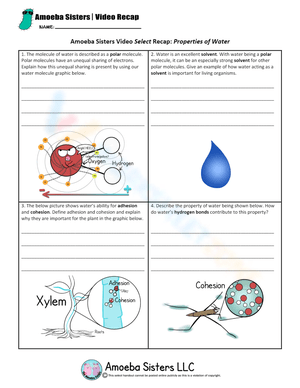
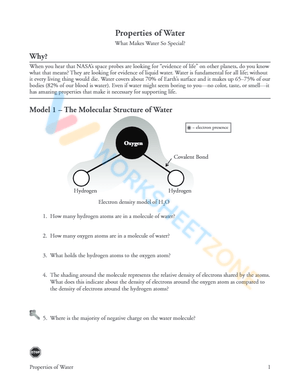
The most effective worksheet progression moves in one direction: from structure to behavior. Start with the water molecule itself. Its bent shape and oxygen's higher electronegativity pull shared electrons toward the oxygen end, leaving a slightly negative pole near oxygen and slightly positive poles near the hydrogens. That imbalance is polarity, and polarity is what makes hydrogen bonding between neighboring molecules possible.
Once students can label a diagram of a polar molecule and mark the partial charges, the observable properties stop feeling like a random list. Cohesion, surface tension, capillary action, and water's ability to dissolve many substances all trace back to those same tugging bonds. Worksheets that ask students to draw the connection line explicitly, from polarity to a specific phenomenon, do more than definition-matching pages ever will. The Carolina Knowledge Center's overview of the properties of water is a useful teacher reference for tightening your own explanations before you hand anything out.
Here's the detail that reframes the whole unit for students: because a single water molecule can form up to four hydrogen bonds with its neighbors, surface tension gets strong enough to support a steel paper clip many times denser than water itself. When you connect that number to the float test, an invisible force suddenly becomes measurable, and students stop treating cohesion as a vocabulary word and start treating it as a prediction they can test.
Cohesion vs. adhesion: fixing the top misconception
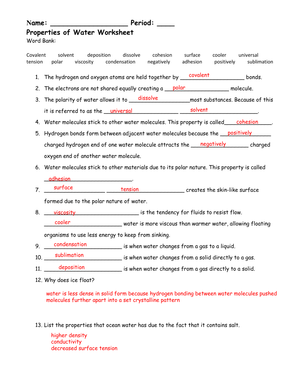
The single most common error on water-properties assessments is swapping cohesion and adhesion. Students hear both, notice both involve attraction, and blur them together. The fix is a consistent visual: cohesion is water-to-water, adhesion is water-to-a-different-surface. A worksheet that shows a water drop beading on a penny (cohesion pulling the drop inward) beside water climbing up a paper towel or celery stalk (adhesion pulling water onto fibers) gives students two contrasting anchors on one page.
Ask students to label which molecules are attracting which, then write one sentence predicting what would change if the attraction were weaker. That prediction step is where the misconception actually gets corrected, because students have to commit to a mechanism rather than a definition. Capillary action, the way water creeps up a narrow tube or a plant stem, is the perfect case study because it needs both properties working together: adhesion pulls water onto the surface, and cohesion drags the next molecules along behind it.
Matching worksheets to NGSS grade bands
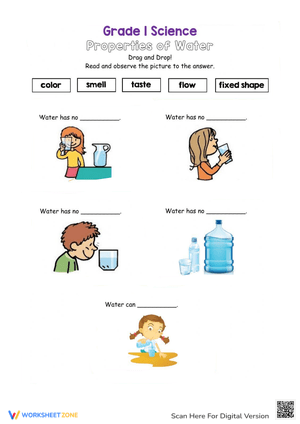
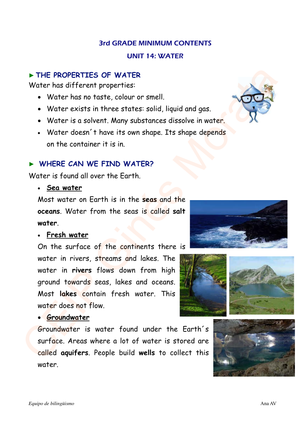
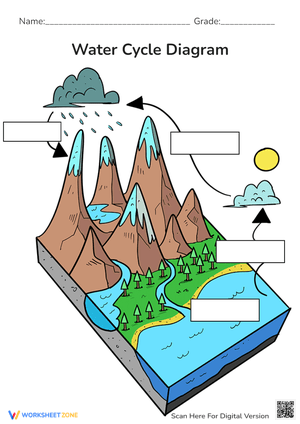
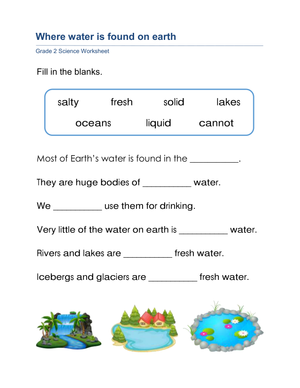
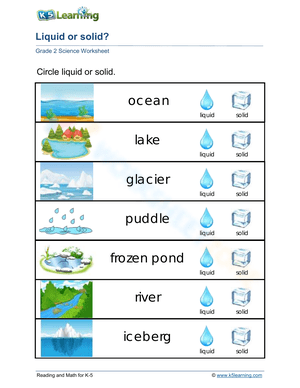
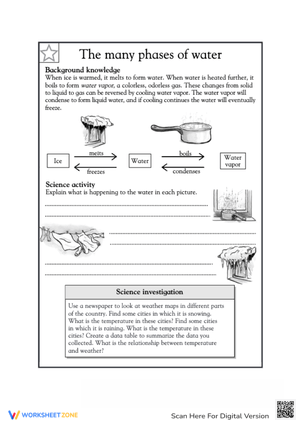
Grade band matters more than page count. In grades 3-5, keep worksheets focused on states of matter, the water cycle, and where Earth's water sits. In middle school, you can push into molecular polarity, hydrogen bonding, and how these properties drive larger systems.
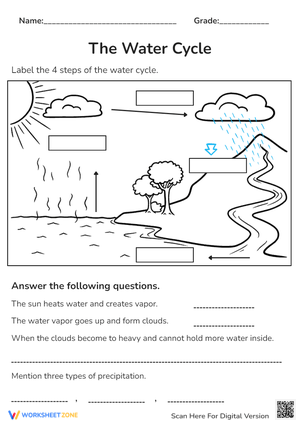
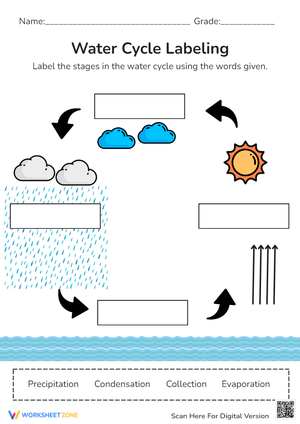
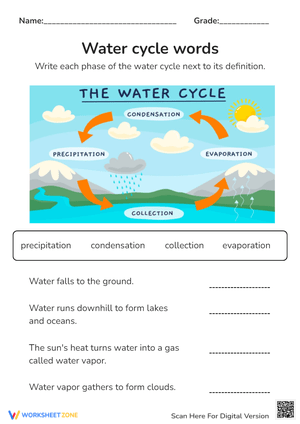
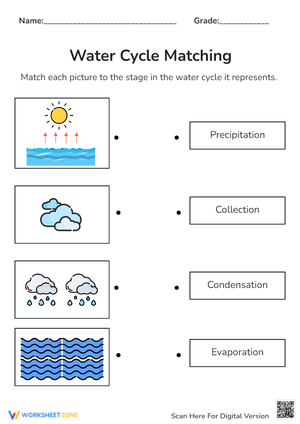
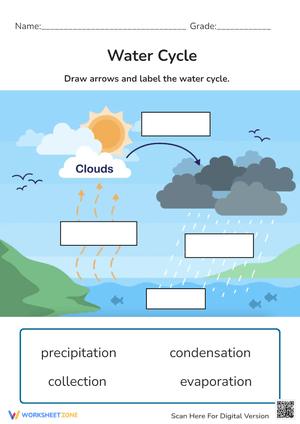
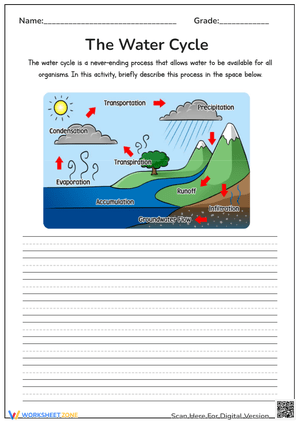
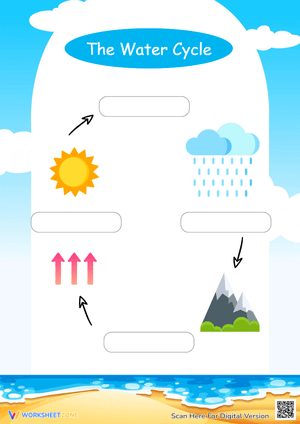
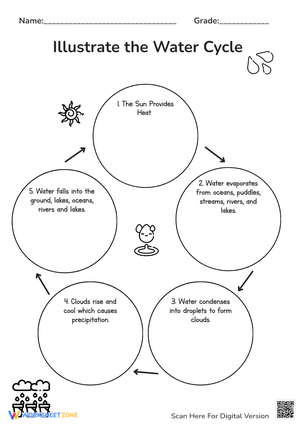
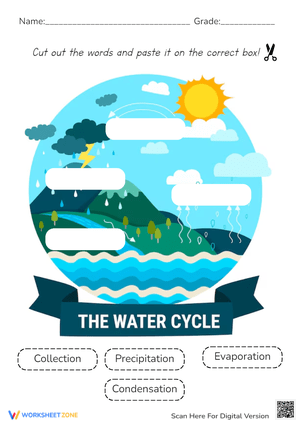
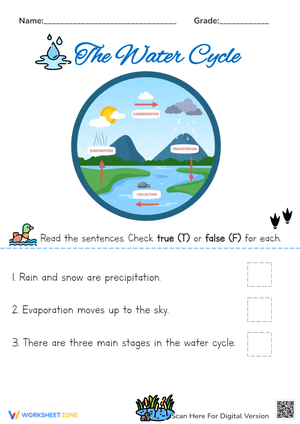
The Next Generation Science Standards set a clear bar here: performance expectation 5-ESS2-2 asks fifth graders to describe and graph the amounts and percentages of water and fresh water in reservoirs across the planet, turning an abstract idea about Earth's water into a concrete, data-driven graphing task students can complete. For middle school, MS-ESS2-4 shifts the focus to how water cycles among land, ocean, and atmosphere through evaporation, condensation, crystallization, and precipitation, driven by energy from sunlight and the force of gravity. Choose worksheets whose questions actually mirror those expectations instead of ones that stop at labeling a diagram.
Teacher Tips for getting the most from these worksheets
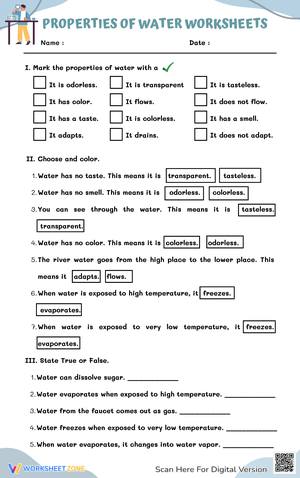
A few moves make these worksheets work harder in a real classroom. Use them as an entry ticket the day after a demo so you can spot lingering confusion before it hardens. For small-group intervention, pull the cohesion-versus-adhesion page and work it aloud, having students point to the surfaces rather than recite definitions.
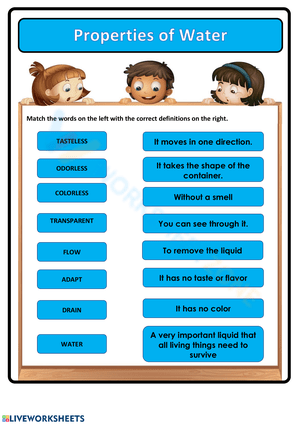
Pair a vocabulary page with a diagram-labeling page so students meet each term in two formats, which helps the language stick for multilingual learners. When you review before a states-of-matter or water-cycle test, assign only the questions that mirror your standard, and let students explain one answer to a partner. If a worksheet names a property your grade band doesn't cover, cross it out rather than skipping the page entirely, so students still get the parts that count. Finally, keep a short answer key visible during review so students self-check and you circulate to the ones who need a second look.
Frequently Asked Questions
1. What grade levels are properties of water worksheets appropriate for?
They work across grades 3-8. Younger students focus on states of matter, the water cycle, and where Earth's water is found, while middle schoolers take on polarity, hydrogen bonding, and how those properties drive cohesion, adhesion, and density.
2. What's the difference between cohesion and adhesion, and how should I explain it?
Cohesion is attraction between water molecules; adhesion is attraction between water and a different surface. The clearest explanation pairs a beading water drop (cohesion) with water climbing a paper towel or celery stalk (adhesion) so students see both side by side.
3. Which NGSS standards do these worksheets support?
They align well with 5-ESS2-2, where students graph the amounts and percentages of Earth's water and fresh water, and MS-ESS2-4, which covers how water cycles among land, ocean, and atmosphere through evaporation, condensation, and precipitation.
4. What hands-on experiments pair well with these worksheets?
Try the paper clip float test, drops on a penny, celery or paper towel capillary action, and a density tower. Each demo gives students an observation to record on the matching worksheet page.
5. How can teachers use these worksheets for review or formative assessment?
Use them as entry tickets after a demo, as small-group intervention pages, or as targeted review before a unit test. Adding a prediction line and a result line turns any page into quick formative evidence you can scan.












 Interactive Worksheet Maker
 Quiz Maker
 Word Search Maker
 Crossword Puzzle Maker
 Word Scramble Generator
 Sentence Scramble Generator
 Handwriting Worksheet Generator
 Name Tracing Generator
 Fill In The Blank Generator