


























Views
Downloads


Properties of Water & Water Cycle | Essential Grade 6-8
Paste this activity's link or code into your existing LMS (Google Classroom, Canvas, Teams, Schoology, Moodle, etc.).
Students can open and work on the activity right away, with no student login required.
You'll still be able to track student progress and results from your teacher account.
This comprehensive 8-page science packet provides students with a deep exploration of the properties of water, the hydrologic cycle, and environmental conservation. By engaging with diverse task types, learners master the transitions between states of matter and the critical stages of Earth's water systems. It is designed for immediate classroom implementation and student mastery.
At a Glance
- Grade: 6-8 · Subject: Science
- Standard:
MS-ESS2-4— Develop a model to describe the cycling of water through Earth's systems- Skill Focus: Hydrologic cycle and states of matter
- Format: 8 pages · 12 problems · Answer key included · PDF
- Best For: Middle school earth science units
- Time: 45–60 minutes
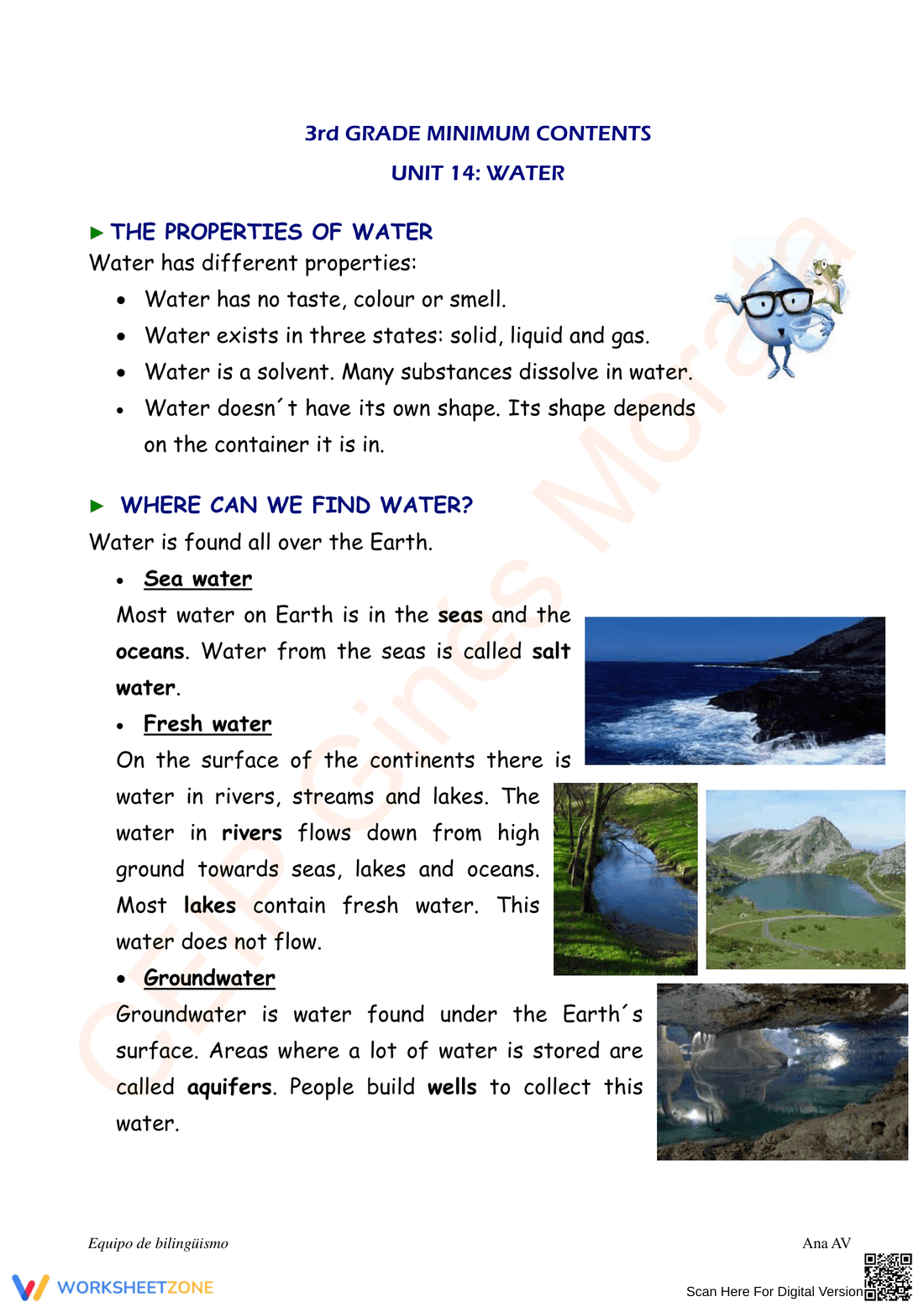
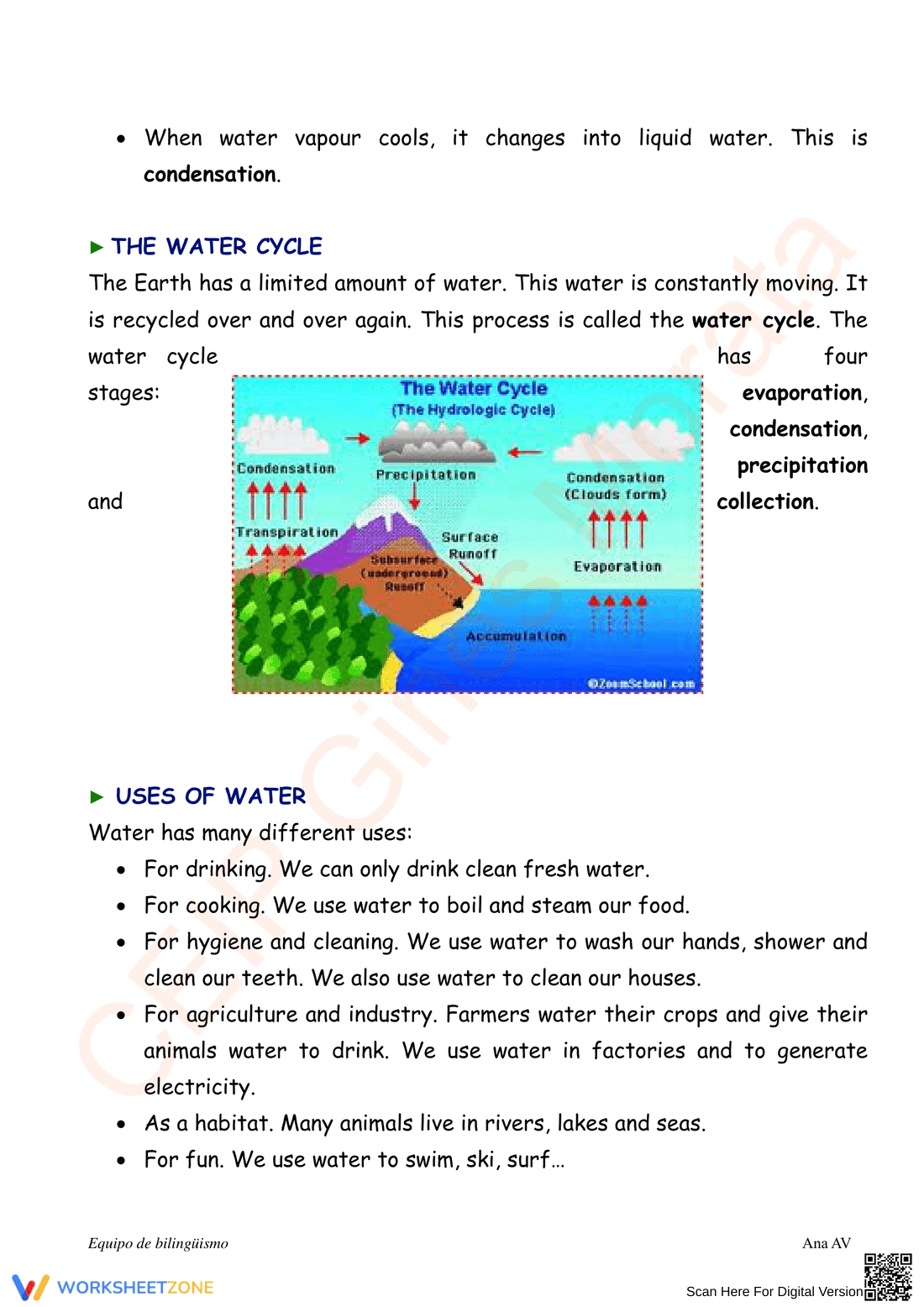
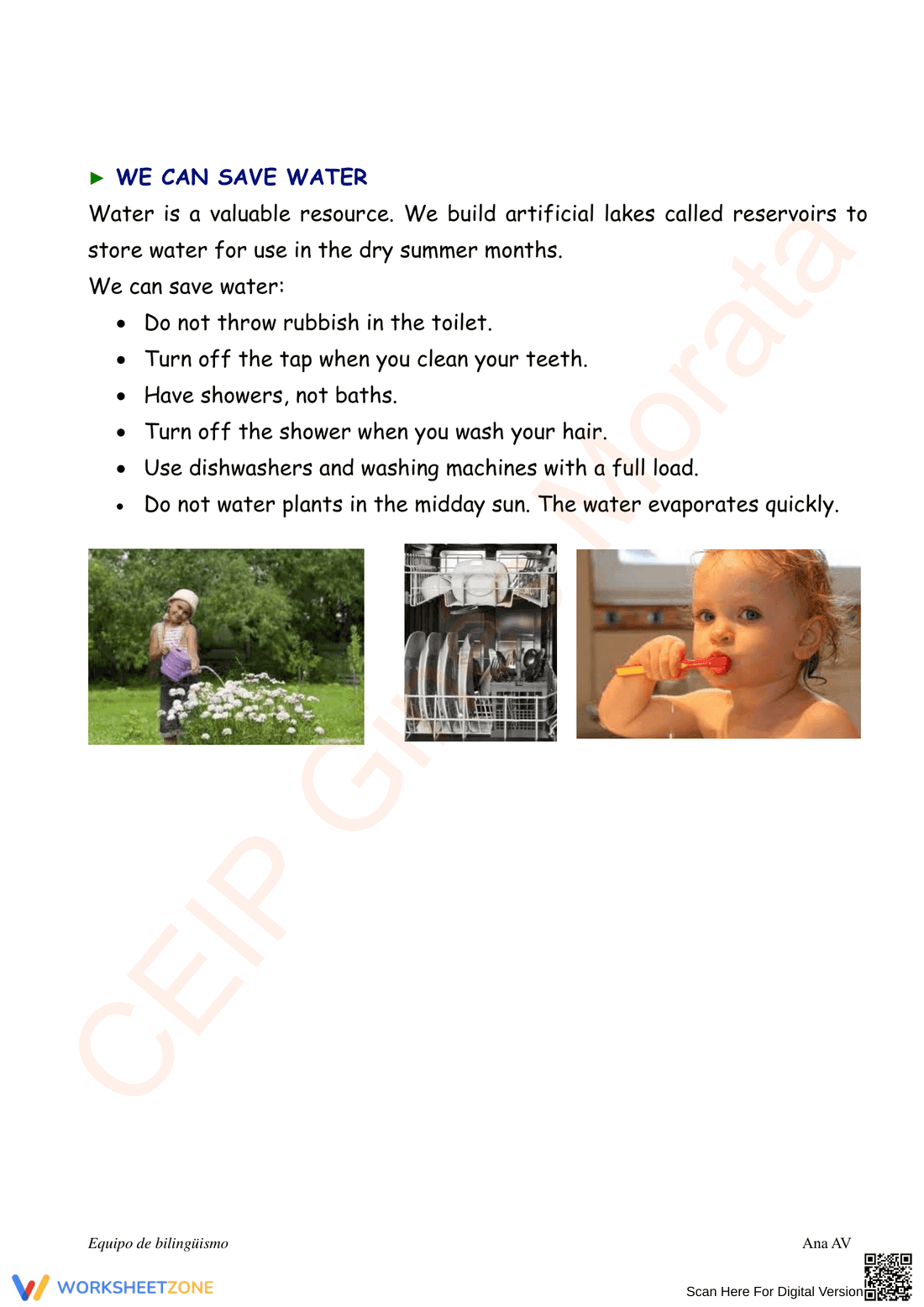
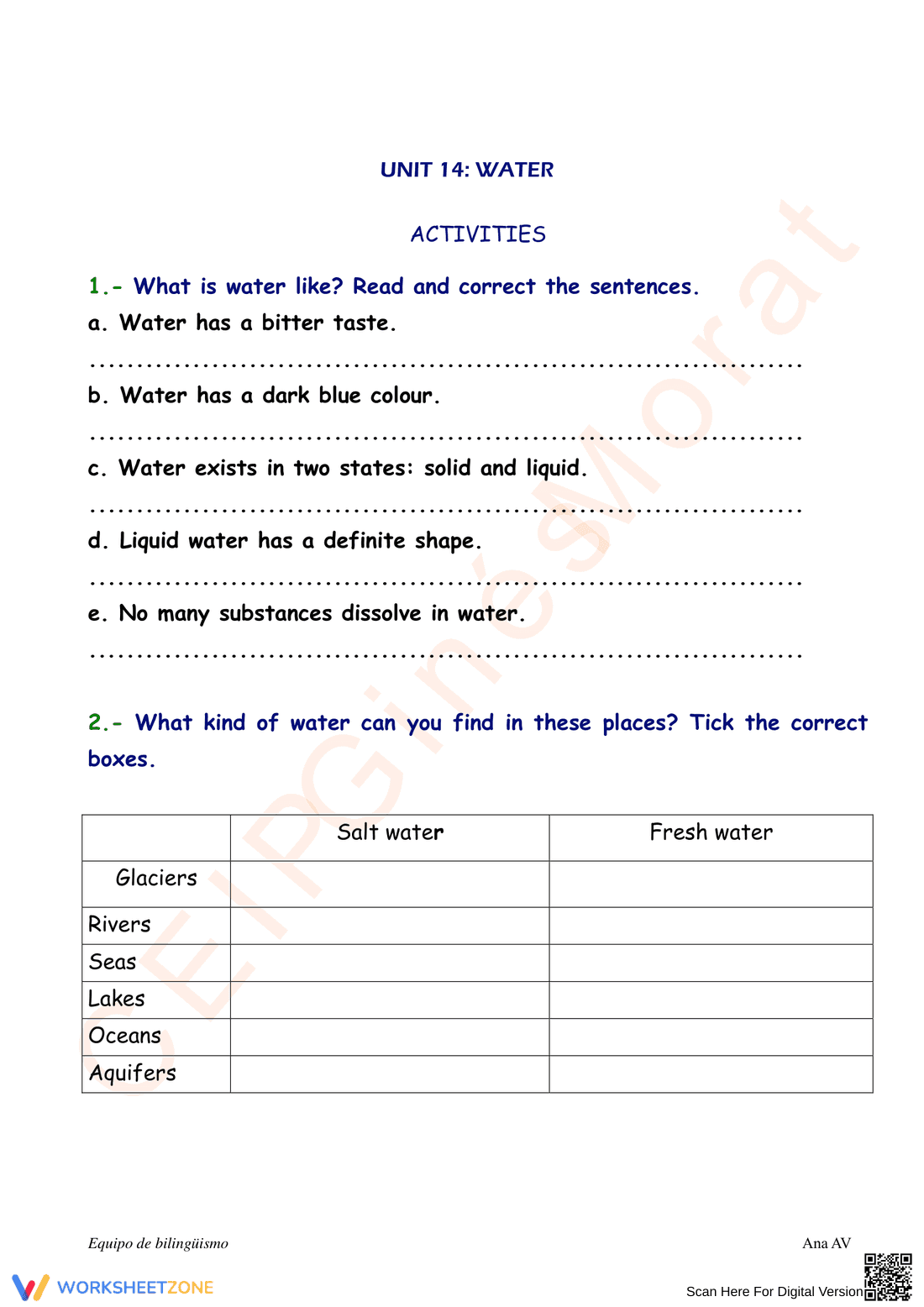
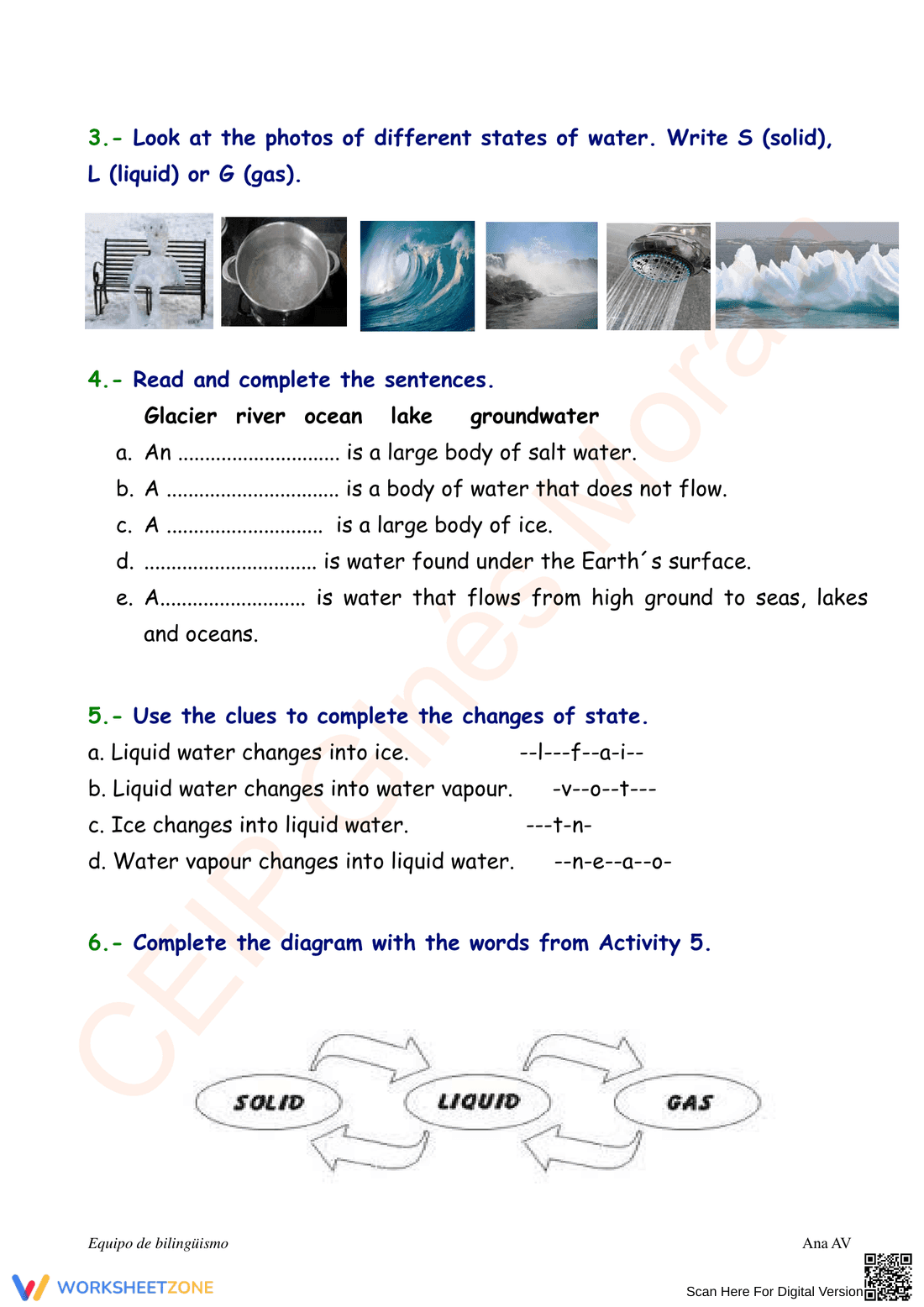
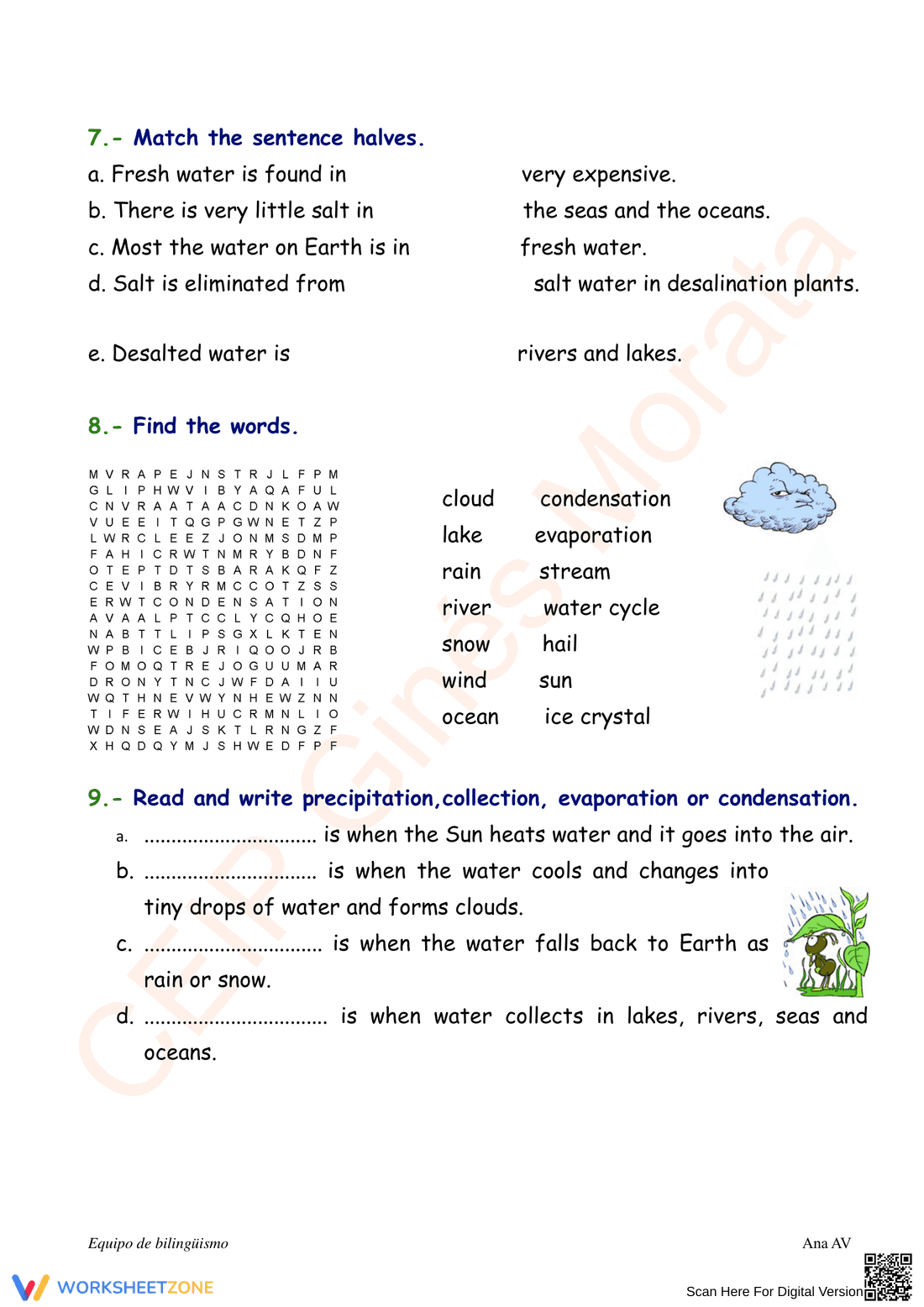
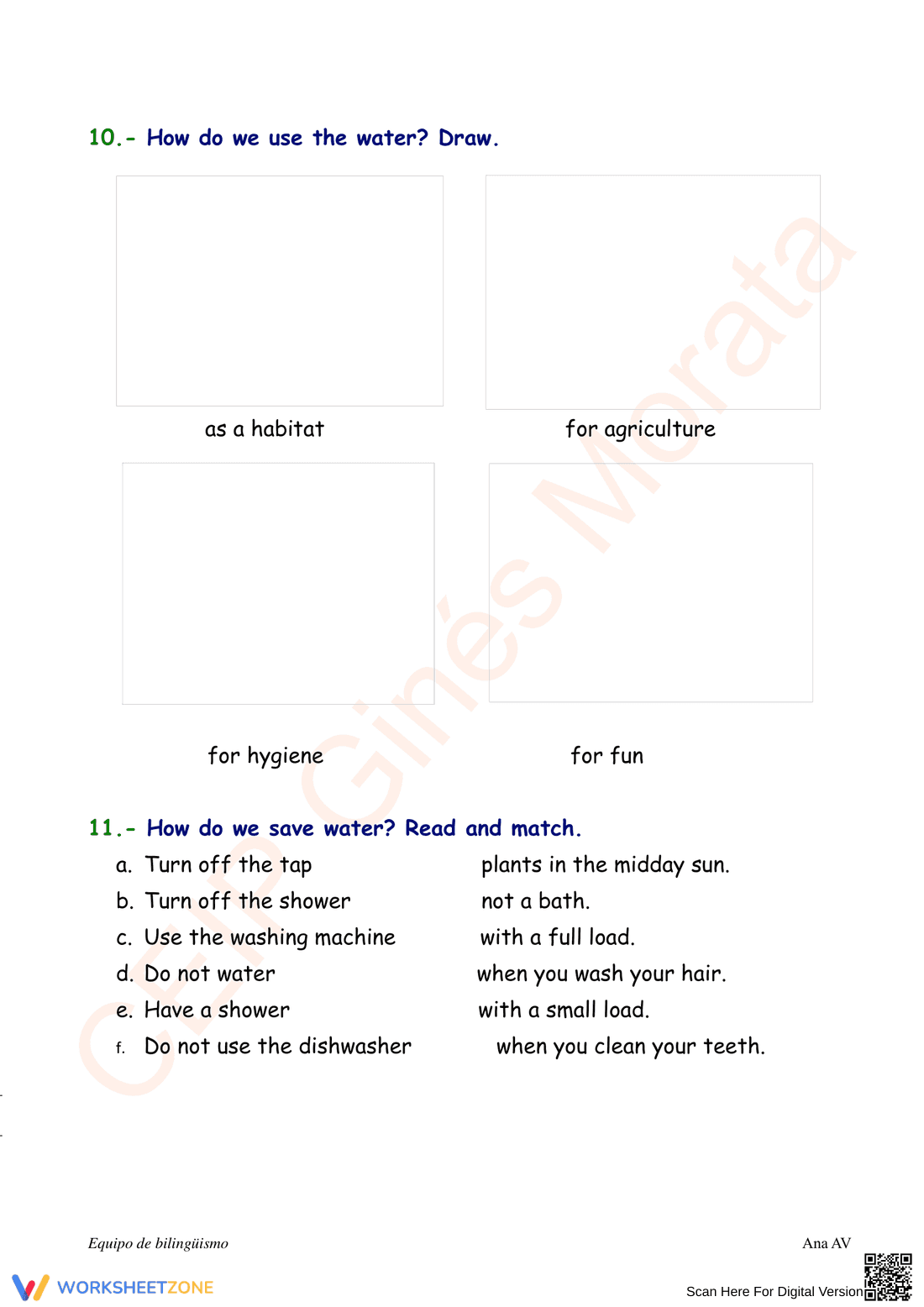
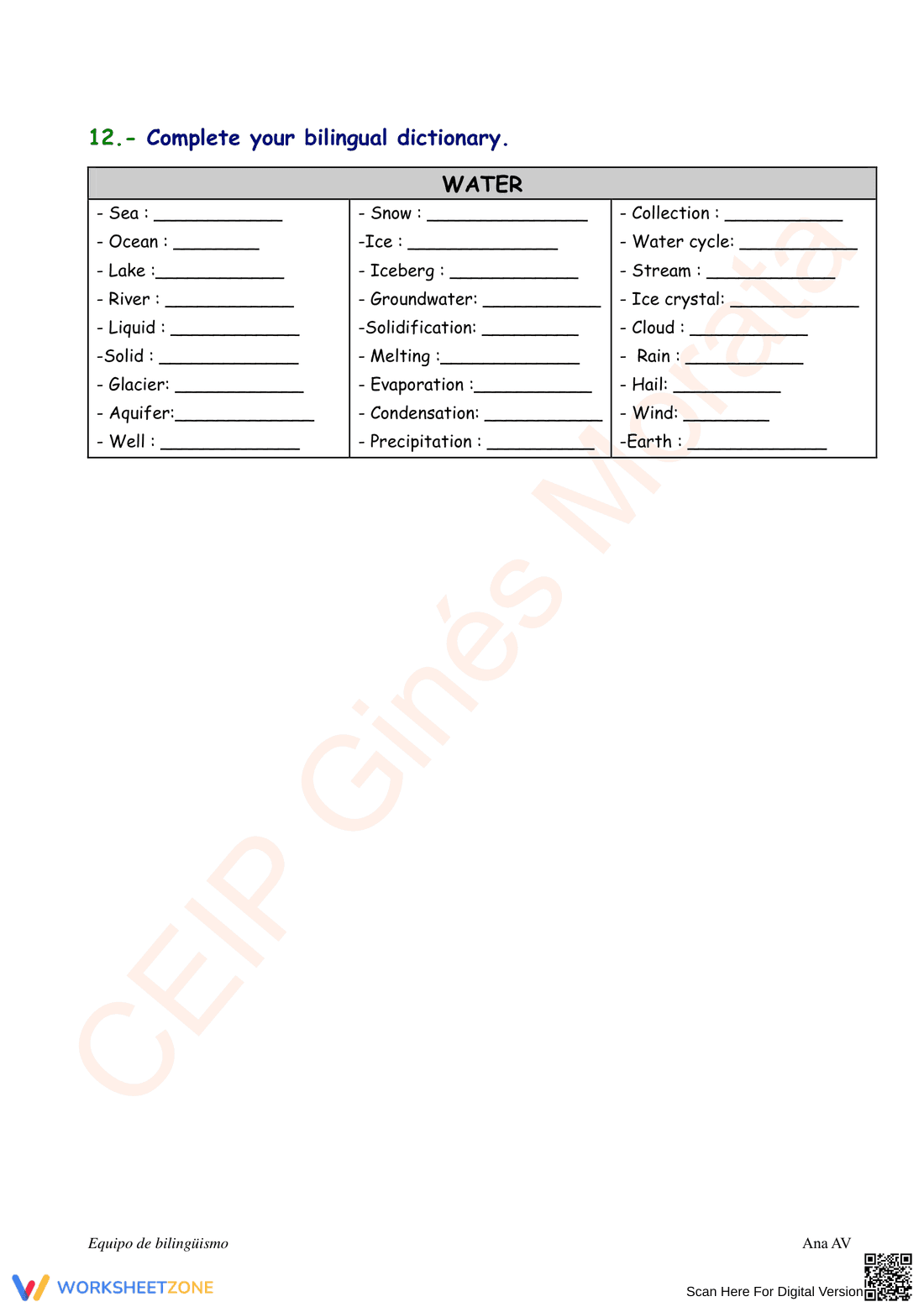
The packet contains 8 high-quality pages featuring 12 distinct activities. Students will find reading passages, visual identification tasks using real-world photography, a word search for vocabulary reinforcement, and diagram completion for the water cycle. It also includes a bilingual dictionary section and a conservation matching task to connect scientific concepts to real-world stewardship and daily water usage.
Zero-Prep Workflow
- Print: Generate the 8-page student set in under 1 minute using any standard printer.
- Distribute: Hand out the stapled packets for immediate individual or small-group engagement.
- Review: Use the included answer key to facilitate a 5-minute peer-review or whole-class check.
The clear headings and self-explanatory instructions make it an ideal candidate for emergency sub plans or supplemental homework assignments.
Standards Alignment
This worksheet is aligned to `MS-ESS2-4`: "Develop a model to describe the cycling of water through Earth's systems driven by energy from the sun and the force of gravity." It also supports MS-PS1-4 by covering the changes in state including solidification, melting, evaporation, and condensation. Both standard codes can be copied directly into lesson plans, IEP goals, or district curriculum mapping tools.
How to Use It
Use this packet during the "Explain" or "Elaborate" phases of a 5E instructional model. It works effectively as a summative assessment after a unit on Earth's systems. For formative assessment, observe students during the "Changes of State" diagram completion to identify misconceptions about thermal energy transfer. Completion typically takes 45 to 60 minutes depending on the depth of discussion.
Who It's For
This resource is designed for middle school science students, particularly those in grades 6 through 8. It is highly effective for English Language Learners (ELL) due to the bilingual dictionary component and heavy use of visual aids. It pairs naturally with an anchor chart on the hydrologic cycle or a direct instruction lesson on molecular motion and phase changes.
According to the RAND AIRS 2024 analysis of science instructional materials, comprehensive multi-page packets that integrate vocabulary, visual models, and real-world application significantly improve student retention of complex Earth science concepts. This 8-page resource addresses the MS-ESS2-4 standard by requiring students to model the hydrologic cycle through both diagramming and descriptive text. By connecting the physical properties of water—such as its three states—to the broader environmental context of conservation and usage, the worksheet facilitates a holistic understanding of water as a finite resource. Research from Fisher & Frey (2014) suggests that the gradual release of responsibility, supported here by the transition from guided identification to independent vocabulary synthesis, is essential for mastery in middle-grade science. This printable PDF serves as a robust tool for evidence-based instruction in any secondary science classroom.


