


























Views
Downloads

Printable DNA Structure Worksheet | Grade 9 Biology
Paste this activity's link or code into your existing LMS (Google Classroom, Canvas, Teams, Schoology, Moodle, etc.).
Students can open and work on the activity right away, with no student login required.
You'll still be able to track student progress and results from your teacher account.
This Grade 9 biology worksheet introduces students to the foundational concepts of genetics by exploring DNA structure and function. Students will identify nucleotide components, apply base-pairing rules, and connect molecular structures to hereditary traits. This resource provides clear, structured practice to solidify essential life science concepts.
At a Glance
- Grade: 9 · Subject: Biology
- Standard:
HS-LS1-1— Explain how DNA structure determines protein structure and life functions.- Skill Focus: DNA Structure and Base Pairing
- Format: 2 pages · 4 problems · Answer key included · PDF
- Best For: Independent practice or sub plans
- Time: 15–20 minutes
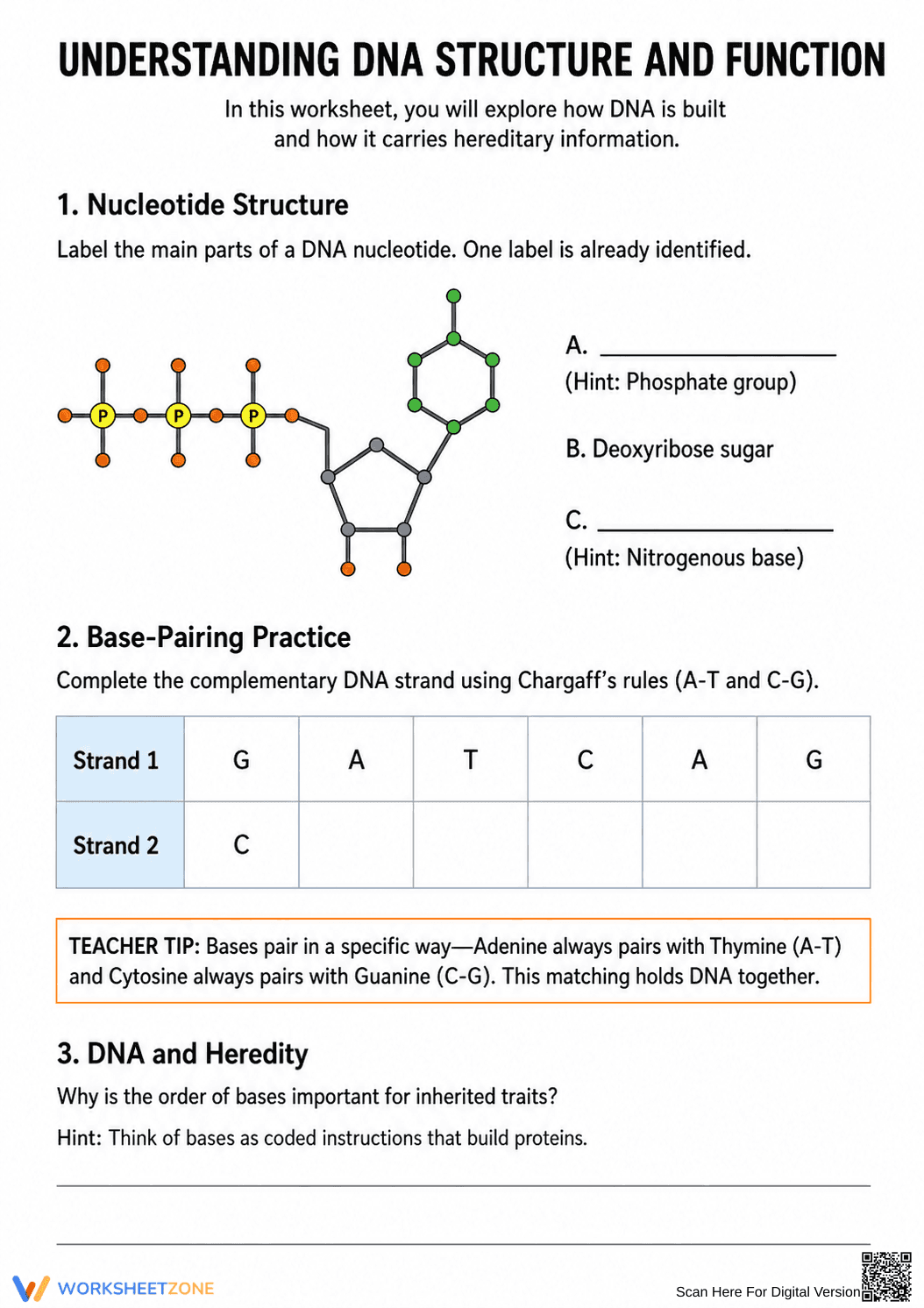
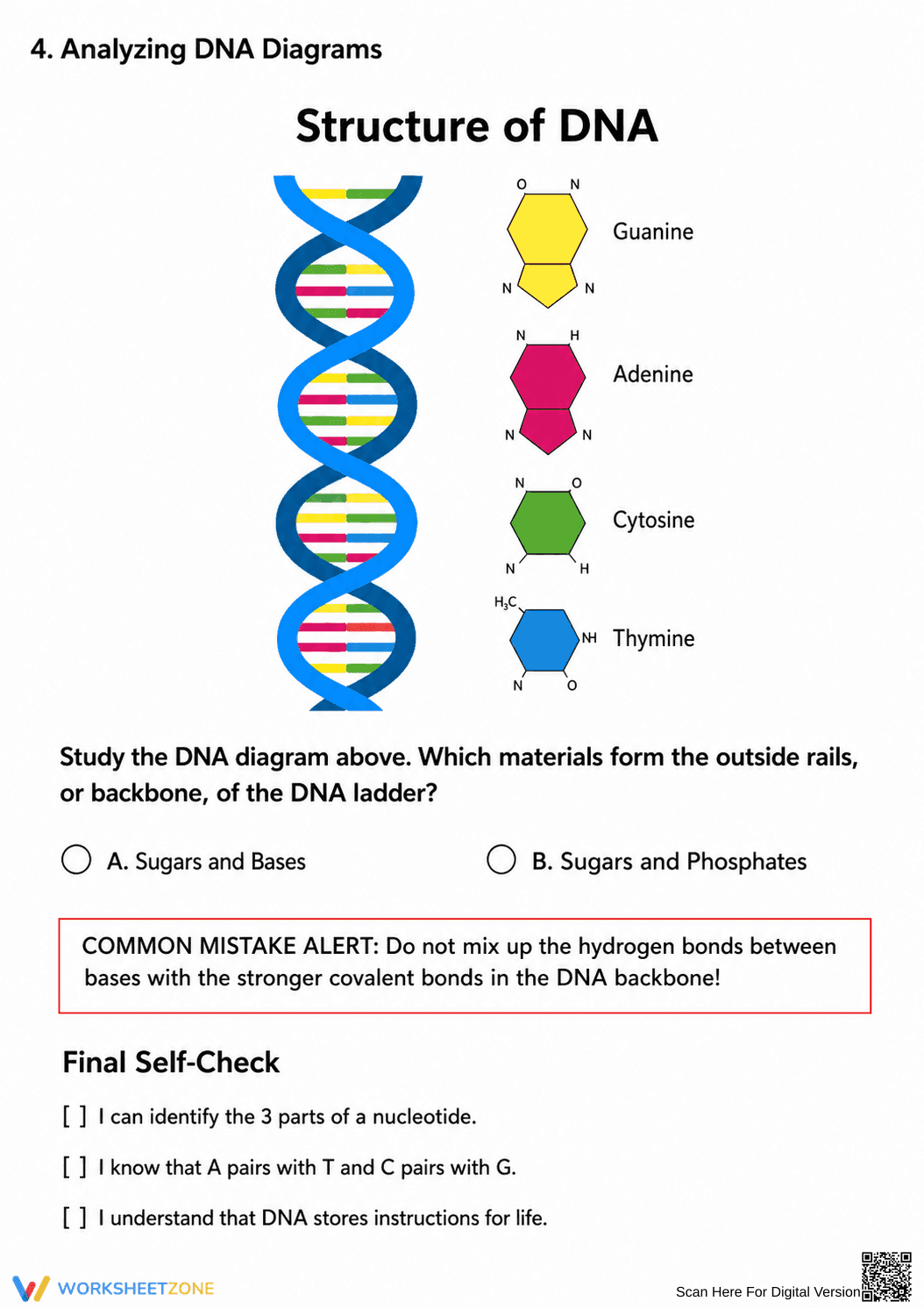
Inside this two-page resource, educators will find four distinct task types designed to build genetic literacy. The activities include a nucleotide labeling diagram, a base-pairing exercise using Chargaff’s rules, a short-answer reflection on heredity, and a multiple-choice diagram analysis. The worksheet also features built-in scaffolds, such as a teacher tip on hydrogen bonds, a common mistake alert, and a final self-check rubric to encourage student ownership. A complete answer key is provided for quick grading.
- Print (1 minute): Simply download the PDF and print double-sided copies for your biology class. No special materials or prior setup are required.
- Distribute (1 minute): Hand out the worksheets as a warm-up, in-class assignment, or homework. The built-in hints and alerts make it highly self-explanatory.
- Review (3 minutes): Use the included answer key to quickly check student responses or project it on the board for whole-class self-correction.
With under two minutes of total teacher prep time, this resource is an ideal zero-prep solution that works perfectly for emergency sub plans or busy instructional days.
This worksheet is aligned to HS-LS1-1: Construct an explanation based on evidence for how the structure of DNA determines the structure of proteins which carry out the essential functions of life through systems of specialized cells. It also supports foundational middle school genetics standards by reinforcing basic nucleotide structures. Both standard codes can be copied directly into lesson plans, IEP goals, or district curriculum mapping tools.
Deploy this worksheet immediately after direct instruction on the double helix model to reinforce new vocabulary. Alternatively, use it as a formative assessment station during a larger genetics unit. As students work through the base-pairing section, observe whether they consistently match Adenine with Thymine and Cytosine with Guanine. This quick check helps identify misconceptions before moving on to complex transcription and translation topics. Expected completion time is 15 to 20 minutes.
This resource is designed for high school biology students, particularly those in Grade 9 or 10 encountering molecular genetics for the first time. The embedded hints and clear visual diagrams provide excellent differentiation for visual learners and students needing extra scaffolding. Pair this worksheet with a 3D DNA modeling activity or a direct instruction lesson on cellular biology to maximize student comprehension.
Understanding the molecular basis of genetics is a critical threshold concept in secondary science education. Aligned with HS-LS1-1, this resource helps students explain how DNA structure determines protein structure and life functions. According to EdReports 2024, instructional materials that explicitly connect molecular structures to observable hereditary traits significantly improve long-term retention in life sciences. By requiring students to actively label nucleotides and apply base-pairing rules, this worksheet moves beyond rote memorization into applied scientific reasoning. The inclusion of self-monitoring checklists and embedded instructional tips further supports metacognitive development, ensuring students can independently verify their understanding of the double helix model. This targeted practice builds the necessary foundation for advanced topics like gene expression, mutation analysis, and modern biotechnology applications in the classroom.


