


























Views
Downloads

Essential DNA Structure Worksheet | Grade 9-10 Science
Paste this activity's link or code into your existing LMS (Google Classroom, Canvas, Teams, Schoology, Moodle, etc.).
Students can open and work on the activity right away, with no student login required.
You'll still be able to track student progress and results from your teacher account.
This comprehensive DNA structure worksheet provides students with a clear, scaffolded path to understanding the molecular foundations of genetics. By moving from individual nucleotide components to the complex double helix model, learners build the conceptual framework necessary to explain how genetic information is stored and transferred. Students will successfully identify chemical groups, apply Chargaff's rules, and connect molecular geometry to biological function.
At a Glance
- Grade: 9–10 · Subject: Biology
- Standard:
HS-LS1-1— Explain how DNA structure determines protein structure and inherited traits- Skill Focus: Nucleotide labeling and base pairing
- Format: 2 pages · 8 problems · Answer key included · PDF
- Best For: Initial instruction or formative assessment
- Time: 20–30 minutes
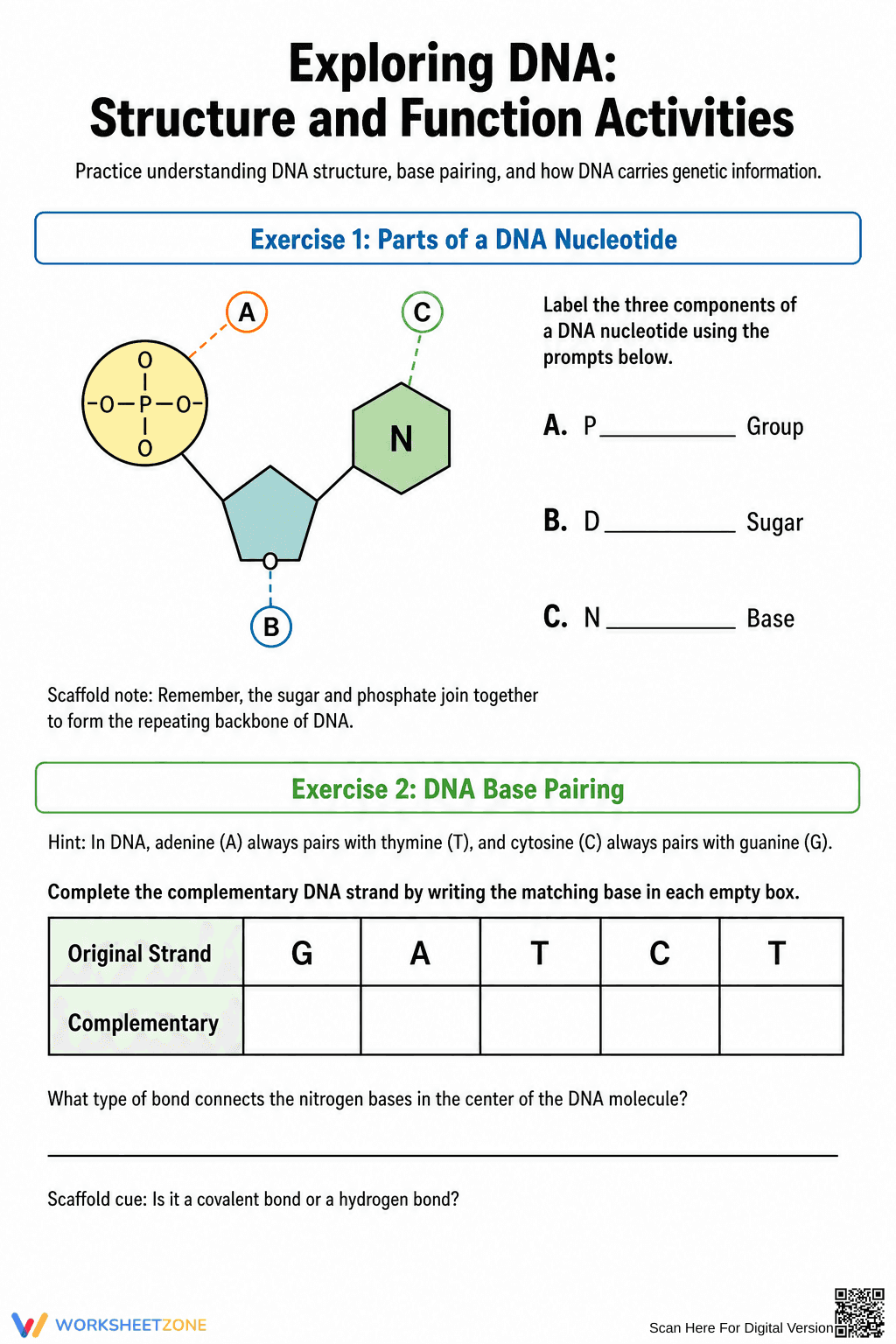
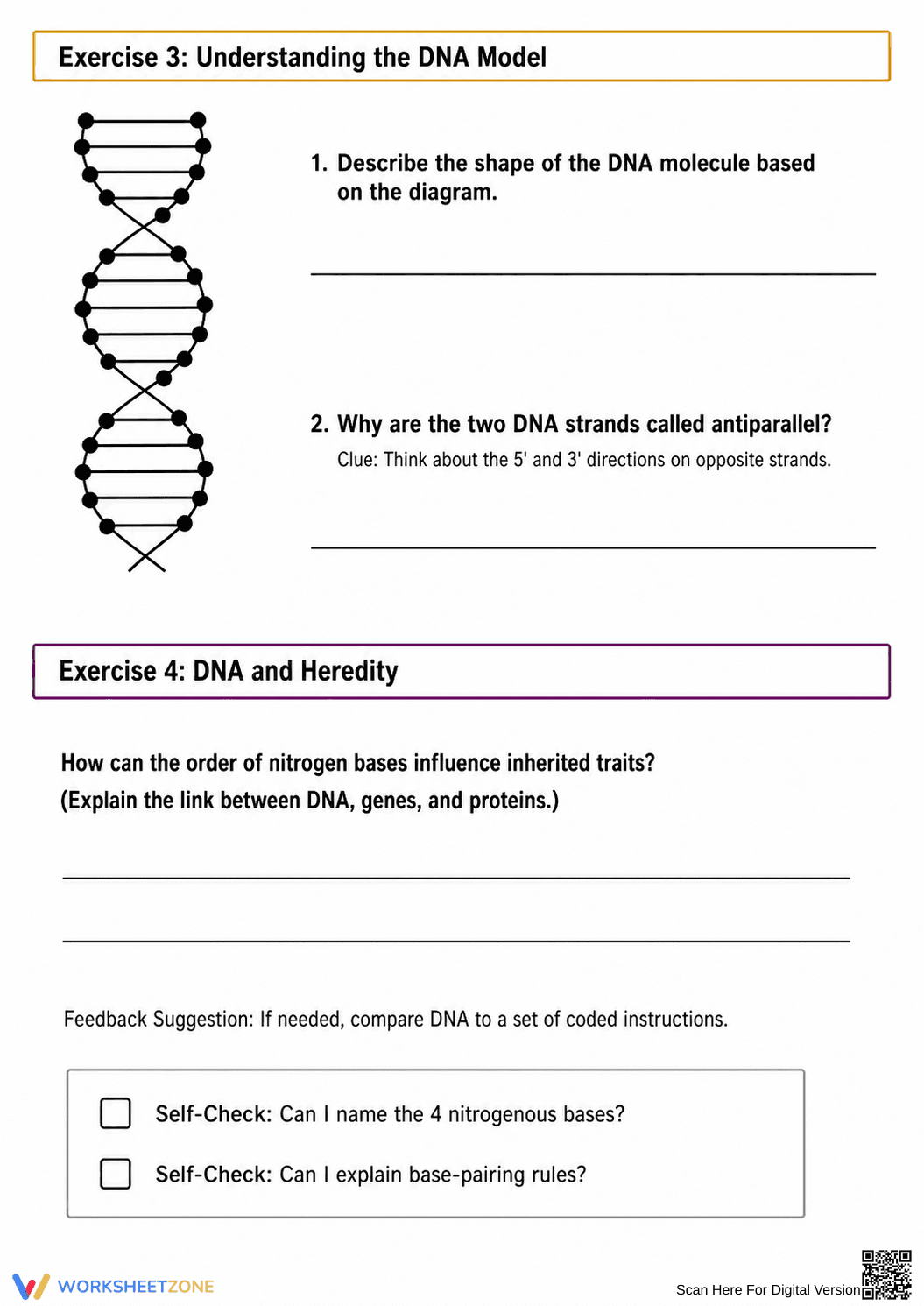
What's Inside: This 2-page instructional resource features four distinct exercises designed for maximum clarity. It includes a detailed nucleotide diagram for labeling, a base-pairing table for sequence prediction, and prompts regarding the antiparallel nature of DNA. The layout incorporates helpful scaffold cues, such as chemical bond hints and self-check boxes, ensuring students remain on track without constant teacher intervention.
Zero-Prep Workflow
This resource is designed for immediate classroom implementation with minimal prep. First, print the 2-page PDF for your class roster. Second, distribute the sheets during the "independent practice" phase of your lesson; the built-in hints allow students to work autonomously. Finally, use the included answer key for a 5-minute rapid review or peer-grading session at the end of the period. It is an ideal sub plan for high school biology.
Standards Alignment: This worksheet is specifically aligned to HS-LS1-1, focusing on how DNA structure determines the structure of proteins. It also supports middle school transitions by addressing components of MS-LS3-1 regarding structural changes to genes. Both standard codes can be copied directly into lesson plans, IEP goals, or district curriculum mapping tools.
How to Use It: Assign this worksheet immediately following a lecture on the double helix to reinforce vocabulary. It serves as an excellent formative assessment tool; as students complete Exercise 2, walk the room to observe if they are correctly pairing Adenine with Thymine. Expected completion time ranges from 20 minutes for advanced learners to 30 minutes for students utilizing the provided scaffold notes.
Who It's For: This resource is tailored for Grade 9 and 10 Biology students, though it is effective for Grade 8 advanced science tracks. The inclusion of sentence frames and visual prompts makes it particularly useful for English Language Learners (ELL) and students with IEPs who require visual aids to process complex molecular biology concepts. Pair this with a 3D DNA model or a strawberry DNA extraction lab for a complete instructional unit.
According to the Fisher & Frey (2014) framework for gradual release of responsibility, scaffolded worksheets that provide immediate feedback cues significantly improve student retention of technical scientific vocabulary. This DNA structure resource applies these principles by utilizing "scaffold notes" that remind students of the sugar-phosphate backbone before asking them to analyze the entire model. By breaking down the nucleotide into its three constituent parts—phosphate, deoxyribose sugar, and nitrogenous base—the worksheet prevents cognitive overload. Research indicates that students who can visualize molecular structures are more likely to succeed in higher-level genetics problems. This document ensures that the standard HS-LS1-1 is met through active student engagement. The inclusion of a self-check section encourages metacognition, allowing students to identify their own gaps in understanding base-pairing rules before moving on to complex heredity explanations.


