What Elapsed Time Worksheets Should Cover in Grade 3
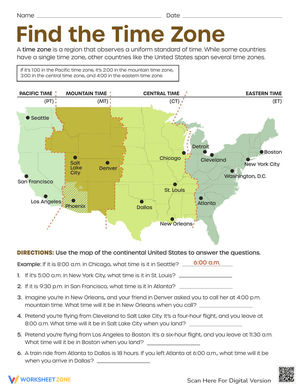
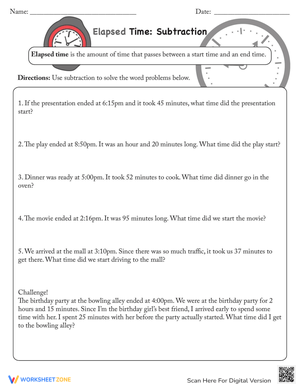
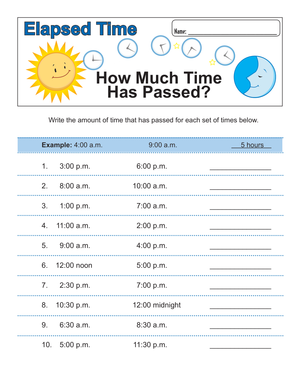
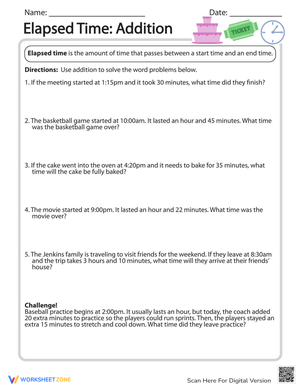
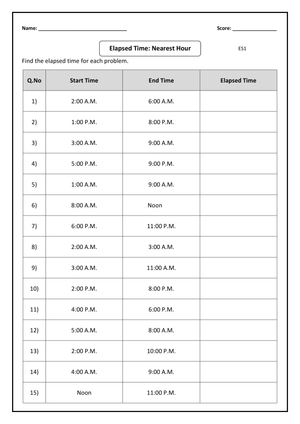
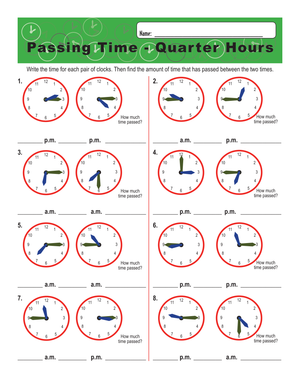
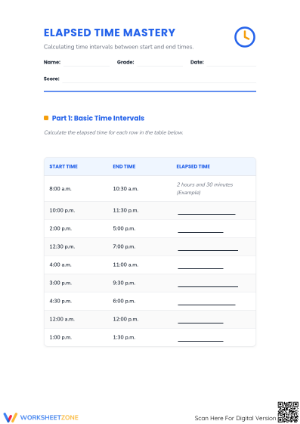
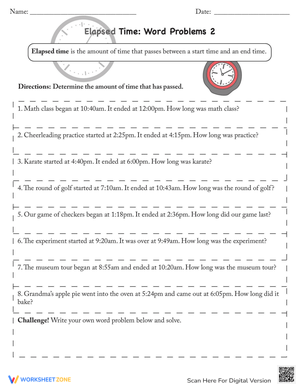
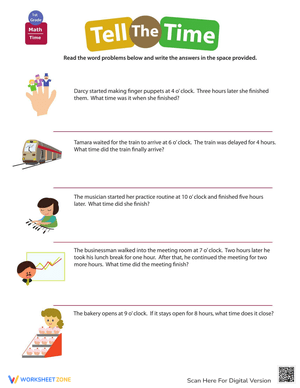
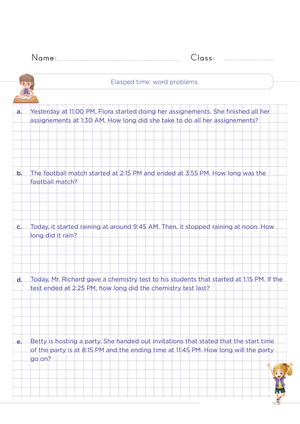
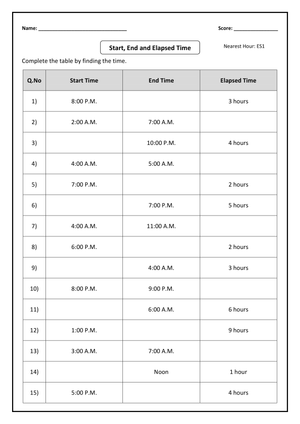
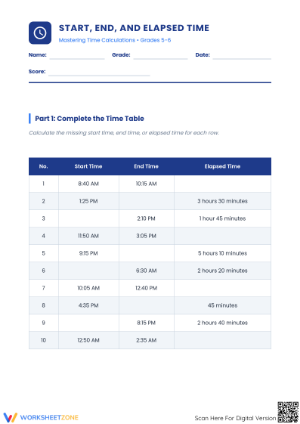
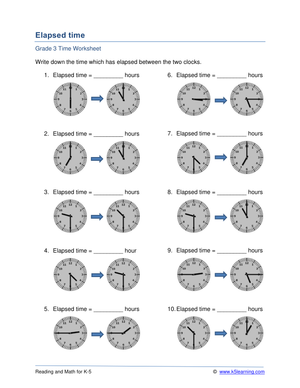
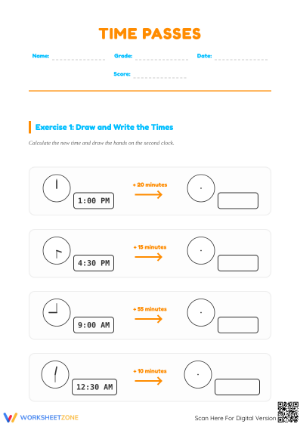
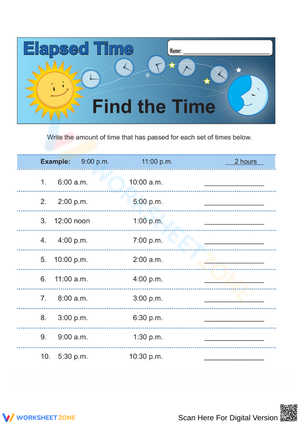
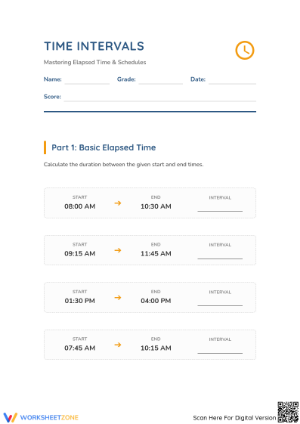
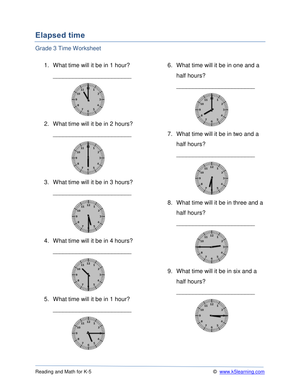
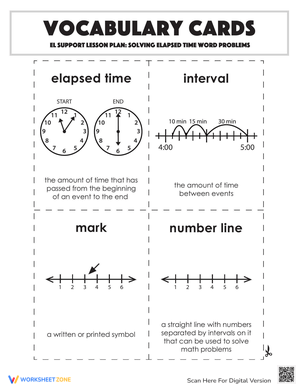
Elapsed time worksheets do their real work when they move students past reading a clock face and into calculating the gap between a start and an end time. For most US classrooms, this skill lands in grade 3, where students are expected to tell and write time to the nearest minute and then reason about intervals. A worksheet set that only asks kids to write the time shown on a clock isn't an elapsed time resource yet. The problems that matter are the ones that give two times and ask how much time passed, or give a start time and a duration and ask for the end.
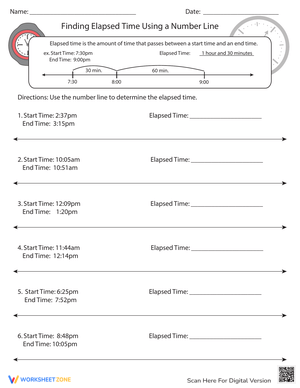
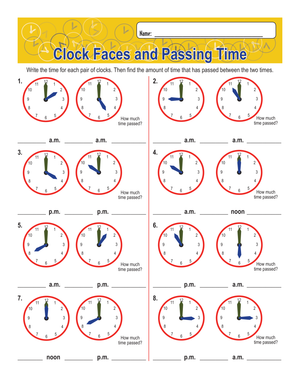
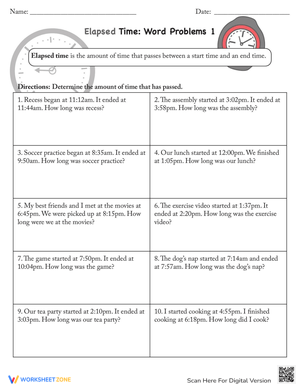
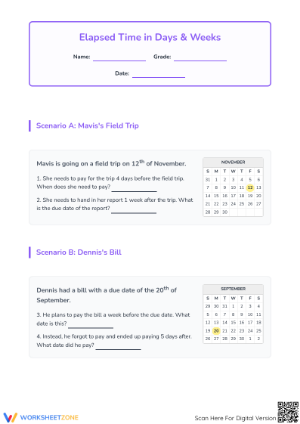
When you're choosing or building worksheets, look for a mix of formats: clock-to-clock comparisons, blank number lines students fill in, and word problems tied to a school day. That variety keeps the practice from turning into a single memorized procedure, which is exactly where elapsed time tends to break down.
How CCSS 3.MD.A.1 Anchors the Work
According to Common Core standard 3.MD.A.1, third graders must tell and write time to the nearest minute and solve addition and subtraction word problems involving time intervals in minutes, representing each problem on a number line diagram. That single standard anchors nearly every elapsed time worksheet teachers assign.
The phrase that gets overlooked is number line diagram. The standard doesn't just want a correct answer; it wants students to model the interval. So when you scan a worksheet, check whether it actually gives space for a number line or expects one. Answer-only pages let students guess-and-check their way to the number without ever building the reasoning the standard is asking for.
Sequencing Worksheets From Clock Reading to Word Problems
The fastest way to lose a class on elapsed time is to open with a two-step word problem. A better sequence spreads the load across several worksheet types:
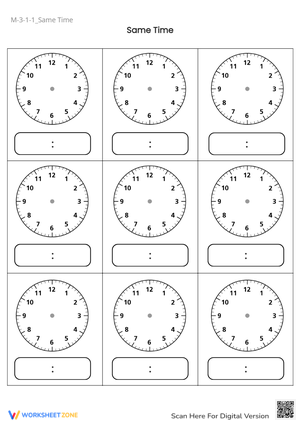
- Start with clock-reading review to the nearest minute, so time-telling isn't the bottleneck.
- Move to open number line pages where the start and end times are already given and students only mark the jumps.
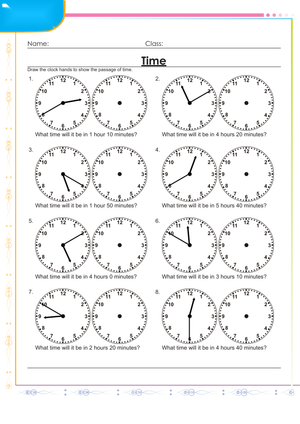
- Progress to problems where students find the end time from a start time plus a duration.
- Finish with multi-step word problems set in real school contexts.
This progression lets you diagnose exactly where a student stumbles. If they can mark jumps on a number line but freeze on a word problem, the issue is reading the problem, not the time math. That distinction changes how you reteach.
The Open Number Line Strategy
The open number line is the strategy that makes elapsed time click for the widest range of students. Instead of stacking times in a subtraction algorithm, which forces awkward borrowing across a base-60 system, students draw a line, mark the start time, and jump forward in friendly chunks: jump to the next hour, jump by whole hours, then jump the leftover minutes. Adding the jumps gives the elapsed time.
Here's what most worksheet packs miss: elapsed time is one of the first places students meet a non-decimal, base-60 system, and that's the real source of difficulty, not the clock itself. A student who nails 3:50 minus 2:15 on a number line will still write 1 hour 35 minutes as "1.35" if the worksheet never separates the two units. Because the skill sits in grade 3 but often needs reteaching into grades 4 and 5, the number line matters less as a trick and more as a way to keep hours and minutes in separate lanes. Worksheets that force a jump to the next whole hour before counting hours are quietly teaching students to respect that base-60 boundary every single time.
Classroom Implementation Across Grades 2-5
The same worksheet library can stretch across several grade levels if you differentiate the entry point. In a grade 2 review setting, use pages that stay within a single hour so the numbers stay friendly. For grade 3 core instruction, use the full CCSS 3.MD.A.1 range: intervals that cross the hour, word problems, and required number line models. For grade 4 and 5 reteach, keep the number line but raise the ceiling with multi-step problems and durations that cross noon or the end of the day.
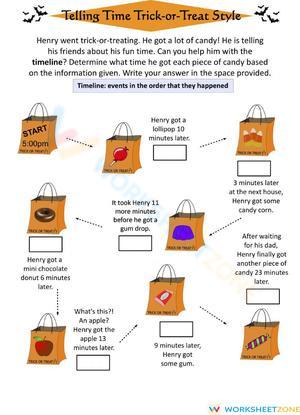
Real school contexts do a lot of the differentiation work for you. Anchoring word problems in the schedule your students already live — when specials start, how long until recess, the gap between lunch and dismissal — turns an abstract interval into something concrete. Students who stall on "a train leaves at 2:15" often move right through "recess starts at 10:20 and ends at 10:45" because they can picture it.
Frequently Asked Questions
1. What grade level are elapsed time worksheets designed for?
Elapsed time is introduced in grade 3 under CCSS 3.MD.A.1, so most worksheets target grades 2 through 5: grade 2 for early clock review, grade 3 for core instruction, and grades 4-5 for reteach and intervention, since the proportional reasoning involved often needs continued support.
2. What is the best strategy for teaching elapsed time to students who struggle?
The open number line strategy works best. Students mark the start time, jump to the next whole hour, jump by whole hours, then count the leftover minutes, and add the jumps. It keeps hours and minutes separate and avoids the borrowing errors that come with subtracting times in a column.
3. How can teachers use elapsed time worksheets for intervention versus core instruction?
For core instruction, use mixed pages with clock reading, number lines, and word problems. For intervention, narrow to one format at a time — usually four or five number line problems — so you can watch exactly where a student's reasoning breaks down and reteach that specific step.
4. How do elapsed time worksheets align to Common Core math standards?
They align to CCSS 3.MD.A.1, which asks students to tell and write time to the nearest minute and solve addition and subtraction word problems about time intervals, representing each problem on a number line diagram. Strong worksheets require that number line model, not just a final answer.
5. How many elapsed time problems should students practice before assessment?
Quality beats volume. A handful of well-modeled problems across each format — interval-finding, end-time-finding, and word problems — usually signals readiness better than a long worksheet. Short, frequent five-item checks let you catch misconceptions before they harden.













 Interactive Worksheet Maker
 Quiz Maker
 Word Search Maker
 Crossword Puzzle Maker
 Word Scramble Generator
 Sentence Scramble Generator
 Handwriting Worksheet Generator
 Name Tracing Generator
 Fill In The Blank Generator