


























Views
Downloads

Essential Elapsed Time Intervals Worksheet | Grade 3-5 Math
Paste this activity's link or code into your existing LMS (Google Classroom, Canvas, Teams, Schoology, Moodle, etc.).
Students can open and work on the activity right away, with no student login required.
You'll still be able to track student progress and results from your teacher account.
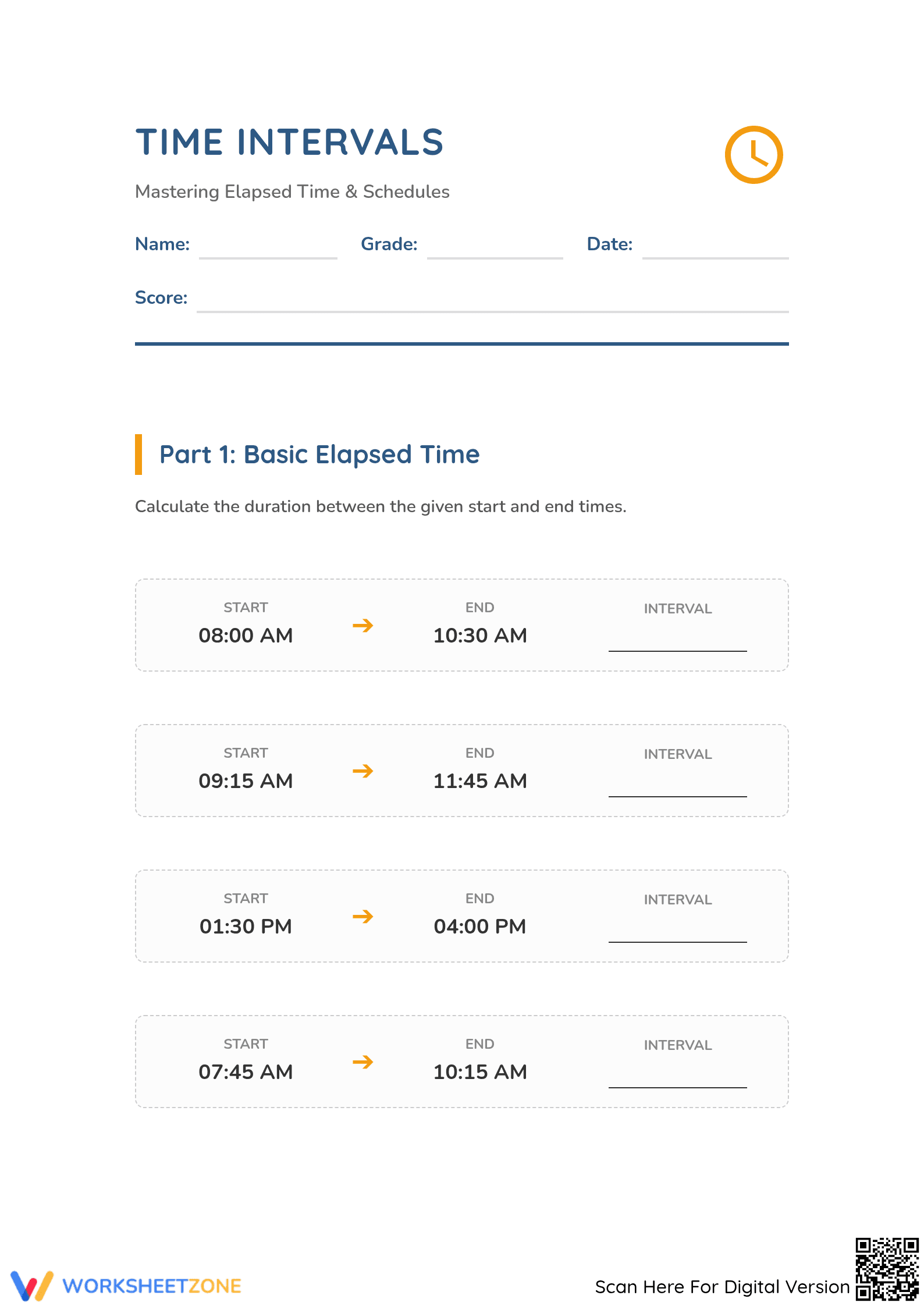
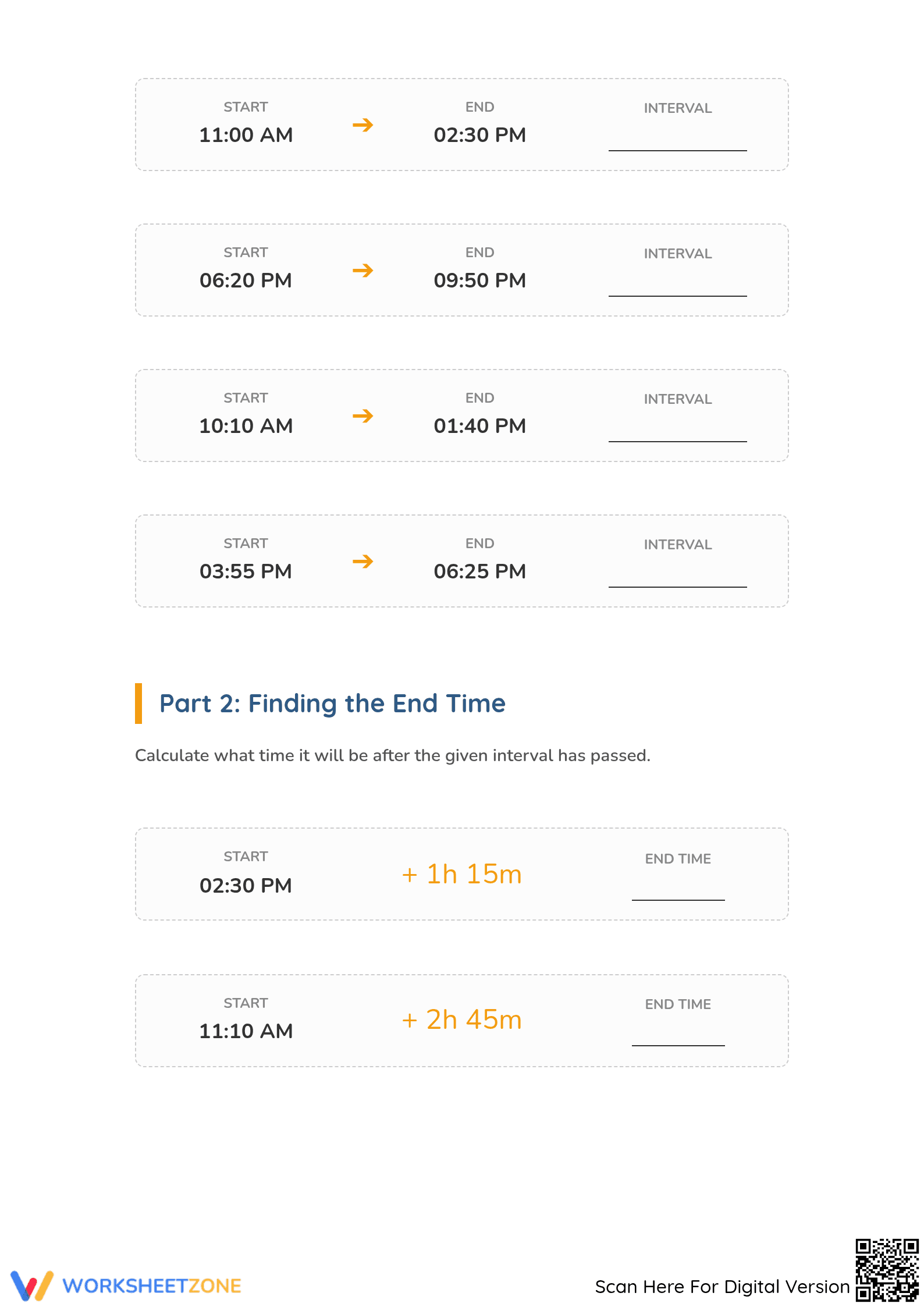
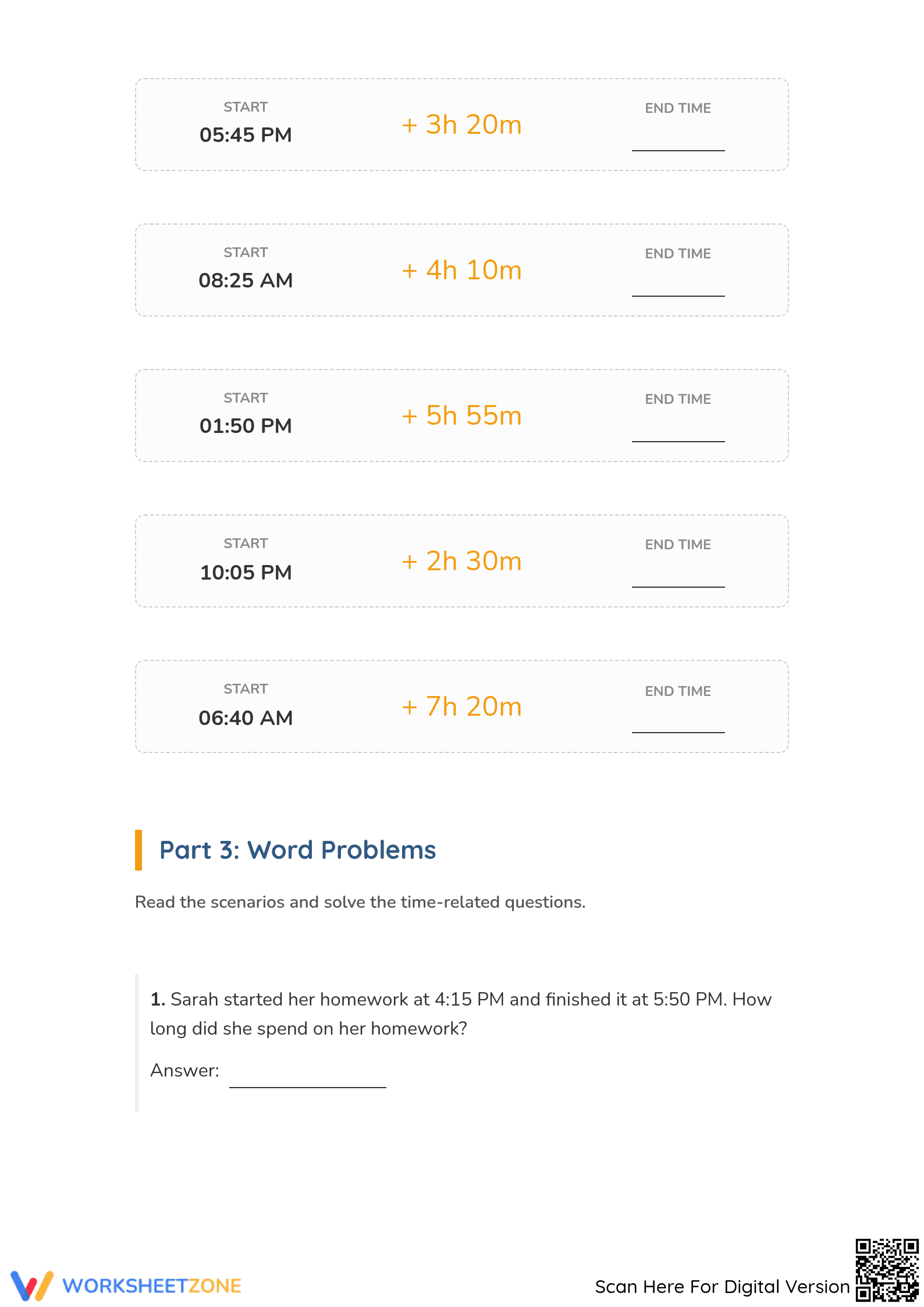
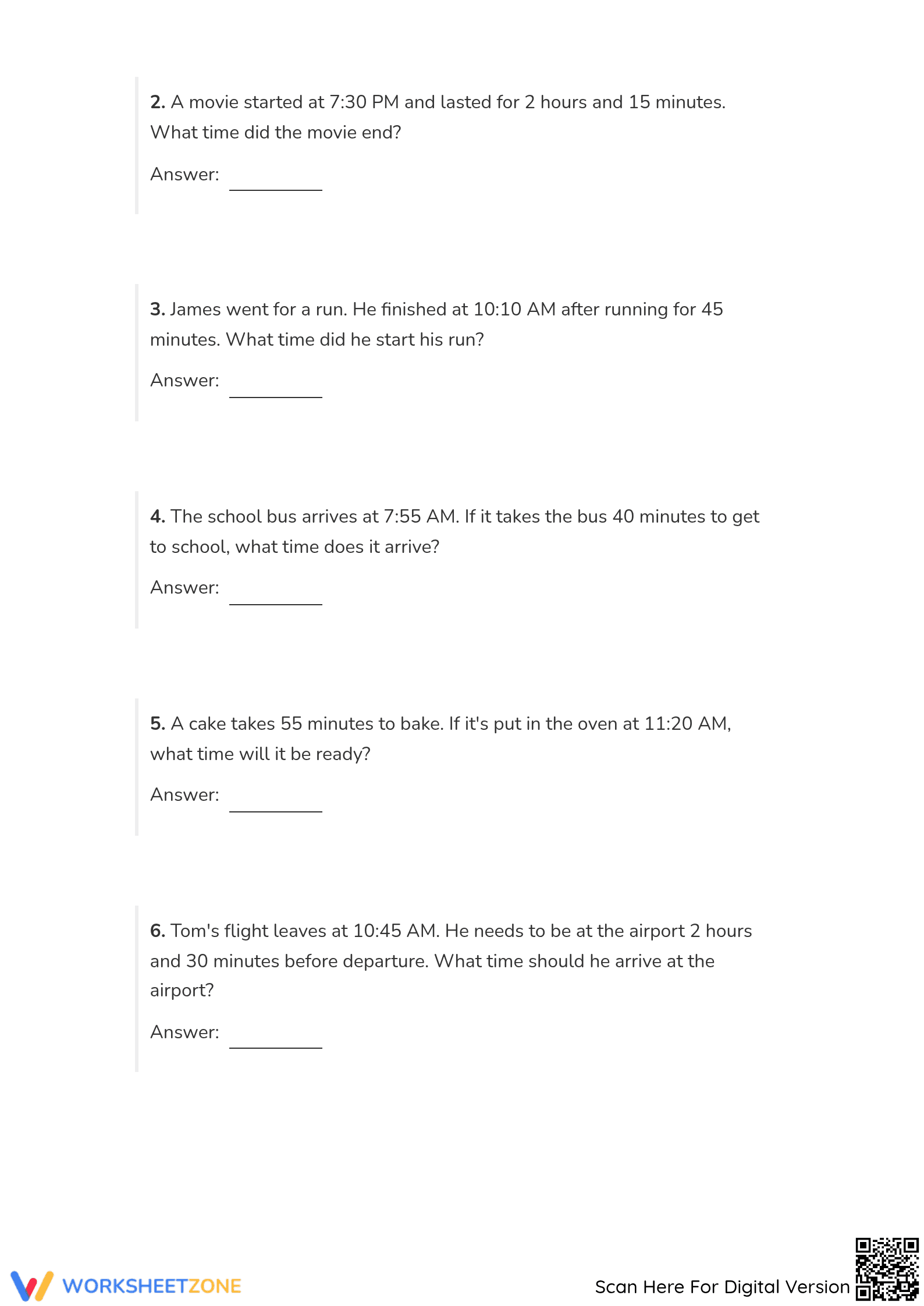
This comprehensive 5-page worksheet provides essential practice for students to master elapsed time and time intervals. By calculating durations and determining end times, learners build the critical skills needed for real-world scheduling and time management. It ensures students can accurately measure time intervals in minutes through structured, varied exercises.
At a Glance
- Grade: 3–5 · Subject: Math
- Standard:
CCSS.MATH.CONTENT.3.MD.A.1— Tell and write time to the nearest minute and measure time intervals- Skill Focus: Elapsed Time Calculation
- Format: 5 pages · 29 problems · Answer key included · PDF
- Best For: Independent practice and formative assessment
- Time: 45–60 minutes
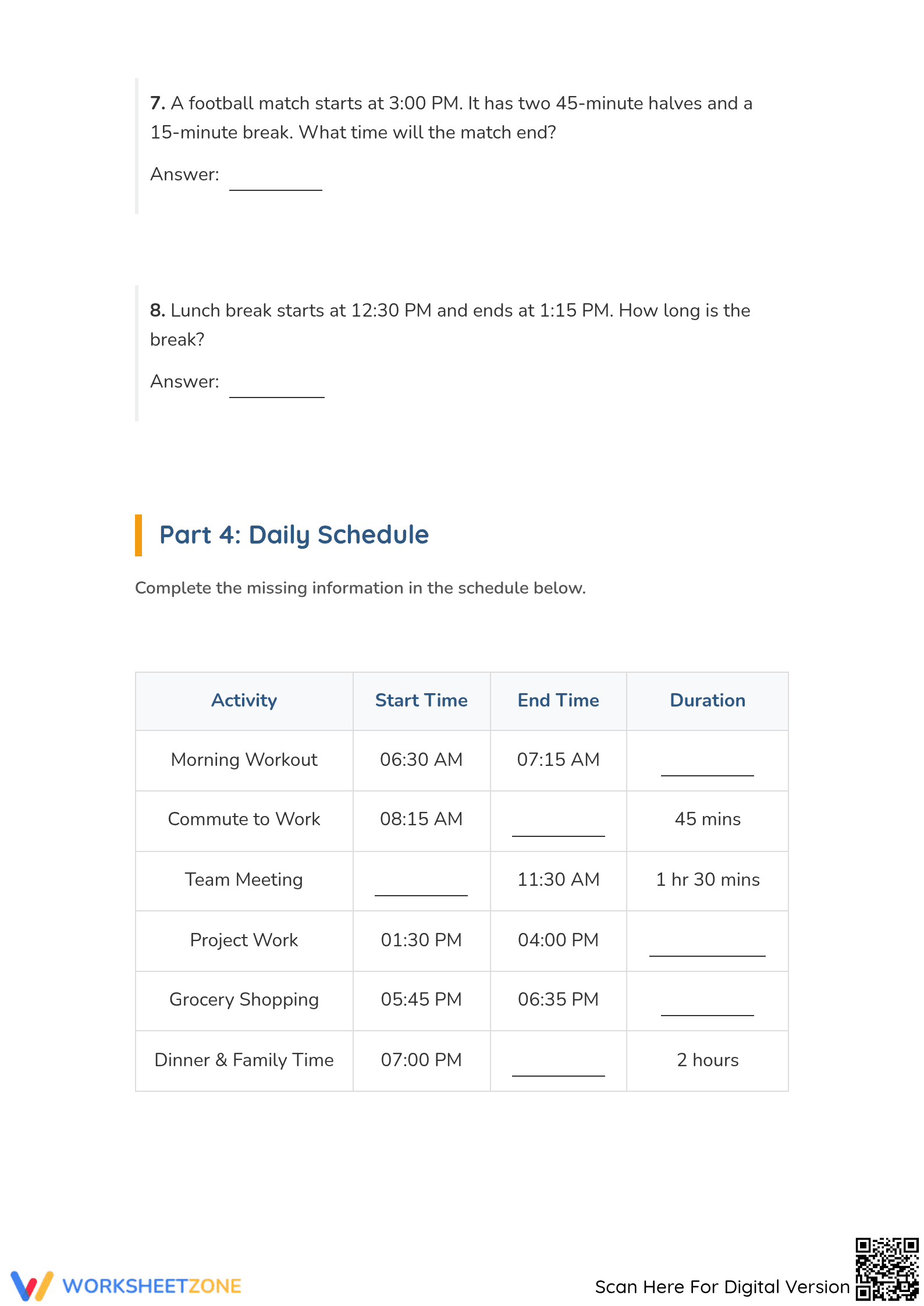
This extensive packet contains four distinct sections: basic elapsed time calculations, finding end times given an interval, complex word problems, and a real-world daily schedule table. Spanning five pages, the worksheet includes 29 unique tasks supported by clear visual cues and a complete answer key for rapid grading.
Teachers can integrate this resource in under two minutes. Simply print the five-page PDF, distribute to students for independent work or as a sub plan, and use the included answer key for immediate review. The structured sections allow for easy segmenting across multiple instructional days if preferred.
The primary focus is `CCSS.MATH.CONTENT.3.MD.A.1`, which requires students to solve word problems involving addition and subtraction of time intervals in minutes. This worksheet also supports Grade 4 and 5 measurement standards by increasing the complexity of durations and contextual applications. Both standard codes can be copied directly into lesson plans, IEP goals, or district curriculum mapping tools.
Assign this packet during the independent practice phase of a gradual release lesson to verify student mastery of elapsed time. It also serves as an excellent formative assessment tool; observe how students handle the transition from simple interval calculations to applying those skills within the daily schedule table.
This resource is designed for Grade 3 through Grade 5 students who are developing their temporal awareness and mathematical reasoning. It is particularly effective when paired with an analog clock anchor chart or a printed time-line diagram to scaffold the more challenging word problems.
This worksheet aligns with current educational research emphasizing the importance of contextualized mathematics. According to RAND AIRS 2024, students demonstrate higher retention of abstract concepts like elapsed time when they are applied to practical scenarios such as daily schedules and word-based problem-solving. By moving from isolated interval calculations to integrated schedule management, students bridge the gap between procedural fluency and real-world application. This 5-page resource provides the necessary volume of practice to achieve standard CCSS.3.MD.A.1 mastery. The inclusion of multi-step word problems challenges learners to visualize time as a measurable quantity, a skill identified by NAEP as a key indicator of fourth-grade mathematical proficiency. Educators can reliably use this data-driven resource to support diverse learners in mastering the essential skill of time management and interval subtraction.


