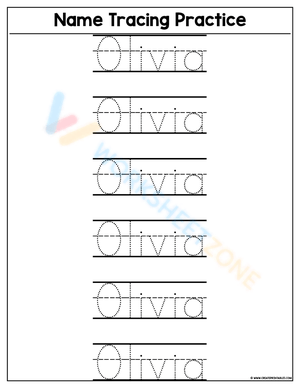
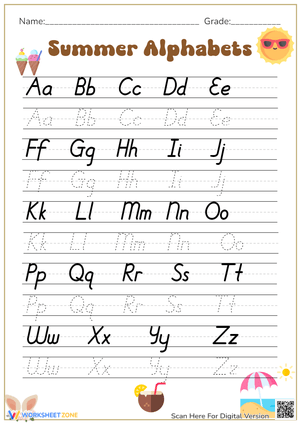
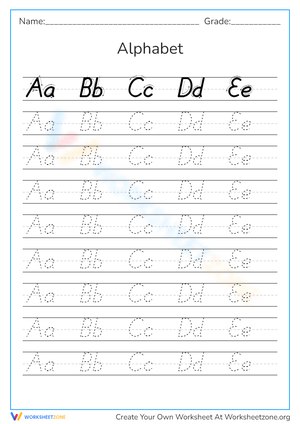
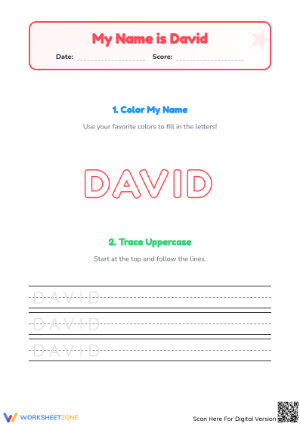
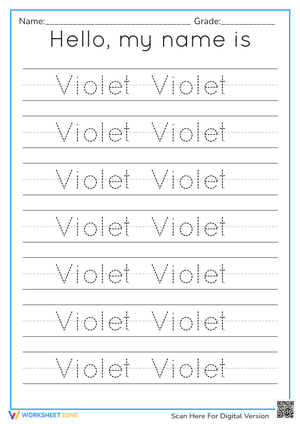
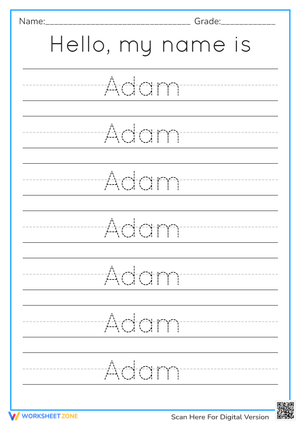
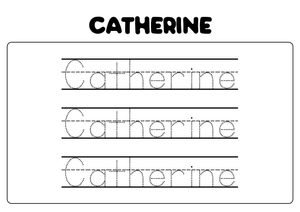
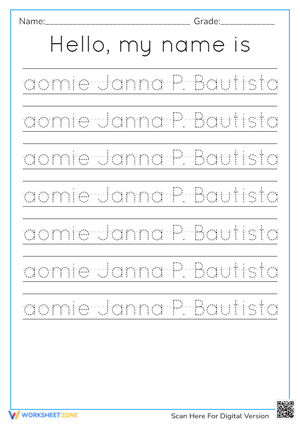
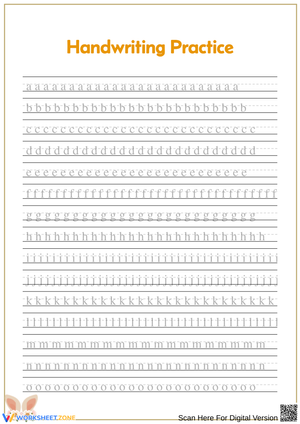
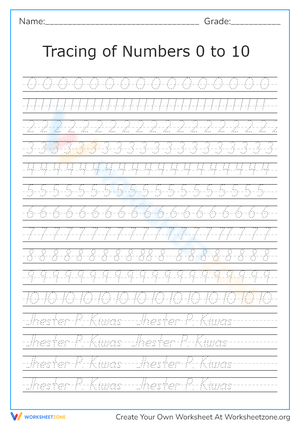
These handwriting for kids worksheets for kindergarten give teachers a ready-to-use set of resources that moves students from unsteady pre-writing strokes to controlled, legible letter formation — no lesson prep required beyond printing and distributing. The set covers pre-writing warm-ups, alphabet tracing, number formation, and sight word practice, sequenced to reflect how kindergarteners actually build fine motor control across the school year.
The Specific Skills Each Worksheet Targets
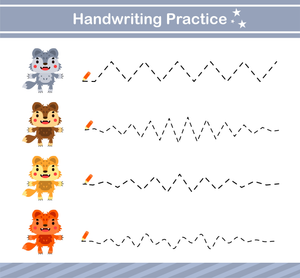
Each worksheet focuses on one skill rather than crowding multiple concepts together. Pre-writing worksheets open the sequence with straight lines, diagonal strokes, and curves — the same foundational movements that appear inside the letters students form later. When children trace a backward curve before ever encountering the letter C, the motor pattern is already forming.
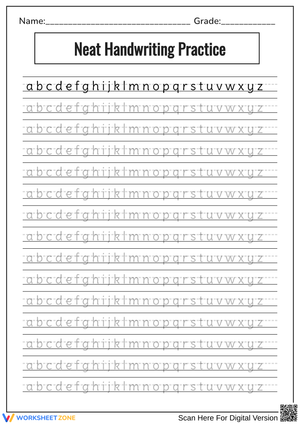
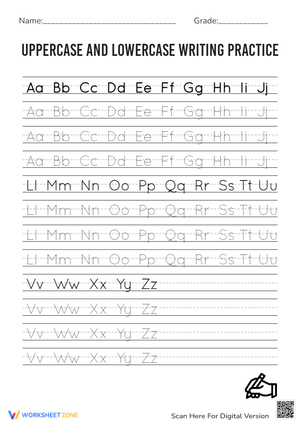
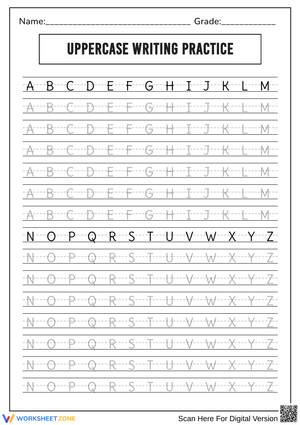
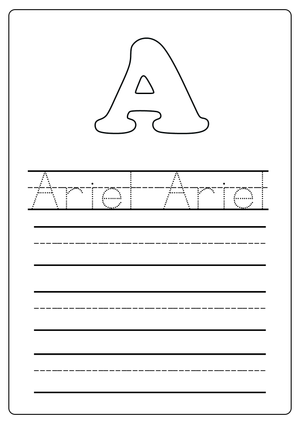
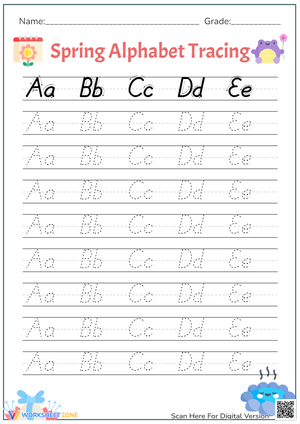
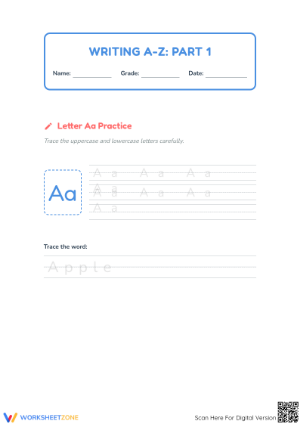
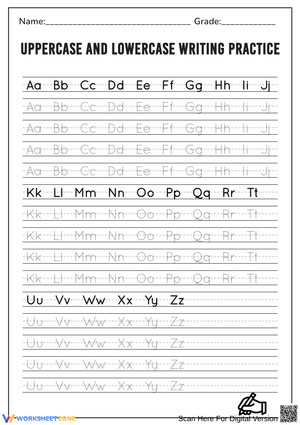
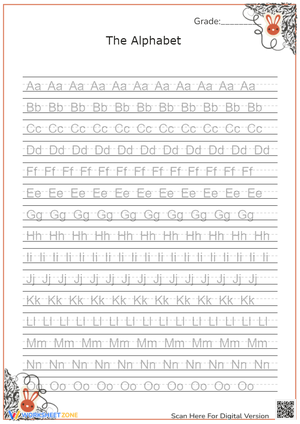
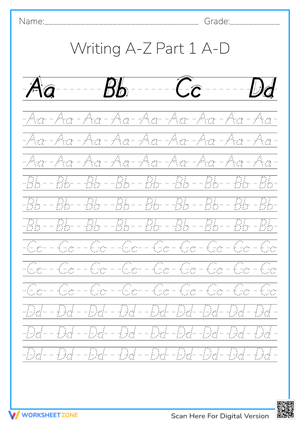
Alphabet tracing worksheets include both uppercase and lowercase, with numbered arrows marking the start point and stroke order. The layout uses a three-line format — sky, fence, and ground — so students judge letter proportion against the same reference point that anchors classroom instruction. Number formation worksheets run from zero through nine, pairing each digit with a small counting visual so students connect the numeral to a quantity rather than treating it as an abstract shape to memorize.
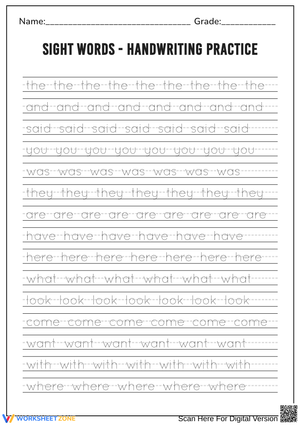
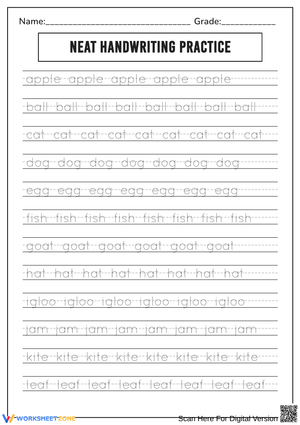
Later in the sequence, high-frequency word tracing moves students from isolated letters to real words. The final worksheets introduce sentence starters — "I can ___," "I see a ___" — where students trace the opening phrase and write one final word independently. That single independent word is often the most diagnostic moment in the entire set: grip, sizing, spacing, and letter formation all show up at once with no guiding dots to fall back on.
Fine Motor Development and Early Literacy — Why Both Happen Here
Kindergarten is the developmental window where printing and reading reinforce each other directly. When a child physically forms the letter M — starting at the top, pulling straight down, then bouncing up and over two peaks — the brain encodes that shape through motor memory in a way that passive recognition doesn't replicate. Research from Learning Without Tears and other early childhood literacy sources consistently shows that physical handwriting practice at this age supports letter-sound connection and early reading in measurable ways.
The sequence in this set is built around that relationship. Pre-writing exercises reduce the cognitive demand on letter formation, which frees working memory for the more important work of connecting letters to sounds. Short daily practice — ten to fifteen minutes — repeated across the week builds muscle memory more reliably than one longer block. When sessions run past twenty minutes, fatigue changes grip and stroke quality, and a child practicing poor technique repetitively is reinforcing the wrong habit.
Error Patterns That Show Up Consistently at This Stage
Reversals are the first thing teachers notice, but the more instructionally important mistake is starting a letter from the wrong point. A student who writes a lowercase a by starting at the bottom and moving clockwise may produce something legible today — but that stroke habit creates real problems by second grade when writing speed becomes a factor. The numbered directional arrows on each worksheet serve as a diagnostic tool: a student who ignores them entirely is telling you something different than a student who follows them but still ends up with a reversed letter.
Spacing errors are equally predictable. Kindergarteners consistently either press letters together as if running out of room or scatter them randomly across the line with no sense of left-to-right sequence. The word-boxing format on the sight word worksheets — individual cells for each letter — forces spatial awareness without requiring students to self-regulate something they genuinely cannot yet self-regulate. As their sense of proportion develops, those boxes can be dropped.
Grip problems are harder to read on a finished worksheet, but the output gives clues. Heavy pressure that scores or tears the paper points to a grip that's too tight. Faint, inconsistent strokes suggest a pencil held too far from the tip or too loosely altogether. Watch grip during the first two minutes of any practice session — that's when students are freshest and you see their default hold before fatigue changes it.
Standard Alignment
These worksheets address Common Core State Standard L.K.1.A, which requires kindergarten students to print many upper- and lowercase letters. Pairing any handwriting for kids worksheets for kindergarten with a simple legibility checklist — stroke order, correct orientation, sizing, and baseline adherence — gives teachers documentation concrete enough to share at parent conferences and specific enough to drive instructional decisions. The worksheets stay tightly within the scope of L.K.1.A: the target is correct formation and legibility, not sentence-level composition. Teachers ready to move students toward independent writing will want to add separate writing instruction resources once letter formation is stable.
Making Room for These Worksheets in the Daily Schedule
Morning work is the most practical placement for this set. Setting a tracing worksheet at each desk before students arrive creates ten to fifteen minutes of independent, focused practice while the teacher handles attendance and the handful of tasks that stack up before morning meeting. Students arriving at different times can begin without any verbal direction — the format is familiar enough to be self-starting after the first week.
Literacy centers work well with the dry-erase sleeve approach: slide each worksheet into a clear plastic sleeve, and students trace with a whiteboard marker, wipe clean, and pass to the next student. One printed set handles a full rotation without running new copies every day. Reserve paper copies for Friday — not scored, but collected — as a weekly snapshot of where each child stands with stroke formation and spacing.
For students flagged for fine motor delays or grip concerns, these worksheets work well in a pull-small-group setting. Sitting alongside a student while they work through the letter-tracing sequence lets you catch starting-point errors and grip patterns in real time. That immediate correction matters more than a stack of completed worksheets done independently, because mistakes practiced alone become the default.
Adjusting the Work for Students at Different Levels of Readiness
Students who struggle with grip or who press too hard benefit from using the worksheets inside dry-erase sleeves with a chubby whiteboard marker first. The larger grip reduces strain, and the smoother surface lowers frustration while the motor pattern is still forming. Once they complete the tracing cleanly with the marker, transition them to pencil on paper.
For students ready to move past tracing, cover the dotted guidelines with white correction tape before running copies. Without the dots, students must reproduce the letter from memory using only the directional arrows as a reference — a meaningful increase in demand without requiring an entirely different worksheet. The handwriting for kids worksheets for kindergarten format handles this kind of modification cleanly because the visual structure gives students enough directional information even with the dotted guides removed.
Students who have mastered letter formation can treat the sentence-starter worksheets as a writing prompt rather than a tracing task. Instead of tracing the opening phrase, they copy it independently and then extend the response by two or three words. One worksheet serves three different readiness levels without the teacher producing new materials for each group.
Frequently Asked Questions
Should uppercase or lowercase letters come first in the sequence?
Most kindergarten teachers start with uppercase because the strokes are simpler — primarily straight lines and open curves. Lowercase letters involve more complex directional shifts and tighter movements. That said, lowercase letters make up the vast majority of printed text, so they should enter the sequence relatively soon after uppercase practice begins, not held off until uppercase is completely solid.
How much daily handwriting practice is realistic in kindergarten?
Ten to fifteen minutes of focused practice, repeated daily, produces stronger results than longer sessions held a few times a week. Frequency is what builds muscle memory at this age, not duration. Sessions that run past twenty minutes typically produce fatigue-distorted output — and fatigued repetition reinforces poor habits as readily as good ones.
What helps a child who keeps reversing letters like b and d?
Reversals at this age are developmentally normal and usually resolve by the end of first grade with consistent guided practice. Worksheets with a clear green starting dot and numbered stroke arrows reinforce directionality with every attempt. Pairing worksheet practice with a tactile approach — tracing the letter in a sand tray before returning to paper — gives the motor system more input channels to build the correct pattern from.
Can these worksheets double as assessment evidence?
The handwriting for kids worksheets for kindergarten set works well as formative evidence when collected weekly and reviewed against a simple checklist: stroke order, sizing, baseline adherence, and letter orientation. A folder of completed worksheets from September through May gives teachers concrete documentation of fine motor growth — the kind parents find more convincing than a rubric score because the change is visible right on the paper. These are not standardized screening tools, but for tracking classroom-level growth across the school year, they are practical and reliable.












 Interactive Worksheet Maker
 Quiz Maker
 Word Search Maker
 Crossword Puzzle Maker
 Word Scramble Generator
 Sentence Scramble Generator
 Handwriting Worksheet Generator
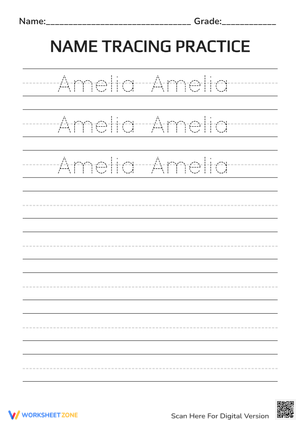
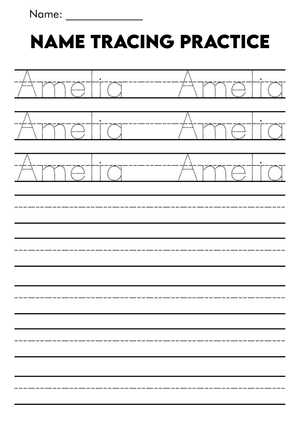
 Name Tracing Generator
 Fill In The Blank Generator