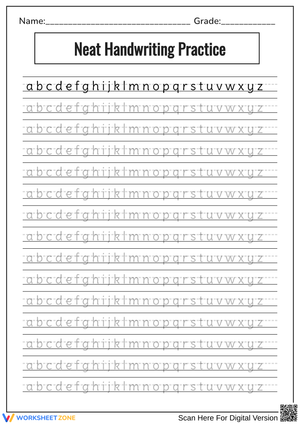
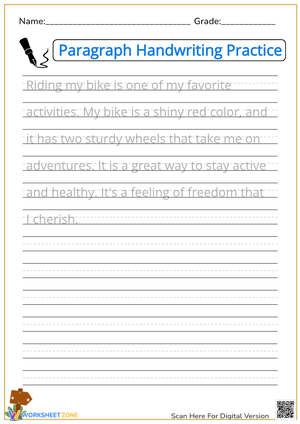
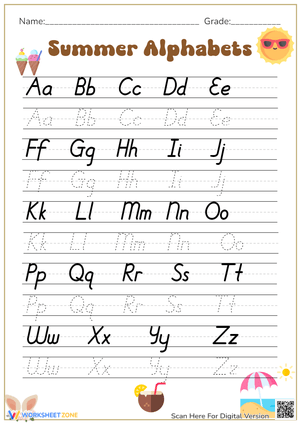
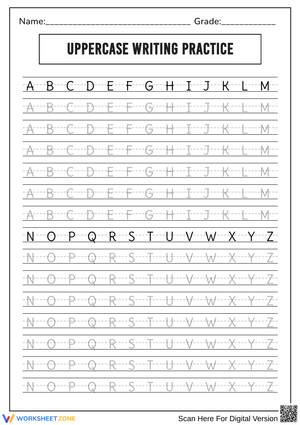
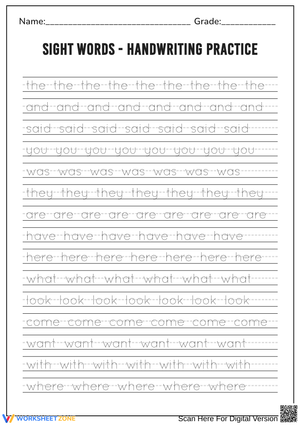
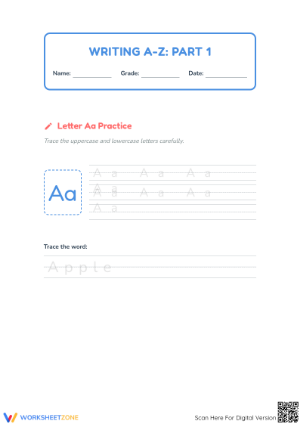
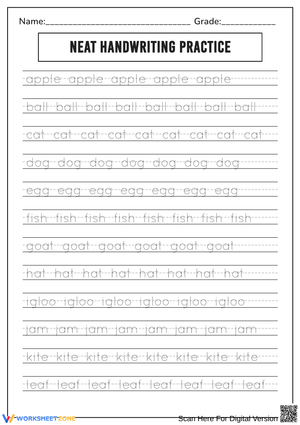
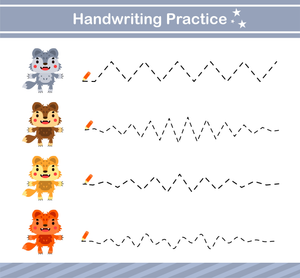
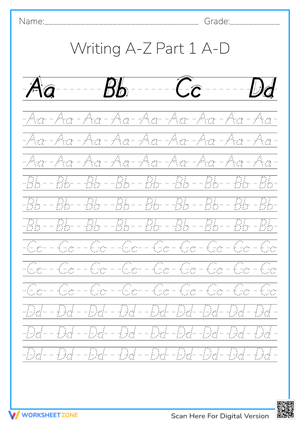
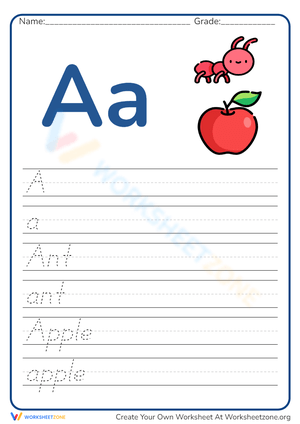
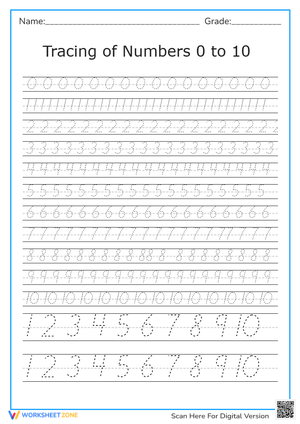
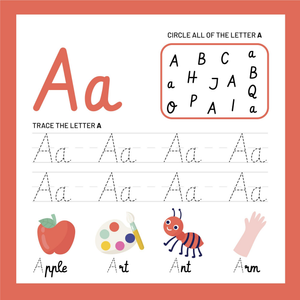
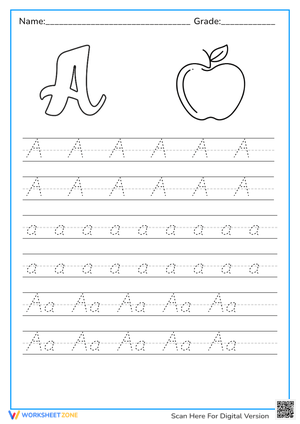
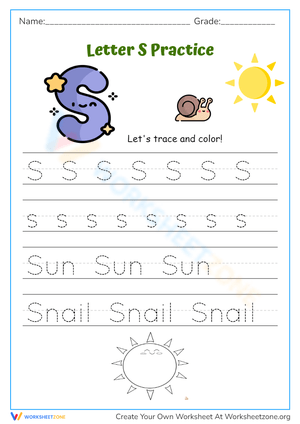
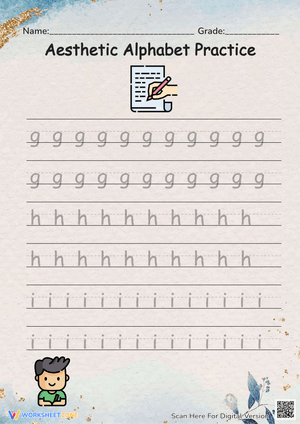
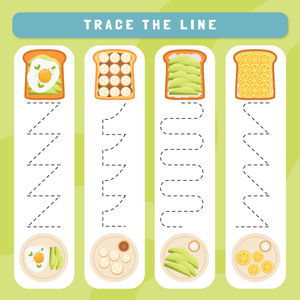
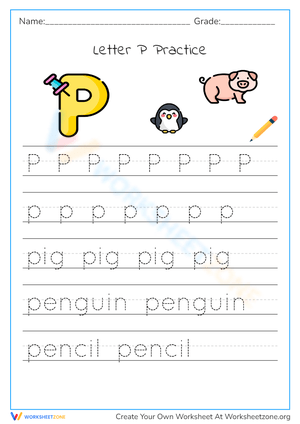
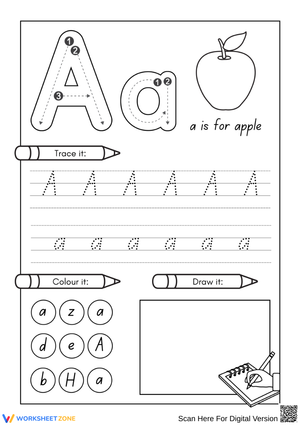
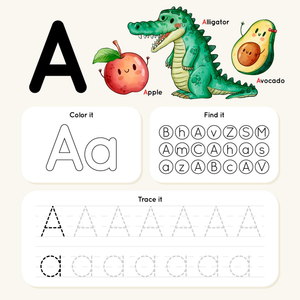
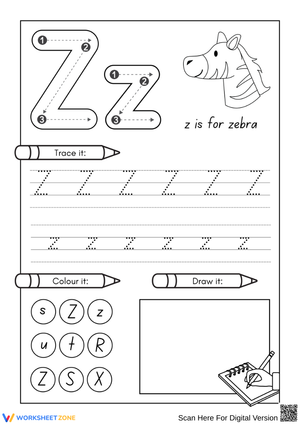
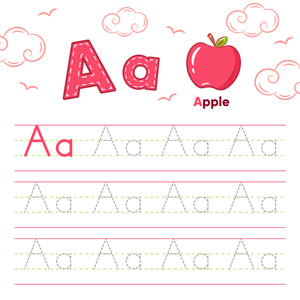
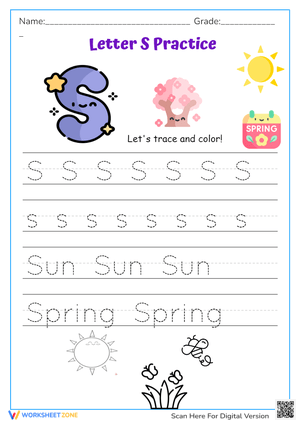
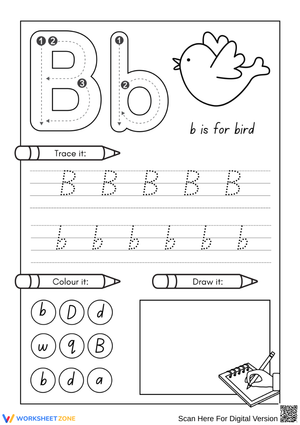
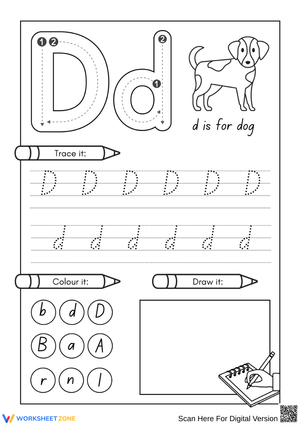
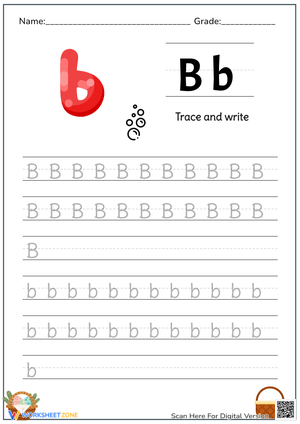
These kindergarten daily handwriting pdf worksheets give teachers a print-ready routine that fits into five to ten minutes without requiring extra setup or materials. The set covers letter formation, line placement, tracing with directional cues, and short independent writing — everything a Kindergarten student needs to build accurate motor patterns before those patterns calcify into habits.
What Each Worksheet Targets
The skills in this set match where Kindergarten students actually are in their motor development — not writing sentences, but learning where letters live on a line and how the pencil moves to form them. Each worksheet addresses one or two closely related concepts, typically a single letter or a formation family such as tall letters, curve letters, or letters built from diagonal strokes. That narrow focus lets students concentrate on movement rather than juggling multiple models at once.
- Letter formation with directional arrows: Students see where to start and which way the pencil travels, not just what the finished letter looks like.
- Baseline and midline awareness: Primary lines are sized so students can see the difference between a letter that sits correctly on the line and one that floats above it or sinks below.
- Tracing before independent writing: Each worksheet moves from guided tracing to a small number of independent attempts, giving students a reliable model before they try on their own.
- Left-to-right directionality: Practice items are arranged to reinforce the reading direction that students are building simultaneously in phonics instruction.
- Pencil control at an appropriate scale: Models and practice boxes are large enough to attempt without cramping, and small enough to build accuracy.
The Case for Short, Repeated Practice Sessions
Five-year-olds' fine motor systems are still developing in ways that directly affect handwriting: grip strength, hand-eye coordination, and the ability to hold a movement intention in working memory while executing it physically all require time and repetition to consolidate. A fifteen-minute handwriting block at this age typically produces more fatigue than learning — the last few attempts on any worksheet look worse than the first because the student's hand is simply tired. Short daily repetition does more to build the habit than occasional long sessions.
There is also a cognitive load consideration that is easy to overlook. When students are actively concentrating on where to start a letter and how the pencil moves, they cannot simultaneously attend to spacing, sizing, and the sound the letter makes. Keeping each worksheet brief and centered on one target letterform keeps those demands at a level beginners can manage, which is what actually allows the motor pattern to settle.
Formation Errors That Settle Into Habits If Teachers Miss Them
The most common problem in early Kindergarten handwriting is forming letters from the bottom up. A student will trace a letter or number correctly when the path is marked, then turn to blank independent lines and start from the bottom, working upward. The finished letter can look nearly right — which is exactly why this error hides so long. Teachers catch it by watching hand movement during the first few minutes of independent work, not by examining the finished worksheet afterward.
Letter reversals are a related issue, most famously with b and d. At the start of Kindergarten, reversals are developmentally normal — the brain has not yet established a strong left-right preference for letter orientation. These worksheets address reversals through consistent directional cues and a stable presentation format, but the real diagnostic moment is the walk-around during independent attempts. Students who reverse b and d almost always trace correctly and reverse only when writing on their own, which tells a teacher exactly where the motor memory breaks down.
Pencil pressure is a less-noticed problem. Some students press hard enough to tear the paper or leave indentations in every worksheet below theirs in the stack; others barely make contact with the surface. Neither shows up clearly in a finished product the way a reversal does, but both interfere with fluency later. A quick scan of the room during the first two minutes of independent practice catches grip and pressure issues before students finish an entire worksheet with the wrong technique.
Fitting These Worksheets Into the Week Without Extra Planning
Morning work is the most natural placement. A worksheet on each desk before students arrive gives the class a consistent entry routine — students sit down, pick up a pencil, and begin tracing without waiting for verbal directions. By October in most classrooms, that transition takes under two minutes. The predictability itself has value at this age: when young students know what to expect each morning, independent work time gradually expands across the year.
Beyond morning work, kindergarten daily handwriting pdf worksheets fit several other spots in the schedule without extra prep. Place a printed worksheet inside a sheet protector at the writing center so students use a dry-erase marker, wipe it clean, and repeat the same formation multiple times before the center rotation ends — that single worksheet stretches across an entire week without extra copies. Pull three or four students who are struggling with a specific letterform and work through a focused worksheet together during small-group time while the rest of the class reads independently. Send a worksheet home on Thursday so families have an actual model with directional arrows to follow alongside their child, not a vague note about practicing writing. Keep a small stack in a finished-early folder for the eight minutes between an early finisher and the rest of the class catching up.
A useful organizational move: sort printed worksheets into three labeled containers — trace only, trace and write, and write independently. Teachers hand out the version that fits each student's current readiness, and because all three containers hold worksheets on the same target letter, no student is visibly working on something different from everyone else.
Matching the Right Version to Each Student's Readiness
Kindergarten classrooms routinely include three or more years of fine motor development in one room. A student who has spent two years at home drawing, cutting, and handling tools will have a different grip and letter control than a student for whom Kindergarten is the first extended time holding a pencil. kindergarten daily handwriting pdf worksheets work best when teachers match the version to where the student is now, not where the calendar says they should be.
For students still developing pencil grip and basic stroke control, limit the practice load to two or three items per worksheet and use the tracing-only version. Do not move to independent writing until tracing is consistent and the starting direction is reliable. For students with solid pencil control who already write recognizable letters, skip the tracing portion and add simple words built from the target letter. Left-handed students need paper angled in the opposite direction from right-handed students — a detail that sounds minor until you see the hooked wrist position that develops when it is ignored and becomes very hard to undo by second grade.
Standard Alignment
These worksheets address CCSS.ELA-LITERACY.L.K.1a, which requires Kindergarten students to print many upper- and lowercase letters. In classroom sequencing, this standard sits early in the year's literacy arc — before students are expected to write words or sentences independently — making daily formation practice the core instructional activity at this stage, not a supplement. The directional cues, primary lines, and trace-to-write sequences in these worksheets directly support the letter formation accuracy the standard calls for.
Frequently Asked Questions
How many minutes should a Kindergarten handwriting routine take?
Five to ten minutes is the practical ceiling for most Kindergarten students. That block is long enough to model one letter, have students air-write the stroke, trace, and attempt a few independent examples — and short enough that attention and grip strength hold through the end of the worksheet.
Should these worksheets use manuscript or D'Nealian letterforms?
That depends on which style the school or district has adopted for reading and phonics materials. If students are learning letters through a program that uses a specific font or letterform, handwriting practice materials should match it exactly. Mismatched models confuse early writers who are still building the connection between the letter they see printed in a book and the letter they write by hand.
Are these worksheets appropriate for family take-home practice?
Yes — kindergarten daily handwriting pdf worksheets work well as take-home materials because the directional arrows and letter models give families enough information to support practice correctly without any additional training. The one thing worth communicating to families upfront: the goal is accurate formation, not speed or quantity. A student who writes three letters correctly has accomplished more than a student who fills a line with letters formed the wrong direction.
When should a teacher be concerned about a student's handwriting progress?
If a student still reverses letters consistently after the middle of the year, or if grip and pressure are significantly outside the typical range despite regular practice, that is worth flagging for the school's occupational therapist or intervention specialist. Daily worksheet practice strengthens formation habits for most students, but it is not a substitute for fine motor evaluation when a student's difficulties run deeper than repetition will address.












 Interactive Worksheet Maker
 Quiz Maker
 Word Search Maker
 Crossword Puzzle Maker
 Word Scramble Generator
 Sentence Scramble Generator
 Handwriting Worksheet Generator
 Name Tracing Generator
 Fill In The Blank Generator