Blank Handwriting Worksheets for Kindergarten
These blank handwriting worksheets for kindergarten give teachers a reliable daily writing tool that holds up across the full school year without requiring new materials every week. The set includes multiple formats — dashed-midline sheets, picture-box-and-lines layouts, wide-spaced primary lines, and both portrait and landscape orientations — so the same resources support name practice, alphabet work, sight word copying, and early sentence writing. That range matters in kindergarten, where writing demands shift quickly from letter formation to word-level control to simple sentences, sometimes within the same week.
What's Inside the Set
Each worksheet is format-specific rather than skill-locked, which means teachers can assign the same worksheet to very different tasks depending on where the class is in the year. The set includes:
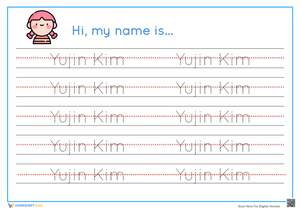
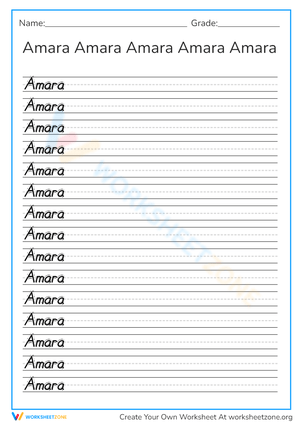
- Dashed-midline primary sheets for letter formation practice, where the dotted center line gives beginners a clear target for lowercase letter height
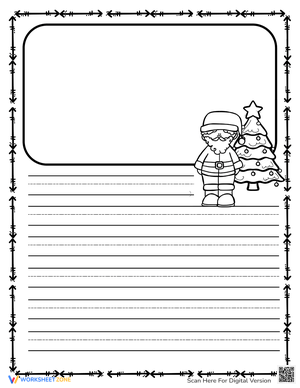
- Picture-box-and-lines layouts that let students draw first and then label or write a sentence below
- Wide-spaced plain primary sheets for copying, name writing, and word work
- Landscape-format worksheets useful for word walls, center rotations, or side-by-side word comparison
- Portrait journal-style layouts for morning work, book responses, or independent draw-and-write time
Each worksheet leaves the content open so teachers can direct the task — trace your name, copy the class sentence, label your drawing — without needing a new printable for every routine.
Line Spacing and What It Actually Does for Beginning Writers
Kindergarten students are managing grip, directionality, and letter shape simultaneously. Wide primary lines reduce cognitive load at that early stage by giving more room for controlled movement. When lines are too narrow too soon, students compensate by shrinking letters inconsistently, skipping the midline entirely, or writing so large that letters run off the line — habits that are harder to correct once they settle in.
The dashed midline is the single most useful feature on a beginning writing sheet. It answers the question students cannot yet ask themselves: where does this letter stop? Lowercase b, d, f, and h all reach the top line; a, e, m, and n stop at the midline; g, p, and y drop below the baseline. Without a visual marker at that middle height, most kindergartners default to making all lowercase letters the same height, which flattens legibility and masks what they actually know about individual letter shapes.
A practical signal that a student is ready for slightly smaller line spacing: they consistently place most lowercase letters correctly, leave visible gaps between words, and their writing stays readable across the full line. Until that's true for most of the class, the wider format does more work.
Smart Ways to Work These Worksheets Into Your Week
These worksheets produce the most noticeable gains when teachers build them into routines that repeat across the week rather than using them as occasional activities. When students encounter the same worksheet format at the same point in the day, the transition disappears and the writing itself gets more attention. A structure many teachers use looks something like this:
- Monday: name writing plus one uppercase letter review
- Tuesday: lowercase letter copying or sight word tracing
- Wednesday: picture-box worksheet — draw first, then label two to four words
- Thursday: copy one short class sentence generated during shared reading
- Friday: independent draw-and-write response without a model
Many teachers also slip blank handwriting worksheets for kindergarten into page protectors and use dry-erase markers during center rotations. Students erase and try again without burning through copy paper, and the format stays consistent across the week — which is what makes the routine stick.
These worksheets also travel well into substitute plans. A clear direction written at the top — "Write your name three times. Draw a picture. Write one word about your picture." — is manageable for another adult and understandable for students without teacher support nearby.
Mistakes Beginning Writers Make That These Worksheets Help You Catch
The most common formation error in early kindergarten is starting letters at the wrong point. Students who haven't yet internalized top-to-bottom directionality will form the letter b by drawing the bump first, then adding the vertical stroke upward — producing a letter that looks nearly right but creates confusion as writing speed increases. Wide-line worksheets make this error visible immediately because the strokes are large enough for teachers to trace with a finger during a thirty-second desk conference.
Spacing errors come close behind. Students learn to write their names before almost anything else, and names are written with no spaces between letters. When they begin writing sequences of words, many students treat the whole line as one continuous name and run everything together. Using the picture-box worksheets — where students label separate objects in separate spots on the same worksheet — builds spacing awareness earlier than any rule explanation does.
Letter reversals, particularly b/d and p/q, tend to appear right after students learn both letters of a pair. The dashed midline doesn't solve reversals, but it does help teachers confirm whether a student understands basic placement — above or below the midline — even when directionality is still inconsistent. Catching that distinction early shapes how intervention is structured later.
Adjusting the Set for a Classroom Full of Writers at Different Points
Blank handwriting worksheets for kindergarten are straightforward to adjust for mixed readiness levels precisely because they carry no fixed content. The same dashed-midline worksheet can serve three groups at once:
- A student just developing pencil grip traces a highlighted or dotted letter model the teacher has prewritten at the top
- A student building letter recall copies from a word card placed beside the worksheet
- A student ready for more writes a complete sentence independently using the same lines
Teachers can also pre-mark starting dots on specific lines to guide students who lose track of where to begin, or fold the bottom half of the worksheet to reduce the visual field for students who tire quickly or feel overwhelmed by rows of blank lines stretching down the sheet. These adjustments take seconds and preserve the familiar format students have already learned to navigate.
Frequently Asked Questions
What line format works best for students who are just beginning to form letters?
Wide primary lines with a dashed or dotted midline. The width gives beginners enough room to form strokes deliberately, and the midline answers the most common unasked question: how tall should this letter be? Most students who ignore the midline aren't being careless — they haven't internalized the height rule yet. The visual line does the teaching without requiring the teacher to repeat it thirty times.
How often should students use these worksheets?
Short daily practice outperforms longer weekly sessions for building handwriting automaticity. Five to ten minutes of focused writing with a clear task tends to produce more consistent gains than one thirty-minute block, especially for kindergartners whose fine-motor stamina is still developing. Frequency matters more than duration at this stage.
Do picture-box worksheets slow down handwriting practice?
No — drawing first actually speeds up the writing portion for most students. When a student draws a dog and then writes "dog" below it, they aren't generating an idea and transcribing at the same time. The drawing handles idea development; the writing handles letter formation. Separating those demands is developmentally sound in kindergarten, where holding both jobs simultaneously often produces neither well.
Are these worksheets appropriate for students who already write sentences fluently?
Yes. A student ready for more can use blank handwriting worksheets for kindergarten to work on consistency, letter sizing, and spacing across a full line rather than stopping at single words. Plain primary-lined worksheets with a prompt asking for two to three sentences give confident writers a reason to sustain effort without switching to a completely different format.
Can these work as take-home materials?
They are well-suited for home use because the format is self-explanatory and requires no special supplies. A direction written at the top of the worksheet — or stamped with a simple phrase before the sheets go home — gives families enough guidance to support the task without a separate instruction sheet.
Clear All