


























Views
Downloads
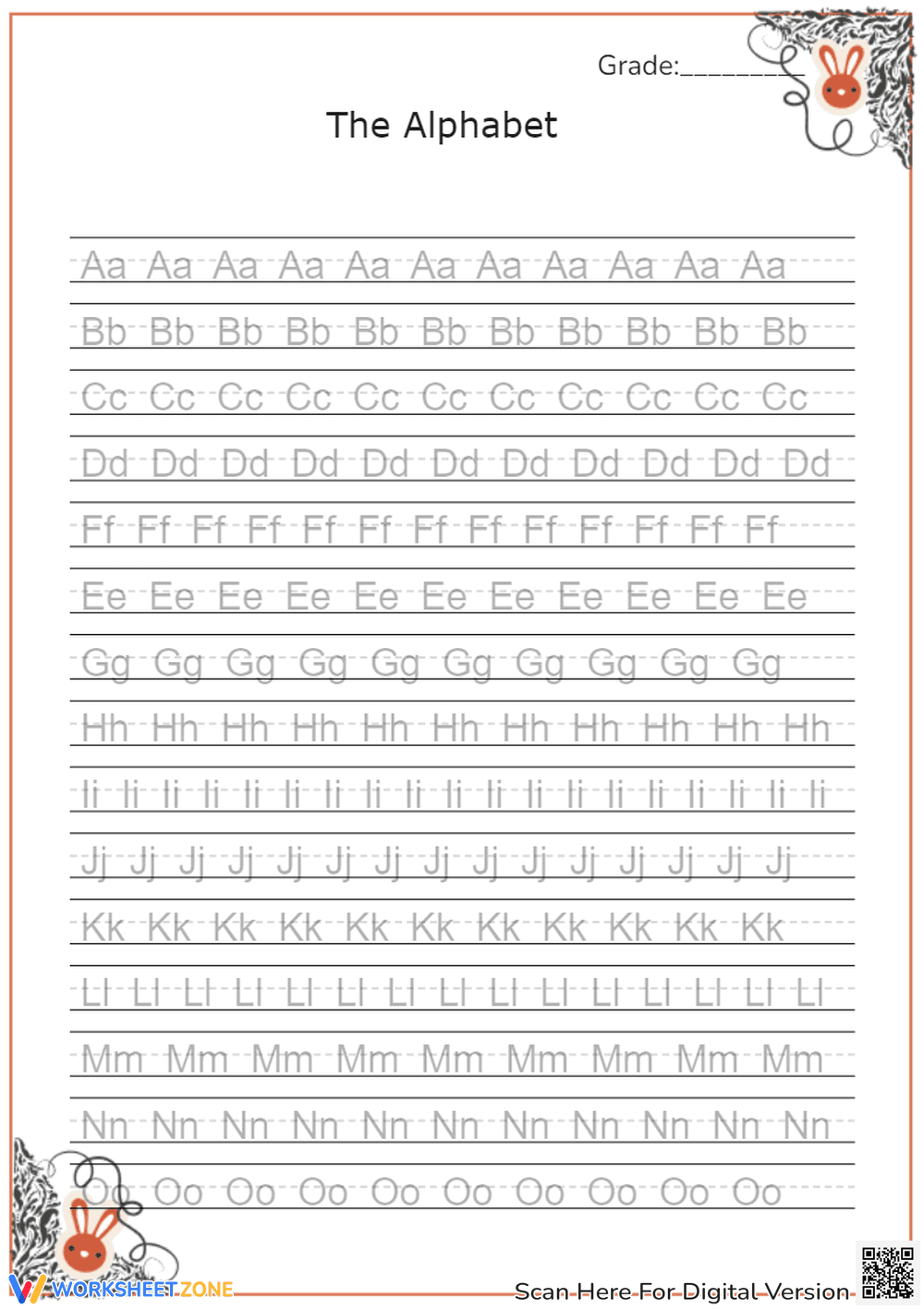


Essential Alphabet Handwriting Worksheet | Kindergarten
Paste this activity's link or code into your existing LMS (Google Classroom, Canvas, Teams, Schoology, Moodle, etc.).
Students can open and work on the activity right away, with no student login required.
You'll still be able to track student progress and results from your teacher account.
Mastering letter formation is a foundational milestone for early learners. This Essential Alphabet Handwriting Worksheet provides a structured environment for students to practice tracing both uppercase and lowercase letters from A to Z. By engaging with these repetitive tracing tasks, children develop the fine motor control and muscle memory necessary for legible, independent writing and long-term literacy success.
At a Glance
- Grade: Kindergarten · Subject: Handwriting
- Standard:
CCSS.ELA-LITERACY.L.K.1.A— Print many upper- and lowercase letters- Skill Focus: Alphabet tracing and letter formation
- Format: 2 pages · 26 tasks · Answer key included · PDF
- Best For: Daily morning work or literacy centers
- Time: 15–20 minutes
What's Inside: This comprehensive 2-page PDF includes dedicated tracing lines for every letter of the alphabet. Each line features uppercase and lowercase pairs presented in a clear, dashed-line font. The layout provides approximately 10 to 12 repetitions per letter, ensuring students receive ample practice. The clean design includes a name and grade header, making it easy to organize and collect for student portfolios or progress monitoring.
Zero-Prep Workflow: This resource is designed for immediate classroom implementation. First, print the 2-page document (30 seconds). Second, distribute the sheets to students during your literacy block or as they arrive in the morning (1 minute). Third, walk the room to review grip and stroke order as students work (1 minute). Total teacher preparation time is under 2 minutes, making this an ideal solution for busy mornings or emergency sub plans.
Standards Alignment: This worksheet is directly aligned with `CCSS.ELA-LITERACY.L.K.1.A`, which requires students to print many upper- and lowercase letters. It also supports fine motor development goals often found in early childhood developmental frameworks. Both standard codes can be copied directly into lesson plans, IEP goals, or district curriculum mapping tools to ensure instructional compliance and tracking.
How to Use It: Use this worksheet during the "You Do" phase of a gradual release lesson on letter formation. It is particularly effective as a quiet transition activity after direct instruction on a specific letter. For formative assessment, observe students as they trace the letters 'b', 'd', 'p', and 'q' to identify common reversals early. Expect students to spend 15 to 20 minutes to complete both pages with high accuracy.
Who It's For: This resource is tailored for Preschool and Kindergarten students who are beginning their writing journey. It is also an excellent intervention tool for first-grade students requiring additional fine motor support or English Language Learners (ELLs) familiarizing themselves with the Latin alphabet. Pair this worksheet with a large-format alphabet anchor chart or a tactile sand-tracing activity for a multi-sensory learning experience.
Early literacy development relies heavily on the physical act of letter formation to bridge the gap between visual recognition and cognitive retention. This Essential Alphabet Handwriting Worksheet targets CCSS.ELA-LITERACY.L.K.1.A by providing structured, repetitive tracing opportunities for all 26 letters of the English alphabet. According to Fisher & Frey (2014), the gradual release of responsibility begins with highly structured scaffolds, such as the dashed lines provided here, which allow students to develop the necessary muscle memory for independent writing. By practicing both uppercase and lowercase pairs in a consistent format, learners internalize the spatial relationships and stroke sequences required for legible penmanship. This resource serves as a foundational tool for Kindergarten students, ensuring they meet early language standards while building the fine motor control essential for later academic success in composition and communication. The clear, uncluttered design minimizes cognitive load, allowing students to focus entirely on precise letter construction.


